Depression

Big Pharma wants to sell you psychedelic drugs

This year is set to be the year of psychedelics – Trump’s trip, you could call it. Since the President signed an executive order supporting the use of psychedelic medicines in April, no fewer than six federal agencies have announced initiatives to help usher the industry along. The agencies, mainly connected to the Department of Health and Human Services, have approved multiple million-dollar initiatives to research, approve and roll out psychedelics. A whole fleet of startups are now circling the Food and Drug Administration. Three of these have Commissioner’s National Priority Vouchers from the FDA, which means that when they submit their new drug applications, the agency will make a decision within two months of filing.

psychedelics

Mother of mysteries: Rosarita, by Anita Desai, reviewed

From our UK edition

There are other reasons beyond shortage of time (the acclaimed Indian novelist Anita Desai has just turned 87) to write a novella; the genre is as attractive and prestigious as it is fashionable. The deceptively slender format can briskly encompass whole worlds and histories, or alternatively, like the short story, depend on strict excisions and limitations for its effects. Rosarita does both. A young woman, Bonita, addressed as ‘you’ throughout, is taking time out from her Spanish-language studies and relaxing on a park bench in the historic centre of San Miguel de Allende, Mexico. Education has been her means of escape from the domineering family structure back in India that crushed her mother.

Adolescent anxieties: Schoolgirl, by Osamu Dazai, reviewed

From our UK edition

In June 1948, the writer Osamu Dazai and his last love, Tomie Yamazaki, drowned themselves in the Tamagawa Aqueduct near Tokyo. It was a murky ending to a life which had begun in wealth and social status but which rapidly descended into alcoholism, depression, impoverishment – and literary genius. During his short life – he died at 38 – Dazai produced a substantial body of work: novels and stories which helped define Japanese literature of the 1930s and 1940s and which are enjoying a significant global reputation now. Often autobiographical in nature, playing games with the blurred borders between reality and illusion, they chart disordered, chaotic lives, exploring isolation, poverty and debauchery with a sly wit and brutal honesty.

Why I take frog poison

You picture the rainforest, naturally. A clearing at first light, a shaman with thousand-yard eyes, the canopy screeching overhead. What you do not picture is a fourth-floor flat on an east London estate, a woman wafting sage around your head and the slow realization that you have just handed over £150 to be – quite literally – poisoned. This is kambo. And at the lowest ebb of my late thirties, becalmed in a miasma of self-loathing and suffering from PTSD following a moped accident in Thailand, I had decided it was precisely what I needed. Made from the dried skin secretions of a giant monkey frog, it is also, as of last month, suspected of having killed its first Briton.

Portrait of an addict: Keshed, by Stu Hennigan, reviewed

From our UK edition

In the tradition of literary lowlifes and lushes as conceived by Charles Bukowski or Jean Rhys, Keshed is a story about an alcoholic, with a distinctive 21st-century, northern English working-class setting. Formally inventive, the ‘now’ sections of the novel are not sentences but strings of words, effective and short: ‘Rancid liquid squirting chin soggy torso peristaltic rush rapid.’ One such section opens the book, setting the uncompromising tone. The protagonist, Sean (‘He was pissed when I met him and he hasn’t changed’), a bright, charismatic lad from an unnamed small Yorkshire town, has been to university in Manchester where he drank heavily. He then moved back home, and we meet him working as a plasterer, living to get smashed.

Self-betterment through contemplation of the Seven Deadly Sins

From our UK edition

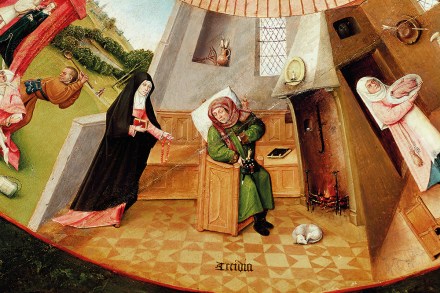
What mistake did Narcissus make when he looked into the water? To fall in love with his own ravishing self, we might think. But to the medieval mind, that wasn’t his problem at all. In John Gower’s 14th-century poem ‘Confessio Amantis’, Narcissus falls in love all right – but with someone else entirely. His fault isn’t that he loves himself; it’s that he doesn’t even recognise himself. Then, as now, as Peter Jones argues in this revelatory exploration of late medieval psychology, the path to self-betterment went through self-knowledge. Like our own, it was ‘a civilisation geared towards understanding the human mind’.

Mark Haddon attempts to exorcise the memory of a loveless childhood

From our UK edition

Growing up in the 1960s at 288a Main Road on the outskirts of Northampton, Mark Haddon spent hours alone in the bathroom, the only lockable room in the house, trying to figure out the universe. In this dark, sui-generis memoir he writes: Even now, insoluble conundrums such as ‘Why was I born as me and not someone else?’ and ‘If the universe is expanding, then what is it expanding into?’ come packaged with images of a shampoo bottle in the shape of a fat sailor with a twist-off head. The author of The Curious Incident of the Dog in the Night-time has a scientifically inclined mind in which small physical details, such as that sailor’s twist-off head, get permanently lodged.

Andrew Ross Sorkin reconstructs the 1929 crash

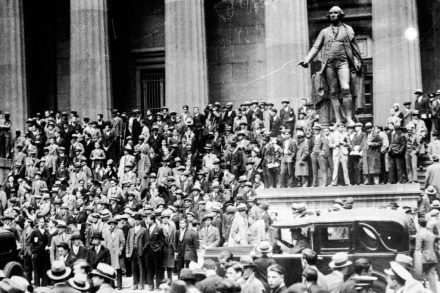
During the great financial panic of 1907, the banker J.P. Morgan locked the titans of the financial world in his lavish private study to determine which banks to rescue and which to let fail. This intervention saved the banking system, restoring public confidence. But trust in Wall Street was shaken to its core. Six years later, Congress passed the Federal Reserve Act, which sought to stabilize the American financial system by establishing a central bank to regulate credit and serve as lender of last resort. By the mid-1920s, the very mechanisms that were designed to promote stability had fueled a surge in stock market speculation.

1929 crash

A very demoralizing trip to Barnes & Noble

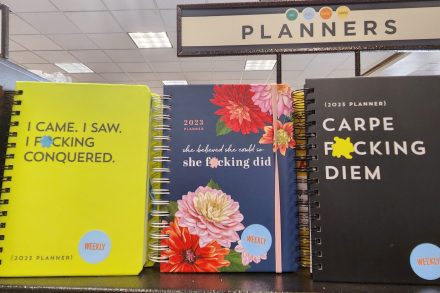
America is enduring a mental health crisis, and you need go no farther than your local Barnes & Noble bookstore to see evidence. I was an avid journal-keeper for years and love all things paper, so I get a little giddy perusing the “stationery and gifts” section. Last weekend, however, rather than being energized by the prospect of filling one of those gorgeous, gilded, supple leather books with my most brilliant thoughts and sweetest sentimentalities, I was left feeling sad about the message sent by so many of the journals, planners, and gifts for sale. Judging from the featured items, you’d be led to believe America is a nation of depressed, exhausted, anxiety-ridden alcoholics. And for the most part, you’d be right.

The Wall Street Crash never ceases to fascinate

From our UK edition

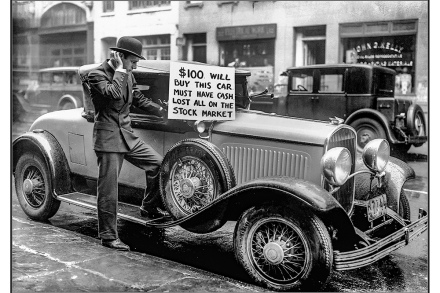
When Winston Churchill dined with the crème de la crème of American finance in New York on 28 October 1929, a facetious toast was made to ‘friends and former millionaires’. Despite a 13 per cent drop in the Dow after another day of market turmoil, the assembled banking titans felt they wouldn’t just survive the maelstrom, they would make more money from it. Churchill, whose finances were perennially chaotic, had caught stock market fever and lost today’s equivalent of almost $1.5 million. On returning to England, he declared the Wall Street crash ‘only a passing episode in the march of a valiant and serviceable people’. In the end, US stocks fell almost 90 per cent between their 1929 peak and 1932.

Highs and lows: The Boys, by Leo Robson, reviewed

From our UK edition

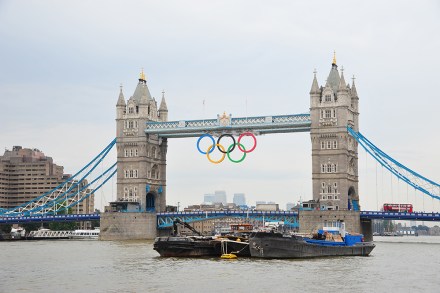
The Boys, the entertaining debut novel by the literary critic Leo Robson, is set in Swiss Cottage during the 2012 London Olympics. Johnny Voghel is ‘methodically lying about’, home on leave from an admin job in the West Midlands and grieving both for his mother, who died the previous year, and – by extension – his father, who died when he was a child. A typical day is spent ‘smoking badly rolled cigarettes, watching the ring-fenced patches of grass suffer in the heat, nodding at passers-by, tweezing grey hairs from my nostrils and popping the spots on my chin’, before walking into the centre to gaze at the BT Tower with its Olympics countdown.

The pain of being a Bangle – despite sunshine through the rain

From our UK edition

I must say that my feelings about the 1980s American rock band the Bangles were – unusually for me – moderate. I loved some of their hits while being left cold by others. They were pleasant. But after reading this book’s press release, I realised how sorely lacking in appreciation of their impact I’d been: It’s a story of the challenges faced by women attempting to follow their artistic dreams in a media and music industry ecosystem which seemed set up for their failure from the start... It is a long overdue corrective that restores the Bangles to their rightful place in music history as feminist trailblazers... As Debbi Peterson herself notes: ‘It’s about time that our true story was told.

The greatest British pop singer who never made a hit single

From our UK edition

This is a magnificent book, regardless of whether the reader knows who it is about. I state this bluntly at the outset because I am keenly aware that many more people are ignorant of Lawrence’s career and achievements in the field of popular music than will be familiar with them; and that I will need to use up a significant number of words attempting to explain a figure who has repeatedly proven inexplicable to the public at large. So here goes... Has the indefatigably eccentric Lawrence led a charmed life or a cursed one? Lawrence Hayward may be the greatest British pop star never to have enjoyed a hit single.

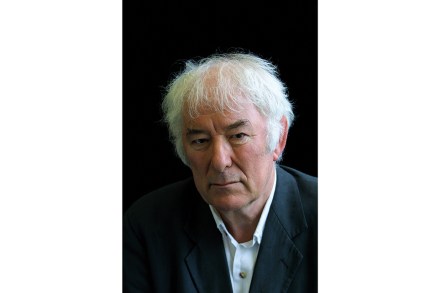
Seamus Heaney’s letters confirm that he really was as nice as he seemed

From our UK edition

Seamus Heaney wrote letters everywhere – waiting for his car to be repaired at a country garage, sitting over a glass or more of Paddy late at night, and above all in aeroplanes, ‘pacing the pages against the pilot as he takes us in to Heathrow or Shannon’, as he wrote to a friend in 1995. So many eloquent missives were dashed off at high altitude that his editor suggests he might have had notepaper printed with the heading ‘EI 117’, the Aer Lingus flight between Dublin and Washington DC. This airborne activity is significant because it indicates two characteristics illuminated by Christopher Reid’s riveting collection: the pressures of life lived at an exceptional pitch of fame, and Heaney’s powerful need to keep faith with friends and fellow poets.

Are hallucinogenic drugs losing their stigma?

From our UK edition

We are in the midst of a ‘psychedelic renaissance’. Not since the 1950s and early 1960s has there been so much interest in researching the therapeutic potential of psychedelics. The FDA approved a ketamine derivative for medicinal use in 2019, and has given both MDMA and psilocybin (the psycho-active ingredient in magic mushrooms) ‘breakthrough therapy’ status, putting the drugs on a fast track to approval in the US, with the UK likely to follow suit. Professor David Nutt is a neuropsycho-pharmacologist (say that three times fast) and head of the Centre for Psychedelic Research at Imperial College, London. He was the UK’s ‘drug tsar’ before getting sacked in 2009 for claiming that LSD and Ecstasy are less dangerous than cigarettes, alcohol or horseback riding.

Are we any closer to finding a cure for depression?

From our UK edition

Some years ago, the Harvard psychiatrist Leon Eisenberg commented that, in the course of his lifetime, his discipline had swung from the brainless psychiatry propounded by psychoanalysts to the mindless psychiatry of those enamoured of biological reductionism and neuroscience.  Camilla Nord, who runs a neuroscience laboratory at Cambridge, is firmly a member of the latter camp. Though in a few places in The Balanced Brain she is driven to concede that social factors seem to play a role in mental health or mental distress, she immediately insists that ‘the process by which social factors are able to cause mental illness is entirely biological’.

Another tragic case involving medical incompetence and cover-up

From our UK edition

It was only eight lines into O Brother that I realised I was in the hands of a good writer. John Niven’s landline phone has rung. His partner hands it to him. ‘I take the phone from her as she watches me in the intense, quizzical way we monitor people who are about to receive Very Bad News.’ I can’t recall a writer noticing that before (I presume a few have), but we have noticed it ourselves. And the narrative masterstroke is that now the reader is looking at the page in an intense, quizzical way, for we want to know what the Very Bad News is. The VBN is that Niven’s younger brother Gary is in a coma, following a suicide attempt.

Elon Musk: innovator, CEO, ket head 

What’s your poison? All of the greatest minds have one. Freud loved cocaine, Charles Dickens dabbled with opium, Steve Jobs once claimed that LSD was “one of the two or three most important things I have done in life.” It turns out that Elon Musk’s drug of choice is ketamine, a controlled substance usually reserved for tranquilizing horses.  Elon Musk “microdoses” the substance, according to the Wall Street Journal. “The CEO has told people he microdoses ketamine for depression, and he also takes full doses of ketamine at parties, according to the people who have witnessed his drug use and others who have direct knowledge of it,” the report says.

elon musk ketamine

The trials of a Tokyo housewife: Mild Vertigo, by Mieko Kanai, reviewed

From our UK edition

Natsumi lives in a modern flat in Tokyo with her husband and two young sons, her life comfortable but circumscribed by the tedium of household chores. Washing dishes in the sink, she finds herself transfixed, gazing at the ‘rope of water’ falling from the tap, twisting like a snake: ‘There was something Sisyphean in the nature of the roster of simple domestic tasks... never an end in sight.’ Things are at once too easy and too much for her; the kitchen is so perfect she hesitates to spoil its pristine condition and ends up buying ready-cooked meals, her life shrunk to what seems stifling captivity.   She memorises the layout of the super-market and makes notes: ‘Fish Day specials: tuna or red snapper or yellow-tail or octopus sashimi.

The company of hens could be the best cure for depression

From our UK edition

A friend of mine, an inspirational teacher, says that one of the best things parents can do is to allow children to believe that their dreams can come true. Arthur Parkinson met his first chicken as a toddler, growing up in a former mining town, and from that moment he longed for a brood of his own. So his father set to, building a handsome ark-shaped hen house, poring over Ad-Mag to find amusing poultry for sale, driving Arthur around country lanes at weekends in search of rare breeds.