Democrats

The last banking crisis and its architects, Dodd and Frank

From our US edition

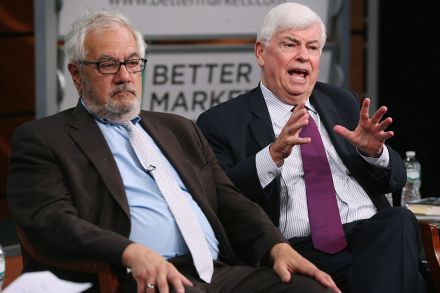
The Dodd-Frank law, enacted in 2010 following the financial crisis of 2007-08, was named for two of its chief architects, Senator Chris Dodd, Democrat of Connecticut, and Representative Barney Frank, Democrat of Massachusetts. It's ironic that both had been involved, politically or personally, in exactly what had caused the financial crisis in the first place. In the 1930s, only about 10 percent of American non-farm families owned their own homes. But that began to change with the New Deal. The Federal Housing Administration was established in 1934 to guarantee mortgages, making banks much more willing to initiate them.

Why the national divorce worked: a future history

From our US edition

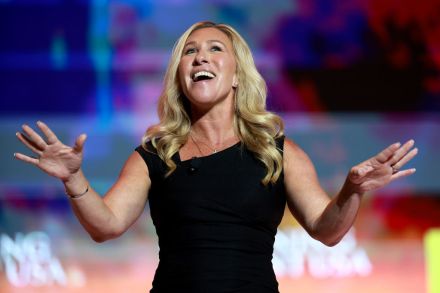
The following is an excerpt from Yale University law professor Elizabeth Friedkin’s remarks to the 2026 International Federation of United Conscious Uncoupling Professionals. When then-Representative Marjorie Taylor Greene first proposed the dissolution of the United States of America in 2023, many feared she was threatening a second Civil War, including most of us in this room. Over the past two years, however, we have witnessed a benign break-up that is now a beacon to dissatisfied land conglomerates the world over. I was skeptical when I was chosen to serve as arbitrator, but I will be the first to admit that I underestimated the shrewdness of Ms. Taylor Greene.

national divorce

Biden will never let Silicon Valley fail

From our US edition

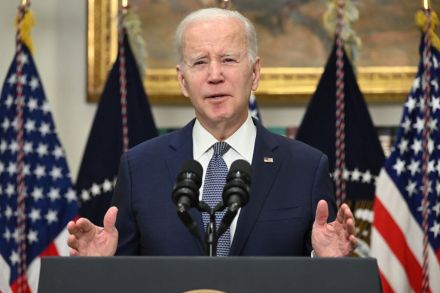
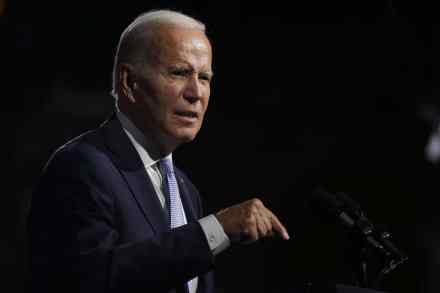
After a bank run on Silicon Valley Bank left the institution in ruins, the Federal Reserve announced it would make whole the bank’s customers, including those with uninsured deposits in excess of $250,000, which should have made them ineligible for the Deposit Insurance Fund. President Biden promised the American people that this was not a bailout because no losses would be borne by taxpayers — a claim the Wall Street Journal assessed as a “whopper.” But the debate we should be having is not over the definition of the authorities' actions, but how to judge them morally — especially given how the Fed has been trying to tame inflation for the past two years.

The budget fight and the new politics of entitlements

From our US edition

It’s almost spring, and you know what that means: buds popping on the trees, birds chirping as the days grow longer, and the president introducing a budget that will be quickly forgotten. And so it's happened. But there have been a few interesting twists that could make this budget season more interesting than most. President Biden wrote an op-ed for the Wednesday New York Times presenting his plan to “extend Medicare for another generation.” The piece was largely predictable: calls to raise taxes on the wealthy as a way “to increase the program’s solvency by twenty-five years.” While some fiscal conservatives welcomed the president’s willingness to raise the issue of Medicare solvency, his ideas are largely dead on arrival for Republicans.

kevin mccarthy

The California rush to replace Dianne Feinstein

From our US edition

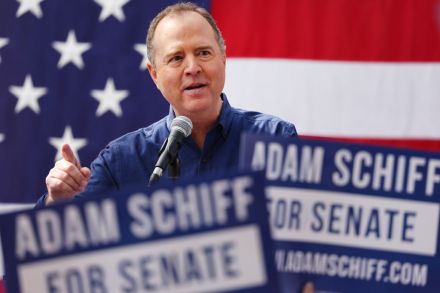
California senator Dianne Feinstein, eighty-nine, whose mental decline has long been an open secret, announced her 2024 retirement last week. This comes on the heels of a stinging Sacramento Bee editorial withholding endorsement for her replacement and an accelerating race for her seat. Senator Feinstein has no public plans to resign. She says she will serve out her full term, preventing an appointment by Governor Gavin Newsom. Efforts to force her out of office early will persist. When Feinstein ran for the Senate in 2018, she obtained just 54 percent of the primary vote against fellow Democrat Kevin de León, a widely despised figure in California politics, now clinging to his Los Angeles city council seat after being exposed as a cutthroat diversity fraud.

california dianne feinstein

Biden and Congress toss the debt ceiling hot potato

From our US edition

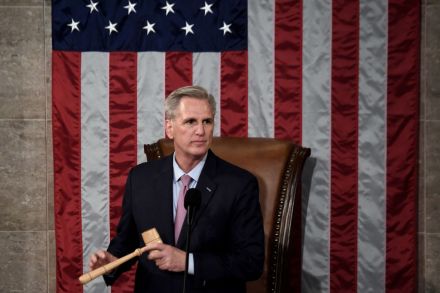
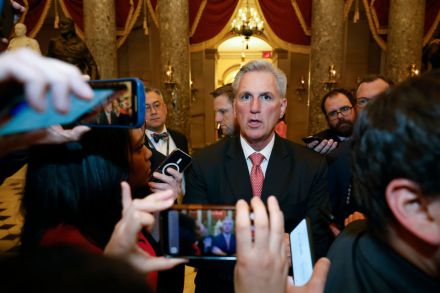
Earlier in the week, Speaker of the House Kevin McCarthy gave an evening address about the urgency of raising the debt ceiling and cutting federal spending. Technically, the government has already taken on the amount of debt it’s allowed to carry. The Treasury Department is employing “extraordinary measures” to shuffle money around to service the national debt and make government payrolls. But these measures can’t keep the government afloat forever. Hence the need to raise the debt ceiling or risk catastrophic default some time in the summer. The timing of the speech — one day before President Biden's third State of the Union address — was conspicuous.

Tocqueville’s warning about the Democrats

From our US edition

Cassandra was a Trojan princess with the gift of prophecy — or the curse. For while she could foresee the downfall of her city, she could not make anyone believe her. She wound up enslaved to the conquering Greek Agamemnon, but he too disregarded her warnings and met his own grisly fate when he returned home to find his queen and her lover prepared to kill him. America’s Cassandra was a Frenchman. His fate has been less cruel but more ironic. Alexis de Tocqueville and his family survived the French Revolution, for aristocrats like them an event nearly as calamitous as the sack of Troy. Like Cassandra, Tocqueville could see into the future, in his case through acute reason rather than supernatural gift.

tocqueville

Here’s how extreme Democrats have gone on abortion

From our US edition

A great deal of the conversation about abortion in America is based on lies about who occupies the more extreme position. For the media and their Democratic allies, the idea is that any limitation on abortion, at any point in a pregnancy, for any reason, is tantamount to fascistic Handmaid's Tale-style misogyny. Of course, there is no basis for this whatsoever. For decades, a plurality of Americans have consistently supported limits on abortion that grow more popular the further along the unborn baby is to birth. Overwhelming opposition to taxpayer funding for abortion here and overseas has been just as consistent, as has been opposition to ending abortion exceptions for rape, incest, and health threats to the life of the mother.

Blame weak political parties for Kevin McCarthy’s mess

From our US edition

For the second consecutive time, the opening of a congressional session has been mired in chaos. In 2021, the certification of the presidential election was the issue. In 2023, House GOP leader Kevin McCarthy is being denied the speakership after waiting in line for well over a decade. Some of McCarthy's detractors make the case that this is simply his comeuppance, the natural consequence of appeasing the rightmost flank of his party during the Trump years. There's an element of truth to this. Too often, he has gone out of his way to placate the demands of the fringes in an attempt to secure their support, only for recalcitrant right-wingers to continue to see him as part of the establishment.

How long can the Democrats keep Trump in legal limbo?

Yesterday, a political committee set up in order to condemn Donald Trump condemned Donald Trump. It would have been truly jaw-dropping if the congressional January 6th committee (which consisted of seven Democrats and two Republicans, all of whom thought Trump was guilty as hell) had decided to say that Donald Trump had not criminally abetted the storming of the Capitol on January 6, 2021. As it was, the headlines last night are about as surprising as the news that Donald Trump has released a new set of Trump-themed NFTs. Congress is not the Justice Department. The committee’s ‘criminal referrals’ may sound dramatic, yet the four counts have no legal teeth. The January 6 committee will be dissolved next month as a new Republican-led House of Representatives comes in.

Why are we ignoring the GOP’s popular vote win?

From our US edition

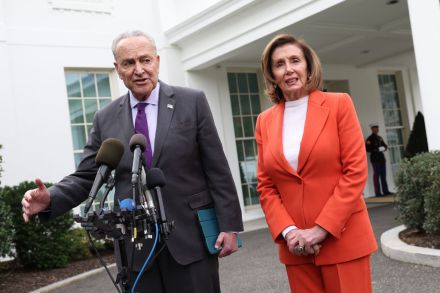
The midterm bloodbath conservatives were salivating for devolved into, at best, a red tide. The Democrats held the Senate and have only a seven-seat deficit in the House. Senate Majority Leader Chuck Schumer is now hoping to grant citizenship to every warm body in the country and perhaps even others on their way here, while Senator Elizabeth Warren is more determined than ever to cancel the student debts of millions of bankrupt liberal arts majors. And an emboldened President Biden is threatening to run for re-election, whether anyone wants him to or not. But amidst all the liberal revelry lies an uncomfortable, little-reported fact: Democrats lost the House popular vote by three points. Remember the popular vote? The popular vote!

Meet the Navajo who wants Native Americans to vote Republican

From our US edition

How well Republicans fared this time around with Native American voters is hazy. Brookings reports that Native Americans “remained solidly Democratic in their voting preferences in 2022, though slightly lower than we observed in 2020.” The Washington Post, meanwhile, reports that support from Democrats’ “diverse voter base… slipped across the board,” and “a majority of voters who are American Indian or Alaska Native favored Republicans this year.” Regardless, Native American voters have always been a tough demographic for Republicans to crack.

How ballot harvesting could save elections

From our US edition

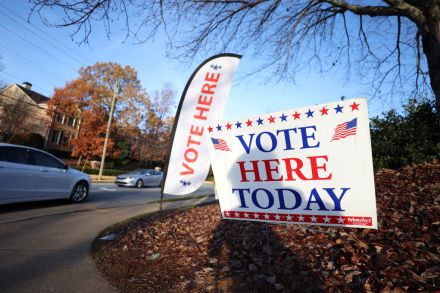
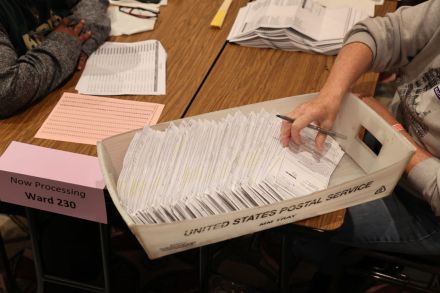
“Ballot harvesting.” To some, it’s a creepy term, conjuring images of hulking party machines plowing through passive fields of citizens, threshing their votes and delivering them to the ballot box. To others, the whole thing seems practically a conspiracy theory — a catch-all for sore losers who can’t understand how voters could have rejected their team. Feelings aside, ballot harvesting is a reality for much of the country. In twenty-seven states, your ballot can be returned by someone other than you. Further, only twelve of those twenty-seven have any limit at all on the number of ballots a person can turn in, meaning an eager harvester can show up with dozens or hundreds of ballots.

ballot harvesting

Joe Biden is the phantom of the Potomac

From our US edition

The day after the election last week, Roger Kimball posted a column here at The Spectator World acknowledging that he had no explanation for the failure of the vaunted red wave to sweep in from the sea. I had no explanation either, and still don’t after six days of ruminating on the question. Nevertheless I am forming a couple of tentative theories, in however provisional a way. Early this morning, I received a post from one Sasha Stone — a Substack writer previously unknown to me — titled “Joe Biden: The Man Who Wasn’t There.

Our leaders will learn nothing from these elections

From our US edition

Elections are an opportunity for us to deliver messages to political leaders most of us will never meet. We can’t send Donald Trump a text, nor can we talk about inflation over an extravagantly expensive Jeni’s ice cream cone with Joe Biden. The best we can do is to vote and hope that in our collective numbers we can make ourselves clear. Yet early indications are that the leaders of both parties are poised to learn absolutely nothing from the midterm elections. Let’s examine some of their delusional reactions. The White House hasn’t commented on whether Joe Biden played the recent $2 billion Powerball drawing (which CNN recently accused of being systemically racist), but if he didn’t buy a ticket, he should have.

democrats

Time for the GOP to call out Democrats’ primaries meddling

From our US edition

If there is one lesson the Republican Party needs to learn from this year’s elections, it is that fringe politics and conspiracy theories are not popular. The GOP lost independents by three points to Democrats, a fatal statistic for any midterms. Poor candidate quality, a problem Senator Mitch McConnell pointed out to many Republicans’ chagrin, lost the party winnable seats across the country. The Democrats played a small part in this result through their cynical support for far-right candidates in Republican primaries who they suspected (correctly) would be easier to beat in November. Through various PACs, Democrats spent around $53.275 million to elevate 13 extreme Republican candidates, six of whom won their primaries. All six lost in November.

What I learned making calls for Democrats and Republicans

From our US edition

I’m a registered Republican in Florida yet the only email offer I received to be a campaign volunteer this season was from the Democrats. Is this a function of Google subverting my Gmail inbox or Republican dysfunction? I have no idea, but I was surprised to get a message on November 4 from “Official Democratic Headquarters” asking me to make phone calls on behalf of Democratic candidates. “With so much on the ballot this Tuesday — from Social Security and Medicare to reproductive freedom and even the future of our democracy — we need all hands-on deck to help Democrats win across the country,” the message read.

The winners and losers of the 2022 midterms

From our US edition

In every election, there are the winners and losers, but there are also winners and losers away from the ballot box, which oftentimes are more important and have a longer tail than the vote-getters. In the 2022 midterms, here are the winners and losers as I see them. Loser: Donald Trump Well, this one is obvious. The former president weighed in with all his political energy behind multiple candidates in this cycle, particularly in divisive primaries and statewide races where he often chose outsiders over more experienced candidates. The Trump fatigue factor was clearly a problem this time around, with his choices in some races utterly rejected by voters.

raphael warnock barack obama

Why didn’t Democrats pay a price for their extremism?

From our US edition

The modern political pundit is a voice in the wilderness, a self-styled beacon of truth against a pampered and bought-off establishment. Yet to cut against the trend: I was wrong about last night's midterms. I thought it was going to be a Republican rout. Even after the Dobbs decision came down and Democrats saw a boost in the polls I still didn't think abortion would ever trump inflation and crime in the minds of voters. And while 2022 didn't see a blue wave, it sure didn't see a red wave either. Instead the scene this morning looks a lot like the status quo. If current vote totals hold, then the Senate will remain 50-50 with Kamala Harris breaking the tie, while Republicans haven't flipped enough congressional seats to retake the House.

Democrats’ last gambit: a corporate windfall tax

From our US edition

Inflation continues to be the economic story of the day. While Democrats try to divert attention to the job market, and many Republicans seem more interested in appealing to “gut feelings” on issues like crime, the latest polling shows that rising prices remain top of mind for most voters. To the extent that the Biden administration is talking about inflation, it’s generally been to downplay the latest numbers (at least when not accidentally highlighting it with ill-fated tweets that take credit for historically high Social Security cost-of-living adjustments). But there is another talking point that some Democrats are taking as an alternative: big corporations are to blame, and windfall taxes are the solution.