Decadence

What a rabbit hole this film takes you down

Madfabulous is a biopic of Henry Paget, the fifth Marquess of Anglesey, who was probably mad and definitely fabulous. His prodigalities in jewels and clothing were enormous. He perfumed his automobile so it belched violets. He was partial to wearing women’s clothing. He set up his own theatre company to showcase his ‘butterfly dance’. Needless to say, he burned through his family’s fortune in a few short years. How could all this not be wonderful on screen? Who doesn’t wish for an automobile belching violets? Alas, the film leans towards the pedestrian but, still, it will send you down a most satisfying rabbit hole. Look him up. The spit of Frank Zappa, right? And this is the late 1800s we are talking about. Respect.
A portrait of the fin de siècle in all its morbid decadence

Everyone I have met who has read Belchamber, Howard Sturgis’s novel of 1904, would endorse Edith Wharton’s judgment that this was a book which was ‘very nearly in the first rank’. I can still vividly remember the week – half a lifetime ago – when my wife and I discovered the little blue World’s Classics edition in a secondhand bookshop and were lost to the world for days. It is Henry James with the gloves off – in some ways quite unbearably vivid. Country house adultery and the sexual mores of London society during the 1890s are upsettingly, even crudely, laid bare. ‘Sainty’ the English aristocrat, an aesthete whose favourite pastime is knitting, fails to satisfy his coarse-grained wife, who provides him with a baby even though the marriage is, of course, unconsummated.

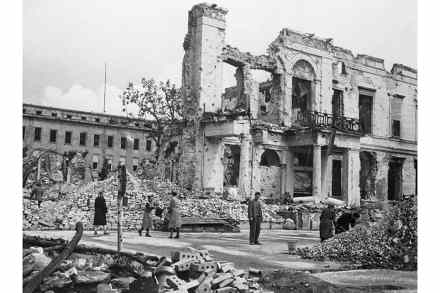
Berliners were punished twice – by Hitler and by the Allies

‘Nationalism is an infantile disease. It is the measles of mankind.’ Albert Einstein’s deft avoidance of the question put to him in 1929 – whether he considered himself a German or a Jew – was prophetic of what would happen to his country in the following decade. He was just one of the many stars of Berlin, Europe’s dazzling, decadent centre of the arts and culture, whose spark would be dimmed or extinguished by Adolf Hitler. Capturing the history, people and spirit of Berlin, arguably the beating heart of Europe, can be a tricky proposition, as I know. Sinclair McKay has wisely kept to analysing the city through the prism of the last century – or at least from the end of the Great War to the end of the Cold War.

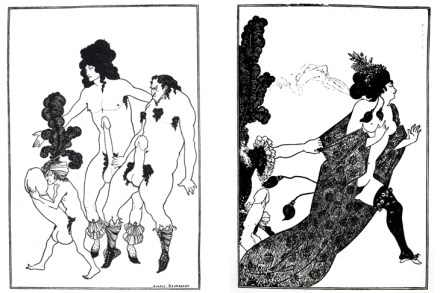
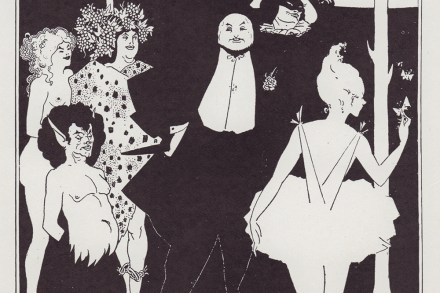
The gloriously indecent life and art of Aubrey Beardsley

Picture the young aspirant with the portfolio of drawings pitching up nervously at the eminent artist’s studio, only to be turned away at the door by a servant; then the master catching up with him, inviting him in and delivering the verdict on his portfolio: ‘I seldom or never advise anyone to take up art as a profession; but in your case I can do nothing else.’ Within two short years of this fairy-tale meeting in the summer of 1891 between Edward Burne-Jones and the 18-year-old Aubrey Beardsley, the self-taught insurance clerk who had fallen under the Pre-Raphaelite spell had turned himself into the most talked-about artist in London.