David davis

Betraying Brexit: the revolt of the elites against the people

From our UK edition

Why is everyone so chilled out about the threats to Brexit? Why isn't there more public fury over the plotting of lords and academics and experts to stymie Brexit and thwart the will of 17.4m people? In all the years I’ve been writing about politics, I cannot remember a time when democracy has been treated with as much disgust, with as much naked, Victorian-era elitism, as it is being today. And yet we’re all bizarrely mellow. We’re going about our business as if everything is normal, as if the elites aren’t right now, this very minute, in revolt against the people. We need to wake up. Every day brings fresh news of the revolt of the elite, of the march of the neo-reactionaries against the mandate of the masses.

Three key tests for any Brexit deal

From our UK edition

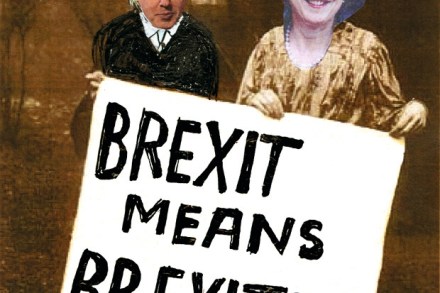
‘Brexit means Brexit’ is one of the most brilliant political soundbites of recent times. It worked wonders for Theresa May during the Tory leadership contest. It showed that she didn’t intend to ignore the referendum result — that would have been politically suicidal — but the phrase is essentially meaningless. Brexit could mean many things. The question of what it actually is will define British politics for the next five years at least; it will be no surprise if we are still arguing about it in a decade’s time. At its most basic, Brexit means leaving the European Union. But the real debate is going to be about how the United Kingdom does that and what its relationship with the EU will be afterwards. May has, understandably, kept her options open.

I was caught smoking a rollie in Chevening. What will Boris & co get up to?

From our UK edition

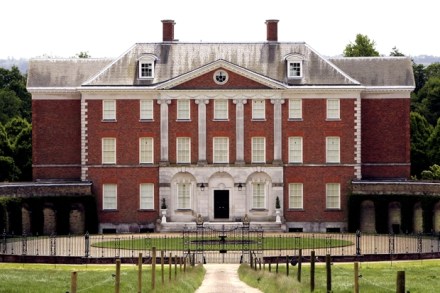
Chevening, the stately home in Kent henceforth to be shared by David Davis, Liam Fox and Boris Johnson — and in a manner which hopefully provides the inspiration for at least one West End play — is a lovely house. I was last there 20 years ago when my father, as Foreign Secretary, had the use of the place. I had a ponytail at the time, and dressed like a hobo. My strongest lasting memory is of two policemen with sub–machine guns catching me smoking a rollie behind a bush. My next strongest is of my first trip there, in the hot, hot late summer of 1995. We wandered the grounds, my sister and I, awestruck and finding things. She thought we might find a tennis court; it took us half a day. There was a boating lake, a maze, an ancient disused kitchen.

Enjoy the honeymoon, Theresa. It won’t last

From our UK edition

Theresa May has been keen to stress that she doesn’t want this country or her government to be defined by Brexit. In her first week as Prime Minister, she has moved quickly to show that she isn’t going to be continuity Cameron. Her reshuffle made the cabinet less posh and more suburban than her predecessor’s. She has suggested that grammar schools might be on the way back, and national-interest tests could be introduced for foreign takeovers. Things are changing fast. May — and those around her — are modernisers. It’s just that they feel the previous modernisation was wrong.

Theresa May has just shown she really is serious about Brexit

From our UK edition

‘Brexit means Brexit’ has been Theresa May’s message since she started running for the Tory leadership. But Brexit could mean a whole variety of things. For example, a Norwegian-style deal with the EU would, technically, be ‘Brexit’. But now, Theresa May has shown real intent. She has demonstrated that she really is serious about this. She has appointed three leavers to the key Brexit-related jobs in government. David Davis will be Secretary of State for exiting the EU, Liam Fox gets the International Trade job and Boris Johnson the Foreign Office. The David Davis appointment is particularly striking. He resigned, unexpectedly, from David Cameron’s shadow Cabinet.

Row about BCC boss shows how careful Cameron must be with his party

From our UK edition

Conservative eurosceptics are trying to hammer Number 10 on the suspension and resignation of British Chambers of Commerce Director General John Longworth over his comments about the EU referendum. David Davis has announced that he is putting in FOI requests to Number 10, Number 11 and the Business Department for details of conversations between ministers, officials or advisers and the BCC. It is unlikely that these requests will yield very much, but Davis is presumably sending them in order to make a statement about Longworth’s resignation and to keep up the pressure on a story that has been running for a few days now.

Tory MPs to push ministers further on snooping bill

From our UK edition

Tory MPs believe they have sufficient numbers of would-be rebels to be able to amend the government’s Investigatory Powers Bill, which was published yesterday. Coffee House understands that there are already around 10 Tory MPs who would be happy to join forces with Labour to change key sections of the legislation on the authorisation of interception warrants, and on the level of detail on someone's internet history that is available to intelligence services and the police. David Davis, the Tory MP who tends to lead the charge on civil liberties matters, is concerned that a number of the points set out by the joint committee that scrutinised the Bill when it was in draft form have still not been addressed now that it has been published.

PMQs: Why won’t Corbyn address the Tory EU divide?

From our UK edition

David Cameron coasted through another PMQs today. Jeremy Corbyn asked about childcare but his questions were too long and unfocused to trouble the Prime Minister. It does seem odd that Corbyn doesn’t even dare approach the Tory split over the EU. He could surely have made something of IDS calling the government’s paper on the alternatives to EU membership a ‘dodgy dossier’? David Davis asked Cameron, after Bernard Jenkin failed to turn up, whether he would get the HMRC to publish its figures showing how many NI numbers issued to EU nationals are active. This would show whether the official immigration figures are significantly undercounting the number of EU migrants coming to Britain to work.

Len McCluskey uses Tory rebel David Davis to attack trade union bill

From our UK edition

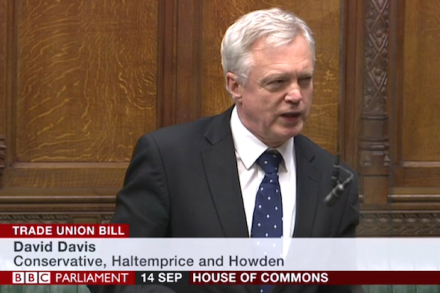
The Labour conference is currently debating a motion on the Trade Union Bill, which Shadow Business Secretary Angela Eagle made clear in her speech that the party will oppose. It gave Len McCluskey a chance to give his traditional pre-Shadow Chancellor conference speech, though this year the Unite leader didn't need to include any pleas to the Labour leadership to listen to him. Instead, he focused all the fire of his typically impassioned and forceful speech on the Tories. He suggested that the legislation curbing the powers of trade unions and their abilities to strike was more fitting for a fascist government. The Tories will be quite used to his strong rhetoric, but what will really irritate them is that McCluskey quoted David Davis' opposition to many of the measures in the Bill.

Shaker Aamer to be released: Jeremy Corbyn and the Daily Mail can rejoice together

From our UK edition

Shaker Aamer, the last British resident held in Guantanamo Bay, is to be released, the White House has announced. Aamer is alleged to have led a unit of Taliban fighters and have plotted with Osama Bin Laden, but he has never been charged or been on trial. His case is one that David Cameron has raised in discussions with President Obama, and one the Daily Mail and Mail on Sunday have been pressing for a good while too, on the grounds that it is indefensible to lock someone up since 2002 without charge or trial (the Mail’s argument has always been that he may be a ‘very bad man’ but that the evidence of him being a very bad man should be discussed and proven in a court of law, something we tend to lecture other countries on).

David Davis: Labour has to accept issues with trade unions monopolies

From our UK edition

David Davis has one of the few Conservative opponents of the Trade Union Bill. The second reading of the bill is currently being debated in the Commons and the former home secretary popped up to clarify his position. After acknowledging that his public comments on the Bill had helped Labour — likening parts of it to something under General Franco’s Spanish dictatorship — Davis said the opposition had to accept that strikes can have a harmful impact on the public: ‘There is an issue when a monopoly – it doesn’t matter if it’s a private sector monopoly or public sector monopoly – goes on strike. The victim then is the public. It’s not the workforce because they tend to get their money back through overtime.

Ministers should not push ahead with English votes for English laws next week

From our UK edition

The first thing that needs to be said about the near-universally panned proposal for English votes for English laws we debated in the Commons this week is not, ‘why the rush?’ but ‘where’s the seriousness?’ If we want to have a constitutional settlement to a problem which the PM and Chris Grayling see as being such a large one, we need to arrive at a solution that’s going to stick. Going about it the way the government currently intends to is not going to end up with a viable, long-term answer. And Tory MPs like David Davis who have made this point are quite right about how counter-productive rushing through EVEL is liable to be. It’s why my party is so opposed, but unfortunately there are plenty of other reasons too.

A small majority means big challenges

From our UK edition

In ancient Rome, when a general rode in triumph through the city, a slave would stand behind him whispering into his ear, ‘Remember you are mortal.’ Today, there is no shortage of people volunteering to make the same point to David Cameron. First, there are Tory backbenchers with long-standing grudges who are already making clear their desire to cause trouble. David Davis, the man Cameron defeated in the leadership contest a decade ago, didn’t even wait to be sworn in again as an MP before he started warning of rows to come over plans set out in the Tory manifesto to limit the powers of the European Court of Human Rights.

Exclusive: Nigel Farage doesn’t want to lead the Out campaign

From our UK edition

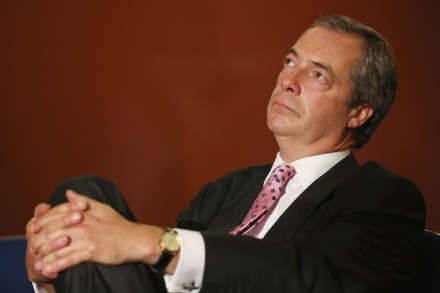
Nigel Farage has told The Spectator that he doesn't want to lead the Out campaign come an EU referendum. In an interview, he said, 'It needs a figurehead and I'm a warrior not a figurehead.' Farage believes that if Ukip win the European Elections then a referendum will be inevitable. He says that come the referendum, he will play his part 'I'm a fixed bayonet man, albeit that I don't see myself as a private. But I see myself leading a division into battle, that's where I fit in.' The Ukip leader wants someone who 'someone who has been very big in British politics' to take charge of the No campaign, though Farage doesn't give any clue as to who that person is.

You’ll regret not having a Human Rights Act when a left-wing government returns

From our UK edition

In today’s Guardian, Matthew D’Ancona warns that David Cameron may face a successful rebellion from the 'Runnymede Tories' if he tries to repeal the Human Rights Act, led by David Davis. Not only would that be a major blow to his authority, it would make remaining in the EU a less attractive option in the forthcoming referendum. Human Rights experts insist that the two issues are wholly separate, although that’s open to debate. But there’s no doubt they’re politically linked.

What Cicero knew that David Davis doesn’t

From our UK edition

The MP David Davis has lamented that the British seem to prefer laws that protect their security rather than guard their liberty. But the first duty of the state is to protect its citizens. If it could not do that, argued Thomas Hobbes, citizens had the right to disobey. The Latin for state is res publica, ‘the people’s property/business/affairs’, and the Roman statesman Cicero took the view that the res publica was best served by laws whose sole aim was the republic’s ‘security and common interests’ (salus atque utilitas rei publicae). The 17th-century thinkers Hobbes, Locke and Spinoza and 18th-century Americans such as the key republican ‘founding father’ John Adams eagerly took up Cicero’s formulation.

Everyone says they’re Charlie. In Britain, almost no one is | 14 January 2015

From our UK edition

Je suis Charlie indeed. This is the problem with placards — there is rarely enough room to fit in the caveats, the qualifying clauses and the necessary evasions. I suppose you could write them on the back of the placard, one after the other, in biro. Or write in brackets and in much smaller letters, directly below ‘Je suis Charlie’: ‘Jusqu’a un certain point, Lord Copper.’ Then you can pop your biro into your lapel as a moving symbol of freedom of speech. Only a few of the British mainstream -national newspapers felt it appropriate to reproduce the front cover of the latest, post-murder, edition of Charlie Hebdo, which shows the -Prophet Mohammed (PBUH, natch) saying: all is forgiven.

Tories split between rival parties

From our UK edition

David Cameron is holding another one of his parliamentary party meetings this evening to discuss party strategy and rally the troops. Normally these things are quite well-attended, save a few conscientious objectors who think these events are an attempt by Downing Street to undermine the 1922 Committee. But today’s one might look a little quieter, or at least see some MPs slipping out early. The reason is that David Davis is holding one of his very good parties in the ‘naughty corner’ of Portcullis House tonight.

David Davis: Cameron must turn Juncker failure into a tactical advantage

From our UK edition

David Cameron has survived the post-Juncker post-mortem without a Tory grandee briefing against him. This is comforting for the Prime Minister, although he shouldn't assume that he has the full loyalty of his party: it is quite clear that many are simply holding their fire until after the General Election. David Davis, who will again become a dangerous figure in 2015 if Cameron holds onto power, reminded everyone of what the PM has got coming to him when he popped up on the Today programme this morning. Davis said: 'He's had a very, very difficult few weeks to say the least, but what he has to do is turn this into a tactical advantage in the next year or two.

When is a party not a celebration?

From our UK edition

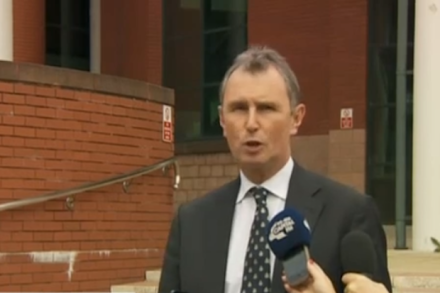
Former Deputy Speaker Nigel Evans stood on the steps of Preston Crown Court last week and said: 'This isn't a time for celebration or euphoria. Bill Roache just a few weeks ago from this very spot said there are no winners in these cases and that's absolutely right. There are no winners. So no celebrations.’ No celebrations. Except for a drinks party hosted by David Davis as soon as parliament returns from the Easter recess. Writing to MPs and chums, Davis said: ‘As you all know Nigel Evans has had the most miserable of years and has suffered what can only be described as the most hideous of injustices. I would like to make his return to the House one in which he is made to feel welcome by as many people as possible.