David davis

Bringing rights back home

From our UK edition

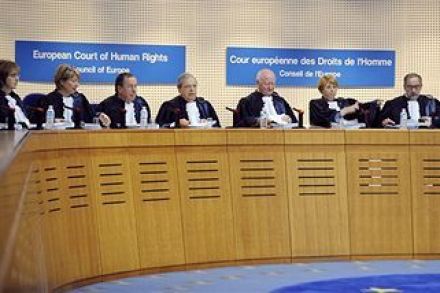
Thursday’s debate on the backbench motion on prisoner voting tabled by Jack Straw and David Davis is set to be a real parliamentary event – a rare occasion where the will of the elected legislature might just make a big difference.  The real news will not be how many endorse the ban, but which MPs – aside from those abstaining Government Ministers and Denis MacShane – choose to bow to Strasbourg.   MPs preparing to speak out against Strasbourg are now armed with a powerful academic case.  A new Policy Exchange report authored by the political scientist Michael Pinto-Duschinsky – Bringing Rights Back Home – outlines how the UK can address the growing problem of conflicts between judges and politicians in human rights cases.
Everyone got the invitation, but the Tories had omitted the dress code

From our UK edition

ConHome has published its latest members’ survey. Its (admittedly unscientific) findings into respondents’ recollections of floating voters at the last election have reopened the debate about why the Conservatives didn’t win. In a combative piece, Janet Daley insists that the results ‘stand the modernising argument on its head’. These findings look more inconclusive to me. 85 percent of respondents were told that the party and its leadership were ignorant of ordinary concerns, supporting David Davis’ insinuations that the party is out of touch with the common man.

DD’s classy intervention

From our UK edition

David Davis’ interview on Jon Pienaar’s show this evening has revived the debate about whether or not it matters how posh the Cameron top table is. Andy Coulson was the most senior person there who understood what it is actually like to work your way up the ladder and with him gone that experience is missing. But what matters far more than the personalities involved is the policy outcomes. As I said in the Mail on Sunday, the most important thing for Cameron to do is to deliver for these voters. To cut their taxes and give them public services that offer them value for money.

Davis and Straw unite against prisoner voting rights

From our UK edition

David Davis and Jack Straw have joined forces to resist the enforcement of prisoner voting rights, an emotive issue bequeathed to the hapless coalition by the previous government. Beside the obvious moral question concerning prisoners’ rights, Davis hopes to open a second front in the struggle over sovereignty with the European Union. He told Politics Home: ‘There are two main issues here. First is whether or not it is moral or even decent to give the vote to rapists, violent offenders or sex offenders. The second is whether it is proper for the European court to overrule a Parliament.’ Unless Davis has confused his articles, his second point is invalid. This decision has nothing to do with the European Court or the European Union.

Control Orders: a pyrrhic victory for the Lib Dems?

From our UK edition

Coalition is a tricky business, full of compromise and connivance. Emblazoned across the front page of the Sunday Times (£) is the news that Control Orders are to be scrapped. A victory for Nick Clegg, we are told, won to nurture wounded Liberal Democrats and preserve the coalition. The Liberal Democrat 2010 manifesto maintained that Control Orders would be abolished and many senior Liberal Democrats have been volubly opposed to Lord Carlisle’s report into Control Orders, which was understood to propose their retention. Certainly, Nick Clegg needs an outright victory on policy.

DD joins the tuition fees rebels

From our UK edition

Now, there’s a Tory rebel too. David Davis has told the BBC that he’ll be voting against the coalition at the end of Thursday’s fees debate. Those Lib Dems who do vote for tuition fees can now expect to be mocked as being to the right of David Davis. So far, there’s no sign of other Tories following DD’s lead. One friend of his fears that his decision to rebel against the government on this issue makes him look like a serial rebel and will undermine the effectiveness of his interventions on the constitutional and civil liberties issues he cares so deeply about it. But I expect DD’s stance will strike a chord with more people than the Tory leadership expect.

Strike out

From our UK edition

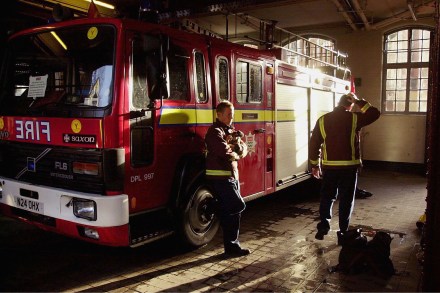
Spark up those Roman candles, the firefighters have called off their strike for today and tomorrow. According to the general secretary of the Fire Brigades Union (FBU), it's all because "we've listened to the concerns about public safety and we were extremely concerned about the capabilities of the private contractors being brought in to cover our strike" – which is awfully thoughtful of them, considering that they previously stoked those "concerns about public safety" by threatening to strike over Bonfire Night. Oh, and they appear to have won some concessions too: the London Fire Brigade will no longer sack any firefighters who refuse to accept contracts that include the disputed shift system.

Out of Control Orders

From our UK edition

The government’s developing a tension headache over Control Orders, and there have been two noteworthy interventions. First, Theresa May lambasted Ken Macdonald. The former Director of Public Prosecutions, who is a now a Lib Dem peer overseeing an independent inquiry into counter-terror legislation, has made clear that he ‘will go ballistic’ if the Home Office retains Control Orders, which it is expected to recommend, in line with the advice of another Lib Dem peer, Lord Carlile. Second, David Davis has described Control Orders as ‘Kafka-esque’, the term used by Chris Huhne on the Politics Show yesterday, and has also said that he will vote against the government if Control Orders are to be maintained.

Ed Miliband calls for humility – now let’s see some

From our UK edition

So Ed Miliband told the Parliamentary Labour Party that he and they need to show humility. He is right, but this is easy to say and much, much harder to do. We shall see whether he has managed it at the despatch box tomorrow when the tackles David Cameron at his first PMQs. The feeling power gives politicians seeps into their bones and they get used to the trappings of deference. Ed Miliband has been close to significant power for most of his adult life, as have many of the people around him.  They need to realise that for a while - about 18 months probably - no one will be seriously interested in what Ed Miliband's vast new team of shadow ministers has to say. The lobbyists have long gone and soon the hacks, once so sycophantic, will start postponing lunches.

David Davis offers his counsel in good faith

From our UK edition

From his roost high on the backbenches, David Davis commands a luminescent eminence that he would not have had if he were a frontbencher. And as the current guardian of traditional right-wing Toryism, his words are clear against the often muddy context of coalition. Talking to the Mail's Andrew Pierce and Amanda Platell, he offers George Osborne and David Cameron some sagacious advice. He joins the chorus, now stalked by Ed Miliband, which urges the government to articulate its growth and recovery rhetoric. ‘We cannot be defined by a purely cuts agenda. If the only message the public takes away from the events of the next few months is one of retrenchment and loss of services, politically at least, we will have failed.

Tonight’s the night

From our UK edition

There's no rest for the wicked. Conservative whips have spent a frantic summer urging Tory opponents of electoral reform to retreat from their opposition. According to Paul Goodman, the whips have been blunt: the government could collapse if its reform bill is defeated tonight. Their scaremongering seems to have had the desired effect. The Financial Times reports: ‘Members of that group told the FT they were likely to advocate not opposing the government now, but supporting amendments at a later stage on the timing and threshold of the referendum in future debates.’ The Mail carries a similar report, with David Davis anointing himself rebel-in-chief and stating that he hopes to ‘get the bill modified to take on board certain things’.

What to do with the defeated?

From our UK edition

One of the challenges facing the next Labour leader will be what to do with Ed Balls. Balls, as he demonstrated in the last few months, has the right mentality for opposition. Labour will need his appetite for the fight in the coming year. But if a new leader makes Balls’ shadow Chancellor, he’ll have a shadow Chancellor whose position on the deficit is simply not going to seem credible to the public; Balls has already said that he thinks the plan Labour went into the election with for the deficit was too ambitious. The Tories are convinced that if Balls is shadow Chancellor, they’ll have the dividing lines they want on the economy. A better department for Balls to shadow would be the Home Office.

David Davis: the coalition hasn’t got a way of negotiating with the Tory party

From our UK edition

I doubt No.10 will be all that charmed by David Davis's comments on Straight Talk with Andrew Neil this weekend, but they should certainly take note of them.  They contain some substantive points about the government's relationship with Tory backbenchers, and points which Davis is not alone in making.  The key passage comes when he discusses the watered-down capital gains tax hike: "I don’t think a victory over [the Lib Dems], I mean, it’s quite interesting, we tried to design this, whatever you want to call it, I don’t know whether it’s a rebellion or a difference of view, to really be a precursor to what’s going to happen over the next couple of years, you know.

Hughes and Davis fomenting rebellion?

From our UK edition

From opposing sides of the coalition's strait, two warning shots have been fired across the government's bows. David Davis has challenged Theresa May’s decision to renew the 28-day detention limit for six months pending a review. And Simon Hughes has declared that he and a like-minded posse will seek to amend ‘unfair’ aspects of the Finance Bill. Neither is an outright revolt. Neither move amounts to what Ed Miliband termed ‘cracks appearing in the coalition’. Both Davis and Hughes remain in support of the coalition agreement – Hughes will ‘support the Budget’, and Davis, to his enormous credit, has made excessive and illiberal detention periods his raison d’être.

David Davis is the darling of the Tory right

From our UK edition

ConservativeHome conducted a poll into prominent, right-wing Tory backbenchers. Unsurprisingly, David Davis topped the poll. 70 percent of respondents hold that David Davis represents their views and 54 percent believe he articulates those views effectively. John Redwood and Daniel Hannan were some way behind as DD’s closest rivals. Davis’s chief weapon is communication. Plain speaking and from a working class background, people easily identify with him; and he expresses an acute intelligence in simple terms, something that John Redwood has failed to do. And whilst Hannan has charisma, Davis has more - the fruit of a decade at the forefront of British politics.

Cameron’s public debate with his backbenchers

From our UK edition

So, did Cameron say anything particularly noteworthy during his interview on the Today programme?  In truth, not really.  Most of the answers were of the "let's wait and see what in the Budget" variety.  The ratio of spending cuts to tax rises: wait and see.  Plans for hiking capital gains tax: wait and see, and so on.   The only answers that weren't determined by the Budget seemed to be his racing tips for the sports bulletin.  You can hear them here. But that isn't to say the interview wasn't revealing.  For much of it, Cameron was quizzed about the objections that David Davis and John Redwood have raised to the planned hike in capital gains tax.

The gathering storm over the 55 percent plan

From our UK edition

There is a massive difference between rebellious talk and actual rebellion. But some of the language surrounding the 55 percent rule has been striking. When I told one senior MP that David Cameron had said on Sunday that he would whip this vote, the MP shot back defiantly, ‘you whip if you want to.’ David Davis’s intervention on the issue on the World at One was particularly significant. Having called the 55 percent rule ‘just a terrible formula for government’ it is hard to see how he can support the measure. It is also hard to imagine that a man who picks his fights so carefully would have marched so far up the hill if he was not confident that he had a critical number of foot soldiers behind him.

Who is missing?

From our UK edition

The Cabinet is taking shape, admittedly with one or two surprises and not all of them good ones. There is still a way to go, even though action has already been taken on the NI increase. I understand that Michael Gove will be education secretary, which obviously leaves the hugely impressive David Laws to find another brief. Work and Pensions is a possibility, a job that has also been earmarked for the equally impressive Philip Hammond. There is a very obvious lack of women – Sarah Teather is highly regarded on the Lib Dem side, probably more so than her counterparts on the Tory side. I’ve heard rumours that she’s possibly headed for Transport or Communities. Though, of course, nothing is certain. So, who has lost out?

The return of David Davis

From our UK edition

The shadow Cabinet were gathering before their meeting at 2pm. One member told me ‘it is looking less like formal coalition now.’ But coalition remains the leadership’s preferred option. Talking to Tory MPs—old and new—this morning, there’s a sense that they would slightly prefer minority government. Though, no-one is planning to blow themselves up if the country does end up with a Tory-Lib Dem coalition. One other interesting development today is that there is a growing expectation that David Davis will be recalled to the colours. Certainly, his return would make Cameron’s top team more accurately reflect the ideological balance of the party.

Grayling’s gay gaffe

From our UK edition

The Tories have weathered Chris Grayling’s gay gaffe. The story could only gain momentum if the papers had gone to town on it. They have not. The Times gives it a couple of paragraphs at the bottom of an inner page and even the Independent and the Guardian relegate it to the interior. The news agenda has gone into election over-drive, but I doubt this story would have had legs anyway, even before his denial. Grayling is no homophobe and whilst he voted for the Equality bill he is right that it should be applied with a soft-touch where the boundary between public and private space is blurred. The State should not dictate how you use your property unless you contravene criminal law by doing so.