David cameron

You can’t spin yourself into authenticity – as Ed Miliband is finding out

From our UK edition

For a politician to draw attention to his own deficiencies is a desperate attempt to curry favour with the electorate that has been tried before with dismal consequences. The most famous case is that of the former Tory leader Iain Duncan Smith who, at his 2002 party conference, addressed the problem of his dullness as a political performer by saying that no one should ‘underestimate the determination of a quiet man’. One result was that Labour backbenchers would raise a finger to their lips and say ‘shush’ whenever this croaky-voiced man was speaking in the House of Commons.

David Cameron can’t afford any more slip-ups

From our UK edition

From now until September 18th, the Scottish referendum will rightly dominate national politics. Tuesday night's debate between Alistair Darling and Alex Salmond is the Yes campaign's last and best chance to gather the momentum it needs to pull off an improbable victory. But, as British Election Survey data shows, the result of the referendum is not a foregone conclusion. If the ‘undecideds’ keep breaking the same way, the result will be No 53.6 per cent, Yes 44.6 per cent. This is too close for comfort. But if Scotland votes No, attention will quickly shift to next May's UK election. It is a sign of how speeded-up our politics has become that David Cameron's political career could be over two years before his 50th birthday.

Podcast: The lure of the crowd, anti-Semitism and Cameron’s uncertain future

From our UK edition

Hell, as one of Jean-Paul Sartre’s characters said, is other people. Unless, that is, you happen to be British and born after about 1980, in which case hell is the opposite: being alone for more than about five minutes. In this week’s View from 22 podcast, Ross Clark looks at the rise of crowd culture. We have succumbed to the lure of the crowd, he says. Lara Prendergast suggests social media is to blame. In this week’s Spectator, Melanie Phillips argues that anti-Israel protests over the Gaza war have convulsed Europe in the worst scenes of open Jew-hatred since the 1930s. The silence from the political class in the face of this is appalling.

David Cameron hints at tax cuts for Middle England

From our UK edition

The Telegraph’s Christopher Hope tweets the news that David Cameron is open to raising the threshold for the 40p rate: NEWS! PM: "I would love to raise the 40p tax threshold, I understand the problem, but would have to look at the books before doing it" — Christopher Hope (@christopherhope) July 30, 2014   The Telegraph has been pushing for this change for some time. Cameron has, in political terms, flashed a bit of thigh at Middle England. One of the strange features of this parliament is how little credit the government gets for keeping taxes low. This sense was reinforced recently by one of Lord Ashcroft’s polls, which found that voters thought that they would pay less tax under Labour. This is errant nonsense, as this morning’s revelations suggest.

Ukip: David Cameron’s immigration policy is vacuous and cynical posturing

From our UK edition

I have described David Cameron's posturing on immigration today as vacuous and cynical, for that is exactly what it is. Cynical because once again he seems determined to fool the British people into believing that we can seriously have our own immigration policy whilst remaining inside the EU. We can't. Vacuous because his policy solution seems to consist of tinkering around the edges of the problem instead of dealing with it head on. Under his government, net migration levels per annum remain in the hundreds of thousands, with citizens from twenty-seven other nations allowed to come and go as they please. What Britain really needs is a tough, solid, Australian-style immigration system. One which is firm but fair and that can control numbers.

David Cameron aims at Ukip and attacks Labour with immigration clamp-down

From our UK edition

The government has unveiled a set of measures to curb immigration. David Cameron has written an article in the Telegraph about what the government has already achieved and what it plans to do now. He has three themes. 1). To tackle illegal immigration. Cameron says that the government has shut more than 750 of ‘bogus’ colleges. He wants to go further: colleges will lose their licenses if 10 per cent of their pupils are refused visas. Cameron also repeats some of the provisions of the Immigration Act 2014. From November, for example, a system will be imposed to ensure that landlords have to account for the immigration status of their tenants.

Betty Boothroyd and peers set to rebuke Cameron over Baroness Stowell’s exclusion from Cabinet

From our UK edition

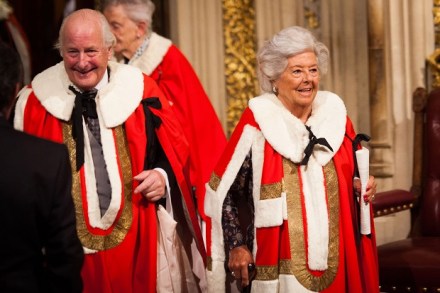
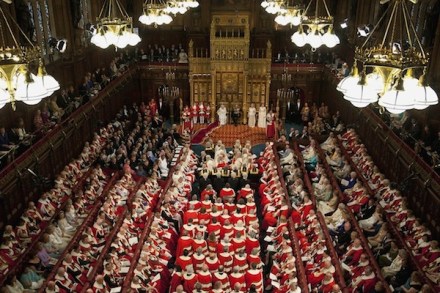
Update: In a sign of the strength of feeling in the Lords on this matter, Boothroyd's motion rebuking Cameron passed by 177 votes to 29. This foolish, unforced error now promises to make Cameron's life more difficult than it needs be between now and March next year.   What should worry Cameron most is how cross the peers, including the Tories, are about the whole situation. A considerable number of Tory peers, including some you would view as Cameron loyalists, are intending to turn up and vote with Boothroyd tonight. This makes a government defeat more likely than not. Ministers, though, seem surprisingly unbothered about the prospect of losing this vote. I suspect that this is because the motion isn't binding.

Libya is imploding. Why doesn’t Cameron care?

From our UK edition

The US has said it has temporarily evacuated its staff from the Libyan capital Tripoli over security concerns. Earlier this year Mary Wakefield discussed in The Spectator how David Cameron wasn't paying due attention to the troubles in Libya: A few days ago I went to a talk about Syria; one of those events for the concerned layman, in which a panel of experts give a briefing. Everything sounded depressingly familiar until expert number three piped up: I hear people blame Saudi Arabia and Qatar for the Islamists in Syria, he said, but in fact, they more often come from Libya. The crowd shifted in discomfort. Isn’t Libya done and dusted? Oh no, said the expert, it’s full of al-Qa’eda training camps now, especially in Benghazi.

Call Me Dave still has much to learn from The Master

From our UK edition

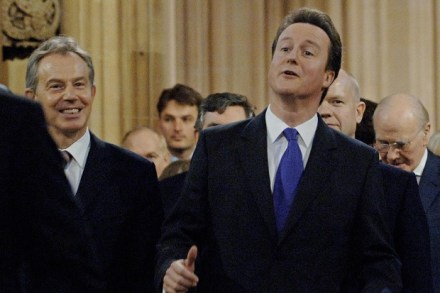
David Cameron and Tony Blair faced identical tasks earlier this week. Both wished to force a reluctant group of back-sliders to adopt a more robust and pragmatic position. Cameron wanted Europe to toughen up against Putin. Blair wanted Labour to toughen up against Cameron. Blair’s opportunity was the 20th anniversary of his enthronement as Labour’s leader. Oddly enough the chief beneficiary of that leadership – the Labour party itself – mysteriously forgot to give its messianic champion a chance to reflect on his methods. Instead, he offered his blueprint for further Labour victories to the think-tank, Progress. Blair likes to write in the early morning, in long-hand, seated at a window.

Our spies have stopped chasing subversives. That’s why we’re in so much trouble

From our UK edition

Peter Clarke’s powerful report on the Trojan Horse affair in Birmingham schools is confirmation of the weakness of David Cameron in demoting Michael Gove. When Mr Gove appointed Mr Clarke to conduct the inquiry, there was execration — even from the local police chief — about how wickedly provocative it was to put a policeman with counter-terrorism experience into the role. But Mr Clarke was just the man and his inquiry has swiftly and efficiently uncovered serious problems of Islamist bullying and infiltration. Too late to reap a political reward, Mr Gove is vindicated. The next time this problem arises — and there undoubtedly will be a next time in another British city — what minister will have the courage to do what he did?

The MH17 disaster

From our UK edition

Home David Cameron, the Prime Minister, told Parliament that President Vladimir Putin of Russia should end his country’s support for separatists in Ukraine, some of whom it had provided with a training facility in south-west Russia. Licences to export arms to Russia were found still to be in place. Theresa May, the Home Secretary, announced a public inquiry into the death of the Russian dissident Alexander Litvinenko, a former KGB officer who died in 2006 in a London hospital after he was poisoned with polonium. Nick Clegg, the Deputy Prime Minister, was criticised by some MPs from rival parties for appearing on television sampling tequila instead of somehow doing something about the crisis. Prince George of Cambridge celebrated his first birthday.

The democratic deficit at the heart of the Human Rights Act

From our UK edition

Dominic Grieve was a worthy attorney-general whose career was helped by this magazine: nine years ago, he was named Spectator Parliamentarian of the Year, beneath the nose of David Cameron, then nearing the end of his successful campaign for the Conservative leadership. But Grieve’s remarks this week, in which he suggested that the Prime Minister would be seen to be as bad as Putin if he pursues proposals to give Parliament ultimate authority over laws in this country, underline why his position as a member of the government had become untenable. One of the few redeeming features of David Cameron’s reshuffle is that it added a certain clarity to our position with the European Court of Human Rights.

Parliament’s next crisis: a dangerous shortage of middle-aged men

From our UK edition

[audioplayer src="http://traffic.libsyn.com/spectator/TheViewFrom22_24_July_2014_v4.mp3" title="James Forsyth and Paul Goodman discuss why so many MPs are leaving the Commons" startat=873] Listen [/audioplayer]The House of Commons is off for the summer. But few MPs and ministers expect to make it through to September without the House being recalled because of the grim international situation. This has been the worst year for the West in foreign policy terms since 1979.

The law’s an ass, obviously

From our UK edition

‘The award of Queen’s Counsel is for excellence in advocacy in the higher courts,’ says the QC appointments page. ‘It is made to advocates who have rights of audience in the higher courts of England and Wales and have demonstrated the competencies in the Competency Framework to a standard of excellence.’ Given that, earlier today, the relatively unknown MP Jeremy Wright, who was recently appointed Attorney General, was sworn in as QC, Mr S suggests adding a few more lines to that description.

Don’t jump to conclusions over the positive drugs test on the Queen’s filly ‘Estimate’

From our UK edition

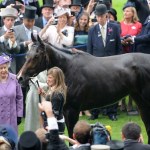
The news that one of the Queen’s horses, Estimate, tested positive for morphine, a banned substance, hit the headlines yesterday evening and unsurprisingly caused a bit of a stir. If the drugs test is confirmed by the British Horseracing Authority then the five year old filly would be disqualified from the 2014 Gold Cup at Ascot in which she came second (and which she won in 2013). She was last night still expected to be racing at Glorious Goodwood on 31st July. Morphine is a painkiller (or a sedative), rather than a performance-enhancing drug, and one that is permitted for use in training, but not in competition. The thing is, morphine is highly unlikely to have affected the performance of the horse at all.

The Trojan Horse affair is about subversion, and only Gove understood this

From our UK edition

Peter Clarke’s powerful report on the Trojan Horse affair in Birmingham schools is confirmation of the weakness of David Cameron in demoting Michael Gove. When Mr Gove appointed Mr Clarke to conduct the inquiry, there was execration — even from the local police chief — about how wickedly provocative it was to put a policeman with counter-terrorism experience into the role. But Mr Clarke was just the man and his inquiry has swiftly and efficiently uncovered serious problems of Islamist bullying and infiltration. Too late to reap a political reward, Mr Gove is vindicated.

Cameron’s Lords mess

From our UK edition

In the last reshuffle, David Cameron made Tina Stowell the leader of the House of Lords. But, astonishingly, he didn’t make her a full member of the Cabinet, giving her only the right to attend. This, understandably, outraged peers; they quite rightly feel that the leader of the second chamber should be in the Cabinet. It also led to jibes that Cameron was paying a woman less to do the same work as a man, her predecessor Jonathan Hill had been a full Cabinet minister and had the salary to go with it. In an attempt to dampen this story down, it was announced that Stowell’s salary would be topped up from Tory party funds. But this, again, angered peers.

Europe split over sanctions against Putin’s Russia

From our UK edition

The European Council has spoken! We must all come back on Thursday after it has considered its approach to fresh sanctions against Russia. The communiqué from today’s meeting of the Council is full of fine ambition: albeit ambition that was agreed on 18 July. We are promised an extended list of: ‘…entities and persons, including from the Russian Federation…who actively provide material and financial support to or are benefiting from the Russian decision makers from the annexation of Crimea or the destabilisation of Eastern Ukraine, and to adopt additional measures to restrict trade with and investment in Crimea and Sebastopol, at the latest by the end of July.

Can the European Union agree a sanctions regime for Russia?

From our UK edition

David Cameron talked tough on sanctions yesterday, suggesting that he had the German and French support. I believe he means what he says and is serious about following through with sanctions. I could even be convinced that France and Germany have hardened their positions to the point where they are genuinely willing to consider ‘stage three’ sanctions (which would hit specific firms and possibly sectors of the Russian economy). However, I remain far less convinced that the EU as a bloc can find a clear and united position – as Open Europe noted with its Dove/Hawk scale the divergences between countries are huge and the motivations for their positions is incredibly varied.

Priti Patel ‘totally up for it’

From our UK edition

Priti Patel, poster girl for the next generation of the Tory right, will be a key face on the airwaves come election time. When the PM offered her a job last week, she confirmed No. 10’s hope that she is a modern voice. After Cameron told her: ‘I’d like you to go to the Treasury, Priti’, she replied: 'Cool, I’m totally, totally up for it.' So much for ‘Yes, Prime Minister’.