David cameron

‘Careless talk costs lives’: Cameron angers MPs as he insists he was ‘misinterpreted’ on EU vote

From our UK edition

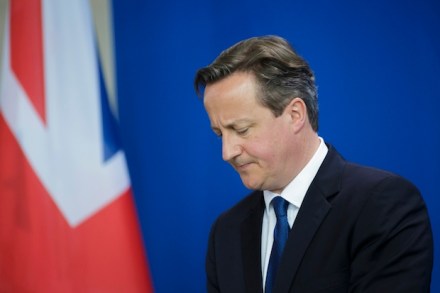
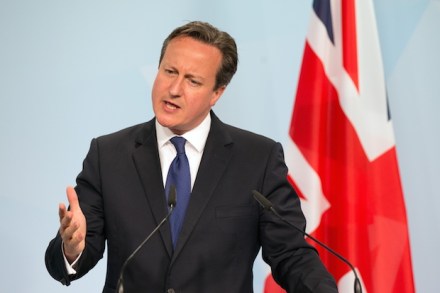
It’s not clear who David Cameron is trying to annoy more: his party or the press pack following him at the G7 summit in Bavaria. But what is clear, at least in the Prime Minister’s mind, is that he has been misinterpreted on the issue of a free vote in the EU referendum. Not over-interpreted, as Number 10 said this morning. ‘It’s clear to me that what I said yesterday was misinterpreted,’ he said, explaining that he was referring to the renegotiation: ‘I was clearly referring to the process of renegotiation. But the point is this. I have always said what I want is an outcome for Britain that keeps us in a reformed EU. But I have also said we don’t know the outcome of these negotiations, which is why I have always said I rule nothing out.
Number 10 rows back on EU vote threat

From our UK edition

So after a few hours of outrage in the Tory party, David Cameron's aides have announced that he didn’t say ministers would have to support his stance during the EU referendum or leave government. Number 10 has clarified the Prime Minister’s remarks, saying they only apply to ministers’ stances during the renegotiation, not the period of campaigning leading up to the referendum.

Even if he wins his EU referendum campaign, David Cameron will be the loser

From our UK edition

I suppose David Cameron had little choice but to offer a referendum on Britain's membership of the European Union. How else could he have held his party together? Indeed, it is possible that he owes some part of his small majority to that promise. Nevertheless, it will all end badly. I think there is no plausible scenario in which it can end well for Cameron. Indeed, it is entirely possible that having begun this parliament with a majority he - or, rather, his successor - will end it leading a minority administration. The most important thing to remember is that perhaps a quarter of his backbenchers actually want the Prime Minister to fail. They have no interest in his cockamamie renegotation strategy.

How David Cameron could still avoid a bitter Tory row on Europe without a free vote

From our UK edition

David Cameron’s indication that his ministers will have to follow the position of the government on the EU referendum or leave the government has caused some consternation in his party. David Davis has just warned on the Today programme that the Prime Minister risks ‘turning a decent debate into a bitter argument’, while the newspapers write this up as a very risky move indeed. Cameron told reporters covering the G7 summit in Bavaria that ‘I’ve been very clear. If you want to be part of the government, you have to take the view that we are engaged in an exercise of renegotiation, to have a referendum and that will lead to a successful outcome.

Why has David Cameron appointed his chum Ed Llewellyn to the Privy Council?

From our UK edition

After the general election, Edward Llewellyn, the Prime Minister’s chief of staff, was made a Privy Councillor. Any member of the Privy Council is addressed as ‘Right Honourable’ and these words well describe Llewellyn’s character, so there is no problem there. But why should an adviser be given this role? If you study the list (which, be warned, takes a long time), you will see that Privy Councillors are almost all MPs (or ex-MPs), peers or judges. This is because they are supposed to be, in some small way, powers in the land, people in their own right, rather than servants of the powerful.

Nigel Lawson: Cameron will hold Tory party together over EU

From our UK edition

Renegotiating substantial change in Britain’s EU relationship is a problem for David Cameron. On the one hand, the Eurozone is facing an unknown challenge with a Grexit on the horizon. But many in the Tory party believe the Prime Minister’s efforts are smoke and mirrors, and he won’t achieve the change they crave. Michael Gove is one, and Nigel Lawson is another. The Tory grandee spoke to Newsnight about what he expects from the renegotiations. Not much, it seems: ‘I think that the odds are we will see a repetition of what happened in 1975. I think it's likely that the changes that David Cameron will secure will be inconsequential, of no significance at all.

Diary – 4 June 2015

From our UK edition

For the first time since the terrorist attack on the Sri Lankan team six years ago, a Test match side has visited Pakistan. The Zimbabwe tourists, playing at the same Lahore stadium where the attack was mounted, were greeted with wild enthusiasm. Less well reported has been the fact that a team of English cricketers (including myself and Alex Massie of this parish) has been touring the Hindu Kush. We played in Chitral, Drosh, Ayun, Kalash and Booni. In these mountain areas many of our opponents were using pads, gloves and a hard ball for the first time. Still, we were overwhelmed, rarely losing by fewer than 200 runs in games which never exceeded 30 overs.

Brain fade

From our UK edition

‘Aa-aah,’ groaned my husband, ‘we fade to grey.’ He had never been much of a Young Romantic, even when Visage was vigorous. I had merely told him that Oxford Dictionaries have added to their online collection the phrase brain fade. In April, when David Cameron said that he supported West Ham, having previously assured the world he followed Aston Villa, he excused himself by saying: ‘I had what Natalie Bennett described as a brain fade.’ What Ms Bennett had said, after a grim radio interview in which she could not explain Green party policies, was: ‘One can have a mental brain fade on these things.

The Spectator’s Notes | 4 June 2015

From our UK edition

We in the West all hate Sepp Blatter, so we pay too little attention to the manner in which the Fifa executives were arrested. For what reason, other than maximum drama, were they all ensnared in a dawn raid on their hotel in Zurich? Are we really satisfied that the US authorities should behave in this way outside their jurisdiction? What is left of Swiss independence if they act thus under US pressure? Can we be confident that this very fat man called Chuck Blazer really exists, or has he been invented by Hollywood? In America, lawyers are more like political players or business entrepreneurs than the sub-fusc professionals of the English tradition. Should we welcome their global reach?

The march of the ‘yes’ men

From our UK edition

Forty years ago this week, Britain voted to remain part of the European Community. That remains the only direct vote on the European question that the country has had. The promise of a say on the EU constitution was shelved when that document metamorphosed into the Lisbon Treaty, and the ‘referendum lock’ that the coalition introduced has not yet been triggered by a transfer of power to Brussels. So it’s a historic process that the government will begin on Tuesday, with the first Commons vote on its referendum bill. Straight after the election, there was much speculation that the government would opt for an early referendum on EU membership, rather than leaving it until the 2017 deadline set in the Tory manifesto.

Cameron has a PMQs trump card – he won the election

From our UK edition

The first PMQs after an election victory is a moment to savour for a Prime Minister. He knows that the result gives him a trump card he can play again and again. So, it was unsurprising that Harriet Harman made little progress against Cameron. He treated it as a gentle net session, meeting each question with a slightly more aggressive and expansive answer. He did, though, seem slightly discombobulated by Ed Balls’ absence. Early on he made a joke about Balls’ defeat and then looked over to where Balls used to sit to drive the point home, but Balls – of course — wasn’t there.

Here’s why the Tories convinced one million BME voters to support them

From our UK edition

One of the funnier moments of the election involved Ed Miliband assuming that a turban-wearing Sikh gentleman he met on the campaign trail would, naturally, be helping him get the Sikh vote out for Labour.  In fact, the man was a Conservative parliamentary candidate. It seemed to exemplify the extent to which Labour assumed ethnic minorities would vote for them – but all that is changing. New research from British Future shows that 1 million BME voters helped keep David Cameron in Number 10. This means that one in three minority ethnic voters supported the Tories, which is the party's best result to date.

David Cameron is putting himself in the firing line on immigration

From our UK edition

One of the important but unglamorous adjustments that the Conservatives have had to make in majority government is the structure of government itself. It’s the sort of thing that was particularly important under the Coalition, as Nick Clegg had managed, rather cannily, to gather a great deal of power for himself on powerful but unheard of Cabinet committees. Now there is no Nick Clegg, and Oliver Letwin has taken the former Deputy Prime Minister’s place on the Cabinet Committees where he wielded unseen power by blocking Tory policies.

Rachida Dati MEP interview — David Cameron’s unlikely French ally in Brussels

From our UK edition

The last time former French Justice Minister and MEP Rachida Dati had the attention of the British press she was embroiled in a combination of sex, politics and intrigue as only the French establishment could concoct. Now she’s back as an unlikely, but potentially vital, centrepiece to the Conservative leadership’s plan to keep Britain in Europe. 'David Cameron has been brave in basically saying: we want the British people to feel comfortable in the EU, but we want them to have a "better deal"' Dati opines. We’re sat in the grandly gothic surroundings of London’s St Pancras station, and the last staging post en-route back to Brussels feels a suitable place to discuss Britain’s place in Europe.

Cameron the cautious PM clashes with May and Gove over human rights

From our UK edition

David Cameron is by instinct not a radical leader. We have another example of his preference to keep the boat steady in today’s Telegraph, which reports the Prime Minister has decided Britain won’t quit the European Convention on Human Rights, much to the chagrin of Theresa May and Michael Gove. Although the Conservative manifesto promised to make the British Supreme Court ‘the ultimate arbiter of human rights matters in the UK’, it did not explicitly mention leaving the convention. Gove and May believe that leaving the convention — as well as a much-discussed exit from the European Court of Human Rights — is the only way to fulfil this pledge. But the Prime Minister disagrees.

The two tightropes that Cameron must walk on Europe

From our UK edition

David Cameron has to walk two tightropes on Europe, and at the same time too. The first is to negotiate a deal with other European leaders that satisfies the bulk of his Euro-sceptic party. If this was not difficult enough, simultaneously Cameron has to show voters that the European question isn’t consuming all of his government’s energies. For despite its importance, it still rankles relatively low on the public’s list of priorities. To address the latter point, I’m told that Cameron will make a major domestic policy announcement in the week of every EU summit in an effort to show that he is not taking his eyes off the home front.

The Europhiles need to act soon — or lose momentum to the sceptics

From our UK edition

Who will speak up for Britain’s relationship with Europe? Even those abroad have noticed that the recent talk from the government and pressure groups has all been tinged with Euroscepticism. During David Cameron’s visit to France yesterday, the French foreign minister Laurent Fabius said he was unhappy with this attitude: ‘I find this process quite dangerous … The British population has got used to being repeatedly told: ‘Europe is a bad thing’, and the day they are asked to decide, the risk is that they will say well you told us: ‘Europe is a bad thing’.

Redefining aid

From our UK edition

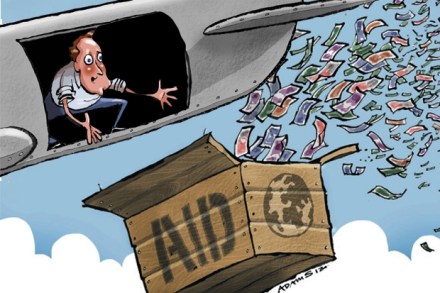
In this week’s Queen’s Speech, the government promised as usual to cut red tape for businesses. But David Cameron is remarkable in his enthusiasm for simultaneously wrapping his own government in red tape. He has proposed a law to prevent the Chancellor raising rates of income tax, and in one of the last acts of the coalition he pushed through a law which commits British governments for ever after to spent at least 0.7 per cent of Gross National Income (GNI) on international aid. There is little chance of the Prime Minister failing to meet his self-imposed spending target. Civil servants at the Department for International Development (DfiD) have proved themselves to be more than equal to the task of shovelling money in the direction of developing nations.

Podcast: defeating Isis, the Queen’s speech and Cameron’s EU negotiations

From our UK edition

Defeating Isis is a task that neither America nor Britain are particularly keen to take on. In this week’s View from 22 podcast, Andrew Bacevich and Douglas Murray discuss what Western countries can realistically do to take on the group and which countries America and Britain should work with. Should Iran be considered a potential partner? And even if America was more keen to take action, would it be successful? Isabel Hardman and James Forsyth also discuss this year’s Queen’s Speech and the government's legislative agenda for the next year. Was it a very Tory speech, or does it show that David Cameron is sticking to the centre ground?

Cameron’s EU rollercoaster

From our UK edition

[audioplayer src="http://rss.acast.com/viewfrom22/defeatingisis/media.mp3" title="James Forsyth and Rob Oxley discuss David Cameron's EU negotiations so far" startat=1493] Listen [/audioplayer]We have just had a very insular general election campaign, but the mood at Westminster is now determined by news from foreign capitals. There was a flurry of excitement last Wednesday when the German finance minister, Wolfgang Schaüble, suggested linking the British renegotiation to eurozone reform.