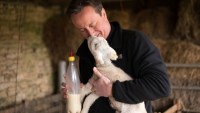
David cameron

Labour should now define itself as in favour of both a referendum and the EU

From our UK edition

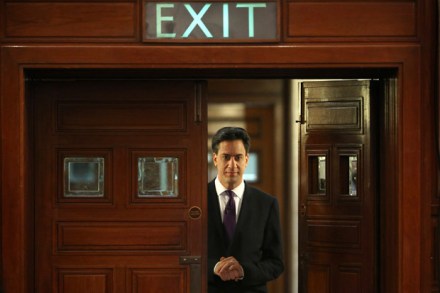
The three main Labour leadership candidates have now all said that they want a referendum on Britain’s relationship with the EU. But the party’s ‘official’ position - that is, the policy it went into the last election with that everyone seems quite keen to disown - is that there should not be a referendum. The party will not have chosen its leader by the time of next week’s Queen’s Speech, even if MPs seem to be making their minds up pretty quickly, and so when the EU referendum bill is published in that speech, the party will need to respond. It would perhaps make sense if that response wasn’t a repeat of the old Miliband policy, given all the candidates likely to succeed him want a referendum.
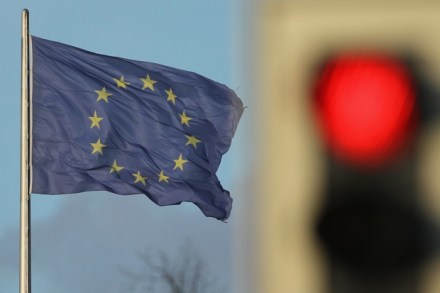
Germans propose linking the British renegotiation to Eurozone reform

From our UK edition

Wolfgang Schäuble’s decision to link the British renegotiation to changes to the governance of the Eurozone is highly significant. In an interview the German Finance Minister told the Wall Street Journal that he has discussed George Osborne ‘coming to Berlin so that we can think together about how we can combine the British position with the urgent need for a strengthened governance of the eurozone’. Schäuble went on to say that ‘the structure of this currency union will stay fragile as long as its governance isn’t substantially reinforced. Maybe there is a chance to combine both goals’. Schäuble’s comments are the most encouragement that the government has had on the renegotiation front.

Steve Hilton talks Cameron, Crosby and Vincecablefreude at book launch

From our UK edition

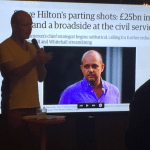
David Cameron's former director of strategy Steve Hilton is in town this week to promote his new book More Human. Mr S was a guest at the book launch in East London where Cameron was serenaded by a violinist while George Osborne and Ed Vaizey raised a glass in celebration of the tome. In his speech, Hilton couldn't help but offer his own verdict on the election, making sure to pay tribute to his former boss: 'I am very happy to say welcome Prime Minister. I think the real reason this book is helpful to the Prime Minister is that he can actually say "see, see what I had to put up with all those years".

What should Jeremy Hunt do next to the NHS?

From our UK edition

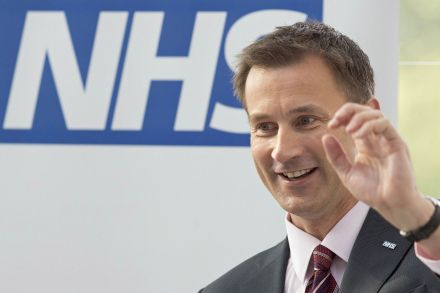
The Tories barely talked about the NHS during the election campaign. It was an area of Labour strength, and one Ed Miliband and Andy Burnham were keen to talk about as much as possible. But now they’re back in with a majority, the Conservatives are keen to start talking about the health service again, and to start trying to erode that Labour poll lead on the issue. David Cameron and Jeremy Hunt yesterday announced their plans for a seven day NHS, but though announcements are always very handy for getting attention, the Tories need to strike a balance between lots of new initiatives and too much meddling that upsets people again. For however many years he has as Health Secretary, Hunt must work out how to fill his time, and how to improve the way voters view the Tories on the NHS.

Does David Cameron have the patience to achieve substantive EU reform?

From our UK edition

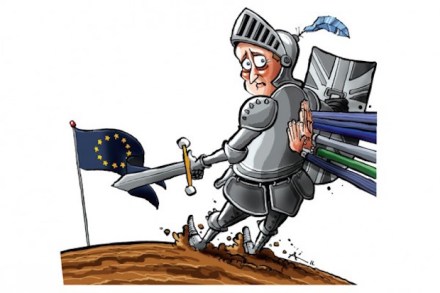
David Cameron is wisely using his first 100 days to tackle the biggest challenge of this parliament head on: the EU referendum. This morning’s papers report that a new referendum bill will be a core part of next week’s Queen’s Speech and Cameron is keen to accelerate the vote to 2016. The logic behind this is sound: by seizing on his fresh democratic mandate, Cameron can hope to convince Brussels he is serious about achieving substantive reforms and his Cabinet now includes those who would definitely consider voting Out (Philip Hammond, Boris Johnson, Sajid Javid). If they decline to play ball, then it’s goodbye to Blighty. This strategy all hinges on whether Brussels will listen.

Obama gets personal on Twitter. Will Cameron follow suit?

From our UK edition

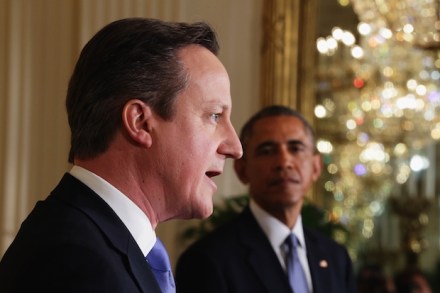
With an increasing number of Twitter accounts for politicians and celebrities run by staff rather than the subjects themselves, the PR-y tweets can often make for a dull read. So Mr S is happy to report that President Obama has set up his own personal Twitter account today. Obama, who already has an account run by Organizing for Action staff, will supposedly be behind any tweets on the personal account: https://twitter.com/POTUS/status/600324682190053376 Surely it's time for David Cameron to follow suit? If he does wish to, Mr S urges him to hurry. Someone has already registered the UK equivalent @PMOTUK (Prime Minister of the United Kingdom). https://twitter.

The ‘backbenchers’ champion’ is back

From our UK edition

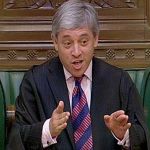
John Bercow has just been re-elected unopposed as Speaker of the House of Commons. Those who had been hoping to get rid of Bercow decided not to pursue this to a vote this week, and so he is back in the chair. In his speech, he cracked a joke at the expense of Labour, saying that he would like the words on his own tombstone to be 'he was the backbenchers' champion'. He then sat through a welcome speech from David Cameron, wearing a slightly wry smile. That wry smile was Bercow recalling the last hours of the last Parliament, in which the Tories tried to stitch him up by sneaking through a rule change that would elect the speaker by secret ballot.

Lord Ashcroft travels to Russia to research his David Cameron biography

From our UK edition

The British government's relationship with Russia is somewhat frosty since David Cameron ordered 75 British soldiers to Ukraine earlier this year to help the country defend itself against Russia. With diplomatic relations at a low, Cameron may now have new reason for Russian woe. Word reaches Steerpike that Cameron's unofficial biographers Lord Ashcroft and Isabel Oakeshott recently travelled to Moscow on a research trip. With Ashcroft's polling services no longer required in the UK, the pair took their quest to discover Cameron's secrets for their upcoming biography, Call me Dave, to the Duma: https://twitter.

Was it Evgeny Lebedev wot won it?

From our UK edition

During this election, every newspaper endorsed the party that most of their readers support – with two exceptions. The Independent and the Evening Standard, who have left-leaning readerships, both backed the Tories (in the Indy’s case, the coalition). A bold decision for the proprietor, Evgeny Lebedev, given that the endorsement divided readers and staff alike. But anyway he had plenty to celebrate on the day after the election: a Tory majority government and his own 35th birthday. Mr S gathers that a lavish party was held, attended by his closest friends: Emma Watson, Monica Lewinsky, Salma Hayek and… none other than David Cameron.

George Osborne poaches Daily Mail’s political editor

From our UK edition

George Osborne has moved to strengthen his personal, political operation by hiring the political editor of the Daily Mail James Chapman as his director of communications. This beefing up of his media team will be seen in Westminster as a statement of political intent by the Chancellor; it gives him a more formidable operation than any of the other likely contenders for the Tory leadership. I am told that Chapman will be handling communications for Osborne in his role as both Chancellor and First Secretary of State.

Louise Mensch backs George Osborne to be the next Tory leader

From our UK edition

All this talk from Labour and the Liberal Democrats about who will be their next party leader appears to have got to the Tory camp. Although the dust is yet to settle following David Cameron's surprise Conservative majority in the election, Mensch couldn't help but offer her prediction for who the next Tory Prime Minister will be, when asked over Twitter. The former Cameron Cutie says that the man for the job next time around is not odds-on favourite Boris Johnson, but instead George Osborne: https://twitter.com/LouiseMensch/status/599155805582135296 She claims that Bojo's chance has come and gone: https://twitter.com/EJHarrison6 Of course, whether Boris would agree with Mensch's statement is another issue entirely.

David Cameron needs to learn how to deal with nationalists

From our UK edition

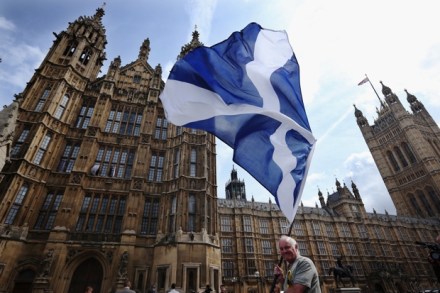
David Cameron still has much to learn about dealing with nationalists. Theirs is a very different kind of politics – one where flags, language and choreography matters. Nicola Sturgeon is hawking a false premise: l’Ecosse c’est moi. That Scotland is her country, that David Cameron can visit (as he does today) in the same way he visits France or America. It matters to Sturgeon that the talks are presented as those between two heads of state (with the flags arranged in that way), that the premise of the talks is what more he can give her government (which she abbreviates to ‘Scotland’). And Cameron falls into her trap. The SNP won a great victory last week, but it’s no more a cry for independence than the referendum was.

High life | 14 May 2015

From our UK edition

OK. Magnanimity in victory is a sine qua non among civilised men and women, so let me not be the first to rub it in. Last week I wrote that I feared the worst and felt sorry for Britain. I was convinced throughout the campaign that a certain testicular fortitude was missing on the part of the voters, and that David Cameron would be vacating No. 10. But, not for the first time, I was proved wrong. The only testicular fortitude missing was when Ed Balls lost his seat. So now we’ll have five more years of furious lefty hacks passing more wind than usual. There is nothing that angers Guardianistas more than when good, hard-working people vote with their brains.

Long life | 14 May 2015

From our UK edition

On election day I was in Puglia in the ‘heel’ of Italy, where interest in British politics could hardly be lower. One local news website that I consulted appeared to give higher priority to the fact that Italian penis-enlargement operations had increased by 20 per cent during the past year than to the electoral bombshell in Britain. I was staying with friends in their beautifully restored house — a former olive-oil press — close to the sea and below the remarkable hilltop town of Ostuni, between Bari and Brindisi, known as ‘la città bianca’ for its white medieval walls and palaces. At dusk it seemed to glow as in a dream.

Portrait of the week | 14 May 2015

From our UK edition

Home David Cameron, the Prime Minister, soon got used to the surprise of the Conservatives being returned in the general election with a majority of 12. He retained George Osborne as Chancellor of the Exchequer and made him First Secretary of State too. Theresa May, Philip Hammond, Michael Fallon and Iain Duncan Smith also stayed put, but Chris Grayling replaced William Hague, who had left the Commons, as Leader of the House, to be replaced as justice secretary by Michael Gove, who was replaced as chief whip by Mark Harper. Amber Rudd became Energy Secretary. John Whittingdale became Culture Secretary in place of Sajid Javid, who became Business Secretary. Boris Johnson was to attend weekly political cabinets.

The Spectator’s notes | 14 May 2015

From our UK edition

David Cameron is taking a bit of trouble to unite his parliamentary party. Having built a coalition outside it last time, he knows he must now build one within. The best way to do this lies to hand. It is to return to the pre-Blair custom of having Prime Minister’s Questions twice a week. Advisers always tell prime ministers not to do this, on the grounds that it is a waste of time and can only expose them to added risk. But in fact it has two good effects. It makes MPs feel much happier, and so discourages plotting. It also makes the Prime Minister the master of every area of policy and every nuance of parliamentary opinion. It literally doubles his power to govern successfully through the House of Commons.

Full employment, Prime Minister? What exactly do you mean by that?

From our UK edition

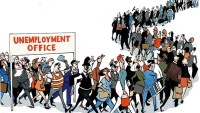
‘Two million jobs have been created since 2010 — but there will not be a moment of rest until we have reached our goal,’ said David Cameron in a Telegraph article a fortnight before the election: ‘Two million more jobs; or full employment in Britain.’ It was a bold statement. Indeed you might think, given unemployment at 1.84 million in the winter quarter, that the target for new jobs was actually an error on the part of who-ever drafts the Prime Minister’s prose. Either way, it drew little attention amid the smoke of battle.

Podcast: the end of Miliband and the Tories’ one nation challenge

From our UK edition

Ed Milband and his team were not ready for their major defeat on election night. On this week's View from 22 podcast, Dan Hodges discusses the final days of Miliband's leadership with Andrew Harrop of the Fabian Society. What were the majority mistakes of the Labour campaign? Was vital polling information about his seat kept from Ed Balls? Will Labour be able to regenerate into a party ready to govern within five years? Isabel Hardman and James Forsyth also discuss the first week of the new Conservative government and the challenges facing David Cameron. Few in the Tory party were expecting a majority, so how will the ideological vacuum be filled? And what does the new Cabinet show about the Prime Minister's strategy to manage his party?

Pandering to animal rights extremists will get MPs rejected, not elected

From our UK edition

The reasons why England and Wales voted so convincingly for a Conservative Government on Thursday will be debated forever, but one of the most obvious is the complete rejection of both Labour and Liberal Democrats in any constituency that has a hint of the countryside about it. This is graphically illustrated by the post-election constituency map. Actually, suggesting that the voters rejected those parties is probably the wrong way round. The truth is that those parties have rejected rural voters.