David cameron

A pledge which Cameron looks set to break

From our UK edition

In its preview of Cameron's speech, the Sun highlights the Tory leader saying that "...in a Conservative Britain, if you put in the effort to bring in a wage, you will be better off."  The implicit reference, here, is to Labour's combined tax and benefit system, which frequently acts to disincentivise extra work.  All too often, effort isn't met by reward - so what's the point? As the Centre for Social Justice's recent Dynamic Britain report showed, this effect impinges, above all, on the least well-off in society - and with tragic consequences.  It's all to do with effective marginal tax rates, which measure what proportion of a small rise in earnings would be lost to both tax and the withdrawal of benefits.
Who has the time to watch a weekday conference speech?

From our UK edition

The activists here are already queuing up for David Cameron’s speech. But very few people outside of this conference centre are going to watch the whole speech: how many people have an hour free at 2.15pm on a weekday?   If we want conferences speeches to be watched by more than conference delegates, then they need to be on in the evenings or on the weekend. Just imagine how many more people would watch Cameron, or would have watched Brown last week, if the speech started at 8pm. US conventions take place mostly in prime time, with the networks being strong-armed into covering them for at least an hour a night. In 2008, more than 40 million people — about 20 percent of the US electorate — watched Obama and McCain’s acceptance speeches.

Contrasting Cameron and Osborne

From our UK edition

Judging by the Independent's preview, as well as the quotes that ConHome have managed to get their hands on, Cameron is going to do Hope 'n' Change in his speech today.  Yes, he talks about a "steep climb ahead," but he adds that "the view from the summit will be worth it." This sounds like the growth and recovery element which many thought was lacking from the Osborne speech.  As it happens, there was actually a growth section in a near-to-final draft of the Shadow Chancellor's address, but it was taken out over concerns about timing. I suspect the double act - Osborne selling pain, with Cameron selling hope - will work out quite nicely for the Tories, and will become their template in the run-up to the election.

Osborne is the key to Cameron’s success

From our UK edition

Initially, I thought George Osborne’s conference speech was unremarkable. Osborne, the second coming of Stafford Cripps, painted the grimmest picture since The Scream. He was relentless, remorseless. in fact, the argument that the Tories ‘relish cuts’ and are out of touch almost seemed plausible, as Osborne, the heir to an Anglo-Irish baronetcy with a flair for interior design, told the nation that “we’re all in this together”.  But in the wider tactical context of securing a Conservative victory, it was a brilliant speech. Writing in the Independent, Matthew Norman concludes: ‘Adorable he will never be, and as an orator he makes the Speaking Clock sound like Cicero, but undeniably he is extremely clever.

Activists for Dave

From our UK edition

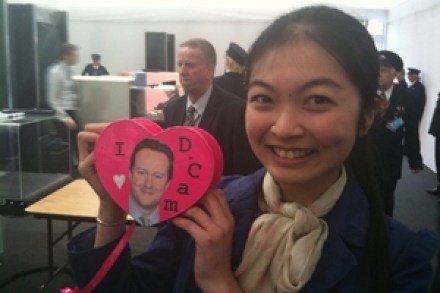
I don’t know this lady’s name, but she is a genuine example of an enthused Tory grassroots activist. She was queuing behind me in security and I noticed her bag. “It’s my own kinda Blue Peter job,” she said. What inspired her to make the design? “Because my party was going nowhere for eight years, then David came along and changed that. When your party recovers, and you know your country will, then that’s something to be pleased about.” So pleased she made this handbag. Surely Smythsons should buy the design?

Cameron needs to tackle the expenses scandal head on

From our UK edition

The current consensus issue in British politics is not to discuss the expenses scandal. The so-called ‘New politics’ was a brief footnote in both Brown’s and Clegg’s conference speeches, but public anger remains palpable. Daniel Finkelstein points out that the Tories stand to lose the most from sidelining the issue: continuity undoes their claim that they stand for wholesale change. That is unquestionably true. Whilst the leadership prepare us for the age of austerity, visions of duck houses, moats and servants’ wings pervade the public consciousness, even though those responsible have been disciplined.

Gotcha!

From our UK edition

When David Cameron turned up to The Spectator’s party last night, I thought it only decent to ply him with a glass of fizz. After all, a magazine whose motto is “champagne for the brain” can hardly begrudge champagne for the guests. And what’s the harm, I thought – there were no photographers at the party. Right? Wrong. The picture is now on the front page of the Evening Standard – with yours truly beside Cameron having just plonked it in his hand a few seconds earlier. I promise, it wasn’t a set-up: we thought we’d cleared the place of photographers.

Who won’t make it into Cameron’s Cabinet?

From our UK edition

There are 29 members of the Commons and the Lords speaking from the podium at conference. Four shadow cabinet members are not — Lord Strathcylde, Lady Anelay, Patrick McLoughlin and Mark Francois. We shouldn’t read too much into who is not speaking. The Leader of the Lords and the Chief Whips in the Lords and the Commons are not regular conference turns and there is an obvious reason why the Tories don’t walk to talk about Europe. What might be more significant is that one person who is on the front bench but not in the Shadow Cabinet has got a slot, Maria Miller — suggesting that the party hierarchy rate her communication skills. But the 29 speakers beg the question of who won’t make it into Cabinet.

Cameron’s radicalism is best for Britain

From our UK edition

The Observer’s leading article asks the question: will David Cameron’s modernism serve Britain’s interests? The article’s conclusion is a firm ‘no’; its key is that the ‘Conservatives' apparent relish in tackling the budget deficit is not entirely economic in motivation. It expresses a broader ideological commitment to a smaller state.’ A smaller state is better for Britain. The consistent growth of the state over more than a decade has demolished Britain’s financial strength. In changed economic circumstances, its continued growth is unsustainable. July is a month that should produce a revenue surplus, as tax receipts outweigh borrowing. This year saw a £8.1bn deficit.

The European issue gets the Tory conference underway

From our UK edition

The Conservative conference is just hours old, but already Cameron faces a battle to hold the line over Europe and the Lisbon treaty.  He produced his standard response on the Andrew Marr show: that he wanted a referendum if the Czechs refuse to ratify the treaty. And he added: “I don’t want say anything or do anything that would undermine what was being decided and debated in other countries”. Meanwhile, rent-a-quote Europhiles and Eurosceptic Tories exchange blows in Manchester. Leon Brittan described a possible referendum on the Lisbon Treaty as “ludicrous” and Dan Hannan has just told Sky News: “This is not the Conservative party of the past. This is a 1990s story.

Time to start banging on about Europe

From our UK edition

It’s not yet official, but everyone is couning on a big “yes” from Ireland – to the tune of about 64% says The Guardian. I say in my News of the World column tomorrow that this is far from a disaster for the Conservatives. It works well for them, in fact: it isn't nerds who want a UK referendum but any fair-minded person who has just witnessed the way Brussels bullies, bribes and cajoles to get its way. Tony Blair was the one who reneged on his promise of a rederendum – something which, in my opinion, should be a criminal act (but, as Stuart Wheeler tested, is not technically breach of contract). And who is to be EU President? Blair himself. It will be dawning on Cameron, fairly soon, why Europe is important.

The politics of hope are dead. Cameron has everything to gain by being realistic

From our UK edition

Publicly at least, Labour MPs are jubilant that Gordon Brown has agreed to appear, in principle, in a televised election debate. They give the responses to the creed first spun by Blair: that Brown is an arch-realist and heavyweight who will undo the vacuous Tories in debate. Certainly, Mr Brown is blessed with talents. As proud wives like to do, Brown’s listed his the other day – intelligence, hard work, dutifulness, diligence and patriotism. All laudable attributes, but even from environs of the cosy Labour conference, Mrs Brown did not dare suggest that her husband was in any way a realist. Brown’s, and Labour’s, messy divorce from political reality was finalised this week when they launched a limp counter-attack based solely on crass anti-Tory slurs.

Brown agrees in principle to TV election debate

From our UK edition

Despite trying to turn Adam Boulton to stone on Tuesday night, Gordon Brown has agreed in principle to appearing on the Sky election debate. It's long been suspected that he would agree to participate, today merely confirms the rumour. If the debate goes ahead, it would represent a huge change in British electoral procedure. Mr Brown deserves credit for contributing to that change. Why he did not choose to announce this positive move, illustrating that he's prepared to take the fight to Cameron and Clegg, in his conference speech defies belief and speaks volumes about his political courage and instincts.

How to form a government

From our UK edition

The change from being in opposition to being in government is almost impossible to gauge. How does a new prime Minister assume control of government? Peter Riddell gives David Cameron 10 tips that would ease the process. To emphasise the scale of Cameron’s impending problem, the only tip he can enact now is to ensure a smooth transfer from Shadow Cabinet to Cabinet. Riddell writes: ‘Do nothing that would make governing harder. When appointing Shadow spokesmen, think whether you want them to do the same job in office. In 1979 and 1997, two fifths of the new Cabinets had not held the same posts in opposition.

Forget referenda. If the Irish vote Yes, a future Conservative government would have to adopt the Lisbon treaty

From our UK edition

According to exhaustive polling data, the Irish will vote Yes to the Lisbon treaty. With Czech senators looking set to ratify the treaty also, the probable future Conservative government in this country faces a dilemma: what to do about Lisbon. Simple, says Bill Emmot in the Times. Cameron and Hague must hold their noses because it is in their national and partisan interests to do so. ‘For a new Tory government in Britain, the European scene could not be better, with right-wing parties in power in both France and Germany. The chance is there to seek common cause on an issue dear to Tory hearts, namely defence and the protection of the Nato alliance, under threat from spending cuts and from the dreadful stresses of Afghanistan.

How Cameron responded

From our UK edition

A quick post to point out that Fraser's interview with David Cameron - to which CoffeeHousers contributed questions - will be appearing in tomorrow's issue of the magazine.  We'll also be making the article free to all website users tomorrow morning, so you can read the full thing then.  In the meantime, here's a selection of the quotes within it, so you can get a sense of what the Tory leader had to say for himself: Thoughtful radicalism: "What you need is thoughtful radicalism. Prepared radicalism. It needs to come from a solid and strong base. Compare Margaret Thatcher’s trade union reforms with Ted Heath’s.

The Sun shines on David Cameron

From our UK edition

The Sun's Whitehall Editor, David Wooding, has just tweeted that the newspaper will officially back the Conservatives at the next election.  Given the paper's recent editorial stance, it's hardly surprising news.  But it will still delight Team Cameron, and is a blow for Brown in the aftermath of his conference speech.  I expect we'll hear more about it shortly. UPDATE: The relevant Sun story is here, although it's still only showing the opening paragraph.

Mandelson: If I can come back, we can come back

From our UK edition

You would have got long odds on it in the 1990s, but Peter Mandelson is now a conference darling. His hugely hammy performance delighted the hall and earned him a prolonged standing ovation. Since he has returned to British politics, Mandelson has sought to deliver enough good lines to write his own story. He deliberately inverted Tony Blair’s quote about choosing the Labour party and rallied the audience by saying ‘If I can come back, we can come back.’ He flirted with conference before confirming that the car scrappage scheme would be extended before wrapping up with a string of attacks on the Tories and a declaration that “this election is up for grabs.

Brown ignores the small issues which precede the “big choices”

From our UK edition

James has already highlighted the New Statesman's interview with Gordon Brown, but it's worth flagging up this passage as well: "Again and again, throughout our interview, Brown refers to the next election as being about 'big choices', not the small issues, which he says the Conservatives would prefer. 'What was the latest thing? The cost of food in the House of Commons?' he asks, referring to David Cameron's recent gimmicky pledge to cut public spending by reducing subsidies on MPs' food. This theme of 'big choices', say Brown's aides, is one he is likely to pursue in his conference speech and beyond." To my mind, this exemplifies one of the main reasons why Brown will struggle to be trusted on the issue of the public finances.