David cameron

Cameron has the positioning right – but fiscal questions remain<br />

From our UK edition

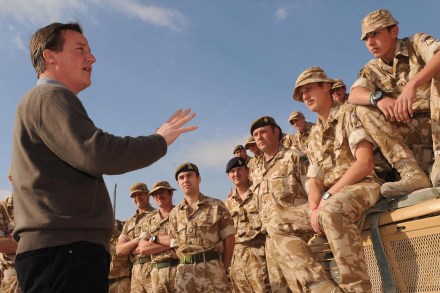
Here, CoffeeHousers, is my take on this morning's Cameron interview: 1. General demeanor: excellent, articulate, confident. The complete opposite from Brown. It does make you think that he should wipe the floor with Brown in the TV debates. 2. “Last week we saw William Hague and George Osborne going to Afghanistan together. First shadow Chancellor, the man who is going to be in charge of the money, on the frontline seeing what is going on in Afghanistan”. Indeed, but the NHS pledge and deficit cut pledge imply deep cuts to the military. To govern is to choose, and Cameron has made his choice: NHS spending before the military.

A tale of two interviews

From our UK edition

So, at the end of a hyperactive week in politics, we've got a pair of interviews with Brown and Cameron.  The PM chats with the News of the World, while Cameron appeared on the Marr sofa earlier. One general similarity between the two interviews stands out: neither is particularly confrontational. Rather than chiding Labour after Alistair Darling's admission yesterday, Cameron adopted a more conciliatory tone, saying things like: "If [the government] ... set out reductions that we think make sense we won’t play politics with it, we’ll say yes."  And, for his part, Brown only nods towards the "big choice" to be made at this year's election, and doesn't mention the Tories once.  Quite rare that, for Gordon.

The NHS is unfair, why should it remain sacrosanct?

From our UK edition

I’ve just heard a truly shocking story. A neighbour, left brain damaged by a haemorrhage, arrived at St Richard’s hospital in Chichester on Tuesday afternoon for her check-up. She was discharged at 2 am. No beds or ambulances were available and she was sent out into the night, and of course a blizzard.   One shouldn't extrapolate that this represents standard NHS care; it doesn’t. But care is hindered by a lack of resources and facilities. Despite throwing money at the NHS, vast areas of the country remain ill-equipped, and not merely at Britain’s rural extremities. For example, there is no specialist cardiac unit between London and Portsmouth. Feel your left arm go tense in Petworth and start trusting to God.

Security and Defence Review 101

From our UK edition

Defence geeks are waiting to see how the Conservative Party intends to conduct a Security and Defence Review, if they are elected. By the time a new government comes to power, the Ministry of Defence will in all likelihood have produced a Green Paper, setting out initial thoughts on the future of the military, which is meant to lead on to a more substantive Strategic Defence Review.  But if the Tories want a process (and ultimately plans and ideas) that encompasses not only the MoD, but also the Foreign Office, DfiD, the security services and even parts of the Home Office, then a new kind of institutional vehicle will have to be set up. There are, broadly speaking, three options.

What’s it all about, Dave?

From our UK edition

This morning, I drove past one of the Cameron adverts - “I’ll cut the deficit, not the NHS” - and that Bacacharch & David song came into my head: "What’s it all about, Alfie?" It’s been in my head, in fact, ever since his Oxford speech last weekend. Just what is the Big Idea? We seek to answer the question in this week’s magazine with four pieces. James Forsyth says that any hunt for Cameron’s ideology will be in vain, because he doesn’t really have one. He doesn’t like –isms and there will never be a Cameronism. David Selbourne, one of Britain’s leading political philosophers, has written a scathing piece. (“I’m afraid this is merited” he said in the email, when his sent his piece).

The plot’s gunpowder is extinguished

From our UK edition

The atmosphere is flat in Westminster today. The plot finally fizzled out this morning but not before having highlighted how little support in the Cabinet Brown has. It was telling that it was Shaun Woodward, not anyone more high profile, who turned up on the Today Programme to defend the PM. Plots that wound but do not kill Brown are perfect for the Tories. They make the voters see Labour as divided and add to the mood that it is time for a change. This one also had the benefit of being ideally timed from a Tory perspective, obscuring a week which had seen Cameron make a rare blunder. YouGov’s latest poll does show the Tories on course for a majority, no small achievement considering the base they are starting from.

An intriguing PMQs – overshadowed by events

From our UK edition

After the hubbub about Hewitt ‘n’ Hoon’s plot to unseat Gordon Brown, PMQs is perhaps a distant memory. It’s certainly made my review a little later than usual. But better late than never, as today’s clash was a bloody and intriguing contest with both party leaders on combative form. Cameron seemed unusually relaxed, glib and self-confident. Perhaps he’d been tipped off about the plot. Or perhaps he’d been thrilled by the sight of his beautifully groomed coiffure in the bathroom mirror this morning. If he spent as much time on his manifesto as he did on his hair there’d be no talk of a hung parliament. But this didn’t seem to bother him today and he laid happily into the Prime Minister over the budget deficit.

PMQs live blog | 6 January 2010

From our UK edition

Stay tuned for live coverage of PMQs from 1200. 1159: Should be kicking off soon.  You can watch proceedings live here. 1202: And here we go.  Brown starts with the usual condolences for fallen British servicemen - and adds a tribute for the late Labour MP, David Taylor. 1204: Brian Donohoe asks for an update on the attempted terrorist attack on Christmas Day.  Brown lists new security measures, and says that he's looking to better coordinate intelligence efforts. 1206: Cameron now.  He adds condolences for British servicemen and David Taylor. 1207: The Tory leader starts with our debt problem.  He lists international organisations - the OECD etc. - which have warned about Britain's debt.

Will CCHQ impose an all women shortlist in East Surrey?

From our UK edition

East Surrey will be the first seat where Tory central office gets to impose a shortlist of three candidates on a local association. Peter Ainsworth, its MP, has today announced that he is stepping down and because he has waited until the New Year to make this announcement CCHQ’s emergency candidate selection rules now apply. The first thing to watch for is whether the Tories go for an all women shortlist. When Cameron said in October that the party would have some “all-women shortlists to help us boost the number of Conservative women MPs” there was a furious reaction from some sections of the grassroots. There was even talk of setting up a legal fighting fund to challenge the decision.

The opening day of the long election campaign is a score draw in terms of media coverage but the big development is that Labour has lost one of its main tax dividing lines

From our UK edition

During an election campaign, the press like to obsess about who won the day. Up until 3pm, the consensus was that the Tories had. The media was pointing out just how absurd it was for Labour to criticise another party for having black holes in its fiscal plans. But then came David Cameron’s marriage gaffe which has evened up the coverage on the evening news broadcasts with the Six o’clock news going particularly hard on the issue. Cameron’s credibility is central to the Tory campaign so anything that depletes that is bad news for them. But in the long term, I think the most significant development today is one that is not getting much coverage on the TV news: Darling’s refusal to commit to not raising VAT.

Is Cameron cowering in the face of Labour attacks?

From our UK edition

Say what you like about the Cameron project, but at least they are strongly committed to marriage. Aren’t they? Well, it seems, not now. I always suspected that the wonderful strength of Cameron’s rhetoric on marriage was not really matched by his policy – a rather paltry tax break. Now, it seems not even that is certain. "It's something within a parliament I would definitely hope to do," he said today. “We're not able to give people absolute certainty on everything.” Well not on everything – but what about on the few hard pledges that have actually been made? Or is Cameron really cowering in the face of Labour attacks that they would propose tax cuts for “the few” - a category which includes married couples?

Why the Tories started with health

From our UK edition

The Tories today rolled out the first section of their manifesto this morning, the chapter on health. The reason the Tories started with their plans for the NHS, as they did when setting out their priorities for government last autumn, is quite simple: the leadership thinks that every time Cameron talks about health the party goes up in the polls. Certainly, one of the achievements of Cameron’s leadership has been to cancel out Labour’s traditional advantage on the question of who is most trusted on the NHS; Labour’s lead on this question has been a statistically insignificant one percent in the last two polls on the subject according to Anthony Wells of the indispensable UK Polling Report.

Two new Tory health policies

From our UK edition

Localism and results-based healthcare are central to the Tories’ NHS reform measures. They plan to arrest the widening gap between the life expectancy of rich and poor by introducing a Health Premium, a new policy, to direct funds to the poorest communities. The second new initiative is the creation of ‘maternity networks’, which will link hospitals, doctors, charities, volunteers and consultants, replacing top-down management with co-operation in a bid to widen expertis, improve services and lower costs. This reflects the belief that local solutions can have national benefits and concurs with the broader aspects of Tory policy regarding the state and welfare provision.

Tories struggling to find a line on tax

From our UK edition

After the platitudes in David Cameron's speech yesterday, comes the bluntness of Ken Clarke in today's Sunday Telegraph.  Interviewed by the paper, the shadow business secretary says that it would be a "folly" to rule out tax rises: "It is something that every Conservative tries to avoid but I didn't avoid it when I was getting us out of recession before. Coming out of a recession when you have such a severe deficit you can't rule out putting up taxes." He's right, of course.  The mammoth size of the deficit, and the lag before many spending reductions take effect, will mean that the Tories shouldn't rule out tax rises.  More than that, in fact: they'll certainly have to introduce them.  As we already know, plans are afoot to increase VAT to at least 20 percent.

Don’t take the voters for fools, Mr Cameron

From our UK edition

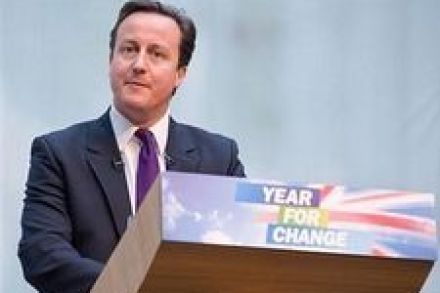
David Cameron can give rousing, mature, insightful speeches. Yesterday’s was not one of them. It used the word ‘hope’ 7 times and ‘change’ 27 times and that, I suspect, was its entire purpose - because there was precious little content in it otherwise. In the News of the World today, I describe the speech as vapid nonsense. Here’s ten extracts which show why. 1. “It’s because we are progressives that we will protect the NHS…We recognise its special place in our society so we will not cut the NHS; we will improve it for everyone.” Come again? Refusing to cut the NHS reflects its ‘special place’? Herewith the poisoned logic of Brown: that love means never having to say ‘cut’.

Tensions in the Cameron circle over election strategy

From our UK edition

There is a fascinating glimpse at the tensions inside the top echelons of the Conservative party in The Times today. Francis Elliott reports that Steve Hilton is trying to veto the appointment of James O’Shaugnessy, head of policy for the party, as head of the Downing Street policy unit should the Tories win the election. Francis writes that tensions between Hilton and O’Shaugnessy have been exacerbated by disputes about what should go in the initial slice of the Tory manifesto which will be published on Monday. O’Shaugnessy is one of politics' nice guys. But he has been the focus of negative briefing in recent months. Back in early September, I was told that Hilton was casting around for other candidates for the job in government.

Brown’s troubles are returning at just the right time for Cameron & Co.

From our UK edition

First she loved him.  Then she hated him.  Then she seemed lukewarm towards him.  And, today, she's gone back to hating him more than ever.  Yes, Polly Toynbee's latest column is another marker stone in her oscillating relationship with Gordon Brown, and it doesn't contain any minced words: "Cancel new year, put back the clocks and forget the fireworks. There is nothing to celebrate in the dismal year ahead. The Labour party is sledging down a black run, eyes tight shut, the only certainty the electoral wall at the bottom of the hill. In five months David Cameron will be prime minister and Gordon Brown will be toast. Remember him? The man who crashed his party. Remember them? The death-wish brigade that let him do it.

The year in cuts

From our UK edition

As we’re still in that period of the year for looking back as well as forward, I thought I’d share with CoffeeHousers a political timeline I put together. It’s not everything which happened in the political year, mind – but rather the important events in the debate over spending cuts. This debate has, at very least, been in the background to almost every political discussion in 2009, and it will dominate the years ahead – so this kind of exercise probably has some posterity value. But, aside from that, you can also draw a couple of conclusions from the timeline (and I do so below).

What happened the last time Gove played Cameron’s opponent in debate prep

From our UK edition

One of the surprises of the Tory leadership campaign in 2005 was how David Davis bested David Cameron in the TV debate between the two men. Those involved in Cameron’s preparations for that debate blame Cameron’s poor performance on how Michael Gove knocked Cameron’s confidence in the run up to it. Gove was Davis in debate prep and played Davis as a ferociously clever, Oxford Union-style debater and kept leaving Cameron tied in knots. So it is interesting that the Cameron camp have again chosen Gove to play the role of Cameron’s opponent in the run up to a TV debate. This time Gove will, of course, be playing the part of Gordon Brown. These debates are going to fascinate the press.

Call yourself a PR man?

From our UK edition

The latest Comres poll for the Independent indicates, as if we needed telling, that the Tories are yet to seal the deal. It’s far from panic stations – the lead remains at 9 points – but there are two figures that prove where the Tories are going wrong. The majority of respondents feel that a Conservative government would exclusively represent the interests of the rich, and the contention that the Tories represent an appealing alternative to Labour was rejected. If Cameron is merely a PR man I hope he’s cheap. Aside from Alex Salmond I can’t envisage anything worse than five more years of Gordon, and this suggests to me that Cameron is struggling to communicate with voters. Nowhere is this more palpable than the preposterous class war.