David cameron

The choice facing the Tories

From our UK edition

If you'd like a step-by-step preview of Labour's next election campaign, then do read Alastair Campbell's latest blog post.  All of Brown's attacks from PMQs are in there, and then some: "tax cuts for the rich"; a lack of "policy heavy lifting" on Cameron's part; the Tories "haven't really changed", etc. etc.  The spinmeister has been in closer contact with Downing Street recently, and it shows.  It's all gone a bit bar-brawling. The Tories now face a choice between, broadly speaking, three different responses: i) Ignore Campbell.
Might there be some fight left in the class war after all?

From our UK edition

The Tories are in mild shock following PMQs, they never expected Cameron to get clunked like that. Brown is clearly going to try and use Tory inheritance tax policy to ram home the message that a Cameron government will be a government of the rich, by the rich, for the rich. But the Tories are taking comfort from their belief that Brown’s ugly class war politics won’t work, pointing to how they failed in Crewe and Nantwich. But the attacks on Edward Timpson backfired, at least in part, because Timpson was a bad target. It is hard to portray someone as an out of touch, uncaring toff when their family have fostered 80 odd children and have a long history of local philanthropy.

Etonians and Bolsheviks

From our UK edition

A terrific PMQs today. This exchange had it all. Noise, laughter, rhetoric, anger, humiliation, jokes, and dramatic swings in the balance of advantage. We even had a sighting of that great Westminster rarity – a fact.  Cameron’s first question elicited simple information. Would our troops start returning from Afghanistan in 2010 or 2011? Brown didn’t quite answer it but said that by 2011 the combined forces, including Afghans, would number 300,000, by which point the military burden ‘will start to change’. Cameron clarified. ‘That sounds more like 2011.’ Brown didn’t demur.   Turning to the economy Cameron asked why Britain is the last G20 country to come out of recession.Brown: We aren’t. What about Spain?

A PMQs to damage Brown?

From our UK edition

A quick tour around the political blogoshpere, and it seems everyone is saying Brown came out on top in today's PMQs.  For what it's worth, I'd agree with them – but only to a point.  On the one hand, Cameron was unusually clumsy, which allowed Brown to land some pretty decent blows.  But, on the other, I suspect some of those blows won't play well on TV later.  And, let's not forget, the entire point of PMQs, from the leaders' perspectives, is to score some coverage on the Ten 'O' Clock News.   It all depends on what the broadcasters pick up on.  If it's Brown's gag that the Tories' IHT policy was "dreamed up on the playing fields of Eton", then it will hardly reflect well on the PM.

Testing times for the Tories

From our UK edition

The opinion polls are continuing to feed the story that the Tories are in trouble. Tonight’s Politics Home data which shows Cameron’s personal ratings dropping 15 points in the last 10 weeks follows a string of polls where the Tories have failed to break through the forty percent mark. Tory morale has been a bit shaken by these polls; Cameron could do with a decisive win at PMQs tomorrow to gee up the Parliamentary party. But turning these numbers around is, I suspect, going to require some policies that show us what David Cameron’s irreducible core is. Oddly enough, I don’t think these policies have to be particularly popular but they have to show the electorate that Cameron stands for something, that he isn’t just another say anything to win politician.

Love and marriage

From our UK edition

It’s all a bit of a puzzle. How will David Cameron incentivise marriage? In an interview with the Mail, Cameron dismisses IDS’s transferable tax allowance scheme. “It would be wrong to say that they are Conservative Party proposals.”                      Considering the scheme will cost £4.9bn, the pro-cuts Tories can ill-afford an incentive that would benefit the middle class in the immediate term. Cameron and Osborne are searching for a cheaper way to honour the pledge. Pete and Fraser debated whether marriage should and could be financially incentivised. On balance I side with Pete, marriage should not be financially incentivised.

The good and/or bad news for the Tories is that there hasn’t been a Brown Bounce

From our UK edition

If you're still scratching your head over the latest opinion polls, then I'd recommend you read Anthony Wells' latest post over at UK Polling report.  In it, he outlines four potential reasons for the diminishing gap between the Tories and Labour: Cameron's "reverse" over the Lisbon Treaty; increased economic optimism; Labour performing better; and the absence of positive feeling towards the Tories.  To my mind, it's probably a case of "all of the above," to varying degrees – but, as Anthony concludes, "we can't tell for sure." One further point that's worth making is that the reduced gap between the parties isn't due to a "Brown bounce".

Will Darling’s politicking make the Tories weaken their IHT pledge?

From our UK edition

Ok, so the Age of Austerity means that promises made in sunnier times will need to be forestalled - or even cancelled altogether.  But it's still revealing that Labour are thinking about reversing their plan to raise the threshold at which inheritance tax is levied. After all, this is what Brown regards as The Great Dividing Line: the Tories implementing a tax cut for their "rich friends," on the one side, and Labour implementing policies "for the many," on the other.  Darling's decision to raise the IHT threshold to £350,000 for single people and £700,000 for married couples undermined that crude message.  Reversing the policy may, in Labour strategists' eyes, strengthen the dividing line.

If you want to restore Cabinet government, you have to reduce the size of the Cabinet

From our UK edition

In the politics column this week, I write about how the Tories plan to hand over many of the traditional policy making powers of the Cabinet to a seven man policy board. The Cameroons are going to do this partly because it is a model that has worked well for them in oppoistion and that they are comfortable with but also because the Cabinet is just too large for effective, detailed discussions about policy. The shadow Cabinet currently has 34 members in it. In government, this number will have to drop by at least ten. But still, a 24 person group is, probably, too large to foster constructive and detailed debate. However, if the Cabinet was smaller, then it would be easier to restore it to its traditional role without sacrificing effectiveness.

What Gordon thinks of London 2012

From our UK edition

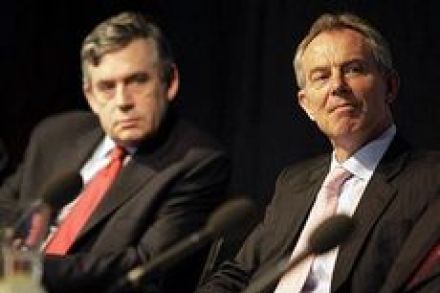
Another good quote for the Brown 'n' Blair scrapbook, courtesy of Ben Brogan's column in the Telegraph: "Only once in the 20th century has a government that won the games survived to deliver them. A change of administration in the run-up to the Olympics might be expected to herald political trouble. Thankfully, David Cameron does not share Gordon Brown's loathing of what he refers to as 'Tony's f------ Olympics'. He is committed to ensuring stability by protecting London 2012's status as the Switzerland of politics, immune from partisan attacks." Brogan's wider argument is worth noting: that the Cameroons think 2012 could be the tonic the country – and their potential mid-term government – needs.  Myself, I still think there's a strong case for an Austerity Olympics.

The Red Tory

From our UK edition

Phillip Blond has been attracting a lot of publicity in the past few weeks and it was standing room only at the launch of his new think tank Res Publica. (I should say that I am on its advisory board). David Cameron gave the opening remarks, stressing the influence Blond's thinking has had on how the Tories think about poverty and public services, but he was also keen to point out that he doesn't agree with everything that Blond says. Ever since the trouble caused by last summer's Policy Exchange report advocating abandoning various northern cities, the Cameroons have been wary of getting too close to any think tank for fear of being tarred by association.

Broken Britain: The Reality

From our UK edition

I was hugely impressed by a long article by my former colleague Rob Yates, in this weekend's Observer magazine. Rob went back to his roots in Walton, Liverpool, one of the most deprived parts of the country on any indicator, to examine the reality of the "broken Britain" rhetoric of the Conservative Party. It was about as far from a liberal whinge as you can imagine, but Rob recognised that not everything New Labour has done to alleviate the lot of the worst off has been disastrous. In particular he points to the popularity of the Sure Start programme for mothers and young children and improvements to school buildings and municipal space in general.

A game of chess

From our UK edition

Fascinating details dominated PMQs today. Instead of the usual custard pie-fight this was a game of chess. Things began with talk of downpours and sandbags. Both leaders were concerned that the sodden folk of Cumbria are receiving enough hot soup and blankets. The PM reminded us that he’d recently popped up there to squelch around in his wellies shaking people’s hands and nodding sympathetically. Then Cameron pulled out a firecracker. He accused Brown of shambolic incompetence in allowing public money to flow into the hands of a front organization for Hizb ut-Tahrir, an extremist group whose constitution denounces non-Moslems in virulent terms. ‘They are combatants in the battlefield. Their blood is lawful, as is their property.’ One thing’s for sure.

A poll taken at the same time as the Ipsos-Mori poll had the Tories 14 points ahead

From our UK edition

The Observer’s Ipsos-Mori poll has dominated political discussion since its publication on Sunday. But two things that I have heard tonight have increased my scepticism that it marks a dramatic shift in public opinion. First, I hear that another of the big pollsters had a survey in the field at the same time and it showed a fourteen point Tory lead. Second, a new poll for Political Betting has Labour down on 22, only a point ahead of the Lib Dems. With polls it is the ones that are surprising that make waves; I’m sure we’ll all run down a few more rabbit holes before election day. The odd surprsingly tight poll is not all bad for the Tories. It helps, as one candidate in a marginal seat said to me yesterday, get the activists out and deals with any sense of complacency.

The problem with Brown’s latest Big Idea

From our UK edition

There's some very readable stuff in this week's Economist (including a leader which outlines what Brown's government should – but almost certainly won't – do with its "last months in power").  But if you read only one article from it, make sure it's the Bagehot column and its dissection of Brown's latest Big Idea: public service guarantees.   These are the pledges-turned-legal entitlements which popped up throughout the Queen's Speech – such as the "guarantee" that patients will have hospital treatment within 18 weeks of being referred by a GP.  As Bagehot points out, it's a problematic approach: 'To be worth the manifesto paper they will be printed on, public-service guarantees need to be readily enforceable.

Cameron goes Blond

From our UK edition

In their party political broadcast last night, the Tories endorsed a community right to buy. The idea is that communities would be offered first refusal to take over and run local amenities that are faced with closure. For example, the community would be able to take over a Post Office rather than see it shut down. Community groups would also be able to bid to run publicly provided assets such as libraries. It is a policy that has doorstep appeal and also positions the Tories where they want to be. Thatcher offered individuals a right to buy, Cameron offers communities a right to buy. The intellectual inspiration for this policy is Phillip Blond, the so-called Red Tory, who first proposed the idea back in July: 'Create a community right to buy.

A phonecall to Kelly looks better than not mentioning expenses

From our UK edition

If you want a measure of how disastrous yesterday's Queen's Speech was for Gordon Brown, you need only pay heed to two things.  First, today's news coverage, which is almost universally negative for the PM.  Even the FT, which is usually quite forgiving of Brown, launches an acerbic attack on the "shameless politicking" in the speech.  And that's before we get onto numerous stories about discontent on the left, as well as unflattering write-ups by political columnists across the political spectrum. The second is David Cameron's interview on the Today programme this morning.

Hoist by his own petard

From our UK edition

The Queen’s Speech contained some worthwhile bills. Parents will face orders when a child breaches antisocial behaviour rules, and the Flood and Water Maintainence Bill, whilst unlikely to rival the 1911 Parliament Act in the annals of Westminster, is welcome, responsible legislation. I can even see that if you’re that way inclined, which I’m not, Harman’s Equality Bill has something to commend it. The remainder of the programme is a political landmine, presenting benevolences that mask incendiary conceits. Clever politics theoretically, but in the rush to prime the fuses, and with little thought for these bills’ practical application, this incomparable government has blown itself up.

A paper-thin Queen’s Speech

From our UK edition

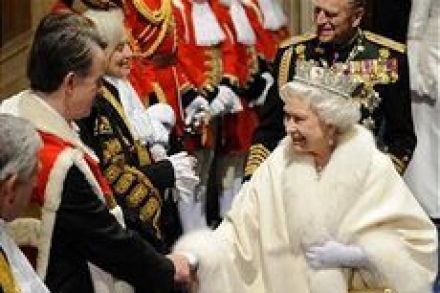
Even before the Queen had trundled back to Buckingham Palace, Mandy had let the cat out of the bag. Speaking on BBC News he said of the Gracious Speech, ‘All these laws are relevant … and achievable. It will be for the public to decide whether they want them or not.’  There you have it. The greatest power in the land admits the Queen’s Speech is Labour’s manifesto. The response to the Gracious Speech is an enjoyably ragged parliamentary occasion, full of ancient traditions and even more ancient jokes. Frank Dobson proposed the Humble Address and spoke with pride about his Holborn constituency where the anti-Apartheid movement had been born.

The Prince is playing politics

From our UK edition

Lord Mandelson argues in the Evening Standard that Labour’s legislative programme has the Tories running for cover. The forthcoming debate should prove this thesis to be nonsense. 7 minutes of largely rehashed policies, including all the old favourites – equality, the ‘smarter’ state and so forth, is unlikely to give Cameron sleepless nights. I suspect Mandelson knows this as there is little substance to his argument. The article contains more insinuations than an episode of Midsomer Murders. Mandelson writes:     ‘David Cameron seems to be getting a little rattled. Following his flustered performance at PMQs last week, he seems shocked and disconcerted to be facing a political fight again.