David cameron

The Tories should have known the taxing questions were coming

From our UK edition

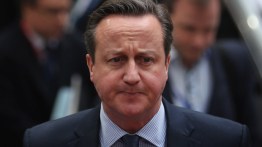
Downing Street has spent the past 24 hours trying to clarify David Cameron’s links to an offshore fund set up by his late father, which never paid tax in Britain. Initially, Downing Street said this was a ‘private matter’, Cameron was then asked about the matter, and said ‘I own no shares, no offshore trusts, no offshore funds, nothing like that. And, so that, I think, is a very clear description.’ Then Downing Street issued a statement saying ‘to be clear, the Prime Minister, his wife and their children do not benefit from any offshore funds’. And today Number 10 had to clarify further: ‘There are no offshore funds/trusts which the prime minister, Mrs Cameron or their children will benefit from in future.

Why has the government been so behind the curve on steel?

From our UK edition

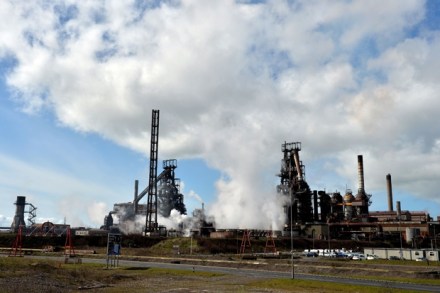
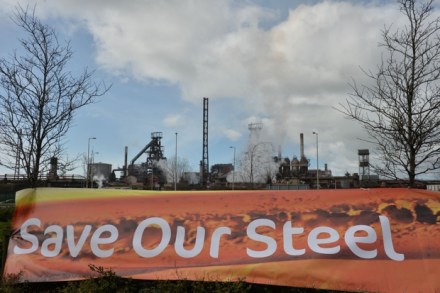
This hasn’t been a good week for the government. As I say in my Sun column today, it has been oddly off the pace in its response to Tata’s decision to sell off its UK steel plants. We have had the absurd sight of the Business Secretary flying to Australia and then turning round and coming back again. What makes all this so odd is that everyone knew that Tuesday’s meeting of the Tata board was key to the future of these plants. Government insiders say that the government being caught on the hop is another example of how Number 10’s obsession with the EU referendum means that it is dropping the ball elsewhere. One Minister tells me that ‘Downing Street are totally distracted’.

Power failure | 31 March 2016

From our UK edition

A fortnight ago, the energy minister, Andrea Leadsom, declared grandly that Britain, alone in the world, would commit to a target of reducing net carbon emissions to zero. ‘The question is not whether but how we do it,’ she told Parliament. It is now becoming painfully clear how this target will be reached: not by eliminating our carbon emissions but by exporting them, along with thousands of jobs and much of our manufacturing industry. This week, Tata Steel announced that its entire UK business is to be put up for sale. That came after Stephen Kinnock, whose South Wales constituency includes Tata’s giant plant at Port Talbot, joined a union delegation to the headquarters of Tata Steel in India to beg the company to keep the plant open.

The Spectator podcast: Eugenics, Tory wars and poetry

From our UK edition

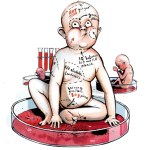
We're delighted to have Berry Bros sponsor our flagship podcast. For some years now their 'Good Ordinary Claret' has been The Spectator's house red, served to all our guests (who are always impressed).  It's just £9 a bottle. Lara Prendergast presents this week's podcast. She speaks to Fraser Nelson about the return of eugenics - which, according to his cover article, is back with a vengeance. He's alarmed - but Toby Young isn't. He says eugenics should be on the NHS so the poor can have more intelligent babies. Next, James Forsyth discusses the latest in the Tory wars over Brexit.

Can anyone stop Boris?

From our UK edition

Most MPs greet the parliamentary recess with a sense of relief. But Conservatives are welcoming this Easter break like the bell at the end of a boxing match. They are exhausted, tempers must be cooled and they now have a fortnight to think about how best to stop their split over the EU referendum becoming something more permanent and debilitating. Some in the party have long hated their own colleagues more than anyone else ,and they have taken full advantage of the excuse the referendum offers for verbal violence. As one Cabinet minister admits: ‘The extreme 10 per cent on either side of the Tory party absolutely loathe each other.’ At times it has seemed like a bar room brawl in which decade-old scores are settled.

Why is Gus O’Donnell misleading the public about the EU rules on Brexit?

From our UK edition

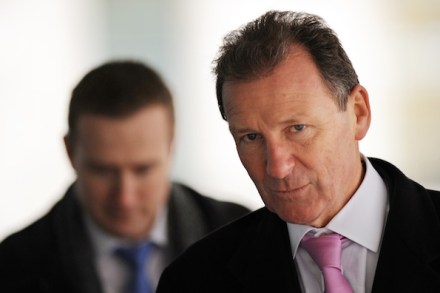
When Sir Gus O’Donnell was head of the civil service, those who worked under him would have prided themselves in the code that he was supposed to uphold: to be impartial, avoid politics and do their best to make sure the public is not misled. This morning, Sir Gus was involved in what can only be described as a systematic attempt to mislead the public about the EU and the terms in which Britain would leave. His point: that it would take more than two years to negotiate the terms of UK’s exit, and this deadline could only be prolonged with hard bargaining from hostile partners. "Obviously at the end of two years anything we haven't negotiated has to be extended by unanimity of a vote excluding us so that's a bit scary.

In defence of Boris Johnson

From our UK edition

It is good that Matthew Parris has taken on Boris. The Mayor has had too easy a press in many quarters. There is a good reason for this: he is one of us. There is a bit of the Bullingdon in Fleet Street: we are often too disinclined to attack our own. Matthew Parris acknowledges this, and the vitriolic nature of his Times column on Saturday is an attempt to redress the balance. But for me, my objection is not that Matthew has gone over the top in his attack on Boris – it is that his line of attack is fundamentally wrong. The same is true of Nick Cohen’s blast yesterday on the same subject. Let’s brush over Matthew’s complaint that a man who once supported Clause 28 has no right to boast on an LGBT ‘out and proud’ video.

Cameron can’t just focus on the EU referendum

From our UK edition

Early on in his leadership, David Cameron was clear that he wanted the Tories to stop ‘banging on about Europe.’ But Europe—or more specifically, the EU referendum—is now dominating Cameron’s time so much that he is neglecting domestic policy. I report in my Sun column today that one of those intimately involved in the disability benefits cuts debacle and IDS’ resignation told me that ‘Cameron is completely obsessed by Europe, he has taken his eye off the ball’. Now, as David Cameron takes a break in Lanzarote, he would be well advised to reflect on whether he wants to carry on letting the EU referendum crowd out other government business.

Spectator’s Notes | 23 March 2016

From our UK edition

Why have David Cameron and George Osborne overreached? Why are so many in their own party no longer disposed to obey them? Obviously the great issue of Europe has something to do with it. But there is another factor. Victory at the last election, followed by the choice of Jeremy Corbyn as Labour leader, has convinced too many Tories, including Mr Osborne himself, that they will be in power for ten more years at least. So they get careless and cocky. Then they make mistakes. Then they come up against the most admirable fact about parliamentary democracy, which is that you can never guarantee being in power for ten years. (You can’t even guarantee it for the prescribed five, though the iniquitous Fixed-term Parliament Act of the coalition has made this easier than before.

PMQs unifies Tory MPs and weakens Jeremy Corbyn

From our UK edition

On Sunday at noon, few would have predicted that Tory MPs would have come out of PMQs cheered and unified. But thanks to The Times’ Sam Coates revealing this morning that the Labour leader’s office have ranked their MPs from core group to hostile, David Cameron won this session hands down and cheered up Tory MPs in the process. Jeremy Corbyn had plenty of material of his own to work with, Iain Duncan Smith’s resignation letter should be a rich seam for Labour. But when Cameron started quoting the rankings at every turn, Corbyn — remarkably, given that his team had had all morning to come up with one — had no comeback. He was reduced to, rather pathetically, telling Cameron to leave the theatre. The Tory benches meanwhile were loving it.

Corbyn’s PMQ performance receives a ‘hostile’ verdict from Labour MP: ‘f—ing disaster’

From our UK edition

Today's PMQs ought to have been a walk in the park for Jeremy Corbyn following days of in-fighting and rebellion in the Conservative party. However, a secret document changed all that, with the Times today publishing a spreadsheet which categorises all the Labour MPs in terms of their loyalty -- or lack there of -- towards Corbyn. John Woodcock -- who is on the 'hostile' list -- was left unimpressed when Cameron was able to ridicule the party over the list at PMQs: 'Mr Speaker there are five categories. We've got "core support" -- I think you can include me in that lot. We've got "core plus", the Chief Whip's being a bit quiet because she's in "hostile".

The Conservative crack-up

From our UK edition

No one does political violence quite like the Tories. The fall of Margaret Thatcher in 1990 unleashed a cycle of reprisals that lasted until David Cameron became leader in 2005. During that time, Tories specialised in factionalism: wets vs dries, Europhiles vs Eurosceptics, modernisers vs traditionalists. Cameron’s great achievement was to unite the party in pursuit of power. Now that unity is coming undone. You can blame Jeremy Corbyn’s leadership of Labour for the latest Conservative breakdown. The Tory wars of the mid-1990s were fuelled by a sense that defeat was inevitable: since the Conservatives weren’t going to beat Tony Blair, they felt they might as well fight each other.

Nicholas Soames on IDS resignation: ‘you’d have thought there’d been a coup by a black African dictator’

From our UK edition

With the Conservatives currently experiencing inner party turmoil following Iain Duncan Smith's resignation over the Chancellor's Budget, there are concerns that in-fighting may soon overshadow the party's work. However, despite several backbenchers speaking out about their doubts in George Osborne's ability,  not every Tory is so fussed about the growing row. In an interview with Conservative Home, Nicholas Soames has offered his take on the situation. The Tory grandee says that Duncan Smith's resignation is simply an 'inconvenience' even though the media reaction suggests that there has 'been a coup by a black African dictator'.

Watch: Dennis Skinner takes Cameron to task over Osborne’s ‘nine lives’

From our UK edition

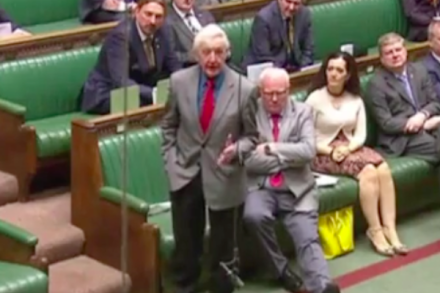
With George Osborne's disastrous Budget the main topic of conversation today in the Chamber, Jeremy Corbyn surprised his colleagues by opting not to mention the Tories' current inner-party turmoil -- let alone Iain Duncan Smith's resignation -- in his speech. Instead it fell on his estranged comrades Yvette Cooper and Liz Kendall to land some blows. Happily Dennis Skinner also joined in -- offering up one of his trademark one-liners. He asked David Cameron whether he would pledge to make this Budget Osborne's last: 'Will the Prime Minister give us an assurance that in the view of the financial mess that's been created with this Budget that this will be the Chancellor of Exchequer's last Budget? He's had eight already, only cats have nine lives.

Why isn’t Jeremy Corbyn kicking the government while it’s down?

From our UK edition

The government is in a mess, with the Chancellor having to go underground while a row rages in the Conservative party about whether or not the central mission of the Prime Minister to lead a compassionate Conservative party is really happening in practice. David Cameron had to use his statement on the European Council this afternoon to defend the government's record on social justice, and praise the work of Iain Duncan Smith in an attempt to get things back on track. And yet Jeremy Corbyn saw today's open goal yawning before him, and decided to kick the ball into a hedge. The Labour leader managed to mention the fact he'd only been given advance sight of half of Cameron's statement twice, but omitted to raise Iain Duncan Smith once.

Paula Sherriff urges David Cameron to consign the ‘Vagina Added Tax’ to history

From our UK edition

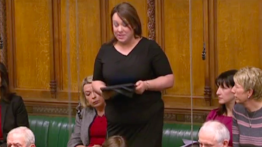
A historic session took place in the Commons today and not jut because of the current omnishambles building around George Osborne's Budget. Instead, it was Paula Sherriff who has managed to make history thanks to her question to the Prime Minister on the tampon tax. The Labour MP asked David Cameron about plans by the government to accept Labour's tampon tax amendment to the Budget. In the process, she referred to it as the 'Vagina Added Tax': 'Will he pledge that vital funding for women's services that was provided from the receipts of this VAT will continue? I hope that today is the day we can consign the Vagina Added Tax to history.

How can David Cameron fix the Tory row over the Budget?

From our UK edition

Last week’s Budget was supposed to be boring, but is still splashed across the front pages of the newspapers this morning. It was supposed to be crafted so that no Tory MPs could raise a rumpus, yet it has led to the resignation of a Cabinet minister and the opening up of a yawning split in the Tory party. This row between the Tory leadership and those supporting Iain Duncan Smith isn’t officially about Europe, though the referendum has undermined the foundations of the party enough to make this row seriously destabilising for the leadership.

Iain Duncan Smith warns government in danger of ‘dividing society’

From our UK edition

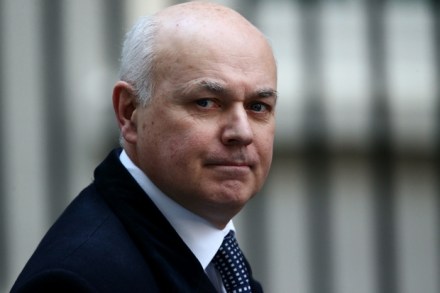
In one of the most extraordinary political interviews of recent times, Iain Duncan Smith has warned that the government ‘is in danger of drifting in a direction which divides society rather than unites it.’ He repeatedly, and pointedly, argued that in drawing up policy the Tories have to have a care for those who don’t, and will never, vote for them—a remark that everyone in Westminster that will see as being directed against George Osborne. Explaining his resignation, IDS that he was ‘semi-detached’ from decisions taken in government, and that his department was being forced to find savings because of the welfare cap which had been ‘arbitrarily’ lowered by the Treasury.

David Cameron suspends disability benefit reform, after IDS resignation

From our UK edition

Well, that was quick. In his letter responding to Iain Duncan Smith's resignation, the Prime Minister has this to say:- "We collectively agreed - you, No10 and the Treasury - proposals which you and your Department then announced a week ago. Today, we agreed not to proceed with the policies in their current form and instead to work together to get these policies right over the coming months." It was the disability benefit cuts that triggered the IDS resignation (or, rather, their being used in the Budget to help finance cuts to the higher rate of tax). The £1.3 billion cut was stated as a fact in the Budget, and the money banked. Then it was downgraded to a "suggestion" by Nicky Morgan on Question Time last night.