David cameron

The Spectator podcast: Obama’s Brexit overreach

From our UK edition

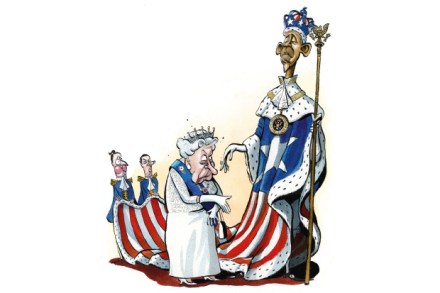
To subscribe to The Spectator’s weekly podcast, for free, visit the iTunes store or click here for our RSS feed. Alternatively, you can follow us on SoundCloud. Is Barack Obama's intervention in the Brexit debate a welcome one or should he keep his nose out of our business? Tim Montgomerie says in his Spectator cover piece that such overreach is typical of the US President's arrogance. But Anne Applebaum disagrees and says that Obama speaks on behalf of many Americans when he calls on Britain to stay engaged in European politics. So should we listen to Obama? Joining Isabel Hardman to discuss is Spectator deputy editor Freddy Gray and the Telegraph's Janet Daley. Speaking on the podcast, Janet Daley says: 'He is perfectly entitled to have a view and he should express it at home.
Cameron’s heading for a hollow victory

From our UK edition

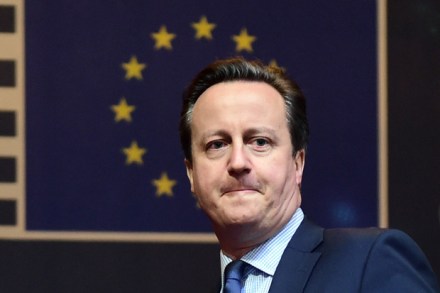
[audioplayer src="http://feeds.soundcloud.com/stream/260046943-the-spectator-podcast-obamas-eu-intervention-the-pms.mp3" title="Isabel Hardman, Fraser Nelson and James Forsyth discuss the PM's hollow victory" startat=511] Listen [/audioplayer]‘Nothing except a battle lost can be half as melancholy as a battle won,’ wrote the Duke of Wellington after Waterloo. David Cameron may well feel the same about referendums on 24 June. The EU debate is already taking a toll on the Tory party and his premiership. While defeat would be disastrous for him, even victory will come at a heavy political cost. Victory is, for now, still the most likely outcome.

PMQs Sketch: The Tories have redefined the term ‘manifesto’

From our UK edition

Does Cameron care any more? Insouciance is a more attractive quality than earnestness in a leader but Cameron is taking his demob-happiness to extremes. He dismisses every crisis with a bored eye-roll and a wave of the hand. Doctors strike? No big deal. Backbench revolt over education? Been there before. Dodgy dossier on Brexit? All forgotten by the summer. Tax evasion scandal? A scrap of signed paperwork will sort it. Corbyn attacked Tory plans to academise schools against their will. This is the same freedom-at-gunpoint policy that worked so well in Iraq and transformed a malign dictatorship into a thrusting modern democracy. Cameron believes that cattle-prodding schools into accepting autonomy will magically improve them.

Watch: David Cameron wades into Labour’s McDonald’s row – ‘I’m lovin’ it’

From our UK edition

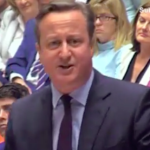
This week Jeremy Corbyn has faced an MPs' revolt over the Labour party's decision to ban McDonald's from having a stall at its party conference. A number of MPs have accused the Labour leader of snobbery, while Corbyn's spokesman has had to admit that he does not know what the vegetarian Labour leader could even eat at the popular fast food chain. Happily one person is at least enjoying the ongoing row. David Cameron brought up Labour's misfortune at PMQs. He explained that he had at first thought the party were banning John McDonnell from Labour conference, before realising it was something much worse.

What ‘stinking cesspit of corporate corruption’? Steve Hilton refuses to say he backs Brexit

From our UK edition

In More Human, Steve Hilton describes the EU as 'a stinking cesspit of corporate corruption gussied up in the garb of idealistic internationalism'. So given his strong words on the issue, in theory it would seem that David Cameron's former director of strategy -- who is also one of the Prime Minister's closest friends -- has all the makings of a Brexiteer. However, speaking on Today to launch his new website Crowdpac -- which aims to show which candidates match your priorities -- Hilton appeared to get cold feet on the issue. When Sarah Montague asked him if he was backing Out, Hilton attempted to avoid the question several times: SH: Well Sarah, I'm not going to get into that today. Other than to say it's many peoples' experience on both sides of the argument.

Did Stephen King write the In campaign’s script?

From our UK edition

One of the most striking things about the debate on Britain’s future relationship with Europe is that the case for staying is couched overwhelmingly in negative and pessimistic terms, while the case for leaving is positive and optimistic. Those of us who want to Leave believe Britain’s best days lie ahead, that our country has tremendous untapped potential which independence would unleash and our institutions, values and people would make an even more positive difference to the world if we’re unshackled from the past.

Tories’ ‘ludicrous’ phone bank email falls flat with voters

From our UK edition

As CCHQ try to gather momentum behind Zac Goldsmith's mayoral campaign, they are hoping that they can count on Tory supporters to do their bit. On top of leafleting, voters are being invited to take part in phone bank sessions at the Connect call centre. In the event that this alone would not be enough to entice would-be volunteers, they have a 'voter communications intern' sending out messages to increase attendance at the sessions. Alas word reaches Steerpike that the tone of the emails coming from 'voter communications' is going down like a lead balloon with a number of well-heeled supporters. A recent email from the intern about a recent caller connect session has been doing the rounds.

The wisdom of pitchfork-waving crowds

From our UK edition

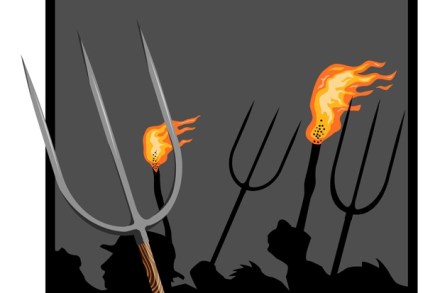
In a way the headline to my fellow columnist Dominic Lawson’s Sunday Times commentary on 12 April said it all. ‘Join the pitchfork wavers on tax, Mr Cameron, and you end up skewered.’ The column had something of an 18th-century ring to it, conjuring in my mind’s eye an elegant London dinner party, with men-about-town in powdered wigs twitching back the heavy damask curtains to sneak worried glances at a riot outside: an unruly and enraged mob rampaging up the street. But Dominic had a powerful argument. It was, he suggested, noblemen like David Cameron and George Osborne who had unwittingly energised the rabble.

The Spectator podcast: tax vs sex

From our UK edition

To subscribe to The Spectator's weekly podcast, for free, visit the iTunes store or follow us on SoundCloud. After the row over tax returns, are political scandals not what they used to be? Richard Littlejohn asks in his Spectator cover piece this week whether we’ve come a long way from the days of Christine Keeler and the Profumo Affair. Have we forgotten what a scandal is really about? Isabel Hardman is joined by Matthew Parris, author of Great Parliamentary Scandals, to discuss. As he puts it:- For quite a long time, sex was very delicious. I think we're beginning to find tax and financial matters delicious too.

Friday caption contest: the three Europhiles

From our UK edition

Although Jeremy Corbyn has been slow to get involved with the EU campaign, David Cameron is still keen to show the public the Remain side has cross-party support. So, what better way to prove this than a photo opp with Labour's Neil Kinnock and Liberal Democrat Paddy Ashdown. Mr S welcomes your caption suggestions for the photo of the three Europhiles. The winner will be revealed on Monday. Update: ... and the winner is Alun Morris for coming up with the caption: 'celebrity threesome fight losing battle to prevent the public knowing the truth'.

The truth about black teenagers, prison and university

From our UK edition

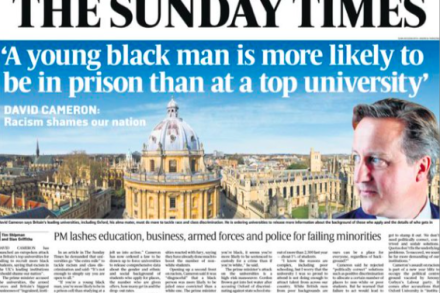
A few months ago, David Cameron made an incendiary claim that splashed the Sunday Times and set the news agenda for days: black boys, he said, were more likely to go to prison than university. It was a shocking statement, that quite rightly sparked much discussion. But there was one flaw: his claim was nonsense. I had to submit a Freedom of Information request to find the real story: black men are twice as likely to go to a top (i.e., Russell Group) university than to prison. Include women, and it’s five times as likely. Include all universities, and there’s no comparison – black teenagers have a higher university entry rate than white teenagers.

Tax returns to boast about

From our UK edition

As Jeremy Corbyn and John McDonnell whinge away about how rich David Cameron’s family is, they might consider that in the last six years he has funded schools ’n’ hospitals to the tune of £402,283. How much have they put in? Since wealthy ancient Athenians loved to boast about the vast sums they contributed via property taxes to the public benefit, they would have been amazed that Cameron did not long to reveal how rich he was. The 5th-century BC thinker Democritus argued that there was nothing like the rich giving to the poor to produce concord that strengthened the community.

My confession: I began dodging tax aged eight

From our UK edition

As someone who still entertains hope of becoming a member of Parliament one day, I’d better come clean about my own tax affairs. It’s a torrid tale, as you’d expect, but rather than wait for my political opponents to winkle the story out of me bit by bit, I thought I’d get it all out in the open. I blame the Cub Scouts for starting me on the wrong path. As a boy of eight, I was an eager participant in bob-a-job week, which involved going from door to door on my street offering to do odd jobs. I turned all the money over to my Cub pack, but I realised I could earn extra pocket money from then on by washing cars and weeding gardens. Before long, I’d earned enough money to buy my own portable black-and-white tele-vision — about £40, if I recall.

The Spectator’s notes | 14 April 2016

From our UK edition

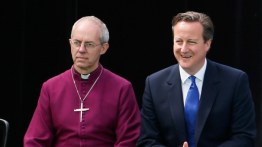
I don’t think there is a Royal College of Public Relations, but if there were, it should teach a course based on a comparison between two stories last week. One concerned the Prime Minister and the other the Archbishop of Canterbury. Both arose from the paternity of the principals and, in both cases, the principals had not done anything wrong. Yet there the similarities end. David Cameron, and those working for him, spent the best part of a week fending off and then changing a story they found embarrassing. Justin Welby, and his much smaller staff, confirmed the truth of a potentially much more painful story in one go, bravely and clearly.

Portrait of the week | 14 April 2016

From our UK edition

Home David Cameron, the Prime Minister, after spending a week parrying questions about his late father’s investment fund Blairmore, suddenly published a summary showing that on his own taxable income of £200,307 in the past year he had paid tax of £75,898. Downing Street said ‘potential prime ministers’ and chancellors should be expected to publish their tax returns in future. George Osborne, the Chancellor of the Exchequer, said he had paid £72,210 in tax on earnings or £198,738. Boris Johnson MP said he’d paid £276,505 tax on income of £612,583. Jeremy Corbyn, the leader of the opposition, had not kept a copy of his tax return, but then got hold of one which showed that he’d paid £18,902 tax on £72,645 income.

Cameron’s plan for a graceful exit all hinges on the referendum

From our UK edition

The year 2019 seems a long way away. Whether or not David Cameron can stay in office until then is this week’s hot topic of conversation among Tories. They wonder how many more weeks like the last two the Prime Minister can endure. Before Parliament broke up for Easter, the view among Cameron loyalists was that the Tory party needed a holiday. The thinking went that the recess would remove MPs from the Westminster pressure cooker and let referendum tempers cool. But this break turned out to be a disaster. The government spent the first week trying to get on top of the Port Talbot steel story and the second attempting to fend off the fallout from the Panama papers.

An inconvenient truth | 14 April 2016

From our UK edition

‘Our findings will shock many people,’ promised Trevor Phillips at the beginning of What British Muslims Really Think (Channel 4, Wednesday). But the depressing thing is that I doubt they will, actually. I think the general British public have known for some time what Phillips’s documentary professed to find surprising: that large numbers of Muslims don’t want to integrate, that their views aren’t remotely enlightened, and that more than a few of them sympathise with terrorism. It’s only the establishment elite that has ever pretended otherwise. As former head of the Equality and Human Rights Commission, Phillips was very much part of that elite. He commissioned the 1997 Runnymede report that popularised the word ‘Islamophobia’.

Cameron and Mugabe: spot the difference

From our UK edition

It is not what Robert Mugabe would do. Calm down. These are ‘spiv Robert Mugabe antics’, said the Tory backbencher Nigel Evans, of the government’s alleged £9 million mailshot making the case for staying in the European Union. But no. They aren’t. If David Cameron was behaving like Robert Mugabe, then he wouldn’t just be sending a leaflet to your house. He’d be sending a gang of thugs to your house, who all claimed to have fought in the second world war and yet had an average age of about 22, and then they’d come into your house and make you leave your house, and say it was their house.

The wisdom of pitchfork-wielding crowds

From our UK edition

In a way the headline to my fellow columnist Dominic Lawson’s Sunday Times commentary on 12 April said it all. ‘Join the pitchfork wavers on tax, Mr Cameron, and you end up skewered.’ The column had something of an 18th-century ring to it, conjuring in my mind’s eye an elegant London dinner party, with men-about-town in powdered wigs twitching back the heavy damask curtains to sneak worried glances at a riot outside: an unruly and enraged mob rampaging up the street. But Dominic had a powerful argument. It was, he suggested, noblemen like David Cameron and George Osborne who had unwittingly energised the rabble.