David cameron

When does reputational damage become real damage?

From our UK edition

So has the Lord Ashcraft saga fouled the Tories' reputation?  Well, looking at this One Poll survey in PR Week it would seem it has.  52 percent of respondents feel that the party's reputation hasn't improved since the start of the year – and 37 percent think that the Ashcroft revelations are the biggest contributing factor to that. But what does all that really mean?  After all, another finding is that 20 percent of respondents believe that the 2006 story about a bike-riding Cameron being trailed by his chauffeur is "still damaging" to the Tories.  That may be so.  But will that kind of reputational "damage" really stop people voting for the Tories come the election?  Similarly, will the Ashcroft story actually sway hearts and minds?

Piers for Parliament?

From our UK edition

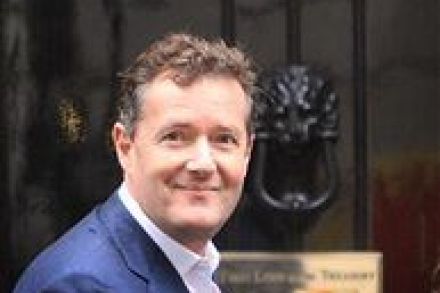
Could you vote for Piers Morgan? In an interview with Freddy Gray in The Spectator tomorrow, he says he's tempted to stand for Parliament - and it's not such a surprise. He has weirdly inserted himself in the political process in recent weeks, defining Nick "no more than 30" Clegg and giving Gordon Brown probably the best piece of television coverage he will receive - ever. Now he is even considering standing for election. 'I am tempted to run on a ticket of openness and frankness about the problems of this country and not being afraid to deal with them,' he says. He doesn't have much time for Cameron, describing him as 'a spivvy snake-oil salesman who has got a load of his Old Etonian mates and they're all on a bit of a jolly to take over the country.' But here's the thing.

Miracle at SW1

From our UK edition

He did it. We saw him. It actually happened.  History was made at PMQs today as Gordon Brown finally gave a direct answer to a direct question. Not only that, he admitted he'd been wrong about something. Tony Baldry (Con, Banbury) informed the PM that his assertion before the Chilcot Inquiry that defence spending has risen, in real terms, every year has been contradicted by figures released to the Commons library. Up got Brown, looking like a wounded old teddy-bear, and offered this epoch-making concession. 'I accept that in one or two years real terms spending did not rise.'   What a union of opposites. Brown and the truth. It was alarming, almost unnatural, to witness. Like Santa in a scuba suit or the Pope playing pinball.

Two blasts from the past

From our UK edition

Michael Savage observes that Cameron’s denunciation of Brown’s 'weak' premiership recalled Tony Blair’s famous savaging of the ‘weak, weak, weak’ Major government . Here it is: After watching that, I chanced upon an exchange between Blair and Cameron, dated November 2006. Their subject? NHS budget cuts. The first two minutes of the clip reinforce just how complicit the Conservatives were in Brown and Blair’s free for all. Cameron was aghast that "budgets were being raided to solve financial deficits".

PMQs live blog | 17 March 2010

From our UK edition

Stay tuned for live coverage from 1200. 1201: And here we go. Brown starts with condolences for fallen troops, and also for the late Labour MP Ashok Kumar and his family.  For the first question, Tony Baldry takes on Brown over his claim that defence expendintue has risen in real terms under Labour.  A note from the House of Commons library has since shown this to be "incorrect".  Brown says that he is already writing to Chilcot to correct this.  Brown: "I do accept that, in one or two years, defence expenditure did not rise in real terms" - but it did rise in cash terms.  Not a good start for the PM. 1203: The Tories are up in arms about Brown's jibe, in response to the second question, that they'd cut SureStart centres. 1205: Cameron now.

The Tory campaign is getting back on track

From our UK edition

Whisper it quietly, but there is a sense that the Tory campaign is getting back on track. The Tories have had three good days in a row, have Labour on the back foot over Unite and the polls appear to be moving in their favour. Certainly, Tory morale is better than at any point since the start of the year. One thing raising Tory spirits is Cameron’s own performance. As Iain Martin points out, on Sunday Brown met the voters and was incapable of finding the right tone. Cameron, by contrast, is at his best among ‘real’ people as Monday’s event demonstrated. Another thing bolstering Tory morale is their campaign against Unite’s influence. After taking a kicking over Ashcroft for more than a week, CCHQ staff are delighted to be the ones on the offensive.

ECR’s record so far

From our UK edition

The decision by David Cameron to pull the Tories out of the EPP and form the ECR was a victory of principle and party politics over pragmatism. While many Tory grassroots howled with joy, it is worth examining the practical consequences on Tory influence in the European Parliament – not to reverse the decision, but validate or disprove the oft-made charge that the decision has made the Tories impotent.   Let us eschew any discussion about the views of key members of the ECR on Jews; let us also not dwell on whether the Tories have cut themselves off from other centre-right leaders. The first point is a matter of opinion and the second is uncontestable. Let us instead focus on how the ECR has done its work in the legislature.

Tories to outline spending cuts after the Budget

From our UK edition

Now here's a turn up: according to Nick Robinson, the Tories are going to announce details of what spending they would cut in the forthcoming fiscal year after next week's Budget.  So it looks like Cameron might come good on his promise, after all. We'll have to wait and see before judging whether those cuts are credible.  But, along with George Osborne's FT article today, it does seem that the Tories have rediscovered the will to take on Labour over when and what to cut.

Cameron must win outright

From our UK edition

Heaven forbid that the Tories and LibDems end up in coalition - but the Guardian asked me to write a piece war-gaming what would happen if they did. The result is here. I really do believe it would be a short-lived calamity because no one would be playing for the long-term. The Westminster system does not handle coalitions, and hung parliaments lead to second elections. From day one of any Lib-Con coalition, everyone would have an eye on that second election. The Tories would want to accuse the LibDems of recklessly pulling the plug, the LibDems would be briefing against the Tories making out that they were the only competent ones in the coalition.

Cameron is synonymous with change

From our UK edition

It was mostly standard fare for a political interview, but the Cameron/Trevor McDonald show reminds you of what I think is one of Cameron’s foremost positives, and one that is welcome amid the Tories' current self-doubt. Cameron and his team turned the unelectable Tories into a modern and truly representative force. Jonathan Freedland may argue that the change is cosmetic, but candidates, such as Shaun Bailey, selected by the Hammersmith association, say otherwise. If Cameron saw-off grass-roots interests who were still fighting Margaret Thatcher’s early battles, if not those of Churchill too, he has the resolve to tackle the legacy that Gordon Brown is likely to bequeath him.   I’d expected to be left slightly flat by this interview.

34 percent  think a hung parliament is in the country’s best interests

From our UK edition

It would be news if the Tory lead didn’t contract every Sunday. James has already noted the latest retreat in the Tory lead, detailed in the Sunday Telegraph's ICM poll. Tory poll contractions are the new banking bailouts - so numerous you scarcely notice them. What struck me about this poll is the large minority who want a hung parliament. Not just those who think such an outcome is likely, but actively seek its realisation - 34 percent according to this poll.   I do not understand this impulse. Coalition and co-operation are laudable but, as the recent care row proves, fanciful aims. Other than fighting World Wars, modern British politics has struggled to accomodate coalitions.

McMillan-Scott makes no impression

From our UK edition

Edward McMillan-Scott fights a lone and determined battle. Timing his defection for maximum destruction, McMillan-Scott characterises the Tory party in the style of Orwell’s Big Brother. He told the LidDem spring conference: "People are controlled within the Conservative party, as I was.” It is a common charge, but, because the Tory leadership currently resembles Channel Four’s Big Brother, it doesn’t stick. Consequently, McMillan-Scott sounds shrill. He accuses David Cameron of ‘propitiating extremism abroad’, a charge usually reserved for Abu-Hamza, and condemns Cameron as being ‘committed to power for its own sake’.

At last, the Tories get organised

From our UK edition

Three weeks ago, James argued that the Tories’ incoherence emanated from their disjointed campaign management. Steve Hilton, Andy Coulson, George Osborne and George Bridges were not communicating and the stark clarity on the economy and ‘Broken Britain’ was obscured. James urged the Cameroon duma to put its house in order. Cameron heeded some of his advice, but this morning brings the most significant change. Tim Montgomerie reports that Andy Coulson and Steve Hilton have at last joined forces and will report direct to George Osborne, who will be replaced by Ken Clarke as the Tory’s economic face. That that this is news reveals the utter chaos  that ruled the campaign; but, as they say, better late than never.

Hague’s modern Realism

From our UK edition

In a splurge of activity, William Hague gave both an interview to the FT and another foreign policy speech at RUSI outlining the views of a Conservative government. It was time for an update on Tory thinking, not least because David Cameron’s description of his policy as “liberal conservatism” and his unwillingness to march into a “massive euro bust-up” has had little effect. That is because a struggle over how to engage with the world continues to run beneath the party leader’s message of party unity.

Uptown girl

From our UK edition

David Cameron warns the nation to “get ready” for Samantha, who will be interviewed by Sir Trevor Macdonald on Sunday. If Sarah Brown is the damsel in distress, saved by her heroic husband, Sam Cam is the trouser-wearing uber-bitch. Allegedly, she is terrifying: cowering Smythsons’ interns refer to her as Anna Wintour. She never does hyperbole. She will extol her husband’s virtues succinctly, saying he’s never let her down in 14 years of marriage. Presumably she will then talk about her career, the tragic loss of her son and her Bohemian youth. Following Ed Vaizey’s bid for de-selection, great efforts have been made to present the twentysomething Sam as a loaded lefty Boho.

Clegg’s conditions

From our UK edition

Nick Clegg is the rage of the papers this morning. His interview with the Spectator is trailed across the media and the Independent has an interview where Clegg once again lists the four demands that would be his initial negotiating tests for backing a minority government. They are: - Raising the income tax threshold to £10,000 through taxes on the rich. - An education spending boost for the poorest in society through the 'pupil premiums'. - A switch to a Green economy, less dependent on financial services.  - Political reforms at Westminster, including electoral reform. What to make of that quartet? There is much that is sensible, much that is not, and still more that is unworkable.

Hague and Cameron are vindicated for leaving the EPP

From our UK edition

Daniel Hannan breaks the, sadly, not very surprising news that MEPs have voted overwhelmingly in favour of an EU Tobin tax. The margin: 536 to 80. Only the European Conservatives and Reformist group and a handful of radicals opposed the motion. The EPP, which describes itself as ‘centrist’, voted uniformly in favour. Cameron was right to withdraw from a grouping whose interests are at odds not only with British Conservatives but with Britain itself: a tax on all financial transactions would castrate the City. What does this division mean for Britain? On the face of it not a lot: anyone of the member governments could veto it. However, many European governments, including our own, seem alarmingly pro the measures.

Clegg: Heir to Thatcher?

From our UK edition

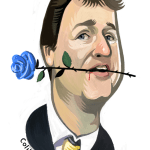
Nick Clegg has a blue rose in his mouth in tomorrow's Spectator, serenading readers - and showing his hidden Tory side. I have to say, he puts his heart into it. Not only does the Lib Dem leader say he'll end the structural deficit with 100 percent spending cuts (not the 20 percent tax rises, 80 percent cuts combo that the Tories advocate), but he even heaps praise in Lady Thatcher. More, he describes her as something of an inspiration: just as she took on vested interests in the 1980s, so he will take on the banks now.   Personally, I can't quite see the equivalence - and Clegg as the Heir to Thatcher is an image that I just can't conjure in my mind. But you can't blame him for trying.

Tornado in the chamber

From our UK edition

It was like a volcano going off. At PMQs today Cameron was calmly dissecting the prime minister’s underfunding of the Afghan war when he quoted two former defence chiefs who’d called Brown ‘disingenuous’ and ‘a dissembler’. Then someone shouted, ‘they’re Tories!’ Cameron lost control. Instantly, completely. His temper just went. White in the face, he leaned his flexed torso across the dispatch box, hammering at it so hard that it nearly disintegrated. ‘Is that it?’ he yelled. ‘Is that what this tribalist and divisive government thinks of those who serve this country!?’ Rippling with anger he demanded that the PM dissociate himself from his backbenchers’ smears.

The prospect of another EU treaty is a huge problem for reformer Brown

From our UK edition

It seems there must be discussion about a potential European Monetary Fund, and an organisation to manage Europe’s economies that circumvents Maastricht, to avert future fiscal crises. So much for Lisbon, the treaty to end all treaties. Quite why no one, especially the treaty's opponents, acknowledged the possibility of a member state's financial collapse whilst Lisbon was being ratified during the recession is a mystery. However, all that is past. The question for the future is will there be a referendum this time round? Adrian Michaels, rightly, point out that the Tories’ eurowars are likely to be renewed at the most inopportune time for Cameron. But Cameron will offer a referendum; his European policy dictates that he must. A further treaty is a problem for Brown.