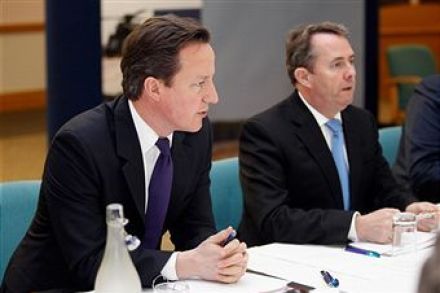
David cameron

Your five-point guide to the Ed Balls files

From our UK edition

Intrigue, hilarious intrigue this morning, as the Telegraph releases a bunch of documents that clarify just how far the Brownites went to oust Tony Blair. They are, it is said, from the personal files of Ed Balls, and they are copious in both quantity and variety. From straightforward poll results to 31-page reports on how Brown is a Volvo not a BMW, this is a real insight into the numerous pathologies of party and government. Here's my five-point overview: i) The leadership coup in waiting. It starts only two months after the 2005 general election, and Balls' own ascent to Parliament, with a memo setting out the structure of Brown's leadership campaign team. And it soon crescendos.
Cameron: a leader in need of ‘a people’

From our UK edition

One of the odd things about David Cameron is that he wants to be a consensual radical. Unlike Margaret Thatcher he doesn’t want to have ‘a people’, a section of the electorate that is loyal to him personally. Rather he wants to be seen as a unifying national figure. He is, to borrow a phrase from The Economist, a ‘one nation radical’ But Cameron’s persona doesn’t mean that the left aren’t going to fight him with everything they’ve got. The Archbishop of Canterbury’s assault on the coalition today in the New Statesman is a classic example of the kind of opposition he is going to face. (If you read the whole piece, it is clear that Rowan Williams identifies himself as being on the left).

Softly, softly

From our UK edition

As I argued this morning, the Rowan Williams furore will be sustained if the government over-reacts. So far, so softly from Downing Street: ministers and prominent MPs have been across the airwaves this morning and no one has taken the so-called nuclear option. As you can see below, the responses have been mild. Paul Goodman observes that this is because the PM ‘doesn’t get too worked up’ about this sort of media conflagration. Here’s a brief selection of what Cameron’s lieutenants have said to counter Dr. Williams’ incandescence: Matthew Hancock: “It’s just slightly odd that he’s made these arguments which, in some cases, are simply incorrect, when it comes to especially welfare and also on education.

The turbulent priest

From our UK edition

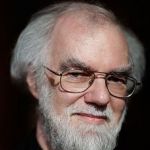
“Nowadays politicians want to talk about moral issues, and bishops want to talk politics,” said Sir Humphrey. This week’s New Statesman has been guest edited by the Archbishop of Canterbury. In his lead editorial, Dr Rowan Williams has launched a brutally eloquent assault on the coalition for embarking on a programme of radical reform for which, he claims, there is no mandate. With particular reference to the health and education reforms, Williams says: “With remarkable speed, we are being committed to radical, long-term policies for which no one voted. At the very least, there is an understandable anxiety about what democracy means in such a context.

A missed opportunity to strengthen the Big Society in rural areas

From our UK edition

David Cameron came into power promising to deliver the greenest government ever and this week the government published its Natural Environment White Paper. In his article on this site, Richard Benyon – Defra Minister and long-time supporter of rural affairs – explains where he believes this White Paper will make a difference. From provisions to increase outside learning for school children, to recognising the hard work that rural businesses are already doing; there is much to be commended.    ‘The Natural Choice’ promises to repair the damage that has been done to the environment in the recent past and encourage greater involvement in helping nature prosper – the ‘Big Society’ in action.

Even Ed knew he’d lost

From our UK edition

Cameron made history today. He gave the Speaker a genuine reason to call PMQs to a halt. Usually Mr Bercow pops up two or three times to shout down shouters and to waste time by ordering time-wasters not to waste time. But today protocol obliged him to stop proceedings. A half-hearted punch-up was in progress over government u-turns and the PM was defending his reforms by referring to his favourite Labour ally, the shadow health secretary. If he quotes John Healey much more often Cameron will owe him royalties. Ed Miliband accused the government of lengthening waiting times by abolishing Labour’s targets and Cameron countered by claiming that the figures were misrepresented regularly. "The opposition leader misled the house two weeks ago," said Cameron.

Cameron’s easy ride

From our UK edition

Having u-turned on two more policies in the last two days, one would have expected David Cameron to have a hard time today at PMQs. But he didn’t. Ed Miliband never got going, turning in one of his worst PMQs’ performances. Cameron pithily summed up Miliband’s performance when he joked that ‘the best thing that can be said about his performance is he wasn’t thinking about politics on his honeymoon.’ Miliband’s performance today will add to the low-level grumbling about him among some Labour MPs and members of the shadow Cabinet. Miliband has a big speech coming up on Monday and he needs it to deliver a rationale for his leadership, to give it a purpose.

Retreating from Kabul

From our UK edition

Britain’s former envoy to Kabul, Sherard Cowper-Coles, has written an op-ed about NATO’s coming withdrawal from Afghanistan in this morning’s Times (£). The unspoken analysis is that: having failed to defeat the Taliban unconditionally in battle, it will be hard to secure peace and stability. Like Matt Cavanagh, who wrote an extensive report on the situation in Afghanistan for Coffee House last week, Cowper-Coles says that NATO is split between ‘shooters’, who perpetually ask for one more ‘big push’, and politicians, who are seeking negotiated settlement and military drawdown.

Cameron stamps on Clarke

From our UK edition

Ken Clarke was summoned to Downing Street yesterday, the BBC reports. He spoke to David Cameron for half an hour, after which the controversial sentencing review was dropped: there will not be a per cent fifty discount in plea bargaining and Clarke will have to find £130m of savings from elsewhere in his department. Clarke has paid for last month’s rape victim fiasco, which so incensed the party leadership. The government is adamant that this is not a u-turn; rather, it argues, it has consulted on extending plea bargaining from the current level of 30 per cent and decided against such a move.

Cameron on a charm defensive

From our UK edition

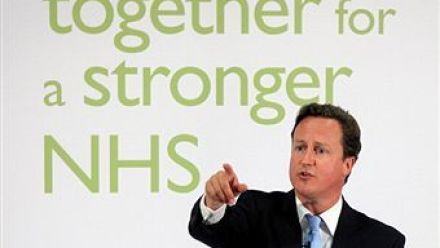
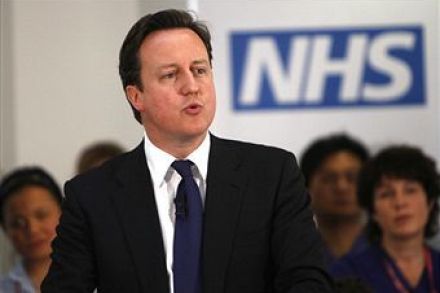
David Cameron is at his best when his back is to the wall. His speech on the NHS was largely as expected – a charm offensive designed to appease his warring coalition and reassure a fevered public. I’ll wager that he has succeeded; but reservations and pitfalls remain. Cameron recognises that competition is the stiking point for most Liberal Democrats, while the Tories insist on it. Competition will stay. He said, “New providers, more choice and competition raises standards and delivers value for money.” However, competition will not be unbridled. Cameron reassured doubters, “But let me clear, no: we will not be selling off the NHS, we will not be moving towards an insurance scheme.

Miliband offers with one hand and stabs with the other

From our UK edition

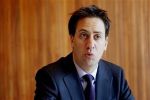
Ed Miliband delivered a speech at the Festival Hall this morning. A couple of strategic issues emerged from it. The first is that Labour has decided that the IMF is wrong: “This Government is going too far and fast, hitting families and making it harder to reduce the deficit.” This is not altogether surprising. Ed Balls’ recent article in the News of the World suggested that Labour will attack on the cost of living and youth unemployment, both of which may serve to slow the rate at which the deficit is reduced. As Fraser noted yesterday, Labour is aided by rising inflation, which is deepening the effect of cuts. However, Labour is still yet to admit to its role in the crisis or reveal how it would cut the deficit.

The need for a strong man to strong-arm the new counter-terror policy

From our UK edition

If the counter-terrorism strategy the government is announcing today is to succeed, it will have to overcome bureaucratic opposition and institutional inertia. As Dean Godson writes in The Times today (£), senior civil servants in the Office of Security and Counter-Terrorism are highly reluctant to accept the government’s new, more muscular approach to this issue and will go back to the old, failed way of doing things if given the chance. If the Prime Minister’s writ is going to run across government on this issue, he is going to need someone working from the centre with Cameron’s explicit backing whose sole role is to supervise the implementation of the policy — the Home Secretary has too much on her plate to expect her to do this task alone.

Cameron’s health worries

From our UK edition

David Cameron has made the NHS his political mission. “I can do it (explain his priorities) in three letters: NHS,” he once said. It was a reassurance that the NHS was safe in his hands. His conviction doubled as a vital tactical stance to prove that the Tories were 'nasty' no more. So, the news that he is re-affirming his faith with an NHS pledge card is telling – a response to the fact that the public do not trust the Conservatives with the health service. It's back to square one. According to Benedict Brogan, the pledges simply reiterate that the Tories can be trusted with the NHS. There is no attempt to explain how reform will unfold, nor indeed whether it will unfold at all.

Counter-terrorism means stopping dealings with extremists

From our UK edition

The coalition’s counter-terrorism strategy will be published tomorrow. This rather delayed review has been the subject of some semi-public wrangling, Cameron and Clegg have given speeches setting out very different visions for it. But one thing to remember is that the test of the review's robustness isn’t just whether it stops government money going to extremists groups. It also has to lead to government, at all levels, stopping dealings with these groups, denying them the oxygen of recognition. Today’s Telegraph notes that 20 groups will lose their funding because the views they espouse are antithetical to British values. This is to be welcomed.

Cable tries to keep everyone happy – apart from the unions

From our UK edition

When the GMB union invited Vince Cable to address their conference today, I doubt they wanted this: a warning that the government could legislate if the brothers decide to militate. The Business Secretary does add that "the case for changing strike law is not compelling," so long as industrial action remains limited. But, on the surface, this is still the firmest coalition attack on the unions since David Cameron and Boris wrote that angry article for the Sun in January. And it comes from the side of the coalition, the Lib Dems, who were thought to be opposed to taking on the unions in the first place. Perhaps Cable really is more ruthless on this than his reputation would suggest. The question, though, is of how the rhetoric will translate to reality.

Helping the kids be all right

From our UK edition

Tomorrow sees the publication of the report David Cameron commissioned on how to address the commercialisation and sexualisation of childhood. Thanks to a leak we already know most of what’s in the report. It proposes, among other things, that sexualized advertisement shouldn’t be displayed in places near where children go, that the watershed should be more strictly enforced, that lads mags shouldn’t be displayed at eye level and that it should be easier for parents to block access from home computers to certain internet sites. There’ll be those that dismiss these proposals as gimmicks or as too small to make a difference. But making the public square more family friendly is a noble purpose and something that it is appropriate for government to get involved in.

Charles Moore warns that the Downing Street machine isn’t working

From our UK edition

Charles Moore, Margaret Thatcher’s biographer, is one of the columnists most sympathetic to and best informed about what David Cameron is trying to do. So when Charles warns that the current set-up of Downing Street isn’t working for the Prime Minister, Number 10 should take notice. Charles’ worry is that the new Downing Street set up is insufficiently political, that policy and politics are being kept too far apart. I think Charles is right about this. The Number 10 policy unit is now made up mostly of civil servants or former management consultants who, by their very nature, aren’t intellectually or ideologically committed to the Cameron public service reform agenda.

Cameron’s European opportunity

From our UK edition

Jean-Claude Trichet’s speech yesterday proposing a ministry of finance for the eurozone (£) can be taken as setting out how the European Central Bank wants to resolve the eurozone’s problems. It is yet another example of how the European elite use crises to advance integration.   But just as important from a British point of view is Trichet’s admission that the overall package of changes he is talking about “naturally demand a change of the [EU] treaty". This, as Fraser has written previously, presents David Cameron with a glorious opportunity to take advantage of this moment to redefine Britain’s relationship with the European Union.

Not just a wily Fox, but a watchful hawk with time on his side

From our UK edition

Liam Fox is fond of reminding us that he didn’t come into politics to cut the armed forces. A wistful look falls across his face when he says it – an indication of frustration as much as sincerity, a sense deepened by his letter of concern about the government spending so much more on international development. Opponents of Fox might characterise this as hypocrisy: he would reduce the size of the state without touching the armed forces, they say. His enemies in the Conservative party say that it’s typical of this “clever fool’s” intellectual indiscipline. Fox the military and fiscal hawk wants to “have it both ways”.