David cameron

Cameron takes on bad dads

From our UK edition

It’s Fathers’ Day today — and David Cameron is marking it with an extraordinary attack on those dads who are AWOL. It comes in one paragaph of an otherwise excellent and moving piece for the Sunday Telegraph (albeit one that downplays the role of the taxman), in which he says that men leaving their family is "beyond the pale"; that such fathers should feel the "full force" of society; and goes as far as comparing them to drunk drivers. This is a brave move — in the Sir Humphry sense of the word — for three reasons. 1. Britain has more absent fathers than any country in the EU. That’s numerically: as a proportion, only in Estonia do single mothers compose a larger chunk of the electorate. Perhaps Cameron is appealing to single mothers here.

Cameron vs Kirchner

From our UK edition

After stating the obvious at PMQs this week — that the Falklands would remain sovereign British territory as long as they want to be — David Cameron has come under heavy fire from the Argentine President, Cristina Kirchner. As today's papers report, she yesterday described our PM as "arrogant," and said his comments were an "expression of mediocrity and almost of stupidity". But there is nothing new in the British position, which has always been that there can be no negotiations over sovereignty unless and until such a time as the Falkland Islanders so wish.

Hilton will probably ride it out

From our UK edition

Not for the first time, a throwaway line in a Spectator article by James Forsyth has been picked up by Fleet St and set the hares running. It's about Steve Hilton, Cameron's best friend and chief strategist, and whether he'll quit. Hilton is a man in a hurry — rightly, in my view, as the Tories are not incapable of blowing the next election. So he wants things transformed, and — for all his faults — acutely feels the sense of urgency and tries to communicate it through government. The Whitehall machine (and, more specifically, the permanent secretary of No.10) does not share this urgency and waters down change. It poses a grave risk. Cameron's mission to change Britain could be over, before it begins.

How the Tories could capitalise on the eurozone’s woes

From our UK edition

With events in Greece moving at pace, next week’s European Council meeting (which was scheduled to be a low-key affair) could be the place where attempts to resolve the crisis in the eurozone take place. I’m told that Number 10 has now woken up to this possibility and is doing some preparatory work on the matter.   But, frustratingly, there’s still no strategy for how David Cameron could use this crisis to advance the British national interest. As I wrote last week, if the eurozone countries decide that a solution will require a treaty change, then Britain has a veto over that — and could use the negotiations to secure various things that Britain wants from the EU.

Balls’ bloodlust gets the better of him

From our UK edition

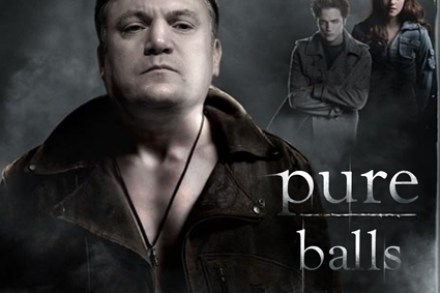
Ed Balls’ problem is his killer instinct. If he were a Twilight vampire, he’d be a Tracker: someone whose uncontrollable bloodlust takes him to places he should avoid. His position on the deficit is so extreme — more debt, more spending — that he’s pretty much isolated now. People are mocking him. John Lipsky, the acting IMF chief came two weeks ago and rubbished Balls’ alternative (as Tony Blair did) — so Balls, ever the fighter, has today given a long speech where he sinks his fangs into Lipsky and says (in effect) "I’ll take on the lot of you!" But Balls is brilliant. Often George Osborne seems not to bother arguing, and instead seeking approval from an alphabet soup of external agencies ("I must be right, the ABCD says so!

General outspokenness 

From our UK edition

Recent wars have given rise to an unusual phenomenon in British civil-military relations: frequent, and often high-profile interventions, by serving or recently retired senior military officers in public debates. The latest has been the intervention of Britain's chief naval officer, Admiral Sir Mark Stanhope, who questioned the Navy’s ability to sustain the Libya campaign. Different prime ministers have dealt with this kind of outspokenness in different ways. Tony Blair was too weak to rein in Army chief Sir General Richard Dannatt, while Gordon Brown did not have the credibility, vis-à-vis the military, to do so either. David Cameron is different. He is at the height of his powers and determined that he, not the military leadership, should exercise command.

Gove goes forwards, while other reforms stall

From our UK edition

The good, the bad and the ugly of the coalition’s reform agenda are all on display this morning. The good is the quickening of the pace in education. As Michael Gove tells this week’s Spectator, the 200 worst primary schools will now be taken over by new management, 88 failing secondary schools are to be converted into academies and any school where half the pupils are not reaching the basic standard of five good GCSEs including English and Maths will be earmarked for a takeover. Gove’s aim is remarkably simple: he wants good schools to take over bad ones.   The bad is yet another delay to the public service reform white paper, the longer things stay in the Whitehall system the less radical they become.

Milburn withdraws the Blairite seal of approval

From our UK edition

Alan Milburn's article for the Telegraph this morning is a rhetorical blitzkreig against the coalition and their NHS reforms. From its opening shot that "The Government health reforms are the biggest car crash in NHS history," to its closing call for Labour to "restake its claim to be the party of progressive, radical reform," it is searing stuff. And no-one is spared, least of all Andrew Lansley and his "foolish bout of policy-wonking". Such fierce language is unusual, even by the standards of cross-party rough 'n' tumble. What makes it extraordinary is that Milburn is employed by the government to work on their social mobility agenda. The coalition's last report on the matter even expanded and prolonged his role.

Ed Miliband volunteers for a kicking, gets kicked

From our UK edition

"First he denies his own policy, then he tries insults." So said Ed Miliband of David Cameron's performance in PMQs today. But I wonder what he'd say of the hundreds of Twitter users who went straight for the insults in a special Q&A with the Labour leader earlier. Urged on by Guido, plenty deployed the #AskEdM hash-tag to be rather unkind to MiliMinor. Here's a selection of some of the crueller, funnier and less comradely tweets: @MTPT: If a train leaves Paddington at 1136, carrying 200 commuters, what time will the RMT bring it to a standstill? @FelicityParkes: Where did Ed Balls touch you? Show us on the doll. @MShapland: hows your brother @Charlesm186: how many knives did you put in Tony Blair's back? @alexmassie: Was Brutus an honourable man? Discuss.

Miliband relieves the pressure

From our UK edition

After last week’s performance and this weekend’s headlines, Ed Miliband needed a win at PMQs — and he got one. Knowing that David Cameron would attack him over the fact Labour will vote against the welfare reform bill this week, Miliband had a string of questions for the Prime Minister on the detail of the bill and whether people recovering from cancer would lose the contributory element of their benefits. The issue was both wonky and emotive. The fact the questions were about cancer meant that Cameron couldn’t deliver his usual string of put downs to Miliband. Indeed, when one Tory backbencher heckled him, the Labour leader shot back that ‘it’s a disgrace that Conservative members are shouting as we talk about cancer.

PMQs live blog | 15 June 2011

From our UK edition

VERDICT: The specifics of today's exchange between David Cameron and Ed Miliband may have everyone rushing for this Macmillan press release, but the rhetorical positions were clear enough. There was the Labour leader, angrier and more indignant than usual, painting the government's welfare reforms as cruel and insufficiently thought-through. And there was the PM, painting his opponent as yet another roadblock to reform. Neither really triumphed, although their battle will most likely set a template for in future. The coalition has extensive public backing for its changes to the welfare system. So, Miliband's challenge is to attack certain aspects of them, without making Labour appear to be — as he put it on Monday — "the party of those ripping off our society".

Bring on the strikes

From our UK edition

An old boss of mine once said to me: when you start a new assignment, seek out a fight — and win it. The same advice should be given to incoming Prime Ministers. U-turns, as Mrs Thatcher knew, just create demand for more U-turns. If the government is willing to revise its NHS plans, then why not reopen the Defence Review, or alter the pledge to spend 0.7 of our national income on overseas aid (or at least abandon the questionable idea of legislating for it)? But seeking out and winning battles, while avoiding too many retreats, is not enough. To be great, a Prime Minister needs good enemies. Mrs Thatcher had great enemies in Michael Foot and Neil Kinnock. Tony Blair did too.

Those three little letters

From our UK edition

The NHS saga is over at last, or so the government hopes. The coalition is expected to adopt the recommendations of the NHS Future Forum, which have been delineated by panel member Stephen Bubb in this morning’s Times (£). Last night, the prime minister and his deputy addressed their respective parliamentary brigades and each claimed the credit for re-shaping Andrew Lansley’s bill for partisan gain. The political saga continues. The Lib Dems have been crowing over their victory; the Tories are licking their wounds –a voluble Conservative MP has told Philip Johnston that a ‘once in a generation opportunity to reform the NHS has been lost.

Miliband borrows from the Cameroons for his most substantial speech so far

From our UK edition

Thematically speaking, there wasn't too much in Ed Miliband's speech that we haven't heard before. The middle is still squeezed, the Tories are still undermining the "Promise of Britain", the bankers are still taking us for fools, and communities still need to be rebuilt. Even his remarks about benefit dependency bear comparion to those he made in February. But there was a difference here, and that was his punchiness. The Labour leader may not be the most freewheelin' orator in town, but the text he delivered was less wonky than usual, more coherent and spikier. It was even — in parts — memorable. You do wonder whether Miliband has learnt from the Cameroons. Much will be made of how his speech relied on the Blue Labour stylings of Maurice Glasman.

Balls bites back (with mixed success)

From our UK edition

You certainly can't fault Ed Balls for chutzpah. After the weekend he has just experienced, the shadow chancellor has an article in today's Mirror accusing George Osborne of "spinning out of control". It is pure, triple-distilled Balls: a fiery attack on both his political opponents and their policies. So let's sup deep and read the whole thing, alongside my comments: THIS is the most exciting Formula 1 season for decades. Because it is not just about who has got the fastest car – it’s about race strategy, overtaking and adapting to the changing conditions. You can be the fastest driver on the track for 40 laps – but that’s no use if, by ignoring advice, you spin-off in the rain or run out of fuel.

The day of the Lib Dem’s greatest ever triumph

From our UK edition

Or so they will try to claim. For today is the day when Steve Field, the GP doing the listening part of the NHS listening exercise, will release his report into the government's reforms. Judging from the convulsions of the grapvine, his recommendations will go something like this: more involvement for nurses and local officials, less private sector involvement and competitiveness, and a more relaxed timescale for introducing the changes. Although there are questions of degree hidden in that checklist, it is enough to have the Lib Dems heralding their "victory" for now. Paddy Ashdown was tapdancing across the airwaves yesterday, saying that Nick Clegg had "played a blinder". "Am I celebrating today?" he added, "Yes, I am, and I think the Liberal Democrats will be as well.

How the coalition hopes to fix Britain’s economic dysfunction

From our UK edition

The largest welfare-to-work programme on the planet is launched today by Chris Grayling and Iain Duncan Smith. It’s not much of an exaggeration to say that the future of this country — and, perhaps, David Cameron – depends on its success. The lead article of this week’s Spectator looks at it, and we used various metrics — some of which puzzled David Smith of the Sunday Times. He understandably challenged our claim that 81 per cent of the new jobs created are accounted for by immigration. We had a Twitter "conversation" about it earlier this morning, but some things you can’t explain in 140 characters. So here is my argument: complete with data, sources and assumptions.