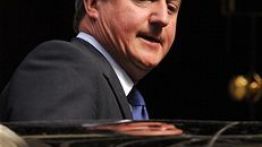
David cameron

The euro’s death rattle

From our UK edition

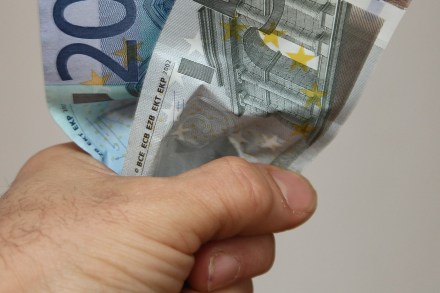
The end might be nigh for the euro. The currency has hit an all-time low against the Swiss franc, as individual eurozone government bond yields vaulted higher due to mounting concerns about the region's debt crisis. To spell out what this means: in Spain, 12 billion euros of interest payments will accrue for every 100 point bond rise in Germany. That is more than Spain's annual public investment in infrastructure (8.6 billion) and its entire defence budget (7.6 billion). At the same time, Greece is heading towards disorderly default or some form of devaluation. Or both. And now Italy looks vulnerable.
Karzai’s brother shot dead

From our UK edition

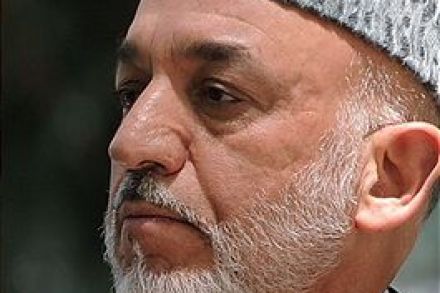
The half-brother of Afghan President Hamid Karzai has just been murdered outside his fortified compound in Kandahar. Ahmed Wali Karzai was the political kingpin in Kandahar province, formally serving as head of the provincial council. I am told by officials that he was killed by one of his bodyguards at a checkpoint; the killer was then shot dead by other bodyguards. A senior FCO official has said that David Cameron would want to give his condolences on a “personal basis” to President Karzai for his loss. That said, many people in the British government will not be all that unhappy with the demise of Wali Karzai – or “AWK”, as he was known. AWK was certainly a controversial figure.

What didn’t make it into today’s reform paper?

From our UK edition

"It's like Blair and Brown — but without the acrimony." So sayeth one Cabinet Office source, describing the prolonged build-up to today's public services White Paper to me a couple of months ago. His point was that, although the yellow and blue halves of the Downing Street operation are genuinely chummy with one another, their differences can still put a block on reform. In his story, the Tories are like Blair, striving to go further, faster, stronger. Whereas the Lib Dems can occasionally stand in the way. So what has been blocked from the White Paper? Listening to David Cameron today, you wouldn't guess that anything has been. "Let me assure you of this," he said in his speech this afternoon, "we are as committed to modernising our public services as we have ever been.

Hunt flounders in very choppy water

From our UK edition

Jeremy Hunt’s statement today confirmed that News Corps’ takeover bid for BSkyB was being referred to the Competition Commission. But the questions afterwards were dominated by Labour questions about Andy Coulson’s appointment. Hunt could not answer whether or not Coulson had been positively vetted. Nor, could he say when Cameron and Coulson last spoke. Indeed, Hunt initially claimed Cameron had not spoken to his former director of communications since Coulson stepped down, before quickly correcting himself. The Culture Secretary did do a decent job of sounding reasonable and bemoaning Labour’s tone. But without a proper line on Coulson, he was left floundering. There were two other things worth noting from the session.

Major proposals on the future of Scotland

From our UK edition

There have long been suspicions in Westminster that David Cameron uses John Major as an out rider, the last Tory Prime Minister advances an idea that allows the current one to gauge opinion on it. Certainly, Major and Cameron are close. Remember how Major was used by Cameron in the days following the indecisive general election result. So there’ll be suspicions that Major is out riding for Cameron with his speech, covered in the Sunday Telegraph, arguing that the Scottish Parliament and Executive should be handed powers over everything apart from foreign, defence and economic policy. In exchange for this, the Scots would accept a reduction in the number of Scottish seats at Westminster.

Miliband primes his weapon of choice

From our UK edition

There's a lot to sift through in the papers this morning, even apart from history's final edition of the News of the World. I mean, a report that Rebekah Brooks is to face police questioning over the phone hacking scandal; an interview with the assistant commissioner of the Met, who apologises and flusters over the original police investigation; and claims from Paddy Ashdown that he warned No.10 "within days of the election" about the Coulson-shaped trouble that was heading their way. But more politically significant is the news that Ed Miliband could push for a Commons vote, on Wednesday, to block News Corp's takeover of Sky. The Labour leader outlined his plan on Andrew Marr's show just now, saying that, "I don't think [David Cameron] can carry on with business as usual.

Roadblocked to death?

From our UK edition

You may doubt that Downing Street is doing much politics beyond the phone hacking saga at the moment — but it is. The coming week will see the launch of the long-awaited, much-delayed public services White Paper, which is intended to set the framework for more or less every service we receive from the state. You may remember that Cameron heralded it with an article for the Telegraph back in February. Then, he suggested that private and charitable providers would be as privileged as state ones, writing both that, "we will create a new presumption that public services should be open to a range of providers competing to offer a better service," and that, "the state will have to justify why it should ever operate a monopoly.

The story sticks to No.10

From our UK edition

Big and bold, the contraction "No.10" appears on most of this morning's front pages. Or, failing that, the words "former Cameron aide". After the arrest of Andy Coulson yesterday, it was ever going to be thus. But it's still a sign of how closely Downing Street is being bound into the phone hacking scandal. Cameron's call, yesterday, for a judge-led inquiry into the whole, stinking affair — which was, you suspect, intended to deflect some of the heat away from his prime ministerial pulpit — is treated almost as a footnote. It's all Cameron, Coulson, Cameron, Brooks. There's more emphasis on Downing Street inside the papers, too.

Who knows where this will all end for politics, the press and the police

From our UK edition

Rarely has that old adage that week is a long time in politics seemed more appropriate. Seven days ago, few of us would have predicted that we would be in the middle of a crisis that could dramatically effect how politics is run, the press are regulated and the standing of the police.  This morning is probably one of those days when, to borrow his joke from yesterday, David Cameron wants to shut down all the newspapers. The Mail and The Telegraph lay into him for his call to end self-regulation of the press. Indeed, their editorials on the matter speak to a broader anger in both papers that despite them having supported the Tories through the thin years of opposition, it is—or was—News International who gets the red carpet treatment from the Tory leadership.

Miliband is running out of attacks — but he’ll use what he’s got

From our UK edition

It's a strange thing, amid all venom and spite over the phone hacking scandal, how the three main parties are actually converging on the same responses. A judge-led inquiry? That's now party policy for them all. The end of the PCC? Likewise. In his press conference earlier, Cameron even came close to saying that Rebekah Brooks should have lost her job. For once, there are trace quantities of Agreeing With Ed in the air at Westminster. This is both a boon and a bitterness for Ed Miliband. A boon, because he can at least claim that Labour led the debate, and Cameron followed. A bitterness, because the politics of the situation were so much easier for him when there were clear divides between his party and the government.

Clegg: don’t let’s be beastly to the eurozone

From our UK edition

If you strain your ears, and listen very carefully above the din of the phone hacking scandal, then you may just hear Nick Clegg's voice wafting across the Channel from Paris. Our Deputy Prime Minister is on the Continent today, delivering a speech that, in other circumstances, might have made more of a splash. This is, after all, a speech in which he stands up for the eurozone, and chastises those eurospectics — some of them within the coalition parties — who are eagerly anticipating its collapse. Or as he puts it himself: "A successful eurozone is essential for a prosperous UK. So there is no room for Schadenfreude here, no place for wagging fingers.

Cameron makes poor start on the long road back

From our UK edition

This was David Cameron’s most difficult press conference since becoming Tory leader. The Prime Minister refused to distance himself from Andy Coulson, a man he said was still his friend. But this loyalty to his ‘friend’ placed Cameron in an almost impossible situation. Cameron remarked defiantly that you’d be ‘pretty unpleasant if you forgot about him’ but the longer Cameron defends Coulson and his decision to hire him, the more this scandal will stick to him. Cameron repeatedly said that he gave Coulson ‘a second chance’. This is an awful line because it sounds like Cameron thinks he deserves credit for hiring him. Cameron needs to say urgently that he now regrets the decision to employ Coulson.

A newspaper has died, and the recriminations are only just beginning

From our UK edition

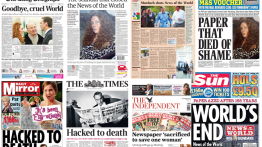
The blood of the News of the World is sprayed right across the front pages this morning. And yet there's still more bleeding to be done, it seems. The Guardian has been reporting since last night that Andy Coulson is to be arrested today, over suspicions about his knowledge of phone hacking and police bribery at the paper he once edited. The Mail quotes "supporters of Mr Coulson" as saying that, "he could make damaging claims about Mrs Brooks, who edited the News of the World before him, which in turn could result in her being questioned." Which rather captures the sense that this story could still intensify, even after Rupert Murdoch's dramatic attempt to cauterise the wound.

Boris or Dave?

From our UK edition

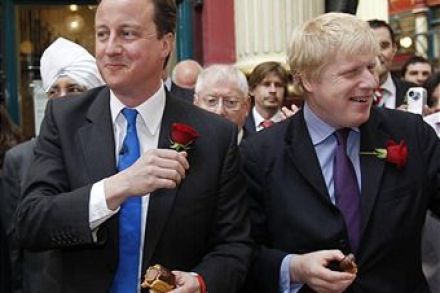
Schoolboy rivalries never quite go away - just look at the ongoing competition between Boris Johnson and David Cameron. Even though it was Cameron who held up Johnson’s arm in a symbolic victory gesture after Boris became Mayor of London in 2008, you wonder if Cameron had his doubts. After all, Cameron never actually approached Johnson about the post, initially choosing Nicholas Boles as the Conservative candidate. Furthermore, Boris Johnson refused to rule out a future bid to become Prime Minister. With the increasing unpopularity of the coalition government and its leaders, the Spectator decided to conduct a(n admittedly unscientific) poll of 75 people: would Johnson, the ‘cycling mayor’, make a better Prime Minister than Cameron?

Cameron needs to move fast to regain the initiative

From our UK edition

Westminster is rife this afternoon with rumours that there’ll soon be a high-profile arrest in the phone hacking case. For David Cameron, this issue is going to remain incredibly difficult as long as the focus remains narrowly on News International. But Cameron has one tool he can use to try and broaden out the issue, the inquiries he mentioned yesterday at PMQs. If Cameron were to move quickly on setting up judge-led public inquiries into the police and into journalistic abuses, he would regain some of the initiative. These inquiries are really the only tool he has, given that the government is hemmed in on the takeover of BSkyB as it is a quasi-judicial issue and on the cases itself he can’t say anything that might risk prejudicing a trial.

Web exclusive: Extended interview with David Cameron

From our UK edition

We interview David Cameron for today's issue of The Spectator. Here's an extended version of that interview for CoffeeHousers: The most striking thing about David Cameron is how well rested he looks. You wouldn’t guess that he was the father of a ten-month-old baby, let alone Prime Minister. He has no bags under his eyes — unlike his staff. He also seems relaxed. He jovially beckons us in to his Downing Street office and then flops down into one of the two high-backed chairs and urges one of us to take the other: ‘the Chancellor’s chair’, he calls it, with a chuckle. The last time we interviewed him, during the general election campaign, he was a different man, tired and tetchy.

The list of alleged victims grows longer as News International’s problems mount

From our UK edition

The emotive list of alleged victims of phone hacking has grown again tonight. To Milly Dowler, the parents of the Soham victims, and survivors of 7/7 can now be added the families of British soldiers killed in Afghanistan and Iraq. It should be stressed that nothing has yet been proved in any of these cases. But this story is just getting bigger and bigger and more and more problematic for News International. Among tomorrow’s front pages, the FT’s will — I expect — cause particular concern at the top of the company. It declares ‘Murdoch investors take fright’. This along with the growing international interest in the story, threaten to open new fronts on Murdoch. There are two new political notes to the scandal tonight.

Cameron’s Coulson problems may be getting bigger

From our UK edition

The Guardian’s story that News International believes that Rebekah Brooks was on holiday when Milly Dowler’s phone was allegedly hacked will place further pressure on Andy Coulson, who was her deputy editor at the time. This is the second piece of trouble for Coulson in the past 24 hours following last night’s revelations. Some in News International are unapologetic about how Coulson is being treated. They say that if Coulson had not gone into Downing Street then the whole phone hacking saga would not have got a second wind and there wouldn’t be all this trouble. Indeed, they allege that Coulson had assured a senior figure at News International that he would not go into Downing Street if the Tories won the election.

Miliband takes the battle honours

From our UK edition

Wow. That was a hell of a session. It shouldn’t have been but it was. A few days ago Mr Miliband seemed to be in the dog-house again. Fresh from his Ed Nauseam interview to a TV reporter – when he repeated the same soundbite on public sector strikes about 36 times in a row – he’d been stung by Lord Goldsmith’s complaint that he was failing to connect with the public. But salvation arrived in the shape of News International. The worse things smell at Wapping the rosier it all is for the opposition leader. PMQs today was easy. All he had to do was to appear suitably revolted by the hackers, to demand an inquiry in his sternest whine, and to resume his seat with a self-righteous quiver fading along his lips. But he did far more.

A beating, but not as harsh as it might have been

From our UK edition

PMQs today was a taste for David Cameron of what he will have to face over the coming weeks as the scandal surrounding the News of the World continues to grow. Ed Miliband asked him whether he agreed that Rebekah Brooks — a friend of Cameron’s —should resign and then mocked him when he wouldn’t answer. The Labour leader than pushed him on whether News International should be stopped from taking over BSkyB and derided him when he said the matter was out of his hands. Finally, he slammed him for his decision to bring Andy Coulson — who had resigned as editor of the News of the World because of the phone hacking scandal — into Downing Street. As each blow hit, there was little the Prime Minister could do.