David cameron

Brooks comes to Cameron’s aid, perhaps unintentionally

From our UK edition

Rebekah Brooks’s  appearance before the Culture Media and Sport Committee was largely uneventful. Most of the questions addressed her editorship of the News of the World, a period about which she cannot openly speak at present because of the criminal proceedings brought against her. However, Brooks was very keen to distance herself from David Cameron. Towards the end of the session, Tory MP Philip Davies asked of the stories circulating about her relationship with Cameron. She took the opportunity to deny them and set the record straight. “I have not visited David Cameron at Downing Street since he has become Prime Minister,” she said and then added that she had visited Tony Blair and Gordon Brown there on numerous occasions.

The crisis gets closer to the Tories

From our UK edition

The news that Neil Wallis was informally advising Andy Coulson without the knowledge of any of the other senior figures in the Tory party is a reminder of just how dysfunctional the Tory party machine was pre-election. It is also an indication of the license that Coulson was afforded. The Tories cannot say if anyone else offered Coulson this kind of ‘informal advice’. The Tories are stressing that they did not pay Wallis or his company. But it is a massive embarrassment for the Tory party that two people who did work for it in its preparations for the election have now been arrested by the police. I expect Cameron will face hard questions from Tory MPs about this matter when he appears before the ’22 committee.

Some good news for Cameron?

From our UK edition

In the midst of the fall-out from the phone hacking scandal comes some positive news for David Cameron: it appears that the Libyan rebels have won control of Brega, as most pro-Gaddafi troops retreated westward leaving around 150-200 loyalist fighters pinned down inside the town. If true, this is an important step towards the end of the Gaddafi regime: control of the oil-rich town is decisive for the Transitional National Council in Benghazi. It gives the rebels control over Libya's eastern oil network, with access to more than 2m barrels of stored crude.

Where are Cameron’s praetorians?

From our UK edition

One of the striking things about the wall to wall hackgate coverage on the 24 hours news channels is the absence of Tory voices defending the Prime Minister. It is coming to something when the leader of another political party, Nick Clegg, is doing more to defend the PM than most of the Tory members of the Cabinet. One minister told me earlier that Number 10 was having trouble getting people to go on TV to bat for the PM. While many Tories are wondering where their party chairman is, in these circumstances you would expect her to be touring the TV studios. Cameron’s political spokeswoman Gabby Bertin is doing a typically able and indefatigable job of making the case for her boss.

Yates goes as Boris stands by

From our UK edition

Yates of the Yard has gone as the phone hacking scandal claims yet another scalp. Yates walked after being told he would be suspended. Yates’ departure was necessary given the appalling mistake of hiring Neil Wallis, a former editor at the News of the World, while the Met was investigating — or supposed to be investigating — phone hacking at the paper. There will, though, be particular pleasure in Blairite circles at Yates’ departure. They remain furious with Yates for his behaviour and tactics during the cash for honours investigation. The talk is of appointing a new Met Commissioner by the autumn.

How Cameron can regain some initiative

From our UK edition

The phone hacking scandal has now been leading the news for a fortnight straight. When a story has been on the front pages for this long, it develops its own momentum. If we were on day two of the story, I very much doubt that Sir Paul Stephenson would have resigned as quickly as he did or if David Cameron would have agreed so readily to extending the parliamentary session. Cameron is now out of the country, allowing Ed Miliband to stay on the front foot. The danger for Cameron is that Miliband constantly appears to be half a step ahead of the PM. Miliband’s line that Cameron is ‘hamstrung’ in this matter by his own actions over Coulson has something to it. Leaders of the Opposition can move far quicker than incumbents.

Missing the target

From our UK edition

It has been a mixed week for Parliamentary Select Committees: they have regained some of their bite, but recent events have also served to remind us of their supine performances in the past. Yesterday it was the turn of the Defence Committee to seek our attention, briefing their latest report on the British military campaign in Helmand to the Sunday Telegraph. Under the headline ‘British Force Was Too Weak to Defeat Taliban’, we read of ‘a devastating report’ which is ‘deeply critical of senior commanders and government ministers’. But, the Committee have got some fairly crucial things wrong. They conclude that the task force was ‘capped at 3,150 for financial reasons’.

Stephenson kicks Cameron on the way out

From our UK edition

Sir Paul Stephenson’s resignation statement contains three paragraphs that hand plenty of political ammunition to Labour: "Now let me turn to the reported displeasure of the prime minister and the home secretary of the relationship with Mr Wallis. " The reasons for not having told them are two fold. Firstly, I repeat my earlier comments of having at the time no reason for considering the contractual relationship to be a matter of concern. Unlike Mr Coulson, Mr Wallis had not resigned from News of the World or, to the best of my knowledge been in any way associated with the original phone hacking investigation.

Miliband the hero

From our UK edition

Garlands go to the conqueror. The Observer has interviewed Ed Miliband about his response to the News International crisis, and it’s as if Caesar has returned home after crushing the traitor Pompey. Miliband told the Spectator in an interview with James Forsyth in this week’s magazine that Murdoch’s spell on British politics has been broken. He reiterates that sentiment with the Observer and adds that Murdoch’s endorsement will be a “double-edged sword at the next election”. When speaking to James he was careful to insist that there was nothing personal in his burgeoning crusade against Murdoch; he is not so careful now.

The Lib Dems try to exploit phone hacking

From our UK edition

The phone hacking saga continues interminably.  Simon Hughes appeared on Sky News earlier in the day to discuss the latest revelations. He refused to condemn David Cameron for entertaining Andy Coulson at Chequers and turned on Tony Blair instead. He said: "I'm much more critical of the fact that under the Blair era we knew, and this will all come out in the public inquiry, we knew that Blair flew just before the 1997 election to the other side of the world to meet Murdoch, we know that Tony Blair, three times in the ten days before the Iraq war was declared, was in touch with Rupert Murdoch" The Iraq War holds a special place in the hearts of some Liberal Democrats.

At the PM’s pleasure…

From our UK edition

Here is the list that James referred to earlier in full: Guests to Chequers from May 2010 to present Government guests and senior media guests: Danny Alexander MP and Rebecca Alexander Lord Ashdown Tony Baldry MP Greg Barker MP and George Prassus Lord Terry Burns and Lady Ann Elizabeth Burns Rebekah Brooks (June 2010 and August 2010) Brigadier Ed Butler and Sophie Butler Ian Cheshire and Kate Cheshire Ken Clarke MP and Gillian Clarke Nick Clegg MP Sir Sherard Cowper-Coles Brigadier James Cowan Air Chief Marshall Sir Stephen Dalton Alan Duncan MP and James Dundeath James Fergusson Stanley Fink and Barbara Fink Daniel Finkelstein and Nicky Finkelstein Liam Fox MP and Jesme Baird Sir Christopher Gent and Lady Kate Gent Michael Gove MP and Sa.

Cameron comes clean

From our UK edition

Later on today, Downing Street will reveal all of David Cameron’s meetings with newspaper / media proprietors and editors since the election. This is a welcome move, transparency is the best disinfectant and by getting the information out there it will end speculation about precisely how close he was to various people in News International. But one detail has already leaked out and will cause controversy: Andy Coulson was a guest at Chequers several months after he quit the government. In some ways this is no great shock, Coulson — as Cameron said at last Friday’s press conference — is a friend of the Prime Minister and someone whose advice Cameron valued hugely.

Britain’s euroscepticism hardens

From our UK edition

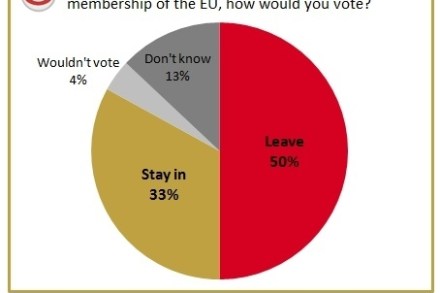
With the European financial crisis rumbling on, anti-EU sentiment in Britain is deepening. Two polls — one by YouGov for PoliticsHome and the other by Angus Reid — show that 50 per cent of the public would vote for Britain to leave the EU if there was a referendum.   Of course, this is nothing new. Brits have long been the most eurosceptic of Europeans, as Fraser noted a couple of months ago. In fact, we're the only country where more people think our membership of the EU is bad than think it's good: The hardening of eurosceptic sentiment does seem to be due to current events: 34 per cent say that the Greek crisis has made them more favourable towards us leaving.

A day like no other

From our UK edition

Was there ever a PMQs like this? The mood was like a revolutionary court. On the central issue – the judge-led inquiry into the hacking affair – there was general agreement. But the doors of justice have been flung open at last and hosts of other crimes are rushing in to receive an airing. Ed Miliband arrived convinced that he had a killer question for Cameron. Assuming his favourite expression of indignant piety he asked about a specific warning given to Cameron’s chief of staff last February that Andy Coulson, when News of the World editor, had hired an ex-convict to bribe the cops. The effect was feeble rather than fatal. ‘It wasn’t some secret stash of information,’ said Cameron.

News Corp withdraws its bid for BSkyB

From our UK edition

Two things struck me about PMQs today and the Prime Minister’s statement on the forthcoming public inquiry. First, the Prime Minister took a very different approach to Andy Coulson than he did at his press conference last Friday. Today, all the emphasis was on how angry Cameron would be if the assurances given to him turned out to be false.   The second was that Cameron rowed away from suggesting statutory regulation of the press. He stressed that he favoured ‘independent’ not ‘statutory regulation’. This should be more acceptable to the press.

PMQs live | 13 July 2011

From our UK edition

A change from the Coffee House norm for this last PMQs before the summer recess. Instead of the usual live-blog, we'll be live-tweeting the session, and our tweets will appear in the special window below (you may be familiar with it from Guido's PMQs coverage). Tweets from other political types may also appear. And you can add your own remarks to the live-stream not in the comments section, but in the space below the window. Anyway, it should all be fairly self-explanatory. It might work, it might not. In either case, do let us know what you think.

Cameron on the back foot

From our UK edition

This has been another difficult morning for David Cameron. He’s now taking flak for having said he would take part in the BSkyB debate this afternoon and then deciding not to. But what should, perhaps, worry the Prime Minister more than this criticism is the evidence that the Liberal Democrats are siding with Labour to portray Cameron as being behind the curve on this issue. The FT, the Lib Dems' paper of choice, reports that Clegg and Miliband pushed Cameron for a wide-ranging public inquiry. The paper details how Clegg is demanding an end to the practice of politicians, and particularly Prime Ministers, meeting newspaper proprietors but keeping the meeting secret by not holding it on official premises.

Might Gaddafi shunt Murdoch from the front pages?

From our UK edition

Loyal Tories and government types are hoping that the media will soon move on from Murdoch. And the unusually heavy briefings emanating from George Osborne’s office last night were perhaps an attempt to shift the spotlight. But it will take a very gripping story to displace the phone hacking saga, especially if yet more has-been politicians shuffle back into public life to settle old scores with Murdoch. With the British press immersed in this tempestuous revenge drama and the whirl of hypocrisy that surrounds it, you wouldn’t guess that the euro has embarked on a 72 hour ordeal that may decide its future.   But, Rupert Murdoch’s mugshots could yet be superseded by those of Colonel Gaddafi.