David cameron

EXCLUSIVE: IDS on British jobs

From our UK edition

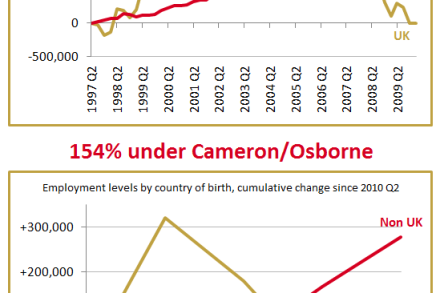
Last week, George Osborne boasted that Britain has the second-fastest job creation in the G7. In tomorrow's Spectator, we disclose official figures showing that 154 per cent of the employment increase can be accounted for by foreign-born workers. We on Coffee House have often questioned Labour's record: 99.9 per cent of the rise in employment was accounted for by foreign-born workers. The graphs for the Labour years and the coalition year are below:     The idea of 154 per cent is strange, so I will reproduce the raw figures below:     Now, no one outside Westminster expects the UK labour market to change the day a new government is elected, but what matters is that the problem still exists.
Cameron’s missed opportunity

From our UK edition

As David noted earlier, the big headline in Nick Clegg’s speech this morning is that the government will hold some kind of inquiry into the riots after all. This climb down in the face of demands from Ed Miliband makes it all the more baffling that Cameron didn’t announce his own inquiry earlier. If he had taken the initiative, he could have determined both its terms of reference and membership which would have ensured that it came up with the right answers. But, in policy terms, I suspect the more important announcement is that prisoners leaving jail will now be placed straight into the work programme. The work programme, masterminded by Chris Grayling, promises to be one of the coalition’s most successful initiatives.

Clegg joins the jamboree

From our UK edition

Cometh the hour, cometh Nick Clegg. The Independent reports that the Deputy Prime Minister is to announce that first-time offenders convicted of looting but not given custodial sentences will be forced to do community service in the very streets that they ransacked. The government hopes to ensure that community sentences are robust, inculcating a sense of responsibility in first-time offenders and insulating them from malign criminal influences. The Probation Service already oversees similar community service programmes and will do so with this one, which Clegg is calling 'Community Payback'. Clegg’s views also allow him to reposition the Liberal Democrats to an extent. The moisture that often characterises his rhetoric has dried on this occasion.

Cameron and Miliband’s differences

From our UK edition

David Cameron and Ed Miliband both gave speeches on the riots this morning and the political dividing lines between the two are becoming more and more apparent. Cameron argues that these riots were about culture not poverty, Miliband thinks you can’t ignore inequality. Cameron believes that society needs two parent families, Miliband that it is about parental responsibility. Cameron doesn’t want an enquiry, Miliband does. The challenge for Cameron now is to turn the social analysis in his speech, which I think was broadly correct, into actual policy. Already in Conservative circles, people are saying that if Cameron really does want to support two parent families then surely he must use the tax system to both encourage marriage and help those who are married.

“Zero tolerance”

From our UK edition

The law and order debate has come full circle: the coalition is going to be tough on crime and tough on the causes of crime. David Cameron’s promise that crime and anti-social behaviour will receive "zero-tolerance" recalls the rhetoric and politics of the Major and Blair years, an indication that, despite the annual celebration at lower crime rates and higher prison numbers, progress has been merely statistical. As James has noted, the success of the Cameron premiership now rests on delivering “zero tolerance”. Cameron is fortunate that the policies required are already in place, for the most part. Planned police reform will be essential, as will the radical plans for welfare and education.

Cameron mustn’t let the police top brass bully him into silence

From our UK edition

The police have been busy defending themselves this weekend against any criticism of their performance. They aim to stop elected politicians from making any comment on their performance. But David Cameron should not—and must not—back down from both his criticism of police tactics and his conviction that the force urgently needs reforming. The truth is that the initial police response to the riots was hopelessly inadequate. If senior police officers really do think that the Met’s performance on Saturday, Sunday and Monday was adequate, then that in and of itself makes the case for reform. Losing control of the streets in sections of the capital is a failure.

From the archives: the Bill Bratton edition

From our UK edition

As James Forsyth says today, No10 wants Bill Bratton to not just take charge of the Met but start a revolution in policing. A 'Stop Bratton' campaign has duly begun with Sir Hugh Orde, himself a candidate for the job, saying that he's not sure he wants to "learn about gangs from an area of America that has 400 of them.” But it’s worth noting, though, that Bratton has advised the British government before: in June 2006, at the beginning of John Reid’s tenure at the Home Office. Allister Heath (now editor of CityAM) went to meet him and reported back in The Spectator. His piece is below. ‘You can control crime’, Allister Heath, The Spectator, 24 June 2006 It was as if the two men had suddenly burst out of nowhere.

Boris’ long-game strategy

From our UK edition

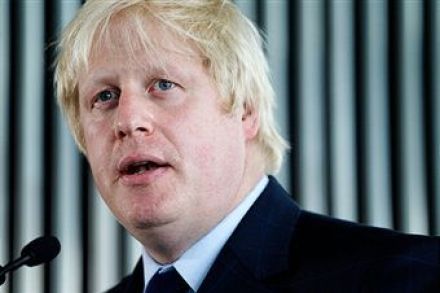
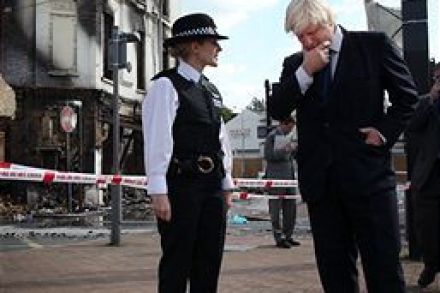
Has the sheen come off BoJo? The question is echoing around some virtual corridors in Westminster this weekend. The Mayor of London was caught off guard by the recent riots and his initial decision to remain en vacances made him look aloof and remote, a sense that grew during his disastrous walkabout in Clapham. Then he joined Labour in calls for cuts in the police budget to be reversed, a decision that reeked on opportunism, superficially at least. The FT’s Jim Pickard has an excellent post on these matters and he reveals that Boris Johnson has been voicing these concerns in private for months and that he has a brace of Cabinet allies: Liam Fox and Michael Gove.

Blunt’s flawed rehabilitation programme

From our UK edition

The decisions of Crispin Blunt, the prisons’ minister, are hard to fathom. One wonders why-as the Daily Mail reports today — he allowed a man convicted of killing five people to give an unapologetic interview to a magazine. Blunt’s defence is that it wouldn’t have been right for him to stop it. That may be the case but that doesn’t explain his decision to send a press officer to assist with the whole procedure. Rehabilitating prisoners is vital if we are going to tackle crime in this country. But it is hard to see how this kind of thing — or parties in prison — help that noble aim. Rather they are actions that do nothing but upset the families of victims and undermine public confidence in the judicial system.

Cameron lands Supercop as police acrimony mounts

From our UK edition

Internationally renowned policeman Bill Bratton has agreed to advise the government on how to defeat gang culture. Bratton’s role is not official, but he will arrive for duty in the autumn nonetheless. The former LA police chief has already offered a diagnosis of Britain’s problems. In an interview with the Telegraph, he says that hoodlums have been “emboldened” by timid policing and lenient sentencing. Quite what this means for Ken Clarke’s justice policy, supported by the Liberal Democrats, remains to be seen. But the indications are that the government will bolster its law and order policies. Doubtless a wry smile will have broken across the face of Andy Coulson, who warned that it would be so from the outset.

Why we need a post-riot inquiry

From our UK edition

Today we learnt that David Cameron is looking at the experience of Los Angeles’ recovery from the 1992 riots. The first lesson he should learn is the value of an inquiry, as Ed Miliband suggests. Californian policymakers held an inquiry, and it taught them plenty about the nature of modern poverty, urban unrest — and how to tackle it. Part of the reason that poverty in Britain is so ingrained is because so few politicians look at it in any detail, and even mentioning the word ‘underclass’ solicits squeals of disapproval. We remain aloof. As I argued in the magazine last month, we like harmless sketches about British poverty (Rab C Nesbitt, Little Britain etc.) but think that The Wire represents an American malaise that could never take root in Britain.

Time for action

From our UK edition

The facts of life are Conservative, as the old phrase has it. The events of the past few days have shown the urgent need for Tory social policies. The case for reforms to the police, welfare and education has been amply demonstrated.  Some in the government appear to get this. But there is also an odd hesitancy about getting on the front foot. As Tim Montgomerie said yesterday, why wasn’t a minister put up for Question Time last night? They could have used the programme to push Cameron’s reform agenda.

May intervenes to restore order

From our UK edition

Theresa May has banned an EDL march in Telford tomorrow, although the organisation will be allowed into the town to conduct a static demonstration. May has been a hive of hyperactivity since she returned from holiday, and this is yet another example of the government making a decisive gesture to amend for its perceived earlier indifference. It also looks like a strategic decision to contain that other unspoken working class resentment: immigration, and the hint of racial tension that it inspires from time to time. David Cameron was at pains yesterday to insist that the riots were a cultural issue, not a racial issue. He’s right.

The scale of IDS’ task

From our UK edition

This afternoon’s parliamentary debate touched on the sociological issues that may have inspired the recent looting. Naturally, there are plenty of competing views on the subject, but I bring your attention to Harriet Sergeant’s, which she has expressed in the latest issue of the Spectator. Sergeant has conducted extensive investigations into the teenage gangs in London, acquainting herself with gang members and their way of life. Her observations are intriguing, albeit terrifying. An extended version of her magazine article is available online and I urge you to read it. But here is a short extract: ‘The young men I interviewed had very obviously failed to make the transition to manhood and a successful adult life.

Cameron sets out his stall

From our UK edition

David Cameron’s statement to the House of Commons was clear about the circumstances that led to these riots. ‘This is not about poverty, it’s about culture. A culture that glorifies violence, shows disrespect to authority, and says everything about rights but nothing about responsibilities.’ Later in the session, he said ‘you don’t hit moral failure with a wall of money.’ On this, Cameron is surely right. In a respectful atmosphere in the House of Commons, Cameron set out the government’s proposed response to the riots. The major legislative action he set out was a change to the law to allow the police to force people who they suspect of being involved in criminal activity to remove face coverings.

Cameron has the opportunity to lead the nation

From our UK edition

The recall of parliament today offers David Cameron the chance to take command of the current situation. The police might have horribly mishandled the situation on the first few nights of the riots and Cameron’s government might have been caught flat-footed by them. But he now has the opportunity to build on the successful policing of the last two nights and his strong statement yesterday and lead the national response to this crisis. The mechanics of a parliamentary statement allow Cameron to set the terms of debate. He also has the huge advantage of simply being the Prime Minister. The nature of his office affords him the opportunity to speak for the country.

Cameron gets forceful

From our UK edition

So far as words matter, David Cameron has just delivered one of the most forceful statements of his political career. It contained all the anger of his address yesterday, but went much further in its diagnosis. "There are pockets of our society that are not only broken, but frankly sick," he said, adding that, "the one word I would use to sum it up is irresponsibility." His most memorable line was that, "It is as much a moral problem as it is a political problem." This was the campaigning Cameron that we have glimpsed only briefly, most notably during his conference speech in 2009. Tim Montgomerie is saying that Cameron has found his mission — but I'd disagree.

The politics of police cuts

From our UK edition

Wow, that was a howitzer of a performance from Boris Johnson on the Today Progamme earlier. And all his shells were aimed at Downing St. Not only did the Mayor of London slander Cameron’s Broken Society thesis, not only did he support Diane Abbott against the jibes of Tory HQ, but he also committed the gravest act of all, given the current climate. He lined up with Labour in attacking the coalition's police cuts. "This is not a time to think about making substantial cuts in police numbers," said BoJo. "I think it would be a good thing if the government had another look," he added, for emphasis.  There's little doubt that Boris has hit upon a potent attack here.

Cameron announces that Parliament will be recalled

From our UK edition

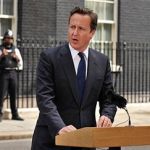
So far as its tone went, David Cameron's statement just now was firm and unyielding. He did express his sympathy for the victims of the riots; the emergency services, the shopkeepers, the fearful. But the major emphasis was on bringing the culprits to book. His "clear message" for the perpetrators of this destruction was that "you will feel the full force of the law". He preceded that by describing their actions as "criminality, pure and simple — and it has to be confronted and defeated". There were no excuses nor prevarications, and rightly so. As for the content, it seems that the government is eager to keep this a police matter, but to ramp it up nonetheless. "We need more," said Cameron, which included "more police on the streets" and "more arrests".

The Met is struggling to cope — it needs support

From our UK edition

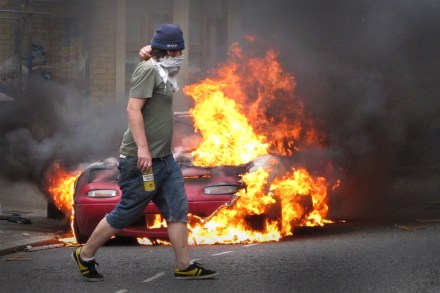
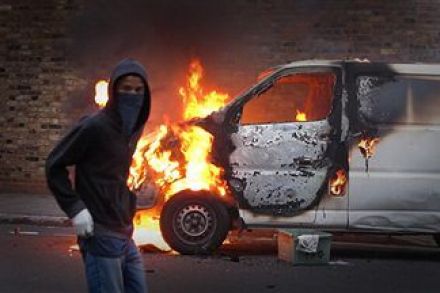
It's a gloomy sort of morning ritual, posting on the riots of the previous night. I'm sure CoffeeHousers have seen and heard the specifics already: further burning and looting in parts of London such as Ealing, Croydon and Hackney, as well as bursts of violence in Birmingham, Liverpool and elsewhere. Businesses and livelihoods have been obliterated, areas set back years. Among the few mercies is that no-one, so far as we know, has yet been killed as a result. One thing that's becoming clearer through the smoke is that the Met Police are overrun, unable to properly deal with criminality at hand. The arrest figures tell a story by themselves.