David cameron

Labour’s PMQs strategy: the Super-Vulnerable Voter ploy

From our UK edition

A sombre and muted PMQs this week. Dame Joan Ruddock raised the issue of benefits and asked David Cameron if he was proud of his new reforms. Tory backbenchers cheered on the PM’s behalf. ‘Then would he look me in the eye,’ Dame Joan went on, ‘and tell me he’s proud to have removed all disability payments from a 10-year-old with cerebral palsy.’ This tactic — the Super-Vulnerable Voter ploy — is highly manipulative and highly reliable. But Dame Joan had forgotten something which Mr Cameron is unlikely to forget. Explaining his reform of the Disability Living Allowance he glared angrily at her. ‘As someone who has had a child with cerebral palsy I know how long it takes to fill in that form.

Afghanistan tragedy overshadows PMQs

From our UK edition

I have rarely heard the House of Commons as quiet as it was at the start of PMQs today. The sad news from Afghanistan was, rightly, weighing on MPs’ minds. The initial Cameron Miliband exchanges were on the conflict there with the two leaders agreeing with each other. In some ways, though, I wonder whether the country would not benefit more from some forensic debate about the strategic aims of the mission. However the volume level in the House increased when Joan Ruddock asked the PM if he was ‘truly proud’ of taking benefits away from disabled children.

A significant moment in the battle for the 1922 Committee

From our UK edition

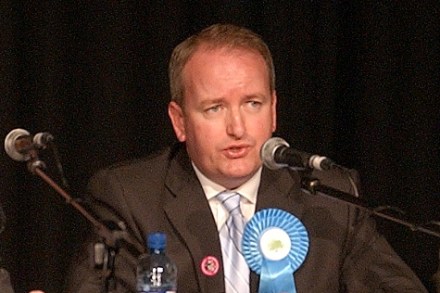
It might mean little to people outside Westminster, but the decision of Mark Pritchard not to stand for re-election to his job as Secretary of the 1922 Committee is a significant moment. It suggests that the Cameroons might be making some progress in their attempt to gain control of the internal structures of the parliamentary party. Pritchard has been a thorn in Number 10’s side ever since he started warning against the ‘Purple Plotters’ who wanted to merge the two coalition parties back in January of last year. Since then, his positions on circus animals, his role in the rebellion of the 81 and his general willingness to speak out against the government have driven Cameroons into a rage.

The government’s options for a child benefit tweak

From our UK edition

Nick Clegg has confirmed this morning that the coalition is looking at how to tweak its policy of removing child benefit from families in which someone pays the higher rate of income tax. As I wrote in the Mail on Sunday, there are three options being explored. The first is designed to address the fact that, a family where one parent works and earns £45,000 while the other stays at home raising the children would lose their child benefit while the one next door where both parents are on £40,000 would keep theirs. This change would see families with one higher rate taxpayer lose only half of their child benefit. But, I understand, that this is not the preferred tweak at the moment.

Hilton’s return hinges on Cameron’s radicalism

From our UK edition

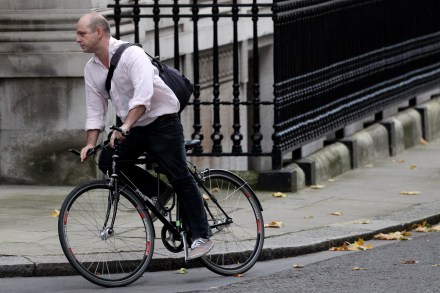
It is a sign of the influence that Steve Hilton has on the Cameron project that there have been more column inches devoted to his departure from Downing Street than there would be to most Cabinet resignations. But even after he heads to California in May, Hilton will still be part of the Cameron brains trust. He is already scheduled to work on the Prime Minister’s conference speech. Hilton has, I understand, been mulling the idea of taking a sabbatical since last summer. His decision to go ahead and take next year off seems to have been motivated by a variety of factors. But those closest to him stress that family reasons genuinely were key. This is not to say that Hilton is not frustrated.

Cameron’s pitch to women voters

From our UK edition

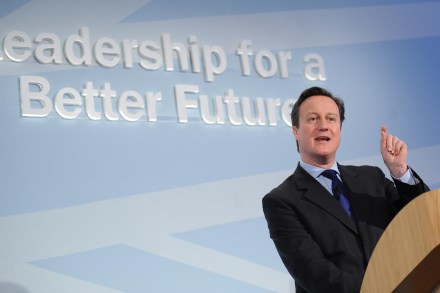
David Cameron’s speech today is another reminder of how concerned the Tories are about losing their traditional advantage among female voters. The message that the Tories are cutting so that the country is passed on in a better state to the next generation is a direct response to the fact that the party’s polling has found mothers to be deeply concerned that their children will not have as good a quality of life as they have had. At the away day for Tory MPs last week, Andrew Cooper — the PM’s chief political strategist — said that talking about deficit reduction in these terms was crucial to winning over female swing voters.

After Hilton

From our UK edition

Perhaps, the greatest testament to Steve Hilton’s influence in Downing Street is that everyone chuckles when you ask if anyone will replace him. His role in Number 10 as the senior adviser was one he had carved out for himself so that he could work on what he wanted to. It is deliberately designed not to fit on any ‘org chart’, the kind of document that the post-bureaucratic Hilton has little patience for. Hilton was for years caricatured as being not really right-wing. But, in reality, the opposite is true — he was, in some ways, the most right-wing man in Downing Street. Few matched him on subjects like 50p tax and labour market regulation. The Lib Dems were right when they called him ‘Thatcher in a t-shirt’.

25 February 2009: They wish we all could be Californian: the new Tory

From our UK edition

With the news that Steve Hilton is heading back to the West Coast, we've dug up this piece from 2009 by Fraser Nelson. He discusses the last time Hilton decamped to California and the culture changes he could bring back to the Tories in Westminster. Once every fortnight or so, David Cameron’s chief strategist lands at San Francisco airport and returns to his own version of Paradise. Steve Hilton has spent just six months living in this self-imposed exile — but his friends joke that, inside his head, he has always been in California. Look at it this way: this is the place on Earth which fuses everything the Cameroons most like in life, where hard-headed businessmen drink fruit smoothies and walk around in recycled trainers.

Steve Hilton to leave Downing St

From our UK edition

The Prime Minister's strategy chief is heading to California to teach for a one year sabbatical, we learn. But who takes a one-year sabbatical in the middle of what's supposed to be a five-year fight to save Britain? He did this before in Opposition, and came back. But this time, I doubt he'll be back. He's joining Stanford University as a visiting scholar, presumably to spend more time with his wife Rachel Whetstone who is communications chief for Google. Hilton's friends say that, in his head, he never quite came back from California — his aversion to shoes (and sometimes manners) has led to much mockery. But overall, he is — and has been — a force for good in No.10. David Cameron's government will be more timid without him. Since Hilton arrived at No.

Europe is being strangled by the Franco-German alliance

From our UK edition

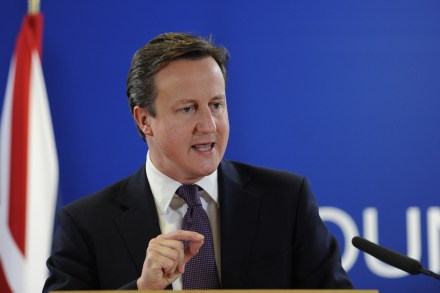
David Cameron’s complaints at last night’s EU meeting about the lack of a growth agenda have, in part, been addressed by the new draft conclusions. Cameron — who was supported by the Dutch, Italians and Spanish — seems to have secured promises on the completion of the single market, deregulation and the services directive in the summit’s draft conclusions. This isn't going to turn around the European economy. But it is a step in the right direction and a small, but possibly significant, victory for the PM.   I understand from sources in Brussels that there has been frustration with the extent to which the conclusions presented last night simply echoed the views of the Germans and the French.

Imagine if Cameron hadn’t vetoed…

From our UK edition

When David Cameron headed to Brussels last December, it was far from certain that he would veto the proposed treaty. It was only when Nicolas Sarkozy proved totally uninterested in accommodating Britain’s demands that the Prime Minister decided that he could not sign up to it. In a way, Sarkozy did Cameron a favour. Imagine if Britain had got the safeguards the Prime Minister wanted and had signed up to the treaty. How would he then have reacted this week, when the Irish announced that they were going to hold a referendum on it? The pressure from the Tory benches to let the British people vote on it would have been immense.

So how much do you really like The Smiths, Dave?

From our UK edition

David Cameron's love of The Smiths has been tested numerous times, in the press, in person and at PMQs. But today, there's new dimension to the saga. Johnny Marr, the group's former guitarist, has announced he will delight fans and reform the band - but only if the Prime Minister steps down: 'We won't be reforming this week. Maybe if the government stepped down. If this government stepped down, I'll reform the band. How's that? That's a fair trade, isn't it? I think the country would be better off, don't you? I'll do it if the coalition steps down.' As a dedicated fan, it's certainly a tough call for Dave to make. Heaven knows, he must be miserable now.

These NHS bouts are becoming more insipid by the week

From our UK edition

Health reforms again dominated PMQs today. That’s four weeks in a row. And the great debate, like a great sauce, has now been reduced to infinitesimal differences of flavouring. David Cameron repeated his claim that 8200 GP practices are implementing his policies. But, corrected Ed Miliband, that’s not because they love the reforms. It’s because they love their patients. He quoted a Tower Hamlets health commissioner who berated the PM for confusing reluctant acquiescence with whole-hearted endorsement. Fair enough. But this nicety won’t resonate beyond the tips of either men’s brogues. The rest of the bout was a repeat of last week’s effortful stalemate.

Miliband can count on the NHS in PMQs, but not much else

From our UK edition

Today’s main PMQs drama came after the session itself had ended. Julie Hilling, a Labour MP who Cameron had said was ‘sponsored’ by the union whose leader threatened to disrupt the Olympics last night, said in a point of order that she was not ‘sponsored’ by Unite. The Labour benches were in full flow, jeering at Cameron as he was leaving the chamber. Cameron then returned to the despatch box and pointed out that she had declared a donation from Unite to her constituency Labour party in the register of members’ interests. I suspect that this row about the meaning of the word sponsorship will rumble on. Labour hate the charge while the Tories think it is politically potent.

A tax battle that the government won’t be able to avoid

From our UK edition

The government is very pleased with itself today for closing a couple of tax loopholes such that Barclays will have to pay £500 million more to the Exchequer. And little wonder why. Not only does it support their rhetoric about a ‘tougher approach’ to tax avoidance, but — on the principle that ‘every little helps’ — it also hammers another few chips from the deficit. Broadly speaking, this sort of action is uncontroversial. In the battle of wits over taxation, the government is well within its legal rights to close loopholes, just as companies are well within theirs to exploit them.

So much for taking the politics out of the NHS

From our UK edition

So here we are again. At least Lord Justice Leveson had the humanity to give us a couple of weeks off whining celebrities, shifty ex-journalists and declaiming newspaper editors. From the Health and Social Care Bill there is no respite. The Bill is back in the House of Lords and Liberal Democrat guerrillas are wound up for a fresh assault on the lumbering mule train as it passes through. Does anyone care any more which bit of this battered and bleeding legislation has been chosen for further victimisation in this week’s shenanigans?

Gove: ‘I’d never run for leader’

From our UK edition

Michael Gove for leader? There have been several suggestions to this effect recently — not least from Toby Young in his debut column for the Sun on Sunday. But Tim Montgomerie today quotes one of Gove's advisors on ConservativeHome, saying that the education secretary has ruled himself out on the grounds that he doesn’t have the character for the job. This certainly squares with what Gove told me in September 2008. The interview was published here, but I’ve looked up my notes and can reprint his answer in a little more detail.   I put to him a Westminster rumour that he promised Sarah Vine, his wife, that he’d never run for leader. He threw his head back and laughed loudly.

The coalition for a Boris victory

From our UK edition

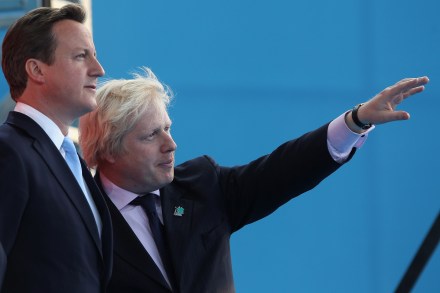
When David Cameron addressed Tory MPs on Friday, he told them that the London Mayoral elections were ‘the binary moment of 2012’. He argued that if Labour lost in London, one of their traditional strongholds, it would be a disaster for Ed Miliband. In the Cameron narrative, a Boris victory in May would mean that the Labour leader would remain under pressure and continue to be the subject of regular attacks in the press. Interestingly, there are Liberal Democrats close to Nick Clegg who share this analysis. Their worry is that a Livingstone victory combined with bad local election results for Lib Dem could turn the deputy Prime Minister back into the party leader under pressure.