David cameron

How Mitt Romney inspired the British charity tax debacle

From our UK edition

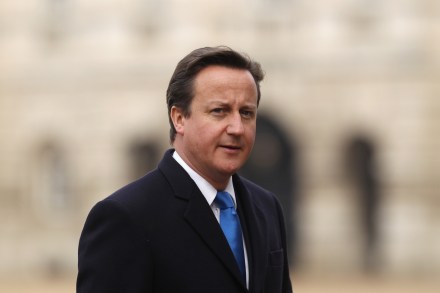
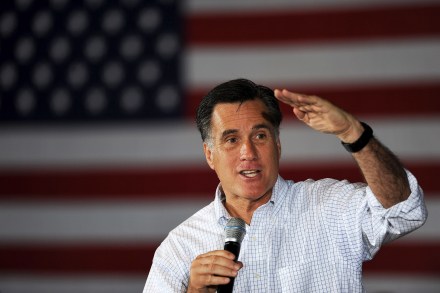
How is Mitt Romney linked to the charity tax debacle? I thought I'd pass on to CoffeeHousers an explanation which passed on to me about the origins of this latest mess. It dates back to the point in the Budget negotiations where Nick Clegg had finally persuaded Osborne to introduce a Mansion Tax. A major coup for his party — but Cameron vetoed, thinking it'd hurt Boris in London. Clegg is annoyed, tells Osborne he can't have his 40p tax, but he still has a problem. A Lib Dem spring conference is coming up — so what will he announce? He hunts for a new idea. The Thursday before the Lib Dem conference, he’s having a late-night brainstorming session in the Cabinet Office with his aides — fuelled by a drop of whisky.
Cameron meets Aung San Suu Kyi

From our UK edition

There aren't many countries where meeting the leader of the opposition would rank above meeting the head of government — certainly this country isn't one of them. But Burma is, because the leader of the opposition is pro-democracy campaigner and Nobel Peace Prize winner Aung San Suu Kyi, who spent 15 years under house arrest between 1989 and November 2010. And Suu Kyi's stature is now higher than ever, with her National League of Democracy party having won 43 of the 44 seats they contested in the by-elections a fortnight ago. As Clarissa reported then, there's even speculation that she may be offered a position in President Thein Sein's new Cabinet.

Another case of Big Government trumping the Big Society

From our UK edition

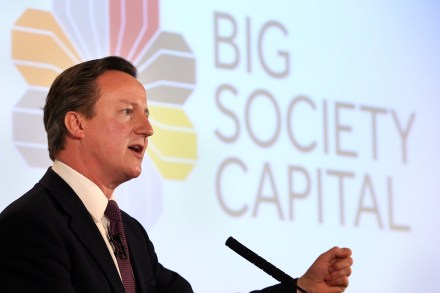
Exactly two years ago today, David Cameron launched the Conservative Manifesto — one of those rare moments in the Tory campaign where it all seemed to make sense. Cameron begged for a hearing: he was serious, he said, about changing government. It was about realizing that ‘Big Government isn’t the answer to the problems’ and that people outside government — like charities — were. This is why the charities debacle today is not just another Budget blunder. As I say in my Telegraph column, if Cameron tolerates the taxman’s proposed assault on philanthropy, he’ll be admitting defeat on what he described that day as his ‘fundamental tenet’.

Hints of a U-turn on the ‘charity tax’

From our UK edition

The pressure is ramping up on the government to reverse its decision to cap tax reliefs on charitable donations. The Times is against it — their leader this morning calls the move a 'blunder'. And the Telegraph doesn't like it either, saying that 'Even from a distance of 8,000 miles, it must be apparent to David Cameron that the Government made a mistake in the Budget by capping tax relief on charitable giving'. Even Tory MPs are speaking out against the measure, including Mark Pritchard, Conor Burns and, in a piece on ConservativeHome, Chris White. And Number 10 does seem to be preparing the ground for a U-turn — or a compromise at least — with David Cameron saying yesterday that 'We will look very sympathetically at these concerns'.

Where will the disenchantment with mainstream politics lead?

From our UK edition

The big question in British politics right now is what happens when the voters are dissatisfied with all the three main parties and their leaders. According to a recent opinion poll, David Cameron’s approval rating is now down to minus 27. According to the invaluable Anthony Wells, this is the lowest it has been since Cameron became Tory leader. But the PM’s numbers look positively healthy compared to Miliband's (minus 41) and Clegg's (minus 53). Dissatisfaction with political leaders isn’t the only indicator that people aren’t happy. As I report in the column this week, senior Downing Street aides have been much struck by polling showing that more than 40 per cent of Britons would emigrate if they could.

The rise of UKIP

From our UK edition

Who represents the biggest obstacle to a Tory majority in 2015? The natural assumption is Labour, but it's looking more and more likely that the party David Cameron should be most worried about is UKIP. Tim Montgomerie has written in the Times this morning (£) about the reason behind this, the 'split of the right-wing vote': 'Team Cameron has always believed that the Tories’ right-wing voters could pretty much be taken for granted. The theory was that they had nowhere else to go and that Mr Cameron had to devote all his energy to winning swing voters.

What today’s Abu Hamza ruling means

From our UK edition

The European Court of Human Rights has ruled that five terror suspects, including notorious Islamist cleric Abu Hamza, can be deported to the United States — a decision welcomed by both David Cameron and Theresa May. Last year, Hamza and three of the other men appealed to the ECtHR against extradition to the US on a whole host of grounds — including that they might face the death penalty and that their trials would be prejudiced.

Cameron pushes back on snooping powers

From our UK edition

It seems David Cameron's found a neat way of needling his coalition partners over their resistance to the so-called 'snooper's charter'. Last week, Nick Clegg insisted on proper pre-legislative scrutiny before any expansion of surveillance powers goes ahead, while a group of Lib Dem MPs wrote a letter in the Guardian declaring that: 'It continues to be essential that our civil liberties are safeguarded, and that the state is not given the powers to snoop on its citizens at will.' And Lib Dem president Tim Farron told the BBC that his party is 'prepared to kill' the proposals 'if it comes down to it'. 'If we think this is a threat to a free and liberal society,' he said, 'then there would be no question of unpicking them or compromising'. So now Cameron's pushing back.

Osborne’s tax avoidance clampdown

From our UK edition

So, George Osborne has taken a look at the tax arrangements of some of the UK’s wealthiest people. And his reaction? ‘Shocked’, apparently — or so he’s told the Telegraph: ‘I was shocked to see that some of the very wealthiest people in the country have organised their tax affairs, and to be fair it’s within the tax laws, so that they were regularly paying virtually no income tax. And I don’t think that’s right. I’m talking about people right at the top. I’m talking about people with incomes of many millions of pounds a year. The general principle is that people should pay income tax and that includes people with the highest incomes.

The Tory leadership is still fighting John Major’s battles

From our UK edition

Bruce Anderson has written a typically trenchant piece today describing the Tory party’s treatment of John Major as ‘the most unworthy, the most shameful, period in Tory history.’ Based on both how close Bruce is to those around David Cameron and my own conversations, I would say that this is a verdict that many in the Tory leadership would agree with. Indeed, the way in which Major was treated by some Tory backbenches has informed — often with calamitous consequences — Cameron’s approach to party management. Take, for instance, Cameron’s effort straight after the election to neuter the 1922 Committee and turn it into the Conservative Parliamentary Party.

Mr Cameron goes to Leveson

From our UK edition

One of the media’s vices is to assume that the public are as interested in stories about journalism as journalists are. This always makes me slightly reluctant to write about the Leveson inquiry - more fascinating for my trade than to anybody else. But the Leveson inquiry is about to enter its political phase which, I think, makes it more relevant. Politicians will start appearing before it from towards the end of next month and, as I say in the Mail on Sunday, David Cameron is scheduled to face the inquiry which he created in mid-June. Six other Cabinet ministers are expected to be summoned before the inquiry. For Cameron, this is going to be a tricky moment (think horses, Oxfordshire weekends etc).

Cameron’s tragic flaw

From our UK edition

The latest issue of The Spectator is out tomorrow, of course – but we thought CoffeeHousers might like to read this piece by Ross Clark in advance. It’s about what he calls David Cameron’s ‘tragic flaw’: impoliteness. Premierships do not end in failure, as Enoch Powell once asserted, but in tragedy. They start with a beaming figure disappearing behind the door of No. 10 - even Edward Heath, immortalised now as the Incredible Sulk, entered with a radiant grin. And they end with a haunted shadow of a politician creeping out to a waiting car, his every character flaw having been chiselled to destruction. Over the past week, the tragedy of David Cameron has become apparent.

Ed Davey’s ‘pro-European’ claim has Tory ministers fuming

From our UK edition

There’s barely disguised fury among Conservative ministers about Ed Davey’s claim that the coalition may well be more pro-European than the Labour government was. One complained to me earlier that it was typical Lib Dem mischief making and that ‘if they are not going to behave like normal ministers then we shouldn’t either’. Indeed, this minister went on to suggest that William Hague should publicly slap down Davey for his comments. I doubt this is going to happen. Davey is the leading Lib Dem on the Cabinet’s European Affairs Committee and I suspect there’s little appetite in the Foreign Office for a coalition row over Europe.

The Lib Dems will relish a scrap over civil liberties

From our UK edition

They're languishing in the polls, their leader is considerably more unpopular than either David Cameron or Ed Miliband, they face a difficult set of local elections in May — and yet the Lib Dems still seem relatively upbeat at the moment. Why so? Mostly, I think, it's because they feel that asserting themselves is starting to pay off. Not in votes, perhaps, but in perceptions. They cite the Budget as a defining moment in this respect: they got the increase in the personal allowance that they wanted, the Tories got most of the blame for everything else. That's why I suspect some Lib Dems will be quietly delighted at the last couple of days of news. Yesterday, the web surveillance plan. Today, secret justice.

Cameron loyalists say his Tory critics are a small minority

From our UK edition

The drumbeat of criticism of David Cameron and George Osborne by various Tory MPs, summed up on the front page of today’s Telegraph, has drawn a reaction from those MPs loyal to the leadership. Kris Hopkins, the founder of the 301 group of Tory MPs, complains that the trouble is being whipped up by a ‘small group of disaffected people’ and that ‘the nature of their criticisms shows that this is about their egos not making the country a better place.’ At issue here is who speaks for Tory MPs.

Tory ire focuses on Dave’s uni friend

From our UK edition

The grumbling in the Conservative party at the moment is reminiscent of Tudor court politics. No one is prepared to criticise the king directly so instead various personal favourites of the monarch are targeted. At the moment, the chief proxy for discontent is Andrew Feldman. To the Cameroons’ critics, he sums up everything that is wrong with the way the PM and his team do politics. Feldman is co-chairman of the party not because of his standing in the party or the country but because he is a friend of Cameron. To further irritate their critics, their friendship dates back to them serving together on the ball committee of their Oxford college many years ago. As a friend of Cameron, Feldman has got away with errors that would have finished off others.

Now Cameron and Osborne take flak from their own side

From our UK edition

The bad headlines continue for Downing Street this morning, with the Telegraph front page declaring ‘Tory MPs round on Cameron and Osborne’. Of course, Tory backbenchers griping about their leadership is nothing new and, usually, ‘concern that Government policies are being poorly explained to voters’ or a suggestion that ‘a senior MP should be appointed as full-time Conservative Party chairman’ wouldn’t make the front page. But after the two week onslaught Downing Street has just suffered — from granny tax to cash for access to petrol panic to pasties — the disgruntled chattering reverberates that bit louder.

Cameron must take on Whitehall

From our UK edition

I doubt that, come the election in 2015, many voters will remember the row about putting VAT on pasties or Francis Maude’s advice to fill up a jerry can with petrol. But what will be on their minds is whether the government is competent and, to use that dread phrase, ‘in touch’ with their day to day struggles. It is for this reason that the key question about the last ten days is whether they make David Cameron realise that the civil service machine just doesn’t work anymore and that he needs to change the way he governs. The early indications on this front are encouraging. Those who have been involved in COBRA discussions these past few days have been shocked by how the failings identified during the fuel crisis of 2000 still exist.

Everyone’s a loser

From our UK edition

Have the opinion polls ever looked more discouraging, overall, for the Tories during this government? Not that I can remember, although I'm happy to be corrected. Not only does YouGov's poll for the Sunday Times (£) have Labour ahead by nine points, but there are also some pretty dismal supplementary findings. For YouGov, both David Cameron and the coalition score their lowest approval ratings since the start of this Parliament. For ComRes in the Independent on Sunday, 72 per cent of respondents reckon the government is ‘out of touch with ordinary voters’; 81 per cent say the government created ‘unnecessary panic’ over fuel; and so on. It's probably no surprise that Tory MPs are now telling the Indy that ‘It is a friggin' shambles’.

Cameron needs a proper solution on party funding — and soon

From our UK edition

Today's ‘cash for access’ revelations (£) are, taken individually, less perturbing than last week's. What we learn is that David Cameron (and other ministers) met with donors on occasions (and at locations) other than those already disclosed, and that Peter Cruddas was more involved with this process than Downing St would have us believe. There is very little added to the most serious allegation from a week ago: that big money donors could gain special insights in the policy process, or even involve themselves in it. But, taken as a whole, today's revelations are extremely tricky for Cameron. Not only do they keep the story going, but they also highlight how absences of transparency will often be probed and exposed.