David cameron

Boris accuses Cameron of ‘pussyfooting’ on growth

From our UK edition

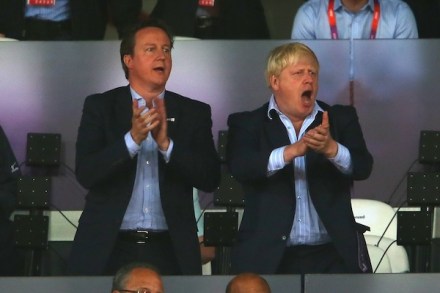
Last week Boris Johnson was in jellyfish mode, drifting along and delivering the occasional sly sting to the coalition. Now that the Olympics are over, the Mayor has launched something of a shark attack on his Westminster colleagues. In an interview with the Evening Standard, Boris accuses ministers of 'pussyfooting' and calls for the government to 'make a very powerful statement of ambition for London' involving new infrastructure and even a new airport: 'The government needs to stop pussyfooting around. I don't think you can rely on Heathrow. Even if the government was so mad and wrong to try to do the third runway or mixed-mode, those solutions would rapidly run out of usefulness and time.
Pressure on Cameron for reshuffle red meat on Europe minister

From our UK edition

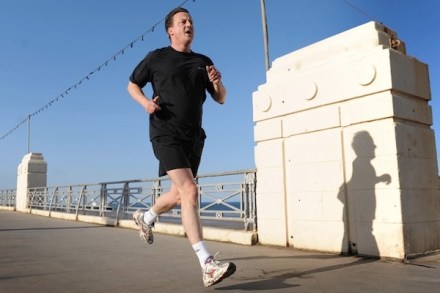
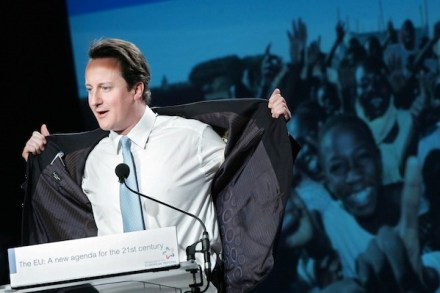
As he relaxes on a Majorcan beach, David Cameron might find his mind wandering to his plans for next month's reshuffle. The latest demand from 'influential figures' is, according to Tim Shipman in the Daily Mail, that he replace Europe Minister David Lidington with a more Eurosceptic minister. Supporting those influential figures from the sidelines is a hefty group of Conservative backbenchers who want to see a bit more welly on the European issue. Some of the names mooted by the Mail - Graham Brady and Mark Francois - would certainly do that but they are no friends of the current leadership. Shipman's story does not say whether Cameron will actually listen to those pushing him, but moving Lidington would be popular.

A deal on party funding could enrage Tory backbenchers all over again

From our UK edition

Are the Tories about to do a deal with the Liberal Democrats over political party funding? Benedict Brogan intriguingly suggests that David Cameron might offer a post-Lords reform olive branch to Nick Clegg — the state funding of political parties. In return, the Lib Dems would have to support a future vote on boundary change: His side won't like it, but it will be presented as Mr Clegg's price for securing a review that gives the Tories more seats. And some Tories, including Mr Cameron, may be secretly delighted to reduce their reliance on donors who are never slow to voice their frustrations when things go wrong. With party memberships plummeting and grassroots cash support drying up, state funding is the gleam in the eye of most politicians.

Ministers vs the curriculum

From our UK edition

David Cameron has not sought to seek personal or political capital from the Olympics, for which he deserves much credit. It doesn't take much to imagine how Gordon Brown would  have behaved had he been in power. But this is politics, Cameron is under pressure to establish an "Olympic Legacy" so he will today announce two hours of competitive sport every week in schools. In so doing, he highlights the contradiction in his education policy. On one hand, he wants to devolve power to schools and get politicians out of the education process. But like his predecessors, he also can't resist pulling the levers of power and telling head teachers what to do.

Cameron digs a hole on school sports

From our UK edition

The Prime Minister today criticised schools for filling their compulsory two hours of weekly sport with 'sort of Indian dancing classes'. He said: 'Now, I've got nothing against Indian dancing classes but that's not really sport.' Now, dancing isn't really sport, is it? It's dance. But it gets the heart rate going like the clappers, improves core strength, balance, and co-ordination. Dancing was good enough for the Great British swimmers, who took up ballet before the Olympics to improve their technique. Just up the road from Downing Street are the Pineapple Dance Studios, founded by a former model who lost three stone from dancing. David Cameron would do well to visit them and watch the sweat dripping down the studio walls in the midst of a fast-paced jazz class.

Cameron faces Tory fury on Lib Dem ministerial rebellion

From our UK edition

Last week when it first transpired that David Cameron had given up on Lords reform, Conservative backbenchers were thrilled. Conor Burns, who resigned as a PPS to vote against the legislation at second reading, told Coffee House that this was a 'symbol of [Cameron's] determination to try to foster improved and friendly relations within the Conservative party'. Rebel leader Jesse Norman was similarly cheery. It suggested that the Prime Minister had a chance to rebuild fractured relations with his party. Not any more. Backbenchers are now livid that Nick Clegg has announced that he will be instructing his party to vote against the boundary review.

Cameron’s big sporting society

From our UK edition

David Cameron made a spirited defence of school sport this morning when he appeared on LBC radio. Waving a sheet of paper triumphantly, the Prime Minister argued that the 20 school playing field sales that Michael Gove had signed off were actually schools that had closed, surplus fields and 'surplus marginal school land'. He also defended the decision to remove a compulsory target for all children to take part in two hours of sport a week: Well, look, we haven't done that, you know, sport is part of the national curriculum and we want schools to deliver sport and I think that's very important, but frankly, and we're putting a lot of money in, there's a billion pounds going into school sport over the next four years. But frankly if the only problem was money, you'd solve this with money.

The sad death of St. Stephen’s Club

From our UK edition

Word reaches me that the St. Stephen's Club in Westminster is set to close at the end of the year due to falling membership and lack of revenue. This fine old Tory Club was formed by Benjamin Disraeli in 1870 and was originally housed where Portcullis House now stands, before moving to its current location on Queen Anne Gate.  I hear that the management committee reluctantly decided to call time last week. The bad news comes as the Club celebrates its 50th anniversary in its current home (being opened by then Prime Minister Harold Macmillan in 1962). The club shot to fame in 2010 as the favoured location for David Cameron's press conferences during the coalition negotiations.

The pressure is on for David Cameron

From our UK edition

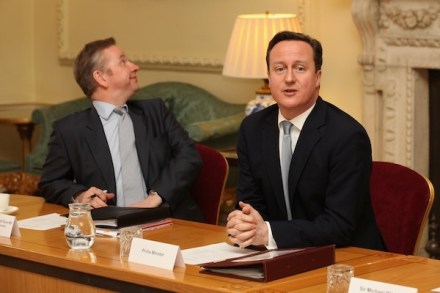
Aside from the party conferences, two big set piece events are looming large in Downing Street’s thinking: the coalition’s mid-term review and the autumn statement. Both of these are expected to be heavy on economic measures as the coalition tries to get growth going again in the face of the headwinds coming off the continent. I understand that extra runways at Stansted are being considered in an attempt to boost aviation capacity in the south east. David Cameron is also trying to boost the enterprise agenda of Margaret Thatcher’s favourite Cabinet minister Lord Young. He brought forward a meeting on it scheduled for September 5th to Thursday last week. He’s demanding that government departments do more to help entrepreneurs and cut red tape.

The Boris bandwagon poses little threat to David Cameron, for now

From our UK edition

One of the criticisms of the idea of Boris Johnson as a potential Prime Minister is that he doesn’t look the part and isn’t serious enough. The argument goes that it is all very well for the Mayor of London to jape around, but quite another thing for the Prime Minister to (Phil Collins produced a very punchy version of this point of view (£) in The Times this week). But as Charles Moore argues in his column, this argument misses that ‘conventional politics is now failing more comprehensively than at any time since the 1930s, and that Boris Johnson is the only unconventional politician in the field.’ It is precisely because Boris does not conform to what is expected of a modern politician that he appeals.

Are you thinking what Aidan Burley was thinking?

From our UK edition

When you are not a part of the Tory tribe there are certain subjects you worry about mentioning as journalist, whether it's at a Conservative Party conference, or indeed, on a blog for the Spectator. One is Europe, another is immigration and a third is multiculturalism. These three interlocking bogies drive the Tory grassroots and emerge, from time to time, to trouble the party leadership. The views of constituency activists on these issues (and people who like to comment on the Spectator site) can be fruity, but I have been talking to Tories for long enough to know that they can be genuinely passionate about this stuff.

Reshuffle bingo

From our UK edition

It's a strange old world when a Prime Minister backing his own Chancellor is worth reporting. But this afternoon the Prime Minister was asked by Sky News whether he was going to reshuffle George Osborne. Naturally, he answered: 'George Osborne is doing an excellent job in very difficult circumstances and he has my full support in going on and doing that job. He's not going anywhere.' Kay Burley then pressed Cameron on whether this meant Osborne would still be Chancellor at the next election. He replied: 'Yes.' Now, this was quite obvious anyway.

The post-GDP sleeve-rolling begins

From our UK edition

David Cameron is using the Olympics today to strike a more upbeat tone after yesterday's GDP gloom. The Prime Minister is speaking at 10am at a global investment conference to pitch for business from 180 chief executives from around the world. Cameron will tell the conference that he is 'determined that Britain will be on of the great success stories' in rebuilding its economy, and will say: 'There will be no more passionate supporter of Team GB than me. But I've got a job to do this summer. And a big part of that job is to get behind British business… and do everything I can to help secure the trade and investment that will help get the world back to sustained, global growth.

Cameron to meet Mitt

From our UK edition

Downing Street confirmed today that the Prime Minister will meet US Republican presidential candidate Mitt Romney in Downing Street this week. It sounds like a sensible plan, given Romney is so close to Obama in the polls at present. But there's just one tiny little problem. I have, in my shorthand notes from a lobby briefing on 5 March 2012, a quote from the Prime Minister's official spokesman, which says the following: 'As a general rule we do not meet candidates in foreign elections.' Then the spokesman was talking about David Cameron's failure to meet François Hollande, who was in Britain while campaigning against Nicolas Sarkozy for the French presidency. So why the difference?

Troubled families policy deserves cross-party support

From our UK edition

The report published this week by Louise Casey, the Government’s 'Troubled Families' Tsar, has attracted a fair amount of criticism, but what it does illustrate is the chaotic lives these families lead – and the implausibility of thinking that their problems can be solved by the kind of flagship social policies traditionally favoured by either Conservatives or Labour. As Isabel put it, Conservative 'reform of the welfare system will pass many of the families by. In these stories there is no calculated decision to opt out of the labour market because of generous benefits, more an endless failure to cope with life and the way it has worked out'.

The secret seven

From our UK edition

David Cameron’s decision to convene an inner Cabinet of seven Tories to advise him is a sensible move. As I say in the Mail on Sunday, calling this group together shows that Cameron knows he needs help handling his party. I understand that it meets regularly with a particular emphasis on the Conservative party side of coalition management. One Cabinet minister told me recently that the Prime Minister spends more time on coalition management than any other subject. To date, this has too often been at the expense of party management. Inevitably, if you spend most of the time thinking about what the Liberal Democrats will accept you begin to lose touch with your own party.

Cameron’s odd behaviour over Europe

From our UK edition

Europe, as everybody knows, is one of those issues on which a Tory leader needs to pay particular attention to the words he uses. This makes David Cameron’s behaviour in recent weeks all the odder. First, we had that Brussels press conference in which Cameron sounded rather too enthusiastic about the EU for his own side’s tastes. This was followed by his Sunday Telegraph piece in which he stressed that ‘the two words “Europe” and “referendum” can go together’ for him. Now, those close to Cameron complain that the two positions were perfectly compatible and that in the first instance he was quoted selectively.

Cameron shows his hand on Europe

From our UK edition

David Cameron's interview with the Telegraph today reveals that the Prime Minister would not campaign for an 'out' vote in a referendum on Britain's membership of the European Union. This will confuse some Conservatives, who had hoped that the 'fresh deal and a fresh settlement' that the Prime Minister described in the chamber earlier this month would either lead to a successful renegotiation followed by a referendum in which the government pushed for a 'yes' vote, or a failed attempt at renegotiation followed by a referendum in which the government pushed for a 'no' vote. But Cameron told Robert Winnett that he would never campaign for an 'out' vote. He adds: 'It comes back to this, who are going to be the winning nations for the 21st century?

Tories, oppose family values

From our UK edition

For almost a decade now, what social conservatives say and the evidence in front of our eyes has been diverging with remarkable speed. According to the received wisdom, the permissive revolution of the 1960s led to family breakdown, which in turn led to today's terrifying crime rates. The small snag with the argument is that crime rates are not terrifying. The decline in marriage and rise in divorce notwithstanding, crime rates have collapsed. Social conservatives can take some comfort from the fact that the fall coincides with the increase in the prison population since 1990. But a rise of about 30,000 in the number behind bars is small beer when set against, the vast and vastly welcome fall in crime. The murder rate has seen the most startling decline of all.

Cameron must carry out a thorough reshuffle

From our UK edition

With Parliament heading off for recess, politics will — barring some unforeseen event or the Eurozone crisis moving into one of its acute phases — be dominated by the Olympics for the next few weeks. David Cameron will be hoping that the global CEOs arriving in town will bring some good investment news with them. Boris Johnson, meanwhile, will revel in the global media attention. Indeed, Boris is already demonstrating an ability to brush off the organisational hiccups that other politicians can only envy. But most ambitious Tories will spend the summer thinking about the reshuffle, currently pencilled in for the third of September ahead of a Tory parliamentary dinner on the fifth.