Czechoslovakia

The clandestine side of Roger Scruton

From our UK edition

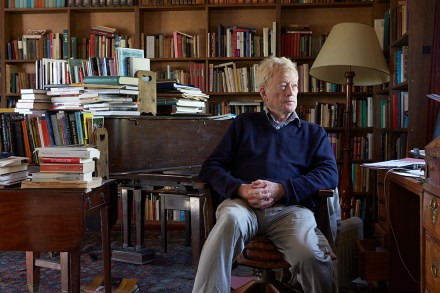
Sir Roger Scruton is remembered by most people as a conservative philosopher. Softly spoken and thoughtful in conversation, he was brave and unconventional in his views. Few things are as unconventional as being a convinced and articulate conservative. It cost him advancement in the academic world. But he was admired, liked and even loved by many. And today his work continues to be influential. But there was a part of Scruton’s life that is not well-known. It was clandestine. This secret life is currently being commemorated and honoured in an exhibition in Brno, the historic and rather beautiful second city of the Czech Republic. It is a two-and-a-half-hour train journey from Prague unless you are willing to face a direct flight on Ryanair.
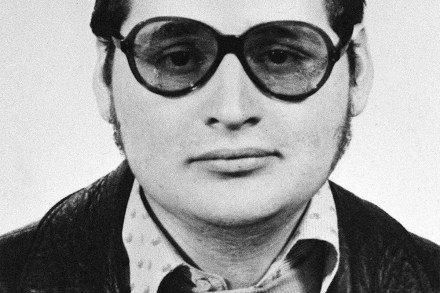
How Cold War Czechoslovakia became a haven for terrorists

From our UK edition

Cold War Prague hid its historic charms under a veil of grime and dilapidation. But, as we learn from this deeply researched and scholarly study, it was still a favoured destination for international terrorists, mostly Palestinians, after the 1968 Soviet invasion. They liked its hotels, its proximity to the West, its medical facilities, the tolerance and support of its security authorities and the quality of its light-arms manufacturing. Communist Czechoslovakia (CSSR) boasted relatively efficient security and intelligence services (generically referred to as the Stb). They were scrupulous record- keepers, and Stb archives, released after the Velvet Revolution with minimal expurgation, remain among the most complete of any former Warsaw Pact nation.

Milan Kundera’s ‘transcendental buffoonery’

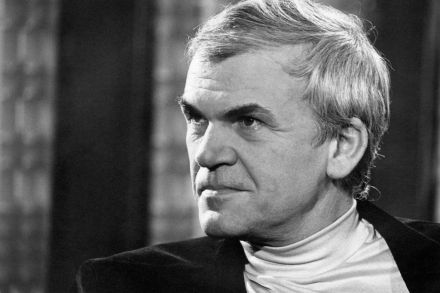
I was just leaving France when I got the news that that the Czech novelist Milan Kundera had died, aged ninety-four. He had emigrated to Paris in 1975, when he was forty-six, a refugee from the crackdown in Prague following the Russian obliteration of the Prague Spring in 1968. He died in his adopted city on July 11, full of honors but also, or so it seems to me, largely forgotten.  I had not been following Kundera’s work for many years. But there was a moment, in the 1980s, when he was the talk of the posh, intellectual literary town. I wrote a longish essay about him for the New Criterion in 1986. I draw on that work here.  Kundera was in his late thirties when he published his first novel, The Joke, in Prague in 1967.

milan kundera

America’s long history of sitting out Russian invasions

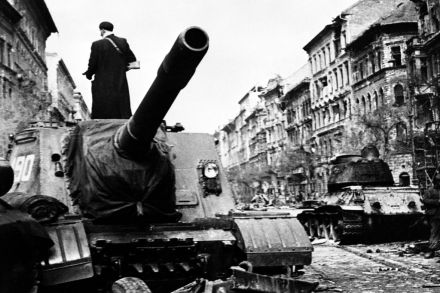
By now, my colleagues in the media may have convinced you that Russia’s invasion of Ukraine has been a “transformative” event, a challenge by a reactionary dictator to the “liberal international order,” if not an end to one historical epoch and the beginning of a new one. The world has turned upside down, nothing will again be the same, blah, blah, blah. When millennials make such apocalyptic observations, I can understand. Like Founding Father Thomas Paine, they assume that each day marks the “birthday of a new world.” But what about baby boomers like New York Times columnist Tom Friedman, who were in high school in 1956 during the so-called Hungarian Revolution, which was very much like what is happening in Ukraine today?

Has the role of resistance in the second world war been exaggerated?

From our UK edition

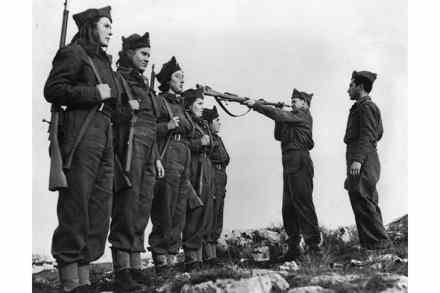
When in 1941 Winston Churchill famously declared that the newly formed Special Operations Executive, set up to encourage resistance movements, would ‘set Europe ablaze’, neither he nor anyone else could have known the extent of the help the partisans would provide to the liberation of the continent. Nor, indeed, did anyone envisage the fact that not all of them would prove as biddable to Allied wishes as they hoped. As Halik Kochanski shows in her compendious book on the six-year underground war, resisters came in all shapes and sizes, not easily controlled or corralled into categories. She divides her survey into three periods. The first runs from March 1939 and the occupation of Czechoslovakia to the German invasion of Russia in June 1941.