Culture

Press censorship has begun in Scotland

From our UK edition

The silencing of Stephen Daisley has nagged away at journalism in Scotland for months. His employer, STV, holds the ITV licences for central and northern Scotland, and is staying very quiet. The Scottish National Party rolls around like a drunk who has won a bar fight. Its politicians and its claque of Twitter trolls celebrate their power to bully and tell direct lies about the journalist they have humiliated. The BBC endorses them. The National Union of Journalists supports them. Everyone behaves as if they are living in a one-party state. Not a dictatorship with men in uniforms marching down the street. But a democratic one-party state like Scotland has become and England and Wales will soon be: a state where it is simply impossible to imagine the ruling party losing power.

Louis Smith’s ‘show trial’ on Loose Women is emblematic of our dimwit-run times

From our UK edition

Both Brendan and I have written about the strange martyrdom of Louis Smith.  But here is an ugly coda. As readers may recall, the Olympic athlete got drunk at a friend’s wedding and, along with a friend, ended up doing a joke version of the Muslim call to prayer. Something to do with Aladdin apparently. Anyhow, before they knew it the phone-video had made its way onto social media and from there to The Sun. Soon sinister Muslim spokespeople were reminding everyone that their religion was to be ‘respected’ and never to be ‘mocked’. Smith has apparently been getting death threats since then. All of which tells us nothing new about the world’s most intolerant religion.

Hong kong: Eating it up

From our UK edition

The brilliant thing about Hong Kong is that you don’t have to worry for a second about all the culture you’re missing. That’s because there’s absolutely nothing to do there except shop (I got a seriously nice bespoke dinner jacket for just £400 from Lafarfalla Tailor) drink and, most importantly, eat. Oh all right, so there are some half-strenuous walks you can do in the surprisingly uncrowded countryside just outside the city (you can cab it from the centre to the pretty Shek O beach — which on weekdays is half-deserted — in just 25 minutes) but even then the main purpose of the exercise is to end up in another restaurant.

The truth about young people’s pay? It’s up, significantly, over a generation

From our UK edition

Right at the start of filming for Dispatches on the generation wealth gap (8pm on Ch4 tonight), we were working around a striking claim: that the young were so shafted that people in their 20s are earning less now that they were 20 years ago. I asked the Office for National Statistics to check this out and when their figures came back, it was the opposite to what I expected – and to what everyone seems to believe. Not only are the 20-somethings paid more, but their disposable income is up by a third on where it was two decades ago. The idea that the young ones are paid substantially more than their parents contradicts all established wisdom. But the ONS had never released the research before, so no-one knew.

The complicated truth about generational inequality in the UK

From our UK edition

I’ve spent the last few weeks making a documentary for Channel 4’s Dispatches on what I regard as one the biggest new arguments of our times: the generation wars. The idea that (as David Willetts famously put it) the ‘baby boomers took their children’s’ future’ – and ‘should give it back’. I’ve been talking to various experts, being heckled at protest marches, wading through research and putting the established wisdom to the test. The result is on Channel 4 documentary:  The Wealth Gap. Only Channel 4 really does documentaries about ideas: the asset bubble, the relationship between wealth and longevity.

The spell of the pharaohs

From our UK edition

Here’s a book to make an Egyptologist of everyone. A compendium of accepted gen on the gift of the Nile, Rose-Marie and Rainer Hagen’s (updated and reissued) Egypt: People, Gods, Pharaohs ‘aims to answer some basic questions about life in Ancient Egypt and whet your appetite to find out more’, and achieves both in appropriate abundance. It looks great, reads well, even smells nice — and is positively jam-packed with wonderful things. Citing the fundamental continuity of 3,000-plus years of pharaonic culture, the Hagens tuck away a (very) concise chronology at the back of the book, and then get on with the business of showing us what Ancient Egypt looked like, and who/why/how/when/where.

Ruth Davidson: why I talk about being gay

From our UK edition

The three most magnetic politicians at this year’s Tory party conference are the Prime Minister, the Foreign Secretary and the leader of the Scottish Conservative Party.  I never thought I’d write this sentence but Ruth Davidson’s rise has been quite extraordinary. She has been campaigning for three years now: the Scottish referendum, the general election and Brexit. Now she doesn’t have a big fight planned, but she does still have plenty of energy. I just interviewed her during a fringe meeting to a packed room, and you could see the extent of her appeal. 'The selfie queen', quipped one Cabinet member earlier: she’s the type of politician that gets stopped by people who want their picture with her.

The science – and politics – of climate change

From our UK edition

Matt Ridley, well known to Spectator readers, is giving the Global Warming Policy Foundation’s Annual Lecture on 17 October, at the premises of the Royal Society. The venue has annoyed New Scientist magazine. How dare the great home of science give house room to ‘those who deny climate science’, asks the paper’s ‘biology features editor’, Michael le Page. He hates the ‘false balance’ which presents opposing views. Revealing his own opinions to be more political than scientific, he cites the example of the US presidential election, where ‘the media’s abject failure to tackle Trump has let him get within spitting distance of the presidency’.

The Ryder Cup is Europe’s great sports project – and it’s feeling the friction

From our UK edition

Golf isn’t the biggest thing in Minnesota right now – that privilege belongs to the knife-edge presidential race – but for this weekend, at least, it will be a close second. The Hazeltine National is playing host to the 2016 Ryder Cup and while the American fans are busy preparing their ballot papers for Hillary Clinton, the European team will be convening for the first time since Brexit. The Ryder Cup is the only major sporting event that involves Europe playing as a team, as they take on the United States in a series of golfing challenges. If the event ought to have more symbolic resonance this year, there has been surprisingly little discussion on it. The European team, led by Northern Ireland’s Darren Clarke, are getting on with business.

Why I’d never wear red corduroys

From our UK edition

The Spectator Book of Wit, Humour and Mischief (Little, Brown) is just out, launched at a party at the paper’s offices where — wittily, humorously and mischievously — no copies were available. I have now procured one and can report that I laughed a lot when reading it. In his introduction, the book’s editor, Marcus Berkmann, describes how I appointed him the magazine’s one and only pop critic, a post he was to hold with distinction for 27 years. He alleges that when we first met I was sitting in The Spectator’s then offices in Doughty Street ‘wearing the brightest red corduroys I had ever seen’. ‘If a pair of trousers can ever be said to be intimidating,’ Marcus goes on, ‘these could.

Why sacking the football manager is a fool’s game

From our UK edition

At last, an English football manager who actually deserves to be sacked (or ‘left by mutual agreement’ if you prefer the official line). An England manager on £3 million a year shouldn’t be dreaming up ways of helping himself to an extra few hundred thousand through dodgy deals. But that makes Sam Allardyce something of a rarity. It is hard to think of another England football manager of recent times who really deserved the heave-ho. Roy Hodgson led a team to an embarrassing defeat against Iceland, but was it really him who deserved to go or the useless players who couldn’t even pick up a pass? It is no use coming up with strategy if the players start letting it through their feet.

If archaeology students can’t cope with ‘scary bones’, they really are doomed

From our UK edition

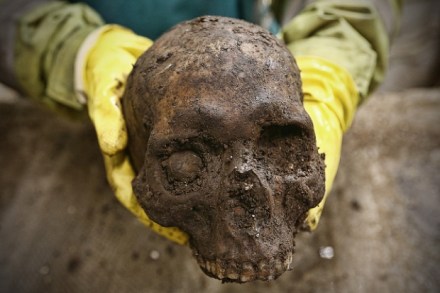
Just when you thought the trigger-warning trend on campus couldn’t get any more bonkers it’s reported that archaeology students are being allowed to dodge discussions of ‘traumatic’ historic events. Yes, students  whose entire academic mission is to dig up bones, pore over old stuff and work out what the hell mankind was doing / thinking a thousand-odd years ago are being warned that such excavations can uncover ‘disturbing’ stuff that might ‘traumatise’ them because 'bones can be scary'. So they should feel free to nip out of class if it gets too much. Archaeology students being told archaeology is a scary pursuit — I think we’ve reached peak campus madness. The students in question are at University College London.

Another glorious year of County Championship cricket; another glorious failure for Somerset

From our UK edition

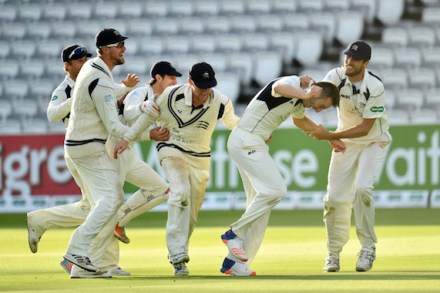
Nearly fifty years ago, CR Poole published a short work entitled 'The Customs, Superstitions, and Legends of the County of Somerset'. Inexplicably, he omitted the foremost of these customs: Somerset will never, ever, win the County Championship. For a while this week, I and many others dared to dream this year might be different. This could be the week, the day, the moment, history might be made. Somerset have been tilting for the championship since 1891 and only rarely been in with a chance of glory on the final day of the season. More often, as a dozen wooden spoon finishes attests, the situation has been hopeless but never serious. Today was serious. Today there was a chance. Somerset had done their part, crushing Nottinghamshire in handsome style yesterday.

Women – and transwomen – should fight on the frontline

From our UK edition

My favourite quote of all time comes from John Stuart Mill: ‘War is an ugly thing, but not the ugliest of things. The decayed and degraded state of moral and patriotic feeling which thinks that nothing is worth war is much worse. The person who has nothing for which he is willing to fight, nothing which is more important than his own personal safety, is a miserable creature and has no chance of being free unless made and kept so by the exertions of better men than himself.

Letting the hard left off the leash

From our UK edition

If there is one word that strikes fear and loathing into the hearts of Labour MPs, it is Momentum. This mixed bag of Trots, tankies, cranks and hipsters who delivered Jeremy Corbyn the leadership has become his Red Guards. Its name is synonymous with the new wave of hard-left entryism into Labour, calls to deselect moderate MPs, picketing offices, harassing staff and tweeting bile. So it doesn’t quite fit the public persona that its founder and chief commissar, Jon Lansman, is such an affable fellow. The 59-year-old Lansman is full of contradictions. He is the leader of Britain’s most notorious and divisive political movement, yet Labour colleagues agree he is ‘a lovely man’, ‘a loveable rogue’.

Divorce is a far greater invention than either the wheel or the Pill

From our UK edition

The late Mrs Merton, bless her, would never have seen fit to ask Angelina Jolie and Brad Pitt: ‘So, what first attracted you to each other?’ Perhaps the most beautiful film stars of their generation, they also possessed a devil-may-care air which combined with their charity work to make them seem both reckless and righteous - not an easy look to pull off. And then there was the Sex Angle. The bottom line about Classic Hollywood is that you knew the stars were having far better sex than you; what Lana and Gable and Ava got up to barely bore thinking about without benefit of a waterproof sheet. These days, though, it seems very unlikely indeed that Hollywood’s finest are having anywhere like as much, or as weird, sex as you, your friends and neighbours.

In a gun country

From our UK edition

Picking a day at random, ‘an unremarkable Saturday in America’, the Guardian journalist Gary Younge identified ten children and teenagers throughout the United States who were shot dead on 23 November 2013. Whichever day he chose, he knew it would be typical. Determined to investigate each of these deaths, none of which bore much — or any — press coverage even locally, Younge would pore over the internet, visit grim parts of cities far from his Chicago home, locate as many relatives, friends and witnesses as he could and speak to them. His book, Another Day in the Death of America, is as one would imagine it: sad and bleak, an altogether terrible tale. Hopeless, too: no one, certainly not Younge, is under any illusion that this story will get better.

The problem with Btecs – a response to Pearson Plc

From our UK edition

When I wrote my last Daily Telegraph column critical of Btecs, an exam now taken by about a quarter of English university entrants, a friend of mine in the world of university admissions told me to wait for the reaction of Pearson Plc, which owns Btec. While A-levels and GCSEs are rigorously examined and discussed, Pearson get away with releasing very little data about Btec and plough a lot of money into marketing their exam. And they don't very much like it being criticised. Rod Bristow, the president of Pearson UK, has written to today’s Daily Telegraph suggesting that I was wrong to suggest that Btecs have gone through serious inflation – and, ergo, devaluation.

Gazza’s 21st-century show trial should worry us all

From our UK edition

Is it a crime now to tell rubbish jokes? The bizarre and frankly cruel treatment of Paul Gascoigne suggests it might be. Yesterday, at Dudley Magistrates Court, Gazza was found guilty of using ‘threatening or abusive words’ and fined £2,000. His crime was to say the following about a black security guard who had been assigned to look after him during his show An Evening With Gazza at Wolverhampton Civic Hall last year: ‘Can you smile please, because I can’t see you?’ Some people might find that funny; I, personally, don’t. But a court case? A criminal record? A fine? For cracking a joke? The precedent set by this case is terrifying.

Could the technology behind Pokémon Go! help encourage more of us to save for our retirement?

From our UK edition

It might seem far-fetched, but in recent years a couple of financial companies have started hiring from the gaming industry in an attempt to make their products more appealing to consumers. Let’s face it, most of us find pensions, savings and investments dull and confusing. Could more engaging money management apps, or elements of ‘gamification’ help to overcome these difficulties? The theory is that if people take more interest in their finances, they’ll be encouraged to save more. So perhaps an app where users have to make a million from a fantasy portfolio could help plug the savings gap. Like Pokémon, this could marry real-world data - up-to-date share prices, for example - with a virtual pot of money.