Culture wars

Real America is the middle seat in coach

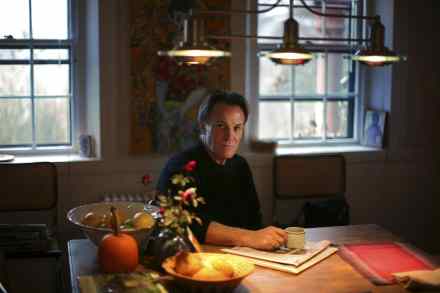
There is a lot of talk about “Real America” these days: what it means, who populates it and what those people represent. Is it the “coastal elites” who inhabit the cities? Is it the people in the “flyover states”? The commentators doing the talking and writing about these mythical Real Americans and their concerns are usually very wealthy. At the very least, they’re flying business or first class. Many of them fly private. To me, Real America is the middle seat in coach. I’ve always loved chatting with people when I travel. (Yes, I’m one of “those people” but don’t worry, I can take a hint.) My ex-husband recently passed away and I was headed home for a thirty-six-hour trip to attend his funeral.

real america middle seat

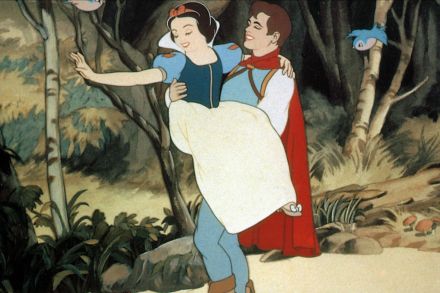
Prince Charming is cancelled

From our UK edition

The only strikes I really enjoy are actors’ strikes. Teachers’ strikes leave me cold. Train strikes get me into a cold fury. But there are few more enjoyable spectacles in life than members of the acting profession making demands which – if left unmet – will see them refuse to work. Why should girls dream of being something like a deputy under-secretary at the United Nations? My first urge is always to clasp my head in my hands and in my best South Park voice scream: ‘You mean no movies with Susan Sarandon for six months? Nooooo.’ Then there’s the fact that most of the strikers haven’t seen work in years. Last month there was an actors’ picket line in New York, one of the leaders of which was someone best remembered for appearing in a musical almost 30 years ago.

How the West plays up to Putin’s caricature

From our UK edition

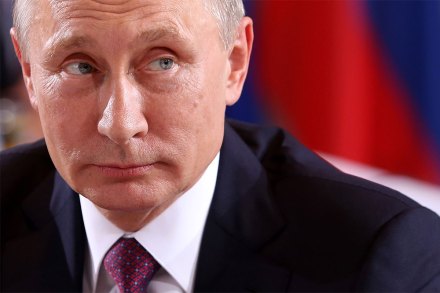
In an outstanding article in the New York Times, Roger Cohen recounted his experience of travelling across Russia for a full month, and hats off to the veteran journalist for risking a shared cell with the Wall Street Journal ‘spy’ Evan Gershkovich. Cohen explains that Vladimir Putin is successfully flogging his war in Ukraine to the Russian people as a battle against the whole spiritually depraved West, no longer the home of ruthless capitalism but of ‘sex changes, the rampages of drag queens, barbaric gender debates and an LGBTQ takeover’.

Tim Scott appeals to a GOP of the past

South Carolina senator Tim Scott represents the kind of candidate white Republicans like to vote for: a black conservative who directly undermines the left's claims about the United States' — and the GOP's — innate racism. He can punctuate a pro-American litany of personal stories and generational improvement with "Can't somebody say 'Amen'?" without any qualms. And unlike Herman Cain or Ben Carson, he can do so as a successful politician who, as he says, went from cotton to Congress in his grandfather's lifetime. Cain and Carson overperformed significantly, particularly in the early months of their efforts. Yet Scott is likely to have a ceiling to his own try for the presidency. He is in many ways a throwback to the George W.

tim scott

Woke culture is strangling comedy

From our UK edition

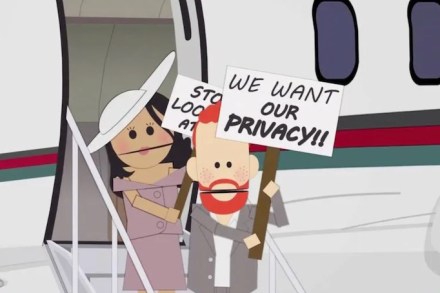
Three weeks after that South Park episode and the memes just keep on coming. Despite years of highly articulate fulminating against the preposterous pair by essayists like myself, there’s a feeling that the satirical cartoon was the conclusive blow to the Sussexes' reputation – no well-turned phrase will ever better the glorious awfulness of ‘The Worldwide Privacy Tour’. One of the things that the woke hate most about our lot is the fact that we’re far more amusing. Their natural mode of address is to scold – and scolding and wit are polar opposites. I daresay some clown somewhere has stated that punchlines are probably imperialist.

How Pat Buchanan redefined the twenty-first century

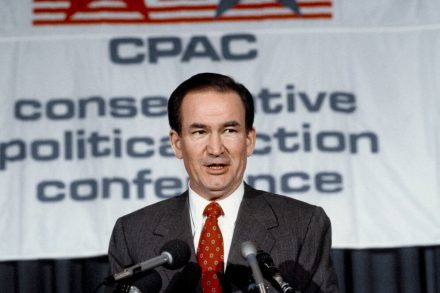
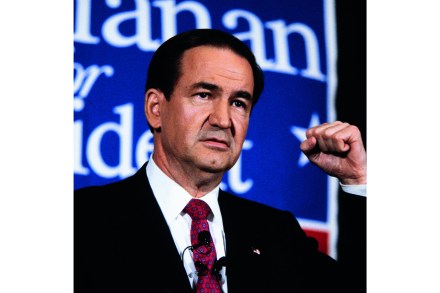
Pat Buchanan recently ended his syndicated column, essentially completing his retirement from public life. Yet it’s hard to think of any writer in his or her prime today whose ideas enjoy the currency that Buchanan’s now do. From trade and foreign policy to immigration and the “culture war” — a term that Buchanan introduced into popular politics — views that once set Buchanan apart from his fellow conservatives are now redefining the right. Buchanan was not the only conservative skeptic of free trade or foreign interventionism in the 1990s, but he was the only one that most newspaper-reading or cable news-watching voters knew about. At the zenith of American power and economic globalization, Buchanan defined the opposition to the spirit of the age.

pat buchanan

Why Gen Z is turning against woke culture

From our UK edition

The other day, in a bar in London frequented by students of the infamously ‘woke’ Goldsmiths University, I met a young white cis-male who said that the English were to blame for his inherited trauma because of their historic oppression of the Irish. The only problem was, he wasn’t Irish – he was American and so were his parents and probably grandparents. ‘Pain lasts a long time,’ he assured me. What struck me about this encounter was not that it was typical of my Gen Z generation but that it was so obviously cringe-inducing – a sort of hackneyed pick-up line. Another student at the same bar – sporting an orange mullet and a thong as a T-shirt – tried to convince me my age was a social construct.

Tár is more than a #MeToo story

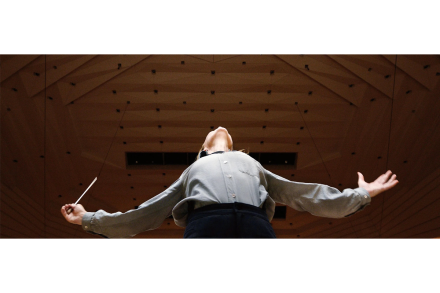
Life imitated art to a depressingly predictable degree when a clip from Todd Field’s Tár circulated online. It’s part of a scene where the film’s title character, superstar conductor Lydia Tár (played by Cate Blanchett), leads a masterclass at Juilliard. She haughtily dismisses students’ reluctance to learn the classical canon because of their difficulty “identifying” with its composers. To some, Lydia’s monologue was a vindication: a righteous tirade against "wokeness." To others, the speech exemplifies Lydia’s abuse of power, which includes not only dressing down students and mentees but sleeping with many of them and torpedoing their careers.  But oversimplified views of Lydia as a crusader or villain flatten the film’s wrenching complexities.

tar

Pat Buchanan and thirty years of culture wars

It was a relatively cool 85 degrees in Houston on the August evening thirty years ago when Republicans gathered at the Astrodome to renominate George H.W. Bush for the 1992 presidential election. The opening session’s speakers included Senator John McCain, Stanford professor Condoleezza Rice, and re-election campaign co-chairman Ken Lay, later to gain fame as a major figure in the Enron scandals. But the speech that would be the most memorable by far was delivered by a television commentator, syndicated columnist and former Richard Nixon hatchet man — the fifty-four-year-old Irish Catholic Pat Buchanan, who delivered what came to be known as “The Culture War Speech.

culture

The problem with being anti-woke

From our UK edition

I'm going to do something that will likely annoy you, dear reader: I am going to make an argument about a certain class of people without naming names. If I do name names, any response will devolve into a debate over whether I am unfairly tarring the individuals in question. That’s beside the point, because the phenomenon in question is undoubtedly real. That phenomenon is anti-wokeness curdling into reactionary crankery. Don’t get me wrong: as I’ve previously written, I think there’s a moral panic afoot in many liberal institutions. Whether you want to call it 'wokeness' or something else, it seems undeniably the case that a culture of illiberalism has corroded these spaces.

Kemi Badenoch: the curriculum does not need ‘decolonising’

From our UK edition

When the government published a report last year by the Commission on Race and Ethnic Disparities (CRED) into racism in the UK, it was the subject of controversy. The report concluded the UK does not have a systemic problem with racism (while accepting there are issues), and a number of charities dubbed it 'deeply troubling'. A year later and the government finally set out its response to the report and how it intends to deal with the inequalities highlighted in it.  Taking its founding principles from the original report, it essentially accepts the chair Tony Sewell’s logic that the different outcomes for different minority groups means that it is the wrong approach to attribute every problem to racism.

Labour’s obsession with race shows no signs of fading

From our UK edition

After a relatively successful spell attempting to side itself with ordinary folk, Labour has lurched back into hardline identity politics with a particular focus on the issue of race. Over recent days some of the party’s leading figures have stoked up the idea of Tory Britain being a hotbed of discrimination. Shadow foreign secretary David Lammy is leading the way with a call for a posthumous royal pardon of those who took part in an anti-slavery uprising in Guyana in 1823. According to Lammy, the pardon would help Britain find a ‘path to repair' in regard to its ‘acknowledgment of its role in the history of slavery’.

The astonishing stories behind today’s culture wars: Radio 4’s Things Fell Apart reviewed

From our UK edition

Martin McNamara, the writer of Mosley Must Fall, a play on Radio 4 this week, must have had a jolt when he opened the papers to find old Oswald back in the news. Oxford University is said to have accepted £6 million from a trust set up by the fascist leader’s son, the racing driver Max, using funds passed down through the family. Cries of ‘Rhodes Must Fall’ have been echoing down the High in Oxford for many years now. If Mosley must fall, too, then this play may prove particularly timely. Although set in Whitechapel, east London, in 1936, the story consciously teeters over live issues, including immigration, the polarisation of society and the threat of violent protest.

I’ve been back one week and the good old US of A has never seemed more depressing

From our UK edition

New York Don’t let anyone tell you the Bagel is worse off than Kabul, where three people were recently shot dead by Islamist gunmen for playing music at a wedding. No siree, people over here are shot every day and night but not for playing music at a wedding. Give New York credit where it’s due. The city is a bloody horror if you’re living way uptown, way downtown, or in the Bronx, with the rest of Gotham experiencing a level of street crime not seen in a decade. Robberies and felonious assaults are up 15 per cent in a year and gun arrests by a whopping 20 per cent. In the subway violent crime per ride is twice as high as in 2019.

Dave Chappelle’s show is a rip-off

From our UK edition

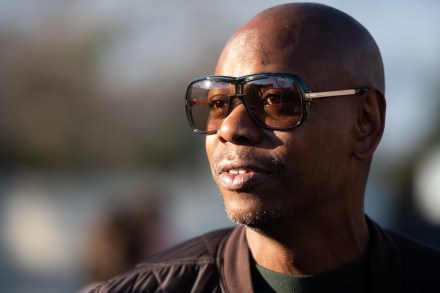
Towards what seemed like the halfway point of his show in London last night, Dave Chappelle announced to the crowd he was going to tell us something he was refusing to tell the media.  He wanted us to know, he said while looking sadly at the floor, that his quarrel was not with the gay or the trans communities . No, no. Looking up and raising an index finger, he explained: 'I’m fighting a corporate agenda that needs to be addressed.' Thinking we still had another hour of the show to go, we cheered. ‘You fight those corporate vampires, Dave!’ we thought. He then let us know, whenever it was possible, that we should be kind to one another. Very shortly after that he raised his thumbs aloft and walked off stage: 45 minutes. Friday night tickets are £160.

Political arguments are now over words, not things

From our UK edition

There is a picture book, by the excellent David McKee, of which my youngest child was very fond. It’s called Two Monsters, and its protagonists are, as promised, two monsters. The blue one lives on the west side of a mountain, and the red one lives on the east side of the mountain. They communicate verbally but never see each other. It all kicks off when one evening the blue monster calls: 'Can you see how beautiful it is? Day is departing.' The red monster shouts back: 'Day departing? You mean night arriving, you twit!' Cantankerous words are exchanged before bedtime and both sleep badly. The following morning the blue one shouts: 'Wake up, you numbskull, night is leaving.' Red responds: 'Don’t be stupid, you peabrain! That is day arriving.

America’s campus culture wars come for St Andrews

From our UK edition

The University of St Andrews has been keen on American imports for some time. Americans make up 16 per cent of undergraduates, by far a larger proportion than any other British higher education institution. The university, hungry for foreign money (international students pay £25,100 a year, compared to £9,250 a year for English, Welsh and Northern Irish students) sends recruiters to high schools in the States to woo potential students. When I was at St Andrews a decade ago, I knew more Americans than Scots. Mostly, the university’s connections with the US have been good. Yet there is one American import St Andrews could do without: campus culture wars.

I loved prison

From our UK edition

Memories for me are like beautifully edited copy: all cleaned up and retaining only the good parts. The wife tells me that I’m quite lucky in choosing to remember just pleasant things, and of course I agree. Actually it’s not really a choice; it is almost automatic. Bad things are tucked away immediately, never to return. I suppose many idiots enjoy such forgetfulness, but then I’d rather be called an idiot than a surly grouch, complaining and finding fault with everything and everyone. Needless to say, I cannot forget Pentonville. Looking back, I recall only fun times among my fellow convicts. There was Warren, the large black man whose appeal I had to draw up because he was illiterate.

The economic illiteracy of anti-capitalists

From our UK edition

Back in October, World Bank chief economist Carmen Reinhart recommended that countries borrow heavily during the pandemic. ‘First, you worry about fighting the war,’ she said, ‘then you figure out how to pay for it’. As thousands of mask-free demonstrators took to the streets of London this weekend to campaign on issues ranging from Palestine to climate change, you have to wonder: are we still at war? And does anyone care about the economy anymore? It has been apparent for some time — though it may continue to confound psephologists — that issues such as identity, patriotism and culture are more important to the electorate than economic concerns.

Pimlico Academy and the politicisation of the playground

From our UK edition

The strange tale of Pimlico Academy, the central London school roiled by ‘anti-racist’ protests, shows us that the culture war now consumes all before it. No institution or arena of life can carry on unmolested by our overheated discussions about race and identity. The politicisation of absolutely everything has, perhaps inevitably, reached the playground. Daniel Smith was, until this week, headteacher of Pimlico Academy. He resigned yesterday following months of student and staff protests over the school’s uniform policy, traditional ‘kings and queens’ curriculum and, most scandalously of all, its flying of the Union flag.