Critical theory

‘Media Literacy’ and the decline of Woke

From our US edition

What is “woke”? To Jordan B. Peterson it is “postmodern neo-Marxism.” To James Lindsay it is “critical race theory” and latterly “revisionism” in general. These theories of what woke means take for granted that one of its core tenets is a denial of objective truth under the influence of what is broadly called “critical theory,” but the thinking behind contemporary wokeness falls far short of these theoretically exalted standards. Critical theory was a movement, primarily among academics, in the mid 20th century which had a diverse array of followers, but the common denominator was the belief that texts, whether literary works like novels, or historical documents, had no inherently “true” interpretation.
Media Literacy

Why intellectuals love Disney

This month marks the 100th anniversary of Walt Disney’s company. The first cartoons it was founded to produce – the animation/live-action shorts Alice Comedies – are largely forgotten, eclipsed not least by the resounding success of Mickey Mouse. Mickey Mouse grabbed much of the attention from the get-go, including that of several philosophers, sociologists and critical theorists, who perceived in him an emblem of the best and worst of the modern age. Also celebrating its 100th anniversary this year is the founding text of western Marxism, Georg Lukacs’s History and Class Consciousness.

Banning Critical Race Theory in schools isn’t enough

From our US edition

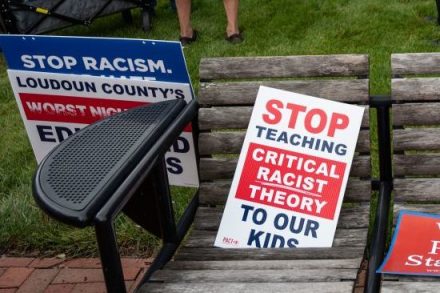
While pundits bicker about whether bills targeting critical race theory in schools are ethical or constitutional, an equally important question is whether they’re effective. While such legislation is a workable stopgap to loathsome practices like affinity groups, it can only work as a temporary measure. CRT is manifested not primarily as a set of explicit ideas to be taught like the freezing point of water or the causes of World War Two. Rather, it’s a philosophy that informs the instruction, curriculum, and policies of various districts. We cannot outright ban CRT from our schools anymore than we can ban the influence of philosopher John Dewey. When the culprit is a belief system, bans are the wrong tool.

critical race theory

What anti-racism really means and how to talk about it

From our US edition

How do you navigate conversations with people when the default assumption is that you’re a racist? What do you do when calmly and sincerely stating that you are not a racist is taken as evidence of your guilt of racism? First, understand what the terms mean, where they come from, and who are the proponents. ‘Anti-racism’ means being against racism, except for one important detail. What anti-racist advocates mean when they use the word ‘racism’ isn’t the same as what most people mean.‘Anti-racism’ comes directly from the academic scholarship of Critical Race Theory. In Critical Race Theory, ‘racism’ means ‘systemic racism’, which is said to be ‘the ordinary state of affairs’ in the United States.

anti-racism