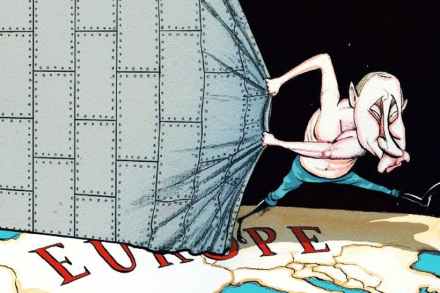
Crimea

Would taking back lost territories make Ukraine whole again?

For many of Ukraine’s supporters, Donald Trump’s recent declaration that Ukraine “is in a position to fight and WIN all of Ukraine back in its original form” came as a welcome – and unexpected – turnaround in US policy. “Ukraine would be able to take back their Country in its original form and, who knows, maybe even go further than that!” wrote Trump in a Truth Social post in late September. “Putin and Russia are in BIG Economic trouble, and this is the time for Ukraine to act.” But would taking back the lost territories of the Donbas, Zaporizhzhia, Kherson and Crimea make Ukraine whole again – or could a reconquest instead condemn Ukraine to perpetual civil war against itself and prolong the conflict with Russia indefinitely?
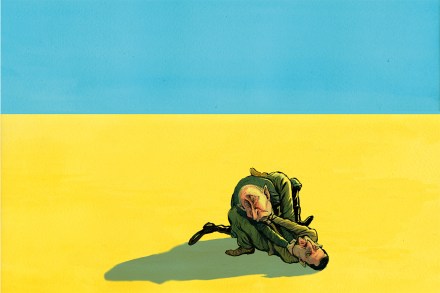
Ukraine

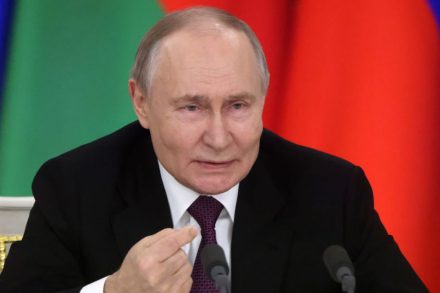
Will Putin give peace a chance?

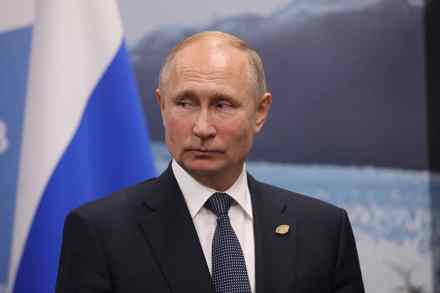
At a summit meeting in Moscow, Ronald Reagan was asked about his basic approach. He famously answered, “Here’s my strategy on the Cold War: we win, they lose.” Vladimir Putin has the same strategy for Ukraine. That is certainly his first response to President Trump’s offer to mediate an end to the war and bring a reluctant Ukraine to the negotiating table. If “we win, they lose” is Putin’s final response, then the war cannot end without Ukraine’s surrender or Russia’s collapse. Putin’s initial reply, filled with his maximalist demands, indicates he is still committed to the conquest of his neighbor, whose independence and sovereignty he has long rejected.

putin

A history lesson for Joe Biden

Some moderately clever people, reflecting on the confusing morass of current events, knowingly quote George Santayana’s most famous observation: that those who cannot remember the past are condemned to repeat it. Since the past is largely an almanac of unfortunate (not to say horrific) events, the idea that we are “condemned to repeat it” concentrates the mind in approximately the way Dr. Johnson said the prospect of hanging in a fortnight tends to do. But of course the past never really repeats itself. When it comes to history, Heraclitus rules: you cannot step into the same river twice, mon brave. Moreover, as that sage of Ionia said, “the true nature of things loves to conceal itself.

Vladimir Putin

Will Biden’s Ukraine visit matter?

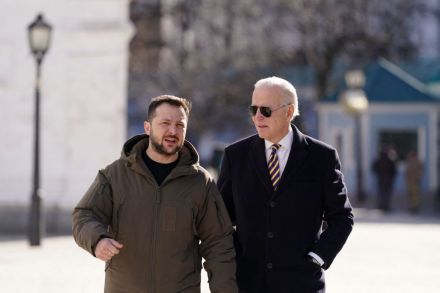
Kharkiv, Ukraine President Joe Biden on Monday showed the world that, as Volodymyr Zelensky said in his London speech two weeks ago, we do not need to be afraid of Moscow. Or maybe we don't need to be afraid so long as Biden is on Ukrainian soil. As I write this, Biden's train has likely crossed into Polish territory, and, on cue, the air-raid alarms are wailing across all of eastern Ukraine. No one I know in Ukraine, where I’ve been since the pandemic and throughout every minute of this war, thinks that Biden's visit accomplished something magical. But it did serve a crucial purpose: boosting the spirits here, amid a week full of warnings that Moscow will do something awful.

What price must the West pay for Crimea?

For centuries before Vladimir Putin arrived on the scene, Russian foreign policy has been shaped by the country’s need for warm-water ports. To be a great power in Europe and the Near East, Russia must have access to the Mediterranean. Commercial as well as military considerations dictate this. In the eighteenth century Russia conquered the khanate of Crimea and acquired a splendid location for a new Black Sea port — what is now the city of Sevastopol. The Crimean peninsula had been a gateway from Asia to the Mediterranean since the days of the ancient Greeks, who built some of their northernmost colonies there. Russia made Sevastopol the permanent home of its Black Sea Fleet.

crimea

How the Ukrainians personally humiliated Putin

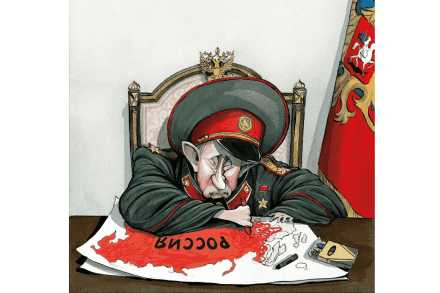
The Russian army has been the source of an endless list of shortcomings and embarrassments over the last eight months. There are simply too many of them to count, from the failure to move through Kyiv’s suburbs in March to the sinking of the flagship Moskva in April to the loss in September of more than 3,000 square kilometers of territory in just days. But by far the most humiliating to Vladimir Putin personally was last weekend’s attack on the twelve-mile bridge that connects mainland Russia with Crimea, the peninsula Moscow annexed in 2014. That bridge, which cost more than $7 billion to build, was one of Putin’s pet projects, a visible signal to the world about Moscow’s staying power in the region.

putin

Are sanctions against Russia actually working?

Six months ago this week, the United States and its European allies enacted one of the most comprehensive, stringent sanctions regimes against a major economy in history. Russia’s unprovoked invasion of Ukraine on February 24 not only shocked the West’s sensibilities, but pushed Washington and Brussels to take actions that would have been unthinkable only a few weeks prior. As far as the West is concerned, Vladimir Putin’s Russia is nothing less than a dangerous pariah state — and its aggression against a neighboring country meant it had to be treated as one.

Is the Ukraine conflict a civil war?

The strategic Ukrainian port city of Mykoliav, that has been under constant Russian bombardment since the onset of war, was locked down for an entire weekend in early August as troops searched for Russian collaborators that had been calling in locations of Ukrainian troops and ammunition. The government arrested scores of traitors during their house-to-house search. Meanwhile in the capital Kyiv, President Volodymyr Zelensky has also been sounding the alarm over Russian collaborators after firing both his prosecutor-general and head of the intelligence agency for treason. The former spy chief was a close childhood friend of the president. There are allegations that the entire intelligence agency is riddled with spies, with many defecting to Russia in the early days of the invasion.

ukraine

Ukraine is convinced that time is on its side. So is Russia

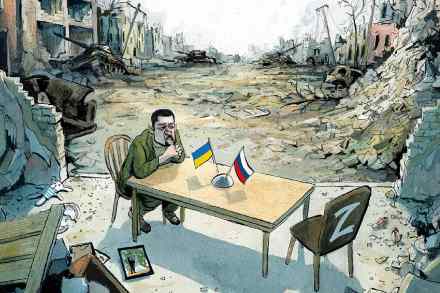
As the war in Ukraine approaches its six-month anniversary this coming Wednesday, the fighting shows no sign of stopping. Peace talks are a figment of the imagination, as Russian president Vladimir Putin and Ukrainian president Volodymyr Zelensky remain just as committed to achieving their objectives today as they were when the war first broke out. The Russians continue to pound residential areas with artillery in the Donbas, hoping to slowly capture more territory after months of slow, high-cost maneuvering in the Donetsk region. The Ukrainians, meanwhile, are settling on a new strategy in the south, harassing Russian supply lines deep into Russian-occupied territory.

ukraine

How will the battlefield stalemate end in Ukraine?

The simplest description of the war in Ukraine is this: stalemate, accompanied by constant, deadly bombardment. For the Ukrainians, that bombardment is aimed at the Russian military. For the Russians, it is aimed mostly at civilian targets, a deliberate strategy that is also a war crime. Russian artillery shells, cluster bombs and cruise missiles are killing tens of thousands of Ukrainian civilians and destroying their homes, schools and businesses. Meanwhile, Ukraine’s counterattack is imposing huge, irreplaceable losses on Russia’s army, killing soldiers, destroying their equipment and liquidating incompetent military leaders who come to the front to untangle the mess. Russia’s initial war plan failed, abysmally.

stalemate