Covid

The data is in and the cost of school closings was terrible

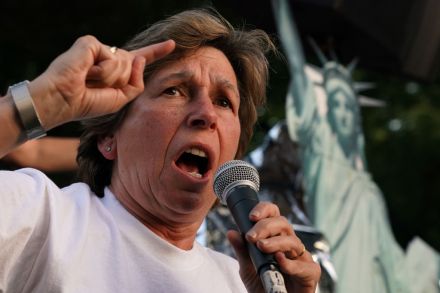
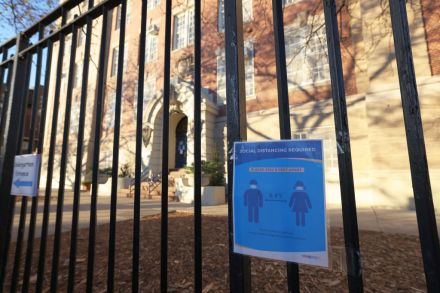
Monday's release of the nation's report card on the academic performance of schoolchildren is just the latest stunning measure of how closed schools damaged young Americans. The National Assessment of Educational Progress, which looks at the test scores of fourth and eighth graders in math and reading, is a devastating indictment of the nation's political leaders and teachers' unions, who collaborated to shut down schools and keep them shut for in-person learning long after those across most of the West had already reopened. We're only just beginning to comprehend the wreckage, which has had significant effects on school districts across the country, even after it was clear they could reopen safely. When Covid first arrived in America, its danger to young students was unclear.

randi weingarten

A nation of quitters

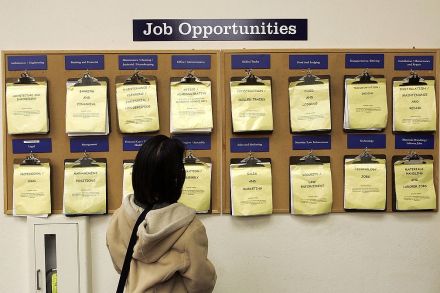
America’s post-pandemic employment picture is an unsettling paradox. On the one hand, job totals are finally back above pre-pandemic highs — and unemployment rates skirt fifty-year lows. But at the same time, overall work rates are lower than they have been since the 1980s — and millions of workers who dropped out of the labor force during the Covid-19 lockdowns have yet to return. A peacetime labor shortage has erupted, yet vast numbers of men and women are still sitting on the sidelines of the economy. America is renowned for its work ethic — and rightly so. The average worker in the United States clocks more hours each year than those in Canada, Australia, Western Europe and now even Japan. But those are the work patterns of US men and women holding down a job.

work

Britain needs more honesty about unemployment

From our UK edition

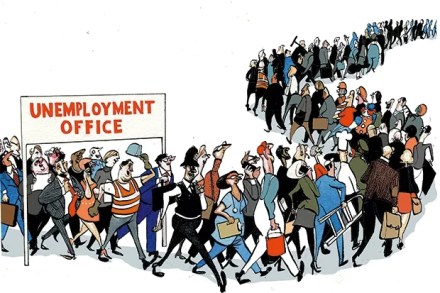
Is low unemployment causing us more problems than we realise? The suggestion might seem absurd, offensive even. It’s reminiscent of the days of Mrs Thatcher’s supposedly ‘cruel’ monetarism, when we had three million unemployed. Some on the fringes liked to argue that unemployment was good for the economy because it made people work harder, being fearful for their jobs. Mass redundancies would not, of course, help the economy now or at any other time. If a million people were to lose their jobs, as happened in the early 1980s, that would be a million households suffering a collapse in the spending power. As well as a human tragedy, it would be an economic one, too. Many graduates are not doing graduate-level jobs But then who mentioned anyone losing their jobs?

The 100-year-old opiate had lost none of its potency

From our UK edition

Our neighbour Michael is a keen and knowledgable attender of vides-greniers, the equivalent of our car-boot sales. His focus is on old bottles, full or empty, and old china, but he’ll pick up anything that piques his fancy. Some months ago, for example, he bought for €1 a glass tube of opium tablets issued to the French infantry during the Great War. Last week he reissued me with three of these little brown pills knowing that I had an abiding interest in the first world war and was using a modern version – white crystals of morphine sulphate in a red gelatine pill – to mask the pain I was experiencing due to the metastases in my bones.

Just how ‘over’ is the pandemic?

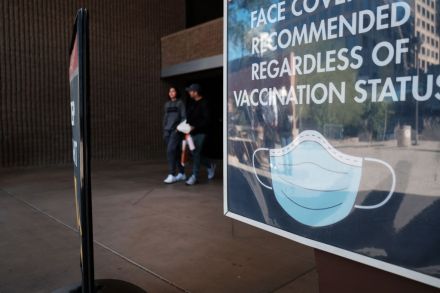
For all the confusion caused by President Biden’s recent declaration that “the pandemic is over,” and the familiar sight of administration officials rushing to qualify his comment, it raises a question: where does the Covid emergency actually stand? Having gone from draconian lockdowns to a summer of travel chaos in just over two years — with lots of political squabbling in between — it has been easy to lose track of both the remaining dangers and the precautions many health experts believe are needed going forward. Strictly speaking, Covid is still very much with us. The average number of daily cases in the US has floated between 50,000 and 60,000 since April of this year and the death toll remains fairly constant at 400 per day.

omicron

Exhausted by America’s culture of fear

When I try to sleep at night, I can't relax. I blearily turn on the TV, but I can't change the channel. My TV is telling me I am going to die, maybe from Covid (they say there's a new variant, you know, called Monkeypox); maybe from climate change because it is likely already too late. Before I drown because of climate change, I'll be hungry because supply chains don't work anymore, and inflation is stripping away my purchasing power, and some sort of fascist coup will happen, and I'll probably have to wear all gray clothes all the time like in the dystopian movies. Then there are the TV diseases, bowel disorders and skin problems that medicines I can't afford might fix except side effects can include blindness, paralysis, saying thingstoofasttounderstandanditallisjustablur of fear.

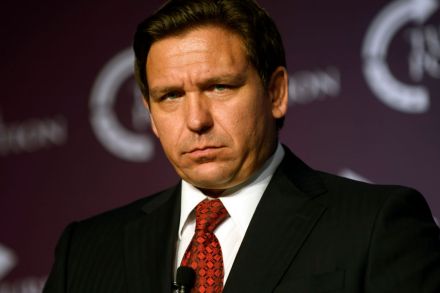
Will Ron DeSantis miss his political moment?

The biggest question for the future of the Republican Party is not whether Donald Trump runs for president in 2024 — he will. It is whether Ron DeSantis chooses to challenge him, or jumps the shark instead. Henry Olsen, the esteemed election analyst and Washington Post columnist, has a new column arguing that the overall lesson from the midterm primaries that have played out over the last several months is that the appetite for Trumpian populist candidates exists almost everywhere. The GOP electorate doesn't just want the policy priorities of populists — they want the style and attitude Trump brought to bear against the media and the Republican establishment.

The tyranny of the specialists

We're all in major trouble anyway, so may as well throw another culture war onto the bonfire. How about this: specialists versus generalists. You can picture it now: the specialists refuse to fight except through a very esoteric discipline that only they understand and won't shut up about. While the generalists fight any way they can, on the beaches, on the landing grounds — and badly all around. The debate between specialists and generalists is an old one, and these days it isn't much of a debate at all. The specialists have all but routed their generalist foes, and are busy dictating terms (in extremely technical language with plenty of appendices).

science

Vaccines disguised the errors of our lockdown policy

From our UK edition

Liz Truss’s statement that she would never authorise another lockdown and The Spectator’s interview with Rishi Sunak have triggered a new debate about whether the lockdowns of 2020 and 2021 were justified. The most widely discussed positions are that lockdown occurred too late or that there should never have been any lockdowns at all, alongside the view that what happened was about right. But there is another position here – in many ways perhaps the most obvious position – that rarely gets an airing. When lockdown was first introduced, Boris Johnson said the point was to ‘squash the sombrero’ of cases, so that the peak number of hospitalisations each week did not overwhelm the NHS.

What Rishi Sunak gets wrong about lockdown

From our UK edition

Rishi Sunak presents an alarming picture of what happened during lockdown in last week’s Spectator interview – one echoed by lockdown sceptics who claim that Covid policy was a disaster, stoked by fear and based on questionable scientific advice. Worst of all, they cry, the trade-offs were not even discussed. But none of this is true – it is Covid revisionism. I know because I sat around the cabinet table as politicians, scientists, economists and epidemiologists agonised over the extent to which lockdown would devastate lives and livelihoods. It was not an easy decision for anyone. We locked down because we knew the cost of 'letting Covid rip' was far more damaging to both the health and wealth of the nation.

Why I left public education for a Christian school

Another school year has begun. It's another year that I’m grateful to have left public education. From the outside, it doesn’t make much sense for me to have left. I had a good reputation in my district among staff, students, and administration. The pay at public schools is markedly better. And being a private school teacher makes you something of an outcast among teacher colleagues — never quite “one of us.” I did not leave because of the standard accusation — that I couldn’t “handle it.” In many ways, my private school jobs have been far more difficult than my public school one.

Reading Flannery O’Connor under quarantine

I recently had a bout of Covid. The symptoms were pretty mild aside from persistent brain fog, which in my case has been a good cover for creeping senility. A much younger friend of mine confessed that she and her family celebrated their defeat of Covid with a summer beach holiday in Delaware. She and her husband still had a bit of Covid-brain — enough, apparently, that when they drove back, they came back in one car. They had driven up in two. It took them four days to figure this out. My own sense of disorientation, confusion, and fatigue has not been so dramatic. I might have fired off the odd, undiplomatic email. But I often do that. I might have wondered about where I left my reading glasses. But they are invariably suavely tilted back on my head.

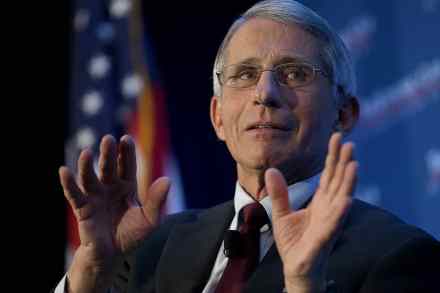
Could DeSantis actually ‘chuck’ ‘little elf’ Fauci across the Potomac?

Dr. “Saint” Anthony Fauci — credited with bringing about the “Fauci ouchie” (a vaccine that was such a “miraculous” cure that we needed several of them) and masks that made Granny look like a member of the Insane Clown Posse — is retiring. Fauci’s handling of the Covid-19 pandemic was confusing at best and contradictory at worst. Cockburn will not miss him, but there is perhaps none so eager to see Fauci depart as Florida Governor Ron DeSantis. These two have gone at each other like Marvel comic book characters — DeSantis as a self-fashioned Captain America and Fauci as his archnemesis, perhaps the “wayward psychiatrist Dr. Faustus.

We’re at pandemic levels of death. Why is no one talking about it?

From our UK edition

At the peak of the lockdowns, thousands were dying every week. Newspaper front pages demanded action. But in the latest week’s data, covering the week to 12 August, some 1,082 more people than would be expected in a normal year died in the UK. These so-called ‘excess deaths’ have averaged 1,000 for 15 weeks of this year. Yet unlike Covid deaths, they are met with near silence. But it isn’t Covid that’s causing these deaths anymore. In the latest figures, published by the ONS, just 6 per cent of English and Welsh deaths had anything to do with Covid. Of nearly 10,000 weekly deaths in England, just 561 mentioned the virus on the death certificate.

Farewell, St Anthony Fauci

From our UK edition

So farewell, Anthony Fauci, the unfortunate face of America’s pandemic response. Well, not so unfortunate – the doctor is stepping down as head of the US National Institute of Allergy and Infectious Diseases this December, riding off into the sunset with a reported $350,000 per year golden parachute, the largest pension in US federal history. Fauci has developed something of a reputation for baffling the public – whether it be for contradictory advice on the efficacy of masks or herd immunity or vaccines. Even his resignation announcement was confusing:  I will be leaving these positions in December of this year to pursue the next chapter of my career... While I am moving on from my current positions, I am not retiring.

The lost boys of Covid

Millions of American children are about to enter their fourth year of Covid-impacted schooling. In vast swaths of the United States, a child now entering second grade has never had anything resembling a normal school experience. No child entering kindergarten has a memory of life before the pandemic. A rising junior in high school has never had a normal high school experience. Over two years into the pandemic, we know that the effects of “long Covid” are basically nonexistent in kids. Following the release of a study published in the Lancet, Alasdair Munro, a pediatric infectious disease specialist in the United Kingdom, tweeted, “A new, large study on long covid in children using Danish registry data has some very reassuring findings.

school

Tony Blair’s Covid grift

From our UK edition

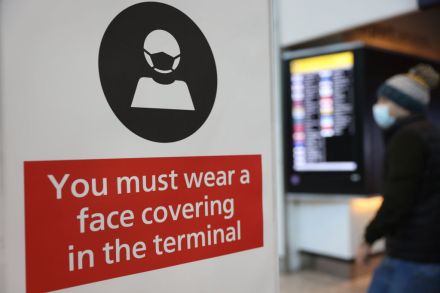
Have we yet seen the end of Covid restrictions? It is tempting to think so. For many people, Covid and the lockdowns have receded into history, replaced by Ukraine and the energy crisis. It would be easy, but foolish, to dismiss Tony Blair’s proposals as the ramblings of a bored ex-PM But perhaps we have parked the whole business in our memories a little too soon. Some are already pushing for restrictions to be re-enacted this winter. The Tony Blair Institute for Global Change has just published a paper, Three Months to Save the NHS, demanding that the government consider re-imposing mask mandates on public transport and other enclosed settings.

Why I joined the college exodus

In the spring of 2020, the pandemic catalyzed a startling personal revelation. As a begrudging student of Zoom University, I came to the realization that a college degree might not be worth it. Pre-pandemic Rikki was a dutiful, head-down student at New York University with a 4.0 GPA and her eyes set on law school. But when the world locked down in the middle of my sophomore year and my university still demanded full tuition for virtual classes, I began questioning everything. Although they certainly made a valiant effort at remote teaching, most of my professors proved too technologically inept to coerce twenty-five despondent teens to attend 8 a.m. Zoom lectures about medieval feudalism.

The War on Normal

The eagerly anticipated midterm elections, now in a countdown, will no doubt reveal vast electoral dismay and division. Inflation, recession, crime, and border invasions are half of it. The Democratic-inspired War on Normal is the other. However impressive GOP victories might be, the fifty-year-old progressive hegemon will endure. Identity hustles, handouts, lawlessness, and cultural rot won’t disappear after the midterms. Disparate impact, non-binary fantasies, and Supreme Court oppositionists in primal breakdowns will persist. Beyond November, cunning propagandists with opportunities at thought control unprecedented in human history will seek to discredit their adversaries. Militants will intimidate authorities. The commercial republic and its assets are the prize.

Admit it: monkeypox is kind of funny

When monkeypox crept onto the scene last month, with a handful of confirmed cases in the US, it seemed too absurd to be taken seriously by anyone who’d been paying attention over the last two years. Americans wised up to media malfeasance and career scammers in our health bureaucracies, rolled their eyes and thought, here we go again. The name itself, monkeypox, couldn’t be scarier — like something from a doomsday novel, or cooked up in an editorial meeting to provoke maximum panic. White liberals — the inexhaustible, ever-dutiful and poised-for-action enforcers of tyranny — had a different issue: the name’s racist.