Covid

The night the masks came off

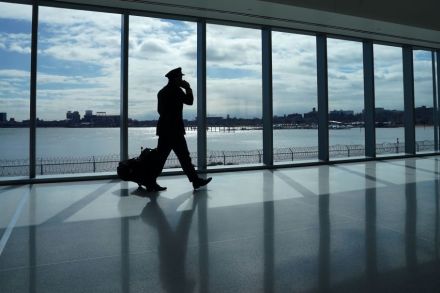
My wife and seven-year-old son were halfway to Boston to catch a connecting flight to Ireland on Monday when the news came down. Or, as it were, went up, as Judge Kathryn Kimball Mizelle voided the Biden administration’s widely reviled but recently extended mask mandate on public transportation. After receiving instructions from the ground, the pilot on their plane emerged from the cockpit and announced that masks were no longer required. He then invited the passengers to “go ahead and throw them in the trash.” There was a swell of cheers as the passengers and crew were overcome by a euphoria of deliverance from the tyranny of overzealous Washington.

The march of the ‘experts’

Historically Americans have had little, if any, respect for college and university professors, for whom they felt a mild though distant and tolerant contempt. As more and more members of the professoriat have been recognized as “experts” in their respective fields, or at least at the edges of them, since World War Two, they have naturally presented themselves to the public under the guise of “specialist,” a vast improvement over their previous reputation as absent-minded eggheads barely able to afford the Ford Motor Company’s cheapest product and a shabby house on the wrong side of the railroad tracks.

experts
spring breakers

Beach for America

I don’t know how I first came across Harmony Korine’s Gummo (1997), but in this cult film about the foibles and joys of small-town life, I found a director who understood the cinematic merits of American seediness. Gummo, which features amateur actors in debauched scenes, hosts a collection of freaks unsurpassed in modern cinema, including skinhead brothers, a boy dressed in a bunny suit (he goes by “Bunny Boy”), and a gay dwarf. Though mostly repulsive, Gummo has a transgressive charm that makes it impossible to turn away. Like Korine’s Mister Lonely (2007) and Trash Humpers (2009), Gummo is less about plot and theme than feeling and sensibility. It is an aesthetic experience that stylizes grime to capture the essence of characters one hopes not to encounter in real life.

Democrat gets bitten by fox — and hypes the CDC

Authorities have finally done something about the aggressive, rabid critters that lurk around our nation’s capital and slink from their dens on the Hill to assault honest people for no good reason. Cockburn has encountered all sorts of such creatures on various Capitol Hill pub crawls, but the type the police just decided to address was neither a blundering elephant nor an indignant jackass. Neither was it a Blue Dog, one of those endangered porcupines that rarely appear in the Swamp, nor even a squawking chicken hawk. It was a red fox. A cute little lady fox with a majestically bushy tail, black-tipped ears and feet, white markings on her chest and muzzle, and shining black eyes. People first started posting images of the fox on Monday.

How science fiction novels read the future

The pandemic is not quite over, but we are getting used to its inconveniences. What disaster will be next? An antibiotic-resistant strain of the bubonic plague? Climate collapse? Coronal mass ejection? Will the next catastrophe be natural — perhaps a massive volcanic eruption, the likes of which we have not seen for more than two centuries, since Tambora in 1815? Or will it be a manmade calamity — nuclear war or a cyberattack? And might we inadvertently descend into a new form of AI-enabled totalitarianism in our efforts to ward off such calamities? To all these potential disasters it is impossible to attach more than made-up probabilities. So what can we do about them? The best answer would be that we should strive to imagine them.

science fiction
covid

I’m done being a crazy Covid lady

I was seven months pregnant in March, 2020. I had miscarried before, and it had taken a little while to conceive, so even before the world became anxious about reports of a novel coronavirus, I was a nervous wreck. When the pandemic came in earnest, I was utterly overcome. I had been working on a live news show. Every day in late February, and even at the very beginning of March, we were telling Americans to wash their hands, but that everything would be okay. Local politicians and medical experts came on the show to tell people it was all going to be fine. This was The Before. One day, I came into the studio during a commercial.

The truckers are coming to Washington!

The Canadian truckers might have been driven out of Ottawa, but a copycat protest is brewing in the United States. Cockburn hears that police are preparing for demonstrations that could gridlock the DC area, and they could start as soon as Wednesday. Honk honk! The truckers are coming to Washington — just in time for President Biden's State of the Union address next week. Cockburn has been a fan of truckers ever since he decided to see whether he could hitchhike across America using only Jim Beam trucks (he could, as it turns out). But in this case, the big riggers may be in need of a friendly correction.

Why a post-Covid world might not be so bad

No one need ask why the strict public health regime to manage Covid — masks, mandates, quarantines, and required inoculations — has begun to collapse. Between angry truckers, unfavorable polling for continued lockdowns, the perception of a Wuhan coverup, changing reports of vaccine effectiveness, and declining hospitalizations, even President Biden and blue state governors realize they have but two options: pretend to be leading a return to normalcy or face an unpredictable grassroots rebellion. The interesting question for Americans is not why the sudden prospect of a return to normalcy but what “returning to normalcy” really means.

mask

Democracy and economic freedom are in decline

The first report cards on democracy and economic freedom for 2021 are out and the results are not good. Economic Intelligence Unit, the sister company of The Economist magazine, found that last year’s Democracy Index had fallen by almost a tenth of a percent. That’s the biggest drop in the index’s 15-year history. The Heritage Foundation’s Index of Economic Freedom, meanwhile, saw a similar albeit larger decline of 1.6 points out of 100. Heritage looked at economic policies and conditions in 177 countries while the Democracy Index looked at 167 countries. Both reports blame government-enforced COVID restrictions for the declines.

Joy Behar’s strange mask religion

Joy Behar made a predictable announcement last week on ABC’s The View. While discussing how the CDC may ease mask guidance in the near future, she explained the depths of her neurosis to her co-hosts. "So if I go on the subway, if I go in a bus, if I go into the theater... a crowded place, I would wear a mask, and I might do that indefinitely," she added. "Why do I need the flu or a cold even? And so I'm listening to myself right now. I don't think it's 100 percent safe yet.” A few hours later, a photo emerged on Twitter of Behar sitting in a booth with two friends at a restaurant. She was sans mask. Worse yet, journalist Libby Emmons, who posted the photos, added, “I hear that she also walked out of the restaurant unmasked, though her companions dutifully donned theirs.

joy behar

Lawnmowers: the real pandemic

Today’s school-aged students are in grave danger. A murderous virus is ripping through the population, leaving a tragic body count in its wake. We need aggressive preventative measures. Classes need to go online, indefinitely if necessary. The experts must be heeded. The science must be followed. This epidemic is simply too dangerous; we cannot afford to play games with our children's lives. I’m talking, of course, about the preeminent public health crisis of our time: lawnmower deaths. The threat that lawnmowers pose to our nation is no joke. According to the Consumer Product Safety Commission’s National Electronic Injury Surveillance system, 90 Americans die every year from lawnmower accidents. Over the past decade, 3.

The research is in and lockdowns don’t work

A new Johns Hopkins systematic review cuts in two the narrative that government-imposed mandates meaningfully prevent coronavirus deaths. The review looked at 34 different studies analyzing business and school closings, shelter-in-place orders, and international travel bans. It included data from US and European Covid mitigation efforts, along with endeavors in India, South Africa and China. Almost two dozen of these studies were peer-reviewed, while the other 12 were working papers. The results of this meta-analysis are striking. Lockdowns reduced Covid mortality by an average of only .02 percent. Shelter-in-place orders were slightly better at a 2.9 percent average, but nothing worth crowing about.

Joe Rogan and the risk of being unreasonable

In the mid-2000s, I was an avid fan of mixed martial arts. My friends and I would pool our money to order the pay-per-view events of the Ultimate Fighting Championship, the combat sport’s largest promoter. One of the fixtures of UFC broadcasts was — and remains — the color commentary of Joe Rogan. Most people of that era would have been more likely to recognize Rogan as the host of Fear Factor, a hokey NBC gameshow in which contestants attempted to withstand such challenges as being covered in live insects or dropped into deep water while trapped in a car. But my buddies and I were more impressed with his UFC broadcast work. He was knowledgeable about the sport and infectiously enthusiastic, to the degree that we wondered whether he was coked out of his mind.

The crackpot of Camelot

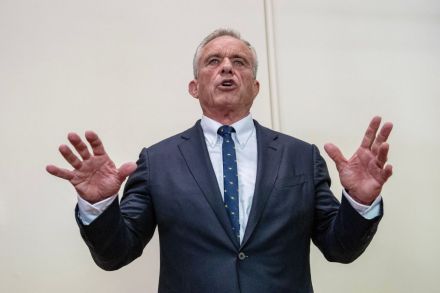
Robert F. Kennedy Jr., son of Bobby Kennedy, is a conspiracy theorist and an anti-vaxxer. He's also an environmentalist lawyer, progressive talk-show host, and near-embodiment of horseshoe theory, having become something of a pin-up for Covid-era cranks. According to Scientific American, this scion of Camelot has, since 2005, "promoted anti-vaccine propaganda completely unconnected to reality." According to the Center for Countering Digital Hate, his Children's Health Defense organization claims "unvaccinated children are healthier than vaccinated children" and condemns the parents of vaccinated children for "enrolling their kids in experimental Covid vaccine trials." On Sunday, Kennedy Jr.

Returning to live gigs

Gigs. Remember them? They were awful. You’d get to some dump of avenue, in a bad part of town (if a small capacity) or out in some apocalyptic wasteland (if an enormo-dome). You’d arrive too early and have to try and dodge some mediocre support band (who’d bought their way on to the tour) or queue for seven hours for a beer in a plastic cup. If you dared to speak while some awful act was plodding away, some goody-goody would hold a finger up to their lips, glare and shoosh you. An hour and a half later in the back of the venue, you’d stand gratefully nearer to death’s beckoning cold hand. “Ever get the feeling you’ve been cheated?” Yes. When Covid rampaged through the world like a Viking raid of death-cult realtors, the world was suddenly shorn of live music.

gigs

How working from home threatens authoritarian regimes

One of the few good things to come out of the pandemic has been the option to work from home (WFH). According to a Stanford University study of 17,000 employees, 50 percent of respondents who stayed at their jobs without commuting wanted to keep working from home at least part-time after Covid. And a September 2021 survey by OwlLabs, a video conferencing platform, found that one in three people who have worked remotely since the outbreak would likely quit if they could not continue to do so. While undoubtedly pressured by the current worker shortage to accept WFH as an employment benefit, companies have come to appreciate how decentralized staffing can improve productivity and substantially lower overhead.

Reading during a pandemic

The experience of having Covid is, by now, well-documented. You spend seven to ten days in your room or house feeling ill and sorry for yourself. The world outside becomes a distant dream, and one of the few pleasures of spending twenty-four hours a day in bed is the time to read. This winter, the Omicron bell tolled for me — as it seemed to do for half of the global population. I was very lucky with the virus: after two days of unbelievable complaining and texting everyone I knew to tell them I was either like Beth in Little Women or a fevered Marianne in Sense and Sensibility, I recovered from my gothic heroine-like swoon and set about ploughing through novels. At the outset, there were endless articles and tweets about what one should read during a pandemic.

The media blackout on Fauci’s damning emails

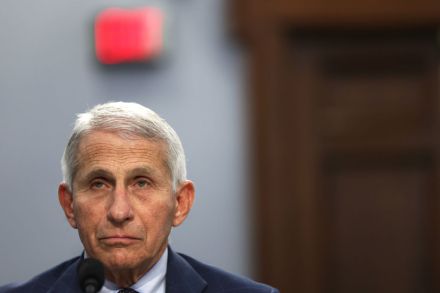
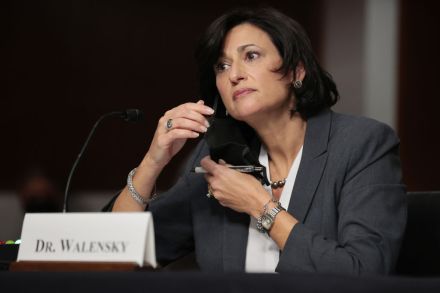
Last week saw another batch of emails drop from Anthony Fauci, and another media blackout as to their contents. The strategy by the press in cases like this has been pretty straightforward: ignore the story, wait for right-leaning media or Republicans to pick it up, then frame any attacks on the subject as tainted by partisanship. Last week, when confronted once again by Senator Rand Paul of Kentucky, Fauci responded with more hyperbole and ad hominem. The media, meanwhile, framed the exchanges as “Rand Paul Attacks!” and “Anthony Fauci defends!” They refused to look at the information in the emails that Paul was asking about, refused to ask questions about them, refused to even report on them. They are interested in the bloodsport, not the truth.

anthony fauci health
zoom

The evidence is in: remote learning doesn’t work

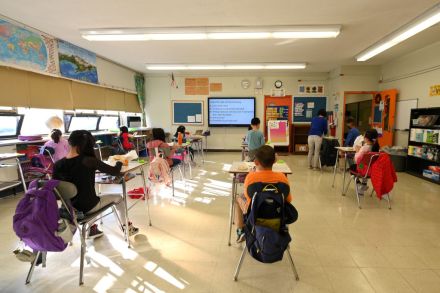
As the omicron wave crests and public schools face teacher sickouts, strikes, and a rash of student absences, it is worth reviewing some basic facts about the pandemic and public education. The results of last year's experiment in remote learning have confirmed what any minimally competent teacher could have told you from the outset: instructing students online yields disastrous consequences. Indeed, the results are so bad that defenders of a maximally cautious approach can only argue about terminology (please don’t say “learning loss!”) while proposing that we shouldn’t actually measure how far students fell behind under lockdown. Meanwhile, the psychological costs of the pandemic era continue to mount.

Democrats defeated by their own pandemic promises

“It’s time for us to do what we have been doing and that time is every day" was the much ridiculed answer from Vice President Kamala Harris in an interview with NBC News on Thursday. It has been lampooned in almost every corner of the media and memed all over the internet, and rightly so. Harris has been plagued her entire electoral career by a sense that she isn't prepared. This time the test is the pandemic, which is a major problem for her and Joe Biden almost a year into their administration. It's a term they were elected to almost exclusively on the promise of “shutting down the virus.” But viruses are a non-political problem, despite Biden's politicizing it during the 2020 election.