Covid

One issue I can’t stop snubbing the left over

Before I’d established my tiny crew of fellow local moms, I aggressively befriended – or tried to befriend – any woman with a baby who looked vaguely friendly. I’d try my luck in cafes, playgrounds, baby classes, yet with only minimal success (one find, a Cambridge-educated Irish lawyer, "forgot" her wallet on our date, leaving me to pay for her expensive glass of wine).So I clung gratefully to one of my café pickups, Marta, with whom two or three pleasant playdates (or rather: mommy walking dates) had taken place. I had rosy hopes for more as her kid was cute and reminded me of my own. But one day, strolling along the dark and wintry main drag that connected our two adjacent neighborhoods, things took a turn for the ominous.

left

The 2020s are too far-fetched for fiction

I write thrillers for a living. All kinds of thrillers. At one point I was in the business of penning Dan Brown-style romps, where ruggedly handsome academics find themselves embroiled in a global chase for the Holy Grail. Then came a stint in domestic noir – sad, isolated women on Scottish isles. Then I had a brief mid-career burst of erotic chillers. Now I’m moving on to folk-horror meets psych-thriller. This might sound ludicrous. It is quite often ludicrous. But it’s also fun: the books translate well and the location research can be a blast. There is a downside, though: plotting. Building a plot is fiendishly hard. You have to steer a fine line between entertainment and believability. The Holy Grail in the jungle can’t just show up – it needs some explanation.

2020s

Has my father’s BBC addiction peaked?

From our UK edition

‘I want the stairlift to go faster!’ said my mother, as the machine she was sitting on whirred furiously while she moaned to me about it on the phone. ‘How fast do you want it to go?’ I asked, imagining it doing 60mph down the short run of stairs in their little house in Coventry, coming to an abrupt halt at the bottom, then catapulting her across the living-room floor because she never does the seatbelt up. ‘It’s too slow!’ she declared, and I could hear her slapping various bits of it and banging the switches on the arm. ‘When the man comes to service it I’m going to tell him to make it go faster. Come on! Come on!

Haunted by my great-grandfather’s second wife – by Alice Mah

From our UK edition

Alice Mah didn’t enjoy finding her roots. Even though ‘ancestor tourism’ is increasingly popular among westernised descendants of Chinese émigrés like her, she felt a nameless sort of dread when visiting the village in the Cantonese county of Taishan where her great-grandfather came from. It didn’t help that she’d just attended the morbid Qingming festival, when the Chinese remember their dead by sweeping their tombs. Mah’s memoir opens here, and we nervously anticipate the tragedy or horror that will surely strike – and are left waiting. Other than the pushiness of Taishanese cousins, who demand ‘red pockets’ (a traditional way of gifting money in small red envelopes) and donations for the village from their richer compatriots, the trip seems uneventful.

Why is Britain’s economy so unhealthy?

From our UK edition

20 min listen

The Spectator’s economics editor Michael Simmons is joined by the outgoing boss of the Institute for Fiscal Studies Paul Johnson and the CEO of the Resolution Foundation Ruth Curtice to understand why Britain’s economy is in such a bad place. Given it feels like we are often in a doom loop of discussion about tax rises, does this point to a structural problem with the British economy? And why are the public’s expectations so out of line with the state’s capabilities? Michael, Paul and Ruth talk about whether it’s fair for Labour to claim they’ve been ending austerity, the extent to which the effects of the covid-19 pandemic are still being felt and if tax rises are inevitable.

Why won’t western scientists condemn Wuhan?

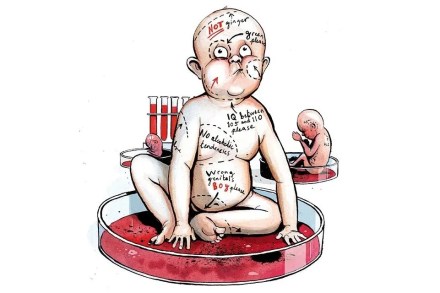
“I am officially launching my new company: Cathy Medicine. We will eradicate diseases in future generations through germline gene editing.” This is one of several strongly – and strangely – worded tweets sent in recent weeks from the X account of He Jiankui, a Chinese scientist who served a three-year prison sentence for gene-editing two human embryos. Those embryos are now people: seven-year old twin girls living under the pseudonyms Lulu and Nana. “Good morning bitches,” Dr. He wrote on April 16. “How many embryos have you gene edited today?” “Get in luddite, we’re going gene editing,” he added the next day. He also wrote: “I literally went to prison for this shit.” Is it the real Dr. He? The journalist Antonio Regalado, who first broke the story of Dr.

scientists

Help! I’m turning into Basil Fawlty

From our UK edition

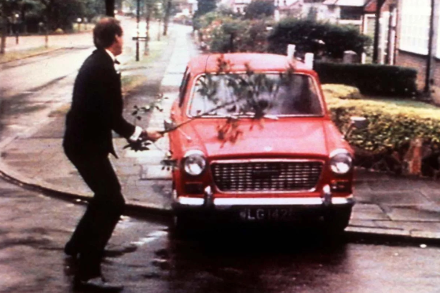
Basil Fawlty ended up beating his car with a tree branch after doing B&B for years, and I am very near that point after six months of dealing with customers. Among the many requests I’ve had since opening en suite rooms in my house in Ireland I can now add: ‘I would like a throw.’ An American lady and her husband checked into our largest double room with a king-sized bed, marble bathroom and spectacular view, and she came straight back out, down the stairs calling my name urgently – so urgently I thought she must have found a dead rat in the bed – and pronounced: ‘Ah. Now. Do you have a throw?’ The lady explained that she wanted to take a nap, but she didn’t want to go under the duvet. Basil Fawlty would have said: ‘Oh a throw! Yes, why not! A throw!

Proxy voting for new moms makes motherhood look like weakness

In recent days, babies have taken center stage at the US Capitol, carried by their congresswoman mothers advocating for a rule change to allow proxy voting for new parents. Representatives Anna Paulina Luna, Republican from Florida, and Brittany Pettersen, Democrat from Colorado, crossed the aisle to propose that House members be allowed twelve weeks to delegate their votes after childbirth. This effort, while well-intentioned, ignores the historical and practical significance of in-person voting in Congress. Article I, Section 4, Clause 2 of the Constitution states: “The Congress shall assemble at least once in every Year.

anna paulina luna proxy voting

There are no Ubers in the wilds of West Cork

From our UK edition

My American guest kept telling me he was going to call an Uber and I could not persuade him that no Uber was going to appear in the wilds of West Cork. I assured him that the only taxi service I knew of was the local funeral director. ‘What? Will I have to go in a hearse?’ said the chap from Philadelphia, laughing. I agreed it was quirky, but the funeral director really was the only taxi. ‘I’ll take you dead or alive’ is his unofficial slogan. The American laughed and laughed and texted his sons back in Philly to tell them the joke. It’s no joke, I thought, as I dialled the funeral home. The old boy answered after about 15 rings and asked me what I wanted in an accent so thick I could barely make out what he was saying.

The punishing life of a chief whip

From our UK edition

For many Spectator readers, their only exposure to the workings of the Whips’ Office will be through the machinations of Francis Urquhart, Michael Dobbs’s fictional chief whip made famous in House of Cards. In the first diaries published by a former chief whip, Simon Hart aims to shine a light on the vital and often unrecognised role that the Whips’ Office plays in the functioning of parliament and government. Having been overlooked by David Cameron and Theresa May, Hart arrives at the top table under Boris Johnson in 2019, nine years after his entry to parliament. He serves as secretary of state for Wales until he joinsa slew of others in resigning from the government – the prelude to Johnson’s resignation as prime minister.

My parents prefer the NHS to me

From our UK edition

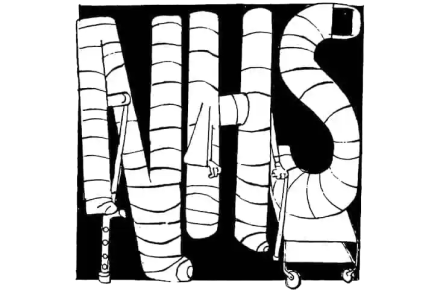
The US marine left his long johns down the back of an armchair and the next guest complained that she had found ‘a pair of knickers’. I ran upstairs after she told me this, she and her male companion standing in the big Georgian doorway about to leave. I found grey thermals, of the kind you might wear under hiking trousers, completely hidden, dropped down the back of this bedroom armchair and camouflaged against the taupe coloured carpet. I cursed myself for not moving the chair, which I normally do, and bolted back down the main staircase to tell the guest it really wasn’t knickers, but their car was already making its way around the fountain. Off it went down the driveway as I stood there shouting: ‘It’s not knickers!’ Darn it, I thought.

Can you still afford to eat out?

From our UK edition

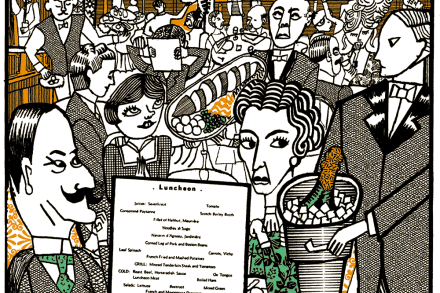
Many of us will remember, misty-eyed, how things changed around the turn of the century. How Britain ceased to be a nation brutalised by rationing and rissoles and instead blossomed into a utopia of celebrity chefs, endless food TV and a population seemingly willing and able to eat out most nights of the week. We no longer regarded ourselves as poor cousins to European nations with ‘cuisines’ – hell, Michelin stars glittered from every orifice. We had the uncalibrated zealotry of converts. In the years following the pandemic, UK hospitality came blinking back into the light, adopted a collective fixed grin and the can-do attitude of small businesspeople, and did some amazing things while trying to get back to that prelapsarian state of glory.

Has the funeral director been sizing up the BB?

From our UK edition

The funeral director down the lane is also the local taxi service, which partly explains why I see him drive past our back gate so often. According to my neighbours, he has been known to joke ‘I’ll take you dead or alive’, and although he has not gone so far as to have this written on the side of his car, his approach does stand as testament to the Irish having a wonderfully earthy sense of humour. The BB claimed that the funeral director eyed him, or rather sized him, as if to assess his dimensions The builder boyfriend met this funeral cabbie, or taxi mortician, when he went to the wake of the elderly man who sold us our house.

The case against a ‘climate emergency’

From our UK edition

January is the ideal month for gaining a sense of perspective. I’m increasingly convinced that the ‘climate emergency’ is another social mania we’ll look back on with: ‘J-eez, what was that about?’ Why? The paradigm displays the classic anthropocentrism of our era. As organised religion declines, we replace God with humanity. Arrogating to our species the power to dial global temperature up or down is typically arrogant (see: pride, goeth, fall). Claiming that something is all your fault is as vain as claiming it’s to your credit. Regarding ‘the planet’ as a frightened fluff ball that requires our protection is the ultimate hubris. ‘The planet’ can squash us like bugs. Or with bugs, which sounds especially gross.

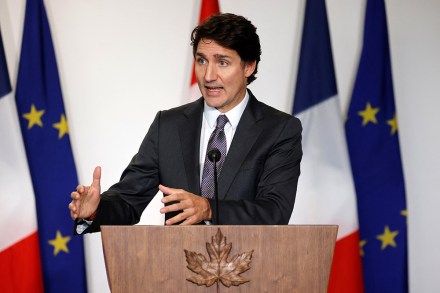
Farewell Justin Trudeau, the last of the lockdown tyrants

From our UK edition

So farewell then, Justin Trudeau, last of the lockdown tyrants. Or should that be the last of the democratically elected lockdown tyrants? After all, Xi Jinping and Vladimir Putin are still in office. But setting aside those authoritarians, it’s difficult to think of a single democratic leader apart from Emmanuel Macron who was in power during the pandemic who has survived – and Macron will be gone soon. Their decision to lock down their countries, with all the collateral damage that entailed, is surely a factor in their demise. Time and time again, these highly educated technocrats have proved spectacularly inept at navigating global crises In Trudeau’s case, inflation is the proximate cause, which rose to 8.1 per cent in 2022.

The Covid cabinet

On March 24, 2020, Dr. Jay Bhattacharya co-published an article in the Wall Street Journal, “Is The Coronavirus As Deadly As They Say?” He argued that Covid lockdowns and quarantines had no grounding in scientific fact. That was a rare opinion in those isolated days. Anyone who spoke out against lockdowns, mask mandates, booster shots for toddlers, school closures, business shutdowns and any number of other injustices large and small that stemmed from Covid panic feels vindication today, as Bhattacharya, a sensible, mild-mannered scientist whom former National Institutes of Health head Francis Collins publicly smeared as a “fringe epidemiologist” is about, barring some sort of confirmation calamity, to take Collins’s job.

Covid

Boris Johnson on Covid failures, the Nanny State & his advice for ‘Snoozefest’ Starmer

From our UK edition

36 min listen

Former prime minister Boris Johnson joins The Spectator’s political editor Katy Balls to divulge the contents of his new book, Unleashed. He reflects on his premiership as PM during the pandemic, describing the time as a ‘nightmare’ for him. He also details how he managed to suppress the force of Nigel Farage, and gives advice to Keir Starmer on how to build a relationship with Donald Trump. Watch the full interview on SpectatorTV: https://youtu.

Tate’s finances are on the skids and I think I know why

From our UK edition

Among the many destructive after-effects of the pandemic, the impact of two years of lockdowns has had serious consequences for public museums and galleries, particularly so for our national museums and galleries. More than two-and-a-half years since the last restrictions were lifted, visitor numbers to many of the big London institutions have yet to return to the levels seen pre-pandemic, according to the latest figures released by the DCMS. Although the British Museum and Natural History Museum have come roaring back, surpassing their 2019/20 figures (the NHM attracting some half a million more visitors alone), the picture varies wildly, mostly between the more ‘scientific’ museums and those whose remit is visual art.

‘When a work lands the excitement is physical’: William Kentridge interviewed

From our UK edition

Watching William Kentridge’s film Self-Portrait as a Coffee-Pot is like being submerged inside his mind, inside the coffee pot maybe. There’s so much going on both visually and intellectually that there’s no room at all for a viewer’s own feeble thoughts. ‘When a work lands the excitement is physical, like biting into chocolate. You feel it in your salivary glands’ Superficially, the film is a look inside the South African artist’s studio and an invitation to watch him work. Over four-and-a-half hours and nine themed episodes you see him making his familiar expressive drawings in charcoal and ink, but this studio is also a stage; there’s dance, puppetry, dips into history, astronomy, philosophy.

Streeting vs Starmer, medical misinformation & the surprising history of phallic graffiti

From our UK edition

43 min listen

This week: Wild Wes. Ahead of next week’s vote on whether to legalise assisted dying, Health Secretary Wes Streeting is causing trouble for Keir Starmer, writes Katy Balls in the magazine this week. Starmer has been clear that he doesn’t want government ministers to be too outspoken on the issue ahead of a free vote in Parliament. But Streeting’s opposition is well-known. How much of a headache is this for Starmer? And does this speak to wider ambitions that Wes might have? Katy joins the podcast to discuss, alongside Labour MP Steve Race. Steve explains why he plans to vote in favour of the change in the law next week (00:57). Then: how concerned should we be about medical misinformation? President-elect Donald Trump has announced vaccine sceptic Robert F. Kennedy Jr.