Covid

Bread is the staff of life

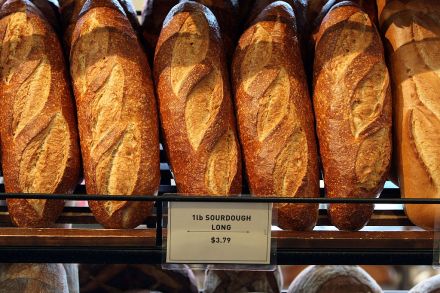
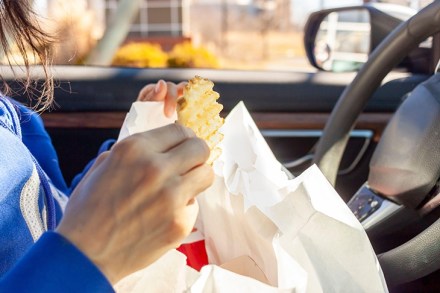
I cannot claim the gift of prophecy, but early in 2020 — before lockdown panic-buying and the warnings of a dire wheat harvest causing bread-price rises — I became a bread-maker. I dug around on the internet for a good recipe for sourdough, and found one padded out with the usual bloggery and waffle. Absent the philosophy and the pious musings, it gives a clear, sensible route to bread self-sufficiency. Sourdough doesn’t need bought-in yeast, only a ‘starter’ of flour and water. This is often called a ‘mother’, and attracts wild yeasts as it develops; after five days in the jar it is a gently bubbling ferment of living yeasts, and you keep it going by adding flour and water to it day by day.

bread

Is Japan about to enter a ‘London-style lockdown’?

From our UK edition

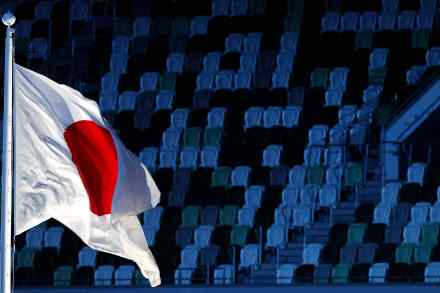
Just like the Olympics, which ended a fortnight ago, the Paralympics is set to commence amid a drumbeat of doom. Japan appears to be in the middle of a Covid renaissance, with around 5,000 new cases a day in Tokyo. The games will take place, like the Olympics, in a ‘state of emergency’ that now covers 84 per cent of the country. But how serious is the situation, and what exactly does 5,000 daily cases mean? Like much of the vaccinated world, the majority of the afflicted this time round appear to be younger people and overall deaths in Japan remain extremely low.

Covid has exposed the flaws in the welfare state

From our UK edition

Upheavals in welfare policy have historically followed major crises such as wars, civil unrest, recessions and pandemics – the Ministry of Health itself was established in 1919. The experience of the second world war led to the creation of the contemporary welfare state. If a course of action (a furlough scheme, say) is pursued in an emergency, we know it is possible. Keep the measure in place too long and it can swiftly become an accepted norm — and politically awkward to unwind. But those expecting a post-Covid reboot of the welfare system might be disappointed.

Boris Johnson’s Macron-esque pettiness

From our UK edition

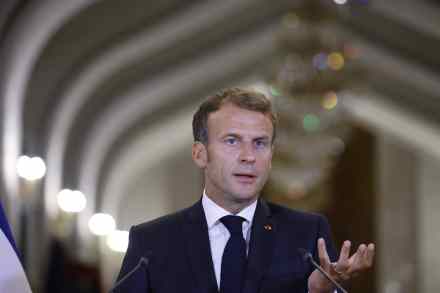
How we all hollered with outrage in May when Emmanuel Macron closed France’s borders to people arriving from Britain on the dubious basis that Britons, and Britons alone, were in danger of infecting France with the Indian variant. I believed, and I still believe, that Macron and his government were in part motivated by Brexit — it was part of our ongoing punishment for daring to vote to leave the EU. It certainly wasn’t justified on scientific grounds: if Briton had more recorded Indian variant (or Delta) cases than other European countries at the time it was largely thanks to more samples of Covid being sequenced here. Some countries, France included, were not analysing more than a tiny fraction of cases.

Five lowlights from Australia’s Covid fight

From our UK edition

At the end of last year, Australia was lauded for its success in containing Covid-19. The country’s borders had been quickly closed; interstate travel restricted and resources diverted to tracking down cases. In the deluge of praise that followed, outlets like the Washington Post ran gushing features on the country’s ‘pandemic success story’ ‘putting faith in science’; America’s top doctor Anthony Fauci hailed it as the ‘epitome of success.’ But eight months on and a different picture emerges. Covid has had an unfortunate habit of finding the weaknesses in a country or health system and in Australia the precious time gained last year was largely squandered on a widely-criticised vaccine roll out.

I’m not ill but I’m not as I was: how Covid takes its toll

From our UK edition

If it’s true that the virus finds your weak spot, it has lodged itself like an evil monkey in my head. After departing from every other bit of my body, it was still in my brain. It told me I didn’t need friends any more. So, as I moped about the house ‘self-isolating’, I sent a series of very odd text messages, telling my friends what the monkey thought I thought of them. The monkey also told me his theory that there is no such thing as long Covid. All Covid is long. I would never get over it: ‘Well, have the authorities bothered to conduct any research to find out if anyone who has survived this lurgy is feeling 100 per cent better after six months or a year? ‘Do you know anyone who says they are the same again?’ the monkey asked.

Giving workers a ‘right to switch off’ could backfire

From our UK edition

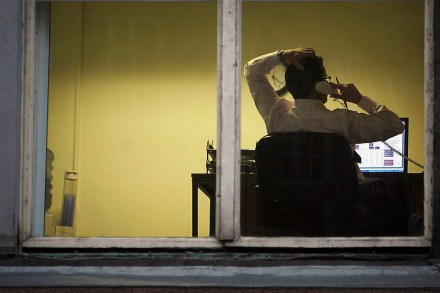
Millions of workers are 'never quite switching off' and are answering emails out of hours, warns Autonomy, a think tank. It suggests that the 1996 Employment Rights Act should be amended to give employees a legal 'right to disconnect'. Unfortunately for Autonomy, Labour’s new deal for workers, outlined last month, somewhat stole its thunder. Spearheaded by deputy leader Angela Rayner, the party’s radical package of labour market reforms includes a default right to flexible working, new worker status for those in the gig economy and, of course, a French-style law barring employers from contacting workers outside strictly regulated hours. Nonetheless, Autonomy’s suggestion has received fawning coverage.

Who should get the vaccine doses?

From our UK edition

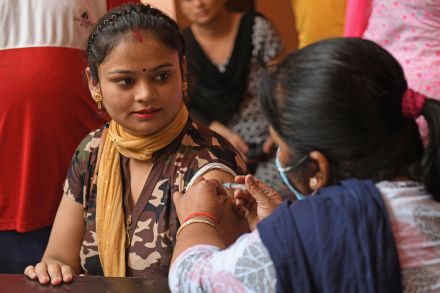
Every now and again, Gordon Brown makes a decent point – as he does today, pointing out that 80 per cent of the jabs have gone to the 20 richest countries. Tedros Adhanom Ghebreyesus, World Health Organisation chief, warned in January that 'even as vaccines bring hope to some, they become another brick in the wall of inequality between the world’s haves and have-nots.' MPs rebel over cutting aid. But send vaccines to overseas pensioners, when they could be heading for the arms of British schoolchildren? Here, they fall silent. Ethically, it’s a far harder question. When Covid vaccines were still a hypothetical, the moral dilemma was clear. Once a country has vaccinated its at-risk groups (ie, the over-50s) it would have massively downgraded the potency of Covid-19.

When will exams get back to normal?

From our UK edition

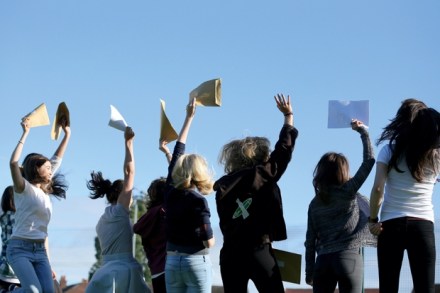
It wouldn’t be credible to say that this year’s A-Levels grades are comparable with 2019's: almost 45 per cent of entries got an A or A* compared to 25 per cent two years ago. But, as I say in the magazine this week, the problem is that you can’t simply snap back to normal next year. Many of those who got their grades this year won’t go to university until next year. This — and the fact that the education of those in the year below has been disrupted too — means it wouldn’t be fair for exams to return to normal next year. That would leave the class of 2022 competing for university places against those who have benefitted from 2021’s more generous system.

How we did the locomotion: A Brief History of Motion, by Tom Standage, reviewed

From our UK edition

Audi will make no more fuel engines after 2035. So that’s the end of the Age of Combustion, signalled by a puff of immaculately catalysed smoke from polished chrome exhausts designed by fanatics in Ingolstadt. But some say the age of motion itself will have shuddered to a halt before then. A trope of the New Yorker is a cartoon showing cavemen inventing the wheel, a companion to the other trope of desert island castaways. The adventure promised by the wheel and the limitations of boring stationary solitude are ineffably linked. Since Homo erectus left Africa 1.75 million years ago, without wheels, moving our bodies through space has been a defining characteristic of civilisation. The urge to travel may be, as the biochemist Charles Pasternak says, very nearly innate.

The problems posed by booster shots

From our UK edition

It is already known that there will be a campaign of booster shots in the UK this autumn to boost immunity among the over-50s. But it now looks like the government is planning one for autumn 2022 as well. Steven Swinford reports in the Times today that the UK has ordered 35 million doses from Pfizer for next year. The number of doses ordered suggests that the government wants to have the option in 2022 of giving a booster shot to everyone in clinical groups 1-9: the over-50s. Swinford reports that the government was prompted to act, in part, by the fact that the EU has already placed an order for 900 million Pfizer shots over the next two years. It seems likely that richer countries will go down the booster shot route in the coming months.

Can Australia escape its Covid lockdown cycle?

From our UK edition

In the early days of the pandemic, Australia was the envy of the world. The country was lauded as a model of how to handle the virus. Australian states recorded few cases; and when there were outbreaks, authorities brought them under control quickly. All that has changed. Now, well into the second half of 2021, Australia is losing its grip on the virus. While other major cities such as New York, London, and Paris, are opening up, Sydney is under lockdown. Even outside the nation’s major cities, travel restrictions are severely limiting movement for Australians within the country. Australia’s politicians have sought to blame the Delta variant of coronavirus. But in truth, the new strain is only part of the story.

Will Covid turn into the common cold?

From our UK edition

Many experts and modellers thought that the 19 July reopening would be a disaster. So far, that has not been the case. Daily case numbers actually started falling within days after 19 July, although that was far too soon to have been caused by anything to do with ‘freedom day’. The question now is how the pandemic will play out for the rest of this year and the next? In trying to understand this, we need to understand some important things about the biology of coronaviruses and their interaction with their hosts: us. Sars-CoV-2, the virus that causes Covid, is not going away. Like other coronaviruses, it will likely infect us all repeatedly throughout the rest of our lives, probably about once every five years.

Cop out: Why can Alok Sharma swerve Covid rules?

From our UK edition

The ‘party elite’ narrative has resurfaced this morning, after the Daily Mail splashed its findings that COP26 president Alok Sharma has travelled to a grand total of 30 countries over the past seven months, skipping quarantine upon return. Sharma is under pressure on two counts: first, that as the cabinet minister responsible for the United Nations Climate Change Conference held in Scotland this November, his example of plane-hopping between nations doesn’t quite gel with the government’s message of reducing carbon emissions. But it’s the Covid element that really sticks. Thanks to loopholes in the legislation, ministers are exempt from quarantine measures when they arrive back in the UK.

New York’s vaccine passport scheme could have a nasty side effect

From our UK edition

The latest French export to the United States is a requirement that people show proof of vaccination to visit indoor bars, concert venues, restaurants and gyms. But will it work? On Tuesday, Mayor Bill de Blasio announced that New York City will be the first American metropolis to import the French health pass. Marketed like an upscale perk, the 'Key to NYC Pass' program will begin on 16 August and become mandatory on 13 September. De Blasio is doing his best to sell the pass as a carrot, rather than the stick it really is. But his rhetoric is still ominous. He said: 'It is so important to make clear that if you are vaccinated, you get to benefit in all sorts of ways. You get to live a better life. Besides your health in general, you get to participate in many, many things.

Should Boris pay people to take the jab?

From our UK edition

The steady stream of mixed messages coming from government ministers have been one of the few constants during the pandemic. Boris Johnson's numerous u-turns have been well-documented and widely ridiculed. And while the news that the unvaccinated could be offered 'kebabs for jabs' may not constitute a full volte-face, it certainly flies in the face of the government’s 'junk food' advertising ban. Young people could now be offered discounts on Big Macs if they get vaccinated, but McDonald’s soon might not be able to promote the product on TV before 9pm or online at all. Where's the logic in that? This latest approach on encouraging vaccine uptake makes life difficult for public health experts who are keen on building up the nanny state.

Are booster shots necessary?

From our UK edition

Will Britain become the first country in the world to have a large section of its population immunised against Covid-19 three times over — and will that be a worthwhile achievement? The government is reportedly planning to give out booster shots — eventually to everyone over the age of 50 — starting as early as 6 September. This appears to be following the advice issued by the Joint Committee on Vaccination and Immunisation on 30 June. If the government tells us we all need an extra shot after so short an interval, might it undermine confidence in the vaccines?

Australia shows the cost of zero Covid

From our UK edition

The UK is growing at the fastest pace in 80 years. The United States, fuelled by President Biden’s stimulus programme, is expanding at a breath-taking pace, while Sweden is growing at a rapid rate. Most of the global economy is bouncing back from the Covid recession at remarkable speed. There is, however, one exception. Australia. What has long been one of the most successful economies in the world is heading back not just into lockdown but into recession as well — and giving the world a sharp lesson in the cost of ‘zero Covid’. Over the last year, Australia, along with New Zealand, has been heaped with praise for the way it has managed to keep Covid-19 under control. There is, of course, plenty of justification for that.

Boris could easily curb the ‘pingdemic’, so why won’t he act?

From our UK edition

Was there ever a national crisis which was so easy to solve? There are reports of supermarket shelves emptying, petrol stations running out of fuel and panic-buying. This in not unprecedented. Yet on this occasion the government doesn’t have to deal with a bolshie trade union, enter difficult negotiations with an EU which is determined to punish us for Brexit or even handle the early, unknown stages of a pandemic. All the Prime Minister has to do is to announce that the changes to the Test and Trace system already earmarked for 16 August – when fully-vaccinated people will no longer be forced to self-isolate for ten days but could be advised to get tested instead – be enacted immediately. The panic would immediately be over.

Boris should follow New York’s example and ditch vaccine passports

From our UK edition

Is making young people show vaccine passports to get into nightclubs a good idea? Boris Johnson's motivation in doing so appears to be that this is a good way to entice under 30s to get their jabs. In reality, the policy is illiberal, shows no gratitude for the sacrifices young people have already made during this pandemic, and should go against all of our British sensibilities. There's also a better alternative: one demonstrated in New York.  I’ve been based in the United States for the past six months and Boris could learn a thing or two from the freedom-loving Yankees. Here, proof of vaccination is not required for entry into nightclubs, as I experienced first hand last Saturday night.