Corruption

Portrait of the week | 20 November 2014

From our UK edition

Home David Cameron, the Prime Minister, said: ‘Red warning lights are once again flashing on the dashboard of the global economy.’ He then offered £650 million to a ‘green climate fund’. In a speech in Singapore, Mark Carney, the Governor of the Bank of England, said that fines for banks over rigging foreign exchange rates showed that ‘it is simply untenable now to argue that the problem is one of a few bad apples. The issue is with the barrels in which they are stored.’ Official figures showed that the number of British Army reservists has been boosted by a recruitment drive in the past year from 19,290 to 19,310. Friends of the Earth went to law to secure the future on the river Otter of a family of beavers living wild there.

England should withdraw from the 2022 World Cup

From our UK edition

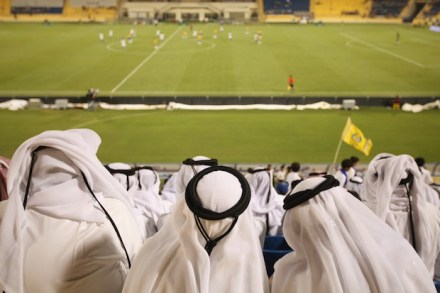
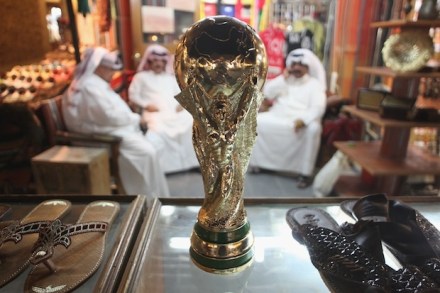
Mark Steyn once wrote of the United Nations: ‘It’s a good basic axiom that if you take a quart of ice-cream and a quart of dog feces and mix ’em together the result will taste more like the latter than the former. That’s the problem with the U.N.’ It’s a maxim that works double for Fifa, world football’s governing body, which has just cleared future World Cup hosts Qatar and Russia of any wrongdoing but managed to criticise the FA. The BBC reports: ‘As for Russia, they have also been cleared, although the report noted its bid team made “only a limited amount of documents available for review”.

Juncker wants more UK money for the EU budget – he could check Luxembourg’s coffers

From our UK edition

By rights, Jean-Claude Juncker should be in dire political trouble this morning, not lecturing Britain about paying an extra £1.7 billion to the European Commission. Documents obtained by the International Consortium of Investigative Journalists suggest that while Juncker was Prime Minister of Luxembourg, 548 comfort letters were issued to various international businesses about their tax arrangements. These letters allowed multinational companies to get away with paying minimal amounts of tax anywhere but Luxembourg despite the majority of their business being done elsewhere, the ICIJ alleges. The ICIJ claims that more than 340 companies secured secret tax deals with Luxembourg. The ICIJ alleges that the deal with FedEx left 99.

When jockeys earn so little, temptation is not surprising

From our UK edition

While Mrs Oakley was patrolling the aisles in Waitrose one day recently, I slipped off into my local betting shop. There, too, fresh from the pub, was Mr Knowall on the day that we learned that the former champion jockey Jamie Spencer, at only 34, intended to retire. ‘Effing retiring at 34,’ Mr Knowall told the Coral clientele. ‘It just goes to show these jockeys are all paid too much.’ There was no point in arguing with beer-fuelled ignorance, and of course Jamie Spencer won’t quit the saddle as a pauper. He has been in the elite band whose talents are so valued that rich owners fly them around the world to employ their services. He deserves to be taking a few nice nest eggs into ‘retirement’ with him. What the Knowalls forget is how few jockeys live at that level.

World Cup diary: Was the ref playing for Brazil?

From our UK edition

Suspicions that FIFA is an organisation given, occasionally, to a bit of corruption will not have been allayed by the first match of the 2014 World Cup. Brazil won with two goals from a player who should have been sent off, including a penalty which clearly wasn’t a penalty, while Croatia had a perfectly good goal disallowed and were denied a rather more clear cut penalty themselves. Incidentally, I say “Brazil” – and so do ITV. So do FIFA. And so does the OED, Wikipedia and Google. But not the BBC. The BBC says “Brasil”. Of course it does.

Did anyone really think that Qatar won the World Cup fairly?

From our UK edition

I suppose the appalling shock to the soul that was occasioned by the allegation that Qatar bribed its way to hosting the 2022 World Cup was exceeded only by the startling suggestion that it was Fifa’s African delegates who trousered nearly all of the illicit money on offer. Who’d have thought, huh? The money was doled out by the Qatari crook Mohammed Bin Hammam, according to leaked emails obtained by the Sunday Times. Mo did not find bribing the Africans terribly difficult, it would seem. My favourite of the various requests for money from these venal and grasping and not terribly bright Third World panjandrums was that of a chap called Adam ‘Bomber’ Mthethwa, of Swaziland: ‘I am in dire need of finance in the region of $30,000.

Is Labour a racist party?

From our UK edition

Is Labour a racist party? The answer, I believe, is ‘no’. Apart from anything else, some of my best friends are in the party and I cannot think they hate themselves or anybody else simply because of their skin colour. Yet the question must be asked. For just this weekend I was rummaging through recent editions of the Gazette Live (the latest news, sport and business from the North East, Middlesbrough and Teesside) when I happened upon this story: ‘Five Middlesbrough councillors resign from Labour Party and will stand as independents.’ You can read about the whole sorry episode here.

Boko Haram proves the Nigerian government to be corrupt and useless

From our UK edition

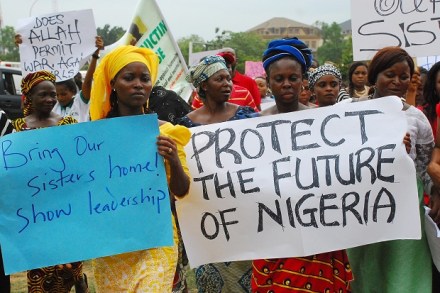
You know, the more we hear about the uselessness of the Nigerian government in dealing with the abduction – the rape, in the original sense of the word – by Boko Haram of 230-odd schoolgirls, the less appealing that government appears. The most striking and urgent action it took in response to the crisis in the three weeks since it happened was yesterday to arrest Naomi Mutah Nyadar, one of the women behind the mass demonstrations calling on the unhappily named president, Goodluck Jonathan, to get a grip and do something. Apparently his wife Patience took against her because she spoke about rescuing “our daughters” when in fact she was not the mother of any of the victims; she was speaking metaphorically, you see.

Lawlessness, corruption, poverty and pollution: the city where we’re all headed

From our UK edition

Rana Dasgupta, who was born and brought up in Britain, moved to Delhi at the end of 2000, principally to pursue a love affair and to write his first novel. He soon found himself mixing in bohemian circles, spending his evenings in ‘small, bare and, in those days, cheap’ apartments, talking with ‘artists and intellectuals’. These are not the people, nor is this the life or the city that he describes in Capital. The book’s title is in fact a pun, since its principal subject is money: how it is acquired, how it is spent and what it has done to Delhi and its citizens.

The EU is corrupt because southern Europe is corrupt

From our UK edition

What with Britain’s dreadful performance in the PISA educational rankings, there has been comparatively little attention given to another international league table– Transparency International’s Corruption Perception Index. The good news is that Bulgaria and Romania, with whom we will become much more intimate next month, are already in the EU’s top 5 for corruption, placed 2nd and 4th, with Greece, Italy and Slovakia filling out the leader board. I don’t object to Romanian and Bulgarian EU citizens being able to come to Britain as such, I object to the very idea of these countries joining the polity of which I am a member. But then I’m not too happy about being part of the same state as Greece and Italy, for the same reason.

Rod Liddle: The truths you can’t tell in today’s Britain

From our UK edition

My memory gets addled sometimes, so maybe I’m wrong about this. But didn’t it used to be the case that when politicians were caught out lying, they made some sort of shame-faced apology to the nation and begged for our forgiveness? I’m sure that was it, you know. So if I’m right, to judge by the case of our Attorney General, Dominic Grieve, things have turned precisely 180 degrees. Mr Grieve has just offered a full and unqualified apology for having told the truth. I thought that politicians were meant to do that — tell the truth? And what an apology. In an interview with the Daily Telegraph, Mr Grieve said the following: ‘We have minority communities in this country which come from backgrounds where corruption is endemic.

When is corruption not corrupt? When the establishment says it isn’t

From our UK edition

Mr Justice Tugendhat delivered a ferocious verdict last week. Undercover reporters from the Sunday Times claimed they had found Peter Cruddas, co-Treasurer of the Conservative Party, offering influence in return for wodges of cash. With damning language, the judge found against the paper, leaving it with costs and damages of around £700,000. I don’t want to discuss the merits of the case. Cruddas, who had to resign when the story came out, may have been unjustly maligned. Conversely, the Sunday Times is going to the Court of Appeal, so it may be that the paper is the true victim. I want to look at the judge’s reasoning instead, because it unconsciously reveals how platitudes, evasions and logical fallacies hide corruption in British public life.

Two riveting journeys to the heart of India and Pakistan

From our UK edition

50 summers have passed since C.L.R. James asked, ‘What do they know of cricket who only cricket know?’ James’s belief, that this quaint game reveals profound truths of those who play and love it, is alive and well: evident in The Great Tamasha by James Astill, which describes India, and Cricket Cauldron by Shaharyar M. Khan, which fumigates Pakistan. Astill, who is a Raja at The Economist, tells the story of India’s turbulent rise with reference to the history of cricket in India, where the sport is a form of entertainment – or tamasha, as numerous sub-continental languages have it. Astill is a self-confessed ‘cricket tragic’ but he is good company nonetheless, with an eye for an anecdote and an ear for a joke.

The curse of the mummy

From our UK edition

The former Soviet Union is so down on its economic luck that it can no longer maintain Lenin’s embalmed body. A brash official from rural China called Liu Yingque decides to buy the deteriorating corpse, create a red tourist attraction in his own county, and so make the area rich beyond its wildest dreams. Liu’s only difficulty is finding the millions of yuan necessary to purchase Lenin. He soon hits upon a solution: he recruits a performing troupe from nearby Liven, a village in which every resident is disabled in some way, and dispatches them on a nationwide fundraising tour.

Arraigning a corpse

From our UK edition

Part 1 “Russian Justice” A judge at Moscow’s Tverskoi District Court stopped the trial of Sergei Magnitsky (above) yesterday – but not because the defendant was dead. Magnitsky’s demise was of no concern to the judge. It did not bother him in the slightest. The court merely postponed proceedings until 4 March when the world will see something rarely seen since the Middle Ages: a prosecutor arraigning a corpse. The Putin regime – that mixture of autocracy and gangsterism – is desperate to discredit the late Mr Magnitsky and his employer, Bill Browder of Hermitage Capital. If you don’t know the story, I’ll explain why. Browder exposed corruption in Russian companies. The Russian authorities did not approve.

Cricket’s the loser

From our UK edition

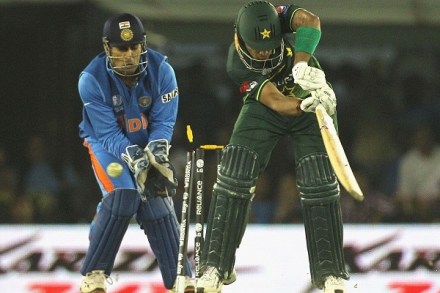
Cricket glorifies some cheats. W.G. Grace often batted on after being clean bowled; such was the public demand to watch him. Douglas Jardine’s bodyline tactics revolutionised fast bowling: eventually making it acceptable to target the batsman rather than the wicket. Fielders “work” the ball. Batsmen stand their ground when convention asks them to walk. Cheating is part of cricket. But match fixing? The culprits live forever in infamy, and deservedly so. The cricketing authorities (the ICC) believed that match fixing had died ten years ago; but the News of the World’s sting on the Pakistan team in 2010 demolished those hopes. The sting suggested that the problem was deep. Rumours abounded around the globe.

Cheat sheet: the new Spanish corruption scandal

From our UK edition

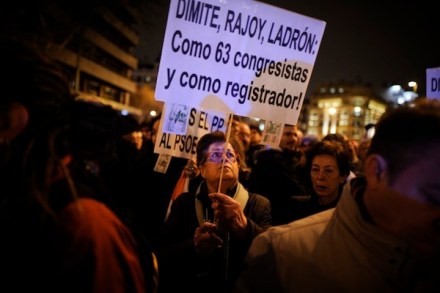
An unemployment rate of 26 per cent (and 56 per cent for young people); an economy that contracted by 0.7 per cent last quarter; tumbling approval ratings. Spanish Prime Minister Mariano Rajoy had enough problems, even before claims that he received about €280,000 (£240,000) in payments from ‘secret’ accounts managed by the treasurers of his People's Party (the PP). Protestors took to the streets of Madrid last night calling for his resignation. El País (Spain's biggest newspaper) published hand-written accounts that it claims were kept by PP treasurers Luis Bárcenas and Álvaro Lapuerta between 1990 and 2009.

Two different Laws

From our UK edition

Among the vast number of British people who are somewhat surprised to see the disgraced MP David Laws back in government is David’s own father, Tony Laws. Laws jnr was kicked out, if you remember, for having pocketed a very large amount of money in expenses as a consequence of lying through his teeth. David explained that the reason he had not been more honest is that he was a deeply private person in a very real sense and did not wish to reveal that he was in a gay relationship: the money he thus acquired was simply an unfortunate by-product of this perfectly reasonable wish not to tell people stuff. I may try this one out on the Inland Revenue next April.

South Africa: Mired in corruption?

From our UK edition

On the 5th of August Mary Robinson delivered the annual Nelson Mandela lecture in Cape Town. It should have been an occasion when the former Irish President and UN Human Rights Commissioner looked back on South Africa’s achievements since the end of apartheid. Yet her speech will probably be remembered for just one sentence: ‘…the ANC’s moral authority has been eroded, tainted by allegations of corruption; a temporary betrayal of its history.’ From an old friend of the ruling party this was damning indeed, but is she right to refer to corruption as a ‘temporary betrayal?’ The ANC’s history is more complex and more difficult than supporters like Mrs Robinson are prepared to acknowledge.

Bertie Ahern’s Greatest Trick: Shaming the Shameless

From our UK edition

My friend Ciaran Byrne is right: If Rupert Murdoch owned Fianna Fail he'd close it down. The Mahon Tribunal's report into the flagrant corruption at the heart of the planning process in County Dublin is a very Irish scandal. It is not surprising that senior Fianna Fail politicians were on the take, yet the extent of their corruption remains revelatory. It's GUBU for the Celtic Tiger era. Now Bertie Ahern, the former Taoiseach once branded "the most skilfull, the most devious, the most cunning of them all" by Charlie Haughey (and he would know!), is set to be expelled from the party he dominated for a decade for "conduct unbecoming a member of Fianna Fail". This is, in its way, an achievement to be ranked with any in a career as murky as it was successful.