Corruption

One day, two lonely people

From our UK edition

Twenty-four long hours, two lonely people, one city in decline. This is the premise of A.L. Kennedy’s new novel Serious Sweet, a work full of anger at what has happened to London since the Thatcher revolution and concern for the city’s isolated, impotent inhabitants. Kennedy’s representative Londoners are Jon, a divorced and fusty civil servant, a ‘passed over man’ plagued by failure, and Meg, a bankrupt accountant and recovering alcoholic who jokes at her own expense that she is ‘Fine: Fucked-up Insecure Neurotic and Emotional’.

Cameron’s ‘anti-corruption summit’ will be a diamond-encrusted joke

From our UK edition

The ugly mug of international sleaze reared up at PMQs today. Mike Kane got things going by calling Nigeria ‘fantastically corrupt’. This was his diplomatic welcome to the West Africans arriving for tomorrow’s ‘Anti-Corruption Summit 2016.’ The purpose of the jamboree is to confirm London’s position as the epicentre of dirty money by holding an honesty seminar for the world’s most dishonest people. The knees-up will take place in the soup-kitchen surroundings of Lancaster House just behind the Ritz. After breakfast, participants will collect their passes from the near-derelict Duke’s Hotel, St James’s Place. Anyone eager to avoid the queue will have pre-bought their ID on the black market.

Gods and monsters

From our UK edition

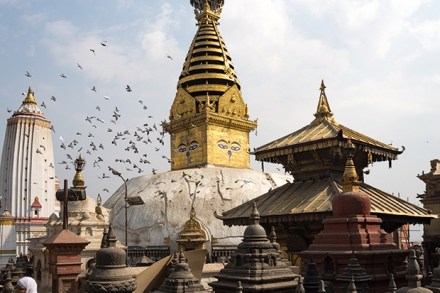
Although Nepal’s earthquake last April visited our television screens with images of seismic devastation, the disaster has probably had little impact upon the prevailing western impression of this country. For many the mountain state remains steadfastly exotic and remote. This is not just a consequence of those sublimely unattainable Himalayan peaks. For generations Nepal was a source of western fantasy that bordered on the obsessive and carried an undercurrent of late-imperial eroticism. What had so stirred European appetites was the long-standing Nepalese policy of playing hard to get. A short, bitter conflict in 1814–1816 with the East India Company inspired its militant Gurkha elite to pursue the rigorous exclusion of all foreigners.

Bribes, bickering and backhanders

From our UK edition

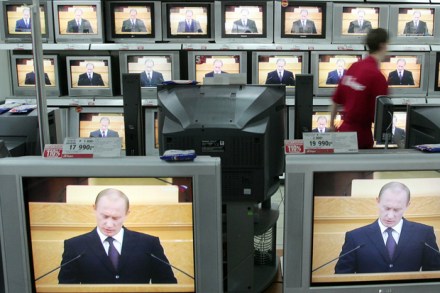
The decrepitude of old age is a piteous sight and subject. In his second book Michael Honig — a doctor-turned-novelist and sharp observer of the body’s frailties, and the mind’s — zanily explores it through the imagined senility of Vladimir Putin, once supremely powerful, now struggling to tie his laces. The horror, sadness and momentary furies of dementia are all traced in Vladimir’s plight, plus the tedium and — especially — the bleak comedy. As the story opens, he is visited by his successor: ‘I’m going to fire that bastard,’ he says. ‘Have we got cameras?’ On a lakeside walk he strips off for phantom paparazzi.

Can Denmark preserve its international reputation?

From our UK edition

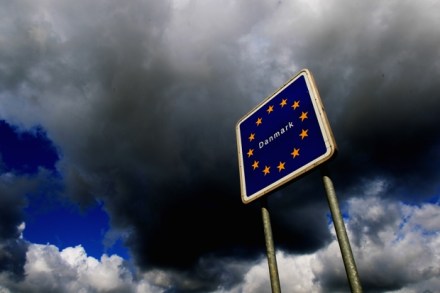
Copenhagen Denmark has had a difficult few weeks. While it’s used to grabbing the headlines for being the happiest country in the world or having an enviable work-life balance, lately the country has been hit by a torrent of criticism. Thanks to its tougher immigration laws, politicians have even had to deal with Nazi Germany comparisons. And it’s hurt – a lot. Last week, Parliament passed new rules including the controversial ‘jewellery law’. This gives police powers to confiscate valuables and cash worth more than £1,000 from refugees. Never mind that few believe this policy will ever be put into practice.

This could be the year that sport dies of corruption

From our UK edition

Like religion, sport can take any amount of passion in its stride. It’s indifference that’s the killer. Sport can be bubbling with incontinent hatred, poisonous rivalries, ludicrous injustice and the most appalling people doing the most appalling things: but as long as people still care, as long as the sporting arguments still echo, as long as newspapers are read from back to front, then sport’s future is safe.

Why the new match-fixing claims could rock the world of tennis

From our UK edition

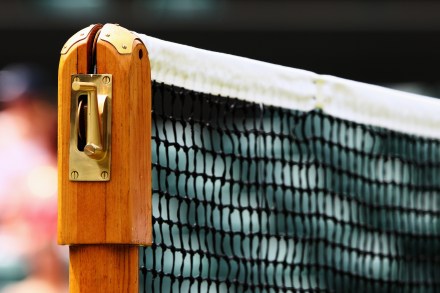
The world’s tennis elite is up in arms. Roger Federer wants to see proof, demanding that the people behind “allegations that match-fixing is rife” should name names.  Andy Murray has criticised the practice of betting companies sponsoring tournaments. And Murray’s former coach Mark Petchey thinks that betting on lower-grade tournaments should be outlawed - although it isn’t clear how he proposes to enforce that on syndicates in Hong Kong. They are all missing the point. Perhaps that’s because (or why) the entire media cohort did the same thing yesterday, running story after interview about the possibility that tennis matches get thrown for money.

Charles Moore’s Notes: Who’d be a diplomat now?

From our UK edition

The other day, a friend told me, he had been chatting to an old friend of his who has spent his life in diplomacy and international relations. The man, who will quite soon retire, has had a successful career, but he was full of gloom. Essentially, he said, the entire system of international relations has now been working very badly for 20 years, having worked much better in the previous 50 or so. No one — particularly no one in the West — can see a way through this, but the chancelleries and ministers are reluctant to confront this sad truth, and so a pointless merry-go-round of international conferences, bodies and negotiations consumes the energies of those foolish enough to stay in the game.

Seb Coe is a fine man… but his roasting over the Russian athletics scandal is justified

From our UK edition

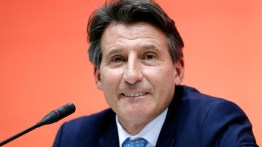
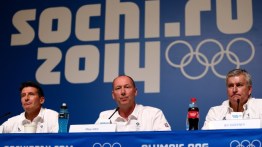
So Smiley was right all along: the bloody Russians were the baddest of the bad. The Pound report on the epic scale of their state-sponsored doping and cheating in athletics was indeed seismic. It can’t have come as that much of a surprise, though. In a remarkable investigation in July 2013, Martha Kelner and Nick Harris of the Mail on Sunday blew the lid on the whole cesspool of Russian corruption. This was the headline: Drugs, -bribery and the cover-up! -Russian athletes— including those who robbed Brits of medals — ‘ordered to dope by coaches’ and officials ‘demanded cash to mask positive tests’. Pretty much what we got this week from Dick Pound, the gunslinging sheriff brought in to clean up the sport.

The caliphate strikes back

From our UK edition

[audioplayer src="http://rss.acast.com/viewfrom22/jeremyhunt-scatastrophicmistake/media.mp3" title="Douglas Murray discusses what Isis might do next" startat=1814] Listen [/audioplayer]When the creation of a new caliphate was announced last year, who but the small band of his followers took seriously its leader’s prediction of imminent regional and eventual global dominance? It straddled the northern parts of Syria and Iraq, two countries already torn apart by civil war and sectarian hatreds. So the self-declared caliph, Abu Bakr al-Baghdadi, appeared to be just another thug and opportunist ruling over a blighted no-man’s land, little known and still less revered in the wider Islamic world.

Of course there’s no morality in top-level sport

From our UK edition

Why do transgendered people need separate toilets? I thought, according to the prevalent orthodoxy, that the new gender they had acquired was every bit as authentic as the one they had jubilantly renounced. So a separate toilet is surely otiose. And not just that, but the suggestion that they might need a separate toilet for micturition through their surgically emended private parts is surely offensive. The Speaker of the House of Commons, John Bercow, may be in trouble, then, for announcing his intention to install these mysterious receptacles throughout the Palace of Westminster to service the hordes of transgendered workers wandering around with extravagant beehive hairdos and outsize stiletto heels.

The greatest surprise about Nigeria on its centenary is that it exists at all

From our UK edition

A giant was born in 1914, an African giant. The same year European powers set about each other in the trenches a framework was laid out for a nation that over the next century would grow into Africa’s mightiest economy, one with a population so prodigious it will soon overtake every other barring China and India. The founding on 1 January that year of the colony of Nigeria was an act of extreme imperial chutzpah. Desert emirates in the north and coastal kingdoms in the south had for years been under nominal control as British protectorates, but for London to unite such diversity was to believe a mosaic has no cracks. The story of Nigeria, first under Britain, later as an African nation independent since 1960, has largely been the story of those cracks.

The day of reckoning is nigh

From our UK edition

I think this should begin with a truth-in-journalism disclosure: I know R.W. Johnson well enough to call him Bill. Since this opens me to charges of bias, let me start by acknowledging that Professor Johnson (a former leader of the ‘Magdalen Mafia’ at Oxford and author of a witty book on the subject) is unpopular in certain circles down here in South Africa. In spite of his record — 12 books, platforms at several esteemed British publications and an engaging prose style — Johnson has been shunned by local book fairs and banished from our op-ed pages.

Does anybody still believe that the EU is a benign institution?

From our UK edition

Ever since Margaret Thatcher U-turned in the dying days of her premiership, there has been a kind of agreement between Left and Right on what the European Union is. Most Conservatives followed the late-vintage Thatcher. They stopped regarding the EU as a free market that British business must be a part of, and started to see it as an unaccountable socialist menace that could impose left-wing labour and environmental policies on a right-wing government. As many critics have said, the Tory version of British nationalism that followed had many hypocrisies. It did not want foreigners infringing national sovereignty when they were bureaucrats in Brussels but did not seem to mind them when they were generals at Nato or economists at the WTO.

Barometer | 11 June 2015

From our UK edition

Forty years on The forthcoming EU referendum has rekindled memories of the in-out Common Market referendum of 1975. But it seems a strange looking-glass world now. — Mrs Thatcher was a keen ‘yes’ campaigner, sporting a jumper with the flags of EC member states. Neil Kinnock campaigned for a British exit. The SNP and Plaid Cymru campaigned to leave the EC, the former calling it a ‘dangerous experiment in gross over-centralisation’. — The worry then was that England would vote to stay while Scotland and Wales would vote to leave. — But the most surprising supporters now seem the Daily Mail and the Daily Express, the latter declaring after the ‘yes’ vote had been confirmed that Britain was now ‘irrevocably’ European.

Pliny the Younger on Fifa

From our UK edition

In any huge enterprise (like Fifa), where does the rot begin? Pliny the Younger mused on this question in a letter to a friend about a games festival held in the Roman colony Vienna (Vienne, south of Lyons). Vienna had been celebrating Greek-style gymnastic games as a result of a bequest, when the town’s mayor decided to abolish them; they were corrupting, unlike good, honest Roman games. The case was contested and came before the emperor in Rome, with Pliny one of the assessors. There the mayor, ‘a true Roman and fine citizen’, came out on top. He was supported, Pliny wrote, by one Mauricus, another Roman famed for straight talking. Courageously, in Pliny’s view, Mauricus expressed the opinion that such Greek fripperies had no place in Rome either.

Good time girls: Italian women prefer sunglasses to babies, according to Nicholas Farrell

From our UK edition

Like so many Britons who chased the dream and woke up in Italy I have contemplated writing a book about the Italians. I even thought of what to call it: Those Italians.The title was prompted by what an Albanian port official told the media during some international crisis in response to the news that the entire cargo of an Italian aid ship had disappeared one night in the Albanian port of Durres. ‘Yes it is incredible,’ the official conceded, ‘but — my friends — there is always something funny going on with those Italians.’ An Albanian, of all people! But such books are a poisoned chalice. The theme demands that you capture the spirit of the place and its people and yet avoid stereotype and cliché.

The low sculduggery of high Victorian finance

From our UK edition

The whole idea of capitalism, according to Enlightenment philosophers, was that it created a positive spiral of moral behaviour. ‘Concern for our own happiness recommends us to the virtue of prudence,’ wrote Adam Smith. ‘The profits of commerce,’ according to David Hume, carry us towards a state in which ‘the tempers of men, as well as their behaviour, refine apace.’ In the first chapter of Forging Capitalism, Ian Klaus encapsulates this theory as an 18th-century artist might have titled an allegorical painting of intertwined figures: ‘Commerce encouraging Virtue, and Virtue harnessing Commerce.’ But that’s not really the way it was, Klaus goes on to argue — and certainly not the way it is today, he implies.

Only capitalism can save Nigeria

From our UK edition

Abuja was eerily quiet when I arrived. The capital of Nigeria is normally bustling, but that morning the wide boulevards were empty. The red dust was undisturbed; the call to prayer echoed through the city like the sad lament of the lonely. There is an election approaching, and a lot of people take that as their cue to leave the country. You’ll find much of Nigeria’s ruling class in the Harrods food hall at this time. Although Abuja is far wealthier and more stable than most of Nigeria, its problems are representative of a country on the brink of disaster. Construction of the capital began in the 1970s, its layout heavily influenced by Milton Keynes. Today it is a mix of grand designs and organisational failure: my tour of the Ministry of Power was complicated by a power cut.

An ancient Olympic tradition that Fifa would love

From our UK edition

Those nice people at Fifa seem to be having a terrible time from the British press, which never stops accusing them of bribery and corruption. What on earth is our problem? Of course games are corrupt. In the ancient world, we now know they could be legally corrupt. Perfect! The Greek comic poet Cratinus invented three goddesses of political bribery: Doro, St Give, Dexo, St Receive and Emblo, St Backhander. Courts described such ‘corruption’ in terms taken from the despised world of trade — ‘buying’, ‘selling’, ‘profit’ and so on. In the real world, however, it was more usually described as ‘giving’, ‘receiving’ and ‘persuading’.