Coronavirus

How coronavirus could kill conservatism

'No corporate bailouts,' says Michigan Rep. Justin Amash as lawmakers debate an economic stimulus package in response to coronavirus. Washington Post columnist Megan McArdle, usually somewhere in Amash's orbit if not quite a fellow traveler, demurs. She wrote that the proper response to the outbreak is, much to her chagrin, 'subsidize everything'. Libertarians are divided on coronavirus, an unusual event (the virus, that is, not intense disagreements among libertarians). Of libertarians, it has been said of late that there are none in a pandemic. We are all Andrew Yang — he of the universal basic income — now. What about conservatives? My longtime TAC colleague Matt Purple says they too are ill suited to the current crisis, as are perhaps humans more generally.
conservatism

My ill-fated foray into homeschooling

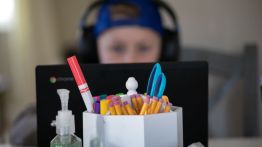
I did not buy into the American Toilet Paper Hoarding Epidemic of 2020, as posterity will dub our present unfortunate episode decades hence. In an effort to help my wife avoid murder charges when the courts resume — though she could plea down to third degree manslaughter with minimal jail time — I decided to take the lead on handling the urchins’ schooling as America hunkers down. By mid-morning — around the time I heard the toddler say, ‘don’t call me a buttcheek, you dummy’ — I began weighing the odds on whether my wife had the guts to pull the trigger.Our Catholic school in Alexandria, Virginia, was one of the last to call it quits in the wake of the coronavirus outbreak, a testament to our stalwart faith.

homeschooling

After the coronavirus, who wins the recovery?

We are living through a gruesome case study in the irrationality of elites. COVID-19 is a serious disease, but the question of just how serious it is has hardly even been posed correctly, let alone answered intelligently. Yet already our leaders have assumed dictatorial airs and enacted policies that threaten to plunge the Western world into an economic crisis unmatched since the Great Depression. Eighty days into 2020, the official worldwide death toll from the coronavirus stands at somewhat over 10,000 lives. That includes fatalities from the final months of 2019 as well, when Chinese authorities initially tried to disguise rather than treat the outbreak of the new disease. The world was utterly unprepared for the virus as it spread from Wuhan.

donald trump recovery

How government should respond

Misdiagnosis can be fatal in a pandemic. Treating the economic effects of the global COVID-19 epidemic as a conventional recession means prescribing the wrong medicine and harming the patient. This is a supply-side recession, not a demand-side recession. The shortfall includes intensive care beds, ventilators, protective gear for healthcare workers, and other medical supplies. Thanks to these shortages, as well as insufficient trained medical personnel, hospitals may soon be overwhelmed everywhere by the demands for treatment of coronavirus victims. To slow the spread of the virus while augmenting existing medical supplies and personnel, governments are promoting social distancing and sheltering in place, both euphemisms for quarantine.

health finance

Why Tulsi backed Biden

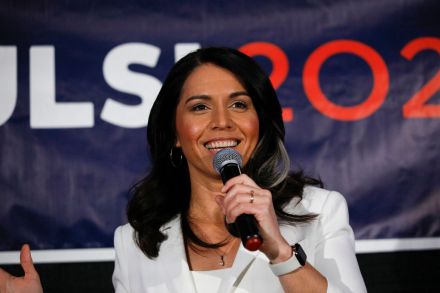
Though neither her supporters and detractors wanted to hear it, Tulsi Gabbard was always clear that she would support the eventual Democratic nominee. Now, with the Democratic primary functionally over, she has endorsed the nominee — Joe Biden. It’s really as simple as that.Tulsi haters loved to invent wild theories about her supposedly sinister motivations, and were always either unwilling or incapable of just listening to her plain-spoken words. Over and over again, she said she would not run as a third-party candidate and would support the eventual nominee. Anyone surprised by her announcement today had no reason to be: it doesn’t contradict anything she’s said in the past; in fact,  it comports entirely with what she always said she would do.

tulsi
Cupcakes tradwives

In quarantine, we’re all tradwives

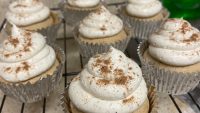
Tie up your apron strings— it's time to get to work, ladies. The coronavirus threat has forced all of us into our homes as the CDC and the White House encourage strict measures of social distancing. The disruption to American life and the economy is no joke, and it's going to take some serious resilience and creativity to make it out the other side. The good news? Now is the perfect time to adopt the much-derided tradwife lifestyle, and it seems many women are already on board. I left my self-imposed quarantine briefly on Tuesday to pick up a few essentials at the grocery store: eggs, milk, flour, butter, sugar, and yeast.

Miami spring break millenials

Millennials will be the death of us

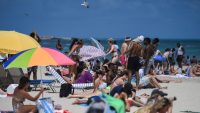
It turns out millennials are the worst generation after all. By now, we should all be well aware that social distancing is crucial if we wish to end the coronavirus pandemic anytime soon. Many of us have responded accordingly — if not already forced to close by state mandate, bars, restaurants, and other employers have determined nipping the virus in the bud outweighs the financial cost of shutting down their businesses. Events and shows have been canceled around the world, and most schools are closed through the semester. No one is thrilled about it, but there is one group that seems to be handling the disruptions to their lives with less decorum than others: millennials. 'May as well enjoy it before everything gets shut down,' one spring breaker toldFox News on Tuesday.

disaster

Americans love living in a disaster movie

In America, we don’t have snow showers anymore. Those meteorological events are now known as Snowmageddons, Snowpocalypses, or Polar Vortices. We’ve even begun to name them, like hurricanes. Each season, as newscasters brace for the arrival of Winter Storm Mephistopheles, inching along the map with its Judgment Day payload of fluffy white powder, most Americans see through the hype, but we’ll ransack grocery store shelves anyway. After all, it might be weeks before another thrill like this comes along. When something truly unnerving arrives, like a global pandemic, America serves up just the right pitch of high-octane, Hollywood disaster-flick pandemonium to make the whole thing a bit zanier and more camp. The world depends on us for that. We invented the genre.

OK boomer, but you’re in danger

Last week my cousin started a group text with three other cousins, two childhood friends and myself, as a virtual support group during social distancing and a way to stay connected. At first it was basically for memes and relevant articles we found interesting or informative — but it wasn’t long before the group devolved into sharing screenshots and anecdotes of the frustrating conversations they were having with their boomer/silent generation parents and relatives. I’d been having similar, exasperating conversations with stubborn loved ones for weeks. I understand that facing your mortality is terrifying and often we react with one of the most powerful mechanisms the human psyche has in the face of fear and death — denial.

boomer
wet markets singapore

Time to ban wet markets

There’s a recurring flashback from my childhood that never fails to induce a blood-curdling shiver down my spine. My mother’s request for company on her monthly shopping trips to the wet market was always a Hobson’s choice, one I deeply resented because the experience was awful. Deep in the bowels of Singapore’s Chinatown complex was a large open-air market that stood in stark contrast to the surrounding glitzy skyscrapers and immaculate streets. The place was a veritable not-so-little shop of horrors and till today, those horrors remain firmly etched in my memory.A distinctly fetid stench greets you long before entering the market; soon it becomes apparent why they’re referred to as ‘wet’.

custer

The lockdown list: books to read during quarantine

Now we’ve got time on our freshly cleaned hands, The Spectator’s literary luminaries are lubricating the wheels on time’s wingèd chariot and seizing the chance to boost their morale and brain function, reflect on the meaning of life and catch up on a good book or six. Each day, the Lockdown List carries our bibliophilic recommendations. Day 74: Indian summerRoss Clark The success of Black Lives Matter has deflected attention from a group which has no less a cause for grievance over its treatment throughout US history: native Americans. Indeed, to this day Native Americans, thousand for thousand, have an even greater chance of being killed by police officers as do African Americans.

The brothers Cuomo

If there's one good thing about the coronavirus outbreak and subsequent collective social distancing in the US, it's that families are getting to spend more time together. That is, unless you're one of the brothers Cuomo. Gov. Andrew Cuomo of New York and his CNN anchor brother Chris reignited their intense sibling rivalry on live television Monday night, arguing over which of them is their mom's favorite. Andrew kicked off the nostalgic debate by comparing the coronavirus lockdown to a curfew implemented by his father, Mario, when he was a kid: 'I don't like the word "curfew." Dad tried to have a curfew for me, I never got past the resentment. But I do believe you'll see more heightening if the numbers don't slow.

Andrew and Chris Cuomo
panic

Panic among the pigeons

Life is a risky business. Danger is everywhere. In New York, even the pigeons are a threat. A friend recalled a graduate school class in which he was told that some 20 people each year die from diseases contracted from pigeon dung. Twenty people! Why hasn’t Mayor de Blasio confiscated all the pigeons? Banned people from walking on the same streets where the pigeons congregate? Enforce a regimen of 'social distancing' among the birds? As of this afternoon, there are about 5,000 reported cases of the Wuhan flu in the US. Ninety-five people in this country have died from it. Ninety-five. Twenty-five of those, more than a quarter of the total, are associated with one place, the Life Care Center of Kirkland, Washington, a long-term, critical care facility.

How to sound authoritative about COVID-19 on Twitter

What strange creatures we 21st-century humans are. The less informed we are about a particular subject, the more we feel the need to pronounce on it with great authority. This is a well-observed internet phenomenon — nobody has to know anything; everybody can look stuff up. When it comes to a global health pandemic, however, the desperation to sound wise starts to turn to feverish frenzy. In times of panic, bullshit grows, exponentially — check the graphs if you don’t believe me. Everywhere you look on social media now you’ll find amazing numbers of Google-enabled experts on epidemiology, virology, the history of plagues, and so on. Many of these people spend most of their time on Twitter, yet somehow they have mastered vast amount of virus-related literature.

coronavirus state liberalism

The weak response to coronavirus is a symptom of the decay of the liberal state

If COVID-19 spreads in the United States as it has spread elsewhere, then quite soon the virus will be established within the general population. The federal response will have changed from containing isolated ‘hot spots’ to managing a national epidemic. ‘Social distancing’ and self-quarantining will be endemic, hospitals will be overloaded and the economy will have continued to contract. This could test not just the American people — their social bonds, their sense of collective fate — but also America’s government and institutions. That testing will be far more demanding than the ‘stress tests’ faced by the banks after the financial crisis of 2007-08. America’s resolve will be challenged again. This should not be a time for petty politicking.

chinese

We’re all Chinese now

I didn’t know this was what they meant by ‘cancel culture’. Sports events, theatre shows, plane flights, weddings, funerals: everyone is in a mad rush to cancel everything. Governments are ordering citizens to remain indoors, with Spanish police even deploying drones to catch miscreants. I don’t know whether it is the best way of tackling coronavirus — the UK government, which has gone to greater lengths than others to explain the scientific modeling behind its decision-making, has come to the conclusion that banning things and forcing the entire population into lockdown will have minimal effect and may even be counter-productive, at least at this stage. But it is going to cause a global recession, if not depression.

How media outlets are coping with coronavirus

Welcome to the age of coronavirus, where lines snake around the aisles of supermarkets, millennials beg their boomer parents to stop going outside and the best sporting event on television is 10-pin bowling. America almost feels like a different country. Cockburn has seen a heartening amount of concern for loved ones over the last few days, especially among fellow journalists. To put minds at rest, therefore, he's been asking around to see what measures right-leaning outlets are taking to protect their employees from the virus. Across Rupert Murdoch's titles, the response has been robust. Workers at the Wall Street Journal and the New York Post had the option to work from home last week, with a lot of editorial staff deciding to do so.

right

Federal health agencies risk lives in their response to COVID-19

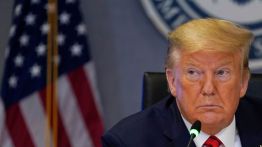
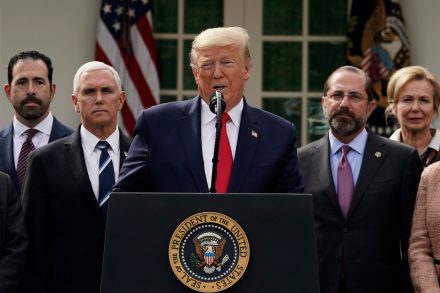
President Trump announced on Friday that the country is now in a state of emergency, due to the rapid pace of the COVID-19 novel coronavirus and its spread. Such a declaration escalates the federal government’s ability to respond to the virus, via the access of billions in funds that can be dispersed to state and local governments in need of additional financial assistance to accommodate robust public health responses. But the declaration was made too late. While we have the ability to contain this outbreak effectively with international coordination, the failures of the Trump administration to respond more quickly is troubling.

donald trump covid-19
slavoj Žižek

‘What I like about coronavirus’ by Slavoj Žižek

‘OK, can do it, but I am ill (NOT the virus).’ With that, the interview is set: an hour on the phone with Slavoj Žižek. As I thanked Žižek for his time, he stresses, ‘Don’t expect too much. It’s not the virus, but...how do I put this, I have a lot of symptoms of the virus, but hopefully not the virus.’ ‘I've had these symptoms for years,’ he noted. ‘You know I’m sneezing all the time, and so on.’ We are meant to discuss Žižek’s upcoming book of essays, A Left That Dares to Speak Its Name, which the 70-year-old says is an easier read than the majority of the books he has written in the past five decades. But Žižek is far more eager to talk about the COVID-19 coronavirus.