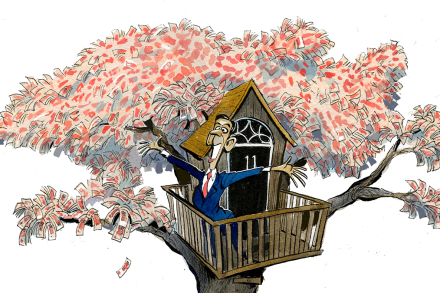
Coronavirus

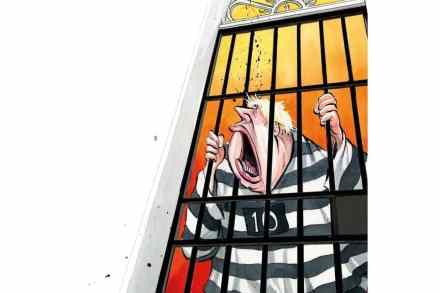
Boris is in deep trouble

From our UK edition

This evening feels eerily familiar to anyone who remembers the meaningful votes of Theresa May’s premiership. The Tory rebellion on the Covid measures is bigger than expected; the rebels are claiming to be the mainstream of the parliamentary party; the cabinet ministers loyalists to the PM are blaming the whips office; there are mutterings about how long this can go on for. There is, of course, one crucial difference: thanks to Labour, Boris Johnson won tonight’s vote. But it is clear that if he wants to tighten restrictions further, he will be reliant on Starmer’s party’s support in doing so. Relying on the opposition to get their business through is never a comfortable place for a Prime Minister to be.
The ethics of the Omicron travel ban

From our UK edition

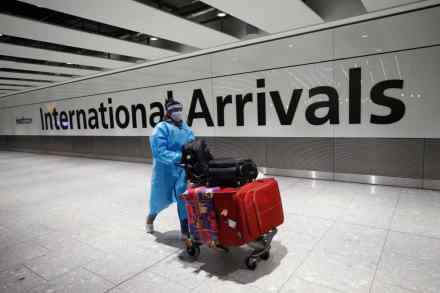
The Omicron variant had not even been named when the government’s reflexes sprung into almost involuntary reaction last month, and it introduced yet more Covid restrictions. The ‘red list’ was immediately revived and South Africa was placed on it. All travellers from there and several other African countries were soon forced into expensive quarantine hotels to live on microwaved mush for ten days. Some European countries even banned flights from southern Africa, while, in turn, Switzerland responded to the first cases of Omicron in Britain by banning unvaccinated Brits from entering the country. Whenever Covid rebounds, the first thing to happen is that international borders are closed.

Vaccine passports may prove a pointless distraction from Omicron

From our UK edition

Sajid Javid ditched vaccine passports when he became Health Secretary but he now has to bring them in again, albeit in an updated form where a lateral flow negative test will also be accepted. But how to get this past the Commons where 65 MPs have now decided to rebel? How to do this now given that the argument - that vaccine passports restrict transmissibility - has now collapsed? The big news is that the AstraZeneca vaccine has ‘zero’ effect on people catching Omicron. The vaccine still offers protection from getting seriously ill, but the premise of vaccine passports – that the double-jabbed are less likely to be infectious than the unjabbed – has just collapsed.

Should we be scared of the Omicron variant?

From our UK edition

Why is the government so scared of the Omicron variant? So far, most of the evidence we have for transmissibility and virulence of Omicron is based on very limited data from South Africa, but the UK Health Security Agency (UKHSA) has now published its own preliminary study of the variant — the results of which will presumably have been available to ministers and scientific advisers prior to Wednesday’s decision to enact ‘Plan B’. They appear to show a variant which is more transmissible, more likely to evade vaccines and more likely to reinfect people who have previously had Covid. But there is a very big caveat: they are based on tiny numbers of Omicon cases.

Sturgeon: all cases will be Omicron by Christmas

From our UK edition

Nicola Sturgeon has said that Scotland should expect a ‘tsunami’ of Covid cases, so has said Christmas parties should be cancelled and household contacts of any positive case — Omicron or not — should isolate for ten days regardless of vaccination status. Given that Scotland and England have very similar Covid profiles (both in waves and vaccination) this is relevant to the whole of the UK. But what especially jumps out is the prediction from Scottish government modelling that Omicron will account for all Covid cases by Christmas. Her document: Omicron in Scotland — evidence paper released during Sturgeon’s TV appearance pointed to modelling to suggest that half of new cases could be Omicron by Monday.

Has Boris seen the Omicron data?

From our UK edition

There was nothing but gloom about the Omicron variant at yesterday’s No. 10 press conference. But with reporters preoccupied with last year’s Christmas parties, no one thought to bring up a statement by Tedros Adhanom Ghebreyesus, the head of the WHO, who earlier told reporters that there is ‘some evidence that Omicron causes milder disease than Delta, but again it’s still too early to be definitive.’  You don’t want to make decisions before you have good evidence, but if it does turn out that Omicron is a milder disease, won’t the government’s efforts to suppress it with travel bans and restrictions be counter-productive?

Punishing the unvaccinated threatens everyone’s liberty

From our UK edition

How should we treat the unvaccinated? Should we stop them from participating in normal life? Castigate them in the media? Mandate they get vaccinated or block them from accessing NHS services? It’s a creeping question across developed countries — asked on Good Morning Britain’s Twitter page yesterday, and then subsequently deleted. Germany has barred the unvaccinated from most aspects of public life, including shops and restaurants. Greece is charging the over-60s Є100 for every month they remain unvaccinated, with money going to top up the health services. In Singapore, the unvaccinated will no longer have their Covid care paid for by the state. A letter in the Times this week suggested the same should happen here too.

Boris takes his colleagues for fools

From our UK edition

Is Boris Johnson really deploying a 'diversionary tactic' in announcing vaccine passports on the day he has had to perform a volte-face over a Christmas party in Downing Street? After watching his press conference tonight, I'm not so sure, though not because of the explanation the Prime Minister himself offered. He was asked about this accusation, which was first levelled by one of his own MPs, William Wragg, at PMQs. Johnson's response was to ask journalists to imagine what it would have been like if today's political row had forced a delay of the 'Plan B' measures to contain the spread of Covid this winter.

What’s the evidence for England’s vaccine passports?

From our UK edition

The Prime Minister has just announced Plan B. Working from home has been all but mandated and large venues — as well as nightclubs — will be required to check for vaccine passports. But where is the evidence for this, and what does the data say? Johnson’s vaccine passport idea copies Nicola Sturgeon’s policy in Scotland which was found, in a 70-page evidence paper, not to have had any measurable effect. As evidence Chris Whitty presented South African hospitalisations — a country with less than a third vaccinated. When Omicron was discovered the government said we should wait for data to be gathered before reacting. Sensible, given the huge economic and livelihood consequences of even small restrictions. Data is published every day.

Will the public take Plan B seriously?

From our UK edition

After holding strong for two weeks, fears over the Omicron variant look set to change the government’s course on Covid restrictions. Reports this morning suggest that Plan B could be implemented as early as tomorrow, including advice to work from home and — more controversially — the introduction of vaccine passports. The timing is interesting: rumours about the possible decision landed hours after a video clip — showing the Prime Minister’s former press secretary joking about last year’s alleged Downing Street Christmas party with No. 10 aides — was leaked. Downing Street still adamantly denies the party took place.

Boris throws his staff under the bus

From our UK edition

What possible lines of defence could the Prime Minister come up with after the leaking of footage showing his Downing Street aides joking about a party he has spent the past week insisting didn’t happen? From the moment ITV broadcast the clip, the No. 10 Christmas party was a dead cert as the sole topic at today’s Prime Minister’s Questions. Almost as much of a certainty was that Boris Johnson would respond by getting other people to take responsibility for him. This is precisely what he did, using a question prior to his exchanges with Sir Keir Starmer to try to get out in front of the matter.

Watch: No. 10 staff joking about Downing Street Christmas party

From our UK edition

Downing Street have spent the week trying to play down reports of a secret No. 10 party last Christmas when the rest of the country was under restrictions. They have tried a few tactics: at Prime Minister's Questions last week, Boris Johnson didn't deny the event had taken place but insisted all Covid guidance had been followed. When that failed, the Prime Minister's spokesman went on the record saying there had been no party. Then today the blame shifted to civil servants: with briefings that it was an event mainly made up of officials rather than political appointees. Those responses are unlikely to hold much weight going forward.

south africa shutdown

The hidden victims of the South African shutdown

I sit in a National Park in South Africa, looking at an empty restaurant in which a robust staff, hired on for the peak international travel season, stand idle and bored. Many will likely be let go next week as the tourism declines yet again. Many were out of work for a year and only just hired back. The ripple effect of the latest travel shutdown is felt immediately here. Many parks in Southern Africa lost 80 percent of funding through the last shutdown, which in South Africa was one of the most severe. We work here with the Rangers, tasked with protecting the last great population of rhino and elephant, and they cannot afford boots, let alone salaries to pay the staff who work without pause.

Will someone wake up the Bank of England?

From our UK edition

It is called managing expectations: the steady drip of forecasts and scenarios designed to prepare us for bad news, so that when that news does finally arrive it doesn’t seem nearly as bad as it would otherwise have done. So is that what the Bank of England is up to with its deputy governor, Ben Broadbent, telling us that inflation next April could ‘comfortably exceed’ 5 per cent? It is reminiscent of the moment in July when the Bank’s departing chief economist, Andy Haldane, dropped in the suggestion that inflation by the end of 2021 could be closer to four percent than three percent.

Omicron: cause for hope?

From our UK edition

It will be weeks before we know just how worried we should be about Omicron — but the first indications seem hopeful. The epicentre of the first recorded outbreak has been the subject of a study that suggests that it may be milder than Delta. Early data from 166 patients in the Tshwane district comes with the usual caveats, especially that very little Omicron has been found among South African over-65s. But the study nonetheless has two weeks of hospitalised Omicron patients to analyse — more than any other country. Here are the main indications so far:  Fewer people hospitalised with Omicron have ended up in intensive care: 8 per cent, compared to 25 per cent for Delta.Fewer patients need oxygen: only about a third.

How’s ‘shutting down the virus’ going, Joe?

We are less than a month away from entering 2022 — so why does it feel like March 2020 all over again? Cable news networks are obsessively covering the new Omicron variant of Covid-19. They are hellbent on scaring the daylights out of any unsuspecting viewer who accidentally flips onto their programs. To be fair, the media is taking cues from the president. According to the Washington Post, the Biden administration is reportedly weighing up a seven-day self-quarantine for all travelers arriving on our shores, regardless of vaccination status, including US citizens and permanent residents. Travel bans, which fell out of fashion in the Trump years because they were "xenophobic", are suddenly back in vogue. It all begs the question: didn’t Joe Biden promise to shut down the virus?

biden quarantine

Boris’s festive fear

From our UK edition

Until a few days ago, ministers could see how the government might regain its footing after several weeks of self-inflicted damage. The argument, as I say in this week's magazine, went like this: as Christmas approaches, voters will see that life in Britain — and specifically England — carries on with very few Covid restrictions whereas elsewhere in Europe more draconian measures have been imposed. This scenario seemed plausible. Austria was in lockdown and heading for compulsory vaccination; there had been rioting in Holland after the announcement of an 8 p.m. curfew and several German states had cancelled Christmas markets.

UK approves new Covid antibody drug

From our UK edition

In the face of the Omicron strain, the UK regulator has approved a drug that its manufacturers, GlaxoSmithKline, claim reduces hopsitalisations and deaths by 79 per cent. The MHRA announced this morning that it had given the NHS approval to start administering the Xevudy antibody drug to everyone over 12. The drug has been sanctioned for use in patients with ‘mild or moderate’ Covid who are at risk of developing severe illness.It is the second treatment of its kind to be approved after Roche’s Ronapreve was given the green light in August. Both treatments are ‘monoclonal antibodies’, and work by binding to the spike protein of the virus and blocking its ability to enter human cells.

Unless Omicron changes everything, Covid is on the way out

From our UK edition

There are good reasons to be concerned about the Omicron variant. For starters, this strain has 50 mutations, twice as many as Delta. Early reports from South Africa, where the virus has been circulating for a while, suggest it’s outcompeting Delta and spreading rapidly. There is a concern, too, that it could blunt the vaccines, because more than half of the new mutations affect the spike protein that the jabs are designed against. But all of this is theoretical: we need real-world data. So we won’t know whether it really is more transmissible, or how the vaccines perform against it, until long after Christmas. The concern, for now, remains Delta, as Chris Whitty said last week. On that front, the news is better.

When will the Tories do something about house prices?

From our UK edition

Anyone who doubts that the fiscal response to the pandemic has stoked inflation needs to look at the latest figures from the Nationwide on the housing market. Yet again they confirm that the deepest recession in modern history has been accompanied by a boom in house prices. Moreover, the inflation does not seem to have been reined-in by the ending of the stamp duty holiday. The price of the average home, according to the building society, rose by a further 0.9 per cent in November to reach £252,687. This is ten per cent up on last November and 15 per cent up on March 2020, at the beginning of the pandemic. How can a global crisis which temporarily put several million people out of work in Britain have resulted in a housing boom?