Contemporary art

Doomed to disillusion

The Forgotten Waltz is one of those densely recapitulative novels that seek to interpret emotional crack-up from the angle of its ground-down aftermath. At the same time, it is not really a book about hindsight. Sometimes extending information to the reader and sometimes deliberately covering its tracks, sometimes inviting sympathy for its characters and sometimes implying that sympathy only gets in the way of knowledge, it offers the enticing spectacle of a heroine determined to decode the human acrostics that strew her path while darkly conscious that most of her judgments are either horribly provisional or downright inchoate. Everything kicks into gear back in the early 2000s, down by the

Creative protesting

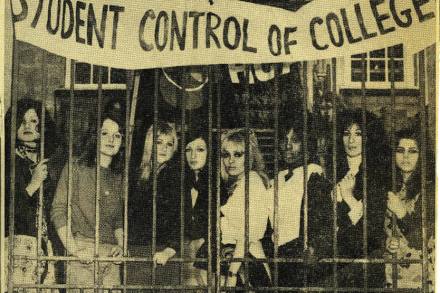
It’s time to heed the complaints and free art schools from the constraints of the university system, says Niru Ratnam The Turner Prize award ceremony always attracts protest — usually in the shape of the Stuckists, a group of bedraggled, eccentric-looking artists who gather outside Tate Britain in funny hats and bemoan the death of representational painting. But this year they were upstaged by around 200 art students, who entered the museum in the afternoon and refused to leave, staging what was described as a ‘teach-in’. In addition to wearing their own humorous hats, the students made speeches, marched round and chanted. The ‘teach-in’ was a protest against proposals unveiled

A look ahead | 18 December 2010

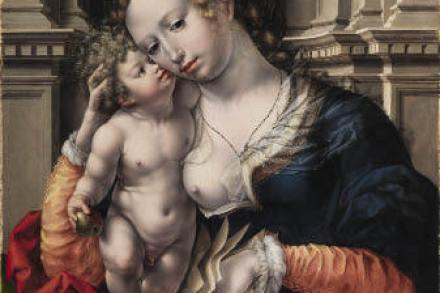
The trend of fewer temporary exhibitions in our museums is becoming established, as the cost of mounting blockbusters escalates beyond even the generous reach of sponsorship. This is in sharp contrast to the commercial galleries, which still put on as many as 10 or 15 different shows a year in the hope of tempting clients to part with their cash. Taking a keen look at forthcoming exhibitions is always a mixed pleasure: the expected counterpointed with the novel, the obvious with the obscure. Thankfully, there are still enough exciting prospects in the public sector to raise the spirits and move us to make a note in the diary. At the

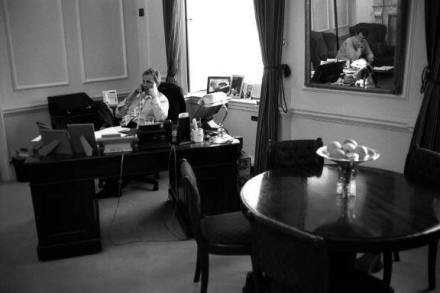
Smoke and mirrors

The Prince, according to Machiavelli, ‘should appear, to see him, to hear him, all compassion, all good faith, all integrity, all piety’ — which might be translated into Basic Blairish as ‘should appear a pretty straight kind of guy’ — but, as the Florentine Father of Spin emphasised, it was a great deal more important to seem to have, rather than actually to have, these qualities. The Prince, according to Machiavelli, ‘should appear, to see him, to hear him, all compassion, all good faith, all integrity, all piety’ — which might be translated into Basic Blairish as ‘should appear a pretty straight kind of guy’ — but, as the Florentine