Constitution

The republic’s public life started with dinner

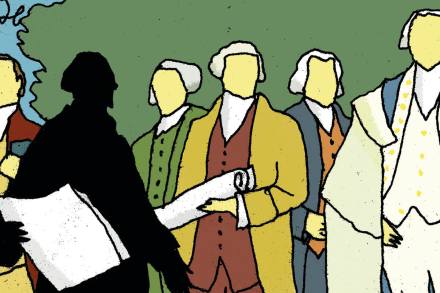
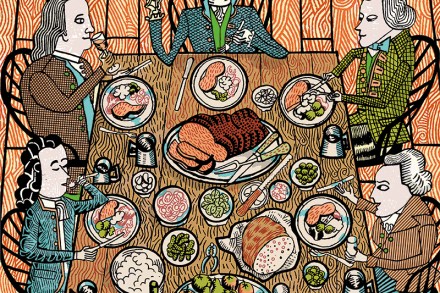
The Constitution was signed on a Monday. That much everyone knows. What the official record tends to skip is what happened right afterward. Forty-two men – some of them barely on speaking terms, three of them having refused to sign at all – stepped out of the Pennsylvania State House into the thin September air. Their wigs were damp from the long, sticky summer. Instead of heading back to their lodgings at the Indian Queen or Mrs. Marshall’s boarding house, they turned south on Chestnut, walked a couple of blocks, and went to City Tavern. At the tavern, on the corner of Second and Walnut, they sat down and ate together.
constitution

The making of America

The story of the United States was determined from the start by the manner of its birth. The original 13 English colonies may seem lost in the distant past. Yet it was their diversity that was the key to their union. The creation of the US reflected the tensions of 17th-century England, pitting the Puritan republicans of Massachusetts against the landed gentry of Virginia, Quaker New Jersey against Catholic Maryland. The Founding Fathers resolved these tensions by instituting the concept of states’ rights. Their Constitution was a tissue of compromise, yet it was robust. What served to unite 13 colonies still holds together the mightiest nation on Earth.

America

Ambition is in America’s DNA

Rome Last month, I found myself sitting on a panel discussing the European Union’s digital asset strategy. The conversation revolved around the digital euro, tokenization, stablecoins, financial regulation and the future of capital markets. Outside the conference hall stood one of the great cities of human civilization. Rome encourages long thoughts. Every stone seems to remind visitors that history is not a straight line. Great nations rise, stagnate and sometimes disappear altogether. Walking through Rome after the conference, I started thinking less about digital currencies and more about something else entirely. America turns 250 this year. For any nation, two and a half centuries is a respectable run. For a republic, it is extraordinary.

The case for the administrative state

By dismantling the Deep State, Donald Trump may inadvertently have undermined his own claim to rule. A chain of unintended consequences is visible in the Supreme Court case Trump vs Slaughter, due to be decided this month. It began with Trump’s firing of Federal Trade Commissioner Rebecca Slaughter in the early days of his second term. She sued, federal judges backed her and Trump sued back. He asserted the right to fire anyone he wants. Trump’s view is that the president is boss of the whole executive branch – there can no longer be bureaucrats and regulatory boards with special status and guarantees against firing. Americans get to vote for the people who rule them. In that sense, Trump has been trying to make the country more democratic.

After Trump comes reform

America needs Donald Trump, badly. He is the bull in the china shop that every nation needs from time to time. He is testing his country’s constitution to destruction as well as its relations with the outside world. Such tests hasten the necessity of reform. The only question is how long will it take for reform to catch up and overcome him, as it surely will. Constitutional chaos may then break loose after midterms. This is America’s great opportunity In January alone Trump toppled the leader of Venezuela, mooted the conquest of Greenland and a 100 percent tariffs on Canada, insulted the British army and killed Americans protesting his immigration policy.

Trump’s $500 million fine wasn’t justice

The New York Appellate Division’s decision to overturn the half-billion-dollar civil fraud penalty against Donald Trump should not be seen as a partisan victory. It is a constitutional one. The court ruled that the judgment – originally $354 million before interest ballooned it past $500 million – violated the Eighth Amendment’s prohibition on excessive fines. This was an overdue reminder that even a former president is entitled to the same constitutional protections as every American. This judgment threatened to become less about enforcing the law, and more about making an example out of a political enemy. The Constitution does not permit prosecutors to weaponize financial penalties into tools of annihilation.

fine

How to reform judicial review responsibly

L.W., a transgender girl, her parents, and her doctor agreed that it would be good and medically appropriate for her to receive gender-affirming hormone therapy. The state of Tennessee, where L.W. lived, passed a statute in 2023 prohibiting transgender minors from receiving such treatment. Did the statute discriminate against L.W. on the basis of sex? The US Supreme Court said it didn’t. In 2023, the British government planned to send to Rwanda people who tried to get to the United Kingdom on small boats and then seek asylum. Would that policy violate the asylum seekers’ human rights because the conditions in Rwanda were unsafe? The UK Supreme Court said it did.

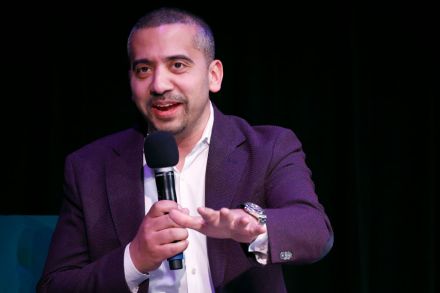
What Medhi Hasan should have told the New Right

Progressive journalist Mehdi Hasan recently went viral for his “debate” with 20 so-called conservatives on the popular YouTube channel Jubilee. The program is formatted such that Hasan makes a claim, and then his opponents, seated in a circle around him, race each other to the chair opposite Hasan when they wish to refute a claim. When the claim, “Donald Trump is defying the US Constitution” came up, contestants lunged for the chair – not to deny the claim, but to dismiss the Constitution outright. Hasan, it seems, was ready to argue that Trump is defying the Constitution, but he was utterly unprepared to defend the document on its merits. We shouldn’t read too much into this gathering of the chronically online.

Biden admits he had no idea who he pardoned with autopen

Let’s not pretend this is normal. President Joe Biden has admitted that he didn’t personally approve the full list of individuals he pardoned on his final day in office. Instead, he delegated the task to his staff and gave them permission to use an autopen – a mechanical device that stamps his signature – to push through thousands of clemency grants in bulk.Legally, this is allowed. Morally? It’s disgraceful.Presidential clemency is one of the few powers in the Constitution left entirely to the judgment of one person. It’s meant to be exercised with moral clarity, human reflection and a sense of final responsibility. What Biden did was effectively outsource that sacred duty to nameless staffers armed with email chains and eligibility “criteria.

Joe Biden

Trump blocked from defunding Planned Parenthood

This week, a lone federal district court judge in Boston, Massachusetts, with nary a citation to the Constitution, statutes or the applicable Federal Rules of Civil Procedure, entered a temporary restraining order prohibiting the federal defunding of Planned Parenthood. The basis for Judge Indira Talwani’s order is left for the public to surmise. Perhaps the good judge will fill in the blanks before the next hearing planned in the case, within two weeks; or perhaps not, since TROs are generally not appealable. Either way, the judge’s barren two-page order, as it stands, is a textbook example of a lawless judiciary engaged in policymaking from the bench.

Planned Parenthood

This July 4, Trump wants you to celebrate winning – big time

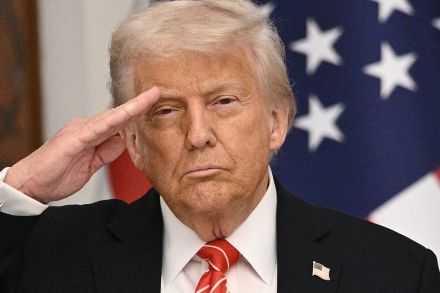
As President Donald J. Trump waits for One Big Beautiful Bill to sign on the 4th of July, it’s worth taking some Independence Day time to muse on what he means for The United States, other than making it some really big deals. The best deals, really. It’s what he does. Trump’s detractors call him Cheeto Hitler, the modern face of fascist authoritarianism. He is not that. His most fervent supporters see him as the savior returned to Earth in a golf shirt. He’s definitely not that. Besides, Führer or God isn’t a very American dichotomy. There’s another way, an American way, a very Trumpian way. America, at its core, is a con, a hustle, a 250-year real-estate boodle.

Trump

Why is James Madison so consistently forgotten?

James Madison is consistently forgotten. Admittedly, many of the Founding Fathers are forgotten. The average American could probably name two of the forty or so founders in Howard Chandler Christy’s Capitol painting “Scene at the Signing of the Constitution of the United States.” But while Washington and Jefferson get imposing monuments in DC and Hamilton gets a musical, the father of our beloved Constitution hardly has a memorial. Asking Google why will pull up an article from the Harvard Law Bulletin quoting Professor Noah Feldman. “Unlike George Washington or Thomas Jefferson, no monument was built to honor Madison in the nation’s capital. You have to see the Constitution as his monument,” said Feldman. “His influence is hidden in plain sight.

Madison

The case against a snap election

From our UK edition

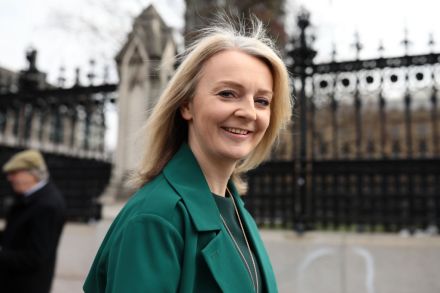
Unless Her Majesty throws us all a curveball, Liz Truss will be the next prime minister. So let’s knock something on the head here and now: she is under no obligation to call an election before January 2025. The replacement of one prime minister with another in the middle of a parliamentary term is not a democratic deficiency. It is parliamentary democracy in action. The prime minister and their cabinet colleagues are the Queen's ministers and when one ministry replaces another, power does not transfer directly but through the sovereign. It is the Queen who issues an invitation to form a government in her name and she does so on the basis of advice about who can command the confidence of the House of Commons.

Biden robs Peter to get Paul’s vote

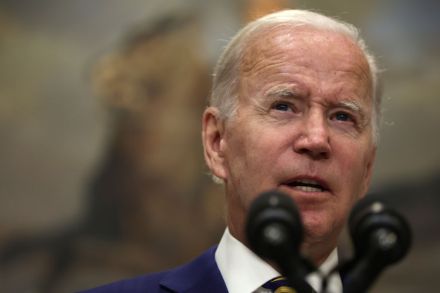
It is a truth universally acknowledged that if you rob Peter to pay Paul, you can count on Paul’s vote. That political axiom is the crux of Joe Biden’s decision to forgive vast quantities of student loan debt. He needs Peter's and Patricia’s votes, and he is bribing them with taxpayer money. Taxpayers know it is not a costless gesture. Their backlash is likely to overwhelm any potential gains. The problems begin with the program’s cost and inflationary impact. Spending another $300 to $900 billion, the estimated cost, raises consumer demand without increasing supply. Since the program is not funded by tax increases, it will be paid for by printing money. The inflationary consequences are predictable.

The attack on Lee Zeldin was an attack on our Constitution

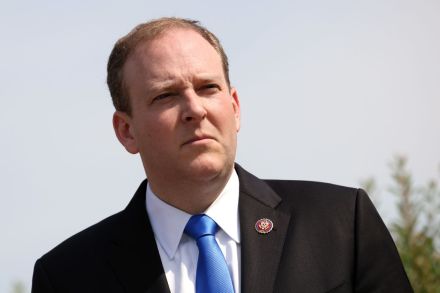
On Thursday, a man jumped onstage and tried to kill one of the two candidates running for New York governor. Fortunately, he failed. Even so, the incident was terrifying, not only because it endangered Representative Lee Zeldin but because it underscores two grave problems facing America. One is the failure of our law enforcement system to treat serious crimes seriously, both to deter them and punish the offenders. This failure makes it a misnomer to speak of our “criminal justice” system. It’s not providing justice, and it's not deterring crime, especially violent crime. The second is the danger violence poses to our established constitutional order, beyond its danger to any individual.

The right to keep and bear fireworks

The political arena is hotter than ever with fights raging over rights and freedoms and all that good American stuff. But one topic missing from these debates only gets the attention it deserves for about a week every year each July: the right to keep and bear fireworks. It's a right heavily restricted in sixteen states and straight-up illegal in Massachusetts. Yes, Massachusetts, home of the Boston Tea Party, that act of defiance that sparked our patriotic tradition of blowing things up. In the Pennsylvania Wilds — the romantic name a tourism agency gave to the hick region of the state where I reside — things go boom year-round.

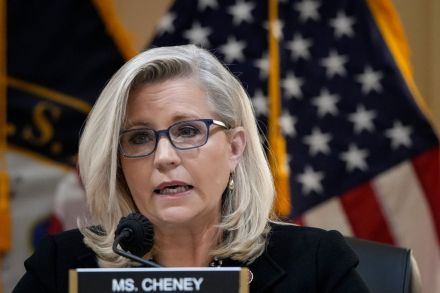
The lawless Liz Cheney

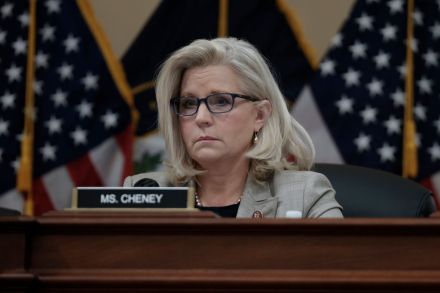
Congresswoman Liz Cheney had a supposedly shining moment this week as she sat on the January 6 committee to lecture the Capitol attackers and anyone in league with former President Donald Trump about the importance of the rule of law. Cheney has long said the committee was about “fidelity” to the Constitution. Seriously? Liz Cheney? Dick’s neocon daughter? People are buying this? I don’t even know where to start. In 2011, when libertarian-leaning Republican Justin Amash and many in the Tea Party movement insisted that President Barack Obama did not have the constitutional authority to bomb Libya, Cheney, Senator John McCain and other establishment politicians said to hell with the Constitution.

cheney

Liz Cheney’s latest plot against Trump

The latest improbable Democratic champion, Representative Liz Cheney, just about said the quiet part out loud: her January 6 Committee has the singular goal of pre-defeating Trump ahead of any voting in 2024. As it becomes clearer that the Committee is failing in its propaganda campaign to get Republican power brokers to dump Trump, and as it is near crystalline that the Committee will not find evidence leading to formal prosecution of Trump for sedition, treason, or insurrection, they are getting desperate. The latest? Purposefully misinterpreting an obscure phrase from a post-Civil War constitutional amendment.

liz cheney january 6

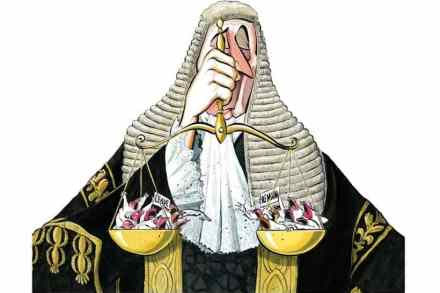
Parliament, not judges, should decide our laws

From our UK edition

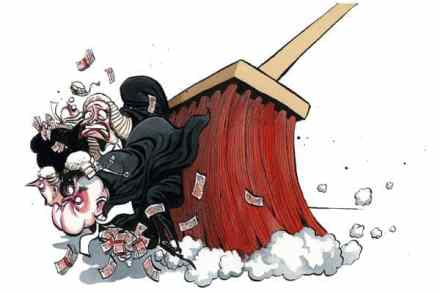
The British commentariat has not covered itself in glory in its reaction to Dominic Raab's proposed reforms to judicial review. The Times reported yesterday that the government is planning to introduce a novel legislative tactic, the ‘Interpretation Bill’, to try to shift the balance of power back towards parliament. To be clear: there is no prospect of ministers being given the power to strike down court judgments they dislike. In fact, the core of the proposal is perfectly orthodox. The proper way for parliament to change the law is through legislation, and an Interpretation Bill is legislation. It would need to be passed in the normal way, and MPs would have to vote it through. No despotism involved.

Raab’s law reforms are ridiculous

From our UK edition

What should we make of the Times story yesterday, which appeared under the headline ‘Boris Johnson Plans To Let Ministers Throw Out Legal Rulings’? The impression given is that ministers will somehow be handed powers by the Prime Minister simply to ignore court rulings that they do not like. That would lead to an extraordinary constitutional crisis, involving either the arrest and imprisonment of ministers for contempt of court, or the arrest and imprisonment of judges with the government exercising Erdogan-style despotism. Nobody can seriously believe that this is what is intended, and the rest of the Times story makes clear that it is not.