Conservative party

‘I want to guide Britain to the sunlit uplands’ – full text of Andrea Leadsom’s leadership speech

From our UK edition

The decision we took on the 23rd June was a great moment in history. Not just a historic opportunity for our country but for Europe as a whole. Perhaps the biggest moment since the Berlin Wall came down. We are not leaving any of our historic ties with our European friends, We are choosing freedom away from the stifling EU institutions. Through NATO we remain bound through the 1949 treaty to come to the defence of Europe’s democracies if they are attacked. The nations and peoples of Europe remain our close friends, staunch allies and key trading partners.

It isn’t just Remain campaigners who are scared about what happens next

From our UK edition

Anyone who hasn't been living in a cave for the past week or so will by now be growing increasingly tired of the repetitive and overly emotional responses of camp Remain. But what the visceral social media posts and pessimistic articles in the media have revealed is the genuine fear felt by many Remainers. These are people who are actually, and in some ways justifiably, terrified by the prospect of us leaving the EU. However, at a debate hosted by Spiked and The Institute of Ideas, 'Brexit: the battle for democracy starts here' last week, I experienced first hand the other side of the coin. Many of the victorious Brexit-supporters, who you'd imagine to be elated by the referendum result, are in fact just as frightened as their opposite numbers.

Andrea Leadsom spells out why Brexit isn’t bad news at her Tory leadership launch

From our UK edition

Andrea Leadsom is the last of the five candidates to launch her bid for the Tory leadership. But if the bookies odds are anything to go on, she is rapidly emerging as a potential frontrunner in this race. Many will view Leadsom as one of the 'Brexit candidates' in this fight. Somewhat refreshingly, though, she painted Brexit not as something for Britain to be afraid of but a positive step. Towards the end of the speech, she said that: 'As your Prime Minister my ambition will be to guide our country to those sunlit uplands.' She also went on to borrow David Cameron's reference during the referendum campaign to voting for our children and grandchildrens' sakes, to suggest that Brexit will be good for future generations.

It’s time for our warring politicians to wake up to what really matters

From our UK edition

Well I might as well say publicly what I’ve been saying to everyone who will listen privately for the last week. It seems to me that our country will regret the distraction and levity we have shown this past week. For those who campaigned to leave the EU, June 24th was not an opportunity to take a break but the start of the real work. Of course it remains astonishing that having lost the vote the Prime Minister and Chancellor of the Exchequer chose to go into hiding and abandon the country they were in place to serve. But it is also unforgiveable that having won the campaign those who campaigned to leave have not dedicated themselves solely to putting the country right.

What Liam Fox’s unlikely leadership bid tells us about the Tories

From our UK edition

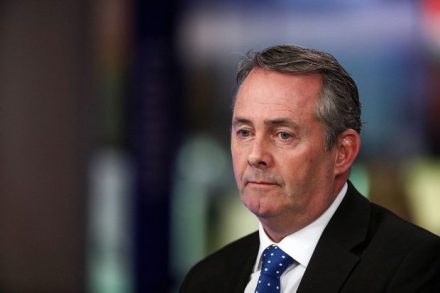
There's much speculation about who will be the two MPs chosen by the Tory party to fight it out for leader, but there is less dispute about the candidate who looks set to get knocked out on Tuesday when voting actually starts on Tuesday. Barring an unlikely surge of support from fellow Tory MPs, Liam Fox's backers so far are not going to be sufficient for his candidacy to survive the week. So why is he running? Here's what he had to say to that question on Sunday Politics today: 'If you remember back to 2005, they were all wrong then. But let's leave that aside on the arithmetic. The reason that I am in this race is that I think we need to take the argument on now from the referendum to how we actually take Britain out of the European Union.

The Spectator podcast: The Tory leadership contest turns nasty | 2 July 2016

From our UK edition

To subscribe to The Spectator’s weekly podcast, for free, visit the iTunes store or click here for our RSS feed. Alternatively, you can follow us on SoundCloud. A week after Britain backed Brexit, politics shows no sign of slowing down. David Cameron has resigned, Michael Gove has pulled out of Boris Johnson's leadership campaign before launching his own. And Boris has decided not to run in the contest. We now have a final slate of five candidates vying for the top job. In his Spectator cover piece this week, James Forsyth says the Tory party is in a 'deeply emotional state'. But he also points out that the leadership candidates who have emerged 'seem strangely united in their vision for post-Brexit Britain'.

The big question that Michael Gove still has to answer

From our UK edition

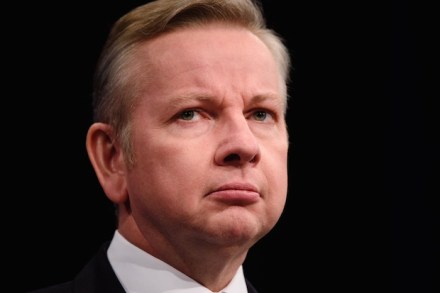
Michael Gove had two clear aims in his leadership campaign launch speech. The first was to explain what the hell he’d just done, which he did using emotive language and a trembling voice. Sounding almost like a Shakespearean hero struggling with destiny, the Justice Secretary insisted that he had ‘never thought I’d be in this position’ and that ‘I did not want it, indeed I did almost everything not to be a candidate for the leadership of this party’. He then told the audience that he lacks charisma, which is indeed something that those who are Gove sceptics are worried about when it comes to persuading the country to vote for a Conservative party led by Gove.

Tory party braced for deep divisions during leadership contest

From our UK edition

The Tory party is waking up this morning reeling from one of its most dramatic days since, well, last week, when the Prime Minister announced he was resigning. MPs from across the party are amazed at what they largely see as not just an act of treachery from Michael Gove but also a breach of how politicians generally behave towards their friends and their party, which is generally with loyalty. Many of them wonder how on earth the Justice Secretary can really reunite the Conservative party at the end of a bitter referendum battle when he has just injected a great deal of bitterness into the leadership contest. Meanwhile, those around Boris Johnson are on a war footing.

Perhaps, after all, sexual morality does still matter in politics

From our UK edition

This is not something that we are keen to discuss, for we are pretty sure that we have become far less puritanical, and that this is a good thing. But try this experiment. Imagine a slightly different version of Boris: funny, human, brilliant, a bit chaotic-seeming, and so on – but without any hint of sexual scandal. There would still have been question marks over such a Boris becoming PM – especially after his opportunistic Brexit decision. But they would have faded as the prospect of a charismatic, nation-enthusing leader emerged. Some would have called this Boris fundamentally untrustworthy, citing episodes of bullying and aggressive ambition, but such qualms would have been marginal.

A nasty Tory leadership battle favours one person: Theresa May

From our UK edition

Even by the standards of Westminster politics, yesterday's developments will be remembered for a long time. But meanwhile, in the short-term, Michael Gove's decision to launch his own campaign - and Boris' subsequent move to drop out - favours only one person in the Tory leadership race: Theresa May. The Home Secretary made her pitch as the quieter candidate who would just get on with the job. Amidst the noise of what looks set to be a nasty leadership campaign, that strategy already seems to be paying off. This morning, May has won the backing of the Daily Mail. The paper described yesterday as one of the most 'unedifying days in modern politics'.

I always defended Michael Gove. Then I met him | 30 June 2016

From our UK edition

This piece first appeared in The Spectator on 15 March 2014.  A few weeks ago, I was a guest at a huge tea party for children’s authors, publishers and commentators at the South Bank, but the atmosphere, over the cupcakes and finger sandwiches, was decidedly frosty. There were three keynote speakers and their speeches all targeted a man so vile and destructive that the audience visibly recoiled every time his name was mentioned. He was, of course, Michael Gove — and I wasn’t sure I should tell anyone that I had always rather admired him and, moreover, was about to interview him for this magazine. It might be better to keep quiet in much the same way that Vidkun Quisling would have been well advised not to mention his wartime visits to Berlin.

Why did Michael Gove suddenly withdraw his support from Boris Johnson?

From our UK edition

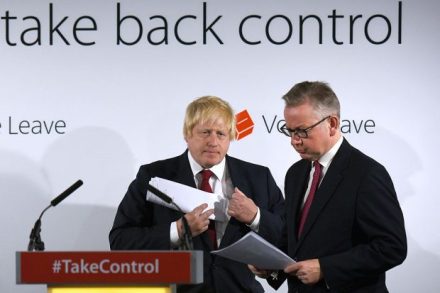
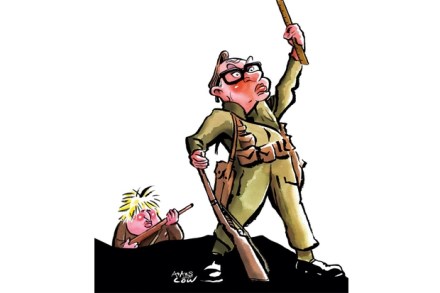
So, what happened? As late as yesterday afternoon, Michael Gove was trying to persuade fellow Cabinet Ministers to back Boris Johnson. This morning, he announced that not only that he was running but that ‘Boris cannot provide the leadership or build the team for the task ahead’. Hours later, Boris – reeling from this blow – announced that he would not be running. Well, one aspect of all this appears to be Gove's frustration with the way Boris operated. The referendum campaign had led Gove to revise his opinion of Boris, to see him as someone who could be a good Prime Minister. But Gove backers say that, when removed from the discipline of the Vote Leave operation, the old Boris returned.

This must be what happens when you put journalists in charge

From our UK edition

Are we learning, rather painfully, what happens when you let journalists take over? Boris Johnson and Michael Gove are political hacks, by instinct and experience, so perhaps it is not surprising that Brexit is starting to look and feel like a post-modern sequel to the novel Scoop.  Deadlines, panic, laziness, brilliance, incompetence, disaster, highs, lows, sheer bloody madness — this is the new politics. Triumph snatched from the jaws of disaster, and then days later the reverse. It makes for great copy, and is (go on, you can admit it) very funny. But is it any way to run a country?

The official candidates to be Tory leader and their pitches to the party

From our UK edition

The 1922 Committee has announced the final line-up in the Tory leadership race, after an extremely dramatic morning. The official contenders are as follows: Stephen Crabb Liam Fox Michael Gove Andrea Leadsom Theresa May Conservative contest rules mean that MPs only need two nominees at this stage, and there will be tectonic shifts taking place in the party as supporters of Boris Johnson move, either to Michael Gove or other candidates. It is fair to say after talking to a number of Boris supporters that some of them are currently so white hot with fury at what Gove has done in turning on his colleague at the last minute that there is little chance of them supporting the Justice Secretary’s campaign. We will be updating the list of who is backing who here.

Boris Johnson: Next Tory leader ‘cannot be me’

From our UK edition

'My friends, you have waited for the punchline of this speech' said Boris Johnson after 11 minutes of what sounded very much like a leadership speech. 'That having consulted colleagues and in view of the circumstances in parliament I have concluded that person cannot be me.' Theresa May has been slightly ahead of Boris in the surveys of Tory members and voters so far. Now she is the front runner. But it is worth remembering that Gove always receives a rapt reception at party conference and many Conservatives went into mourning when he was moved from the education brief. Gove has also been the key driver in government of the Conservatives' social justice agenda.

Why Michael Gove is the leader shy Tories need

From our UK edition

In February The Spectator's Emily Hill explained why Michael Gove was the leader the Leave campaign needed – and why he is the right leader for shy Tories. Here's her article: Lately, people only have to look at me to splurge their deepest, darkest secret. Last May, they did a terrible thing. They voted Tory. Now they’re contemplating greater deviance: voting to leave the EU — if only, they say, the campaign was fronted by someone they could believe in. And who do they want? The answer surprised me. Theresa is no temptation, as it turns out, nor even Boris. No, it’s Michael Gove they fancy. Westminster types might read this and splutter, ‘What tosh! If there’s one thing we know about the British public, it’s that they hate him.

‘I’m Theresa May and I’m the best person to be Prime Minister’

From our UK edition

'My pitch is very simple, I'm Theresa May and I think I'm the best person to be Prime Minister', she said. here's the rest of the speech: I want to start by paying tribute to the Prime Minister. It’s easy to forget how far the Conservative Party and our country have come since David Cameron was first elected leader in 2005. Thanks to David we were elected into government for the first time in 18 years, we won a majority in the House of Commons for the first time in 23 years and in difficult times we stabilised the economy, reduced the deficit and helped more people into work than ever before. But David’s legacy is about more than the economic rescue mission we undertook.

Theresa May launches her Conservative leadership bid

From our UK edition

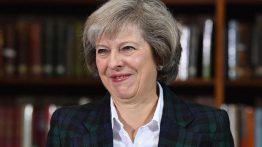
Theresa May has launched her Conservative leadership bid this morning. Her scheduled announcement came just moments after Michael Gove announced that he was also entering the race in a surprise move, having broken ranks with Boris Johnson's own campaign. In her speech, which you can read in full here, the Home Secretary said: 'My pitch is very simple. I'm Theresa May and I think I'm the best person to be Prime Minister of this country' May spoke at length of her reasoning for wanting the top job during her 16-minute speech. On Brexit, she said the country had emerged from a 'bruising and divisive campaign'.

Michael Gove: why I’m standing for the Tory leadership

From our UK edition

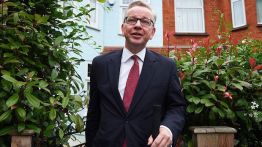
The British people voted for change last Thursday. They sent us a clear instruction that they want Britain to leave the European Union and end the supremacy of EU law. They told us to restore democratic control of immigration policy and to spend their money on national priorities such as health, education and science instead of giving it to Brussels. They rejected politics as usual and government as usual. They want and need a new approach to running this country. There are huge challenges ahead for this country but also huge opportunities. We can make this country stronger and fairer. We have a unique chance to heal divisions, give everyone a stake in the future and set an example as the most creative, innovative and progressive country in the world.