Conservative party

Dominic Raab’s brazen Brexit pitch

From our UK edition

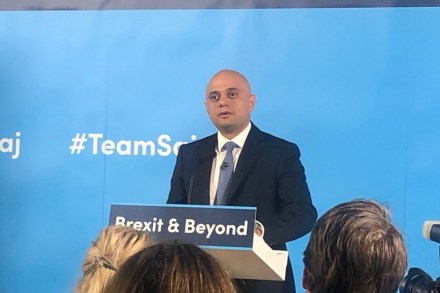
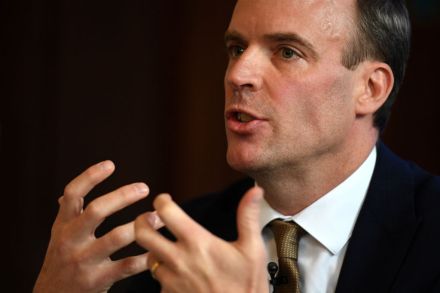
Dominic Raab's launch was just downstairs from the event that Matt Hancock held, and rather more serious, too. He was able to underline his parliamentary support, filling the front row of his audience with MPs who cheered loudly at appropriate moments. He was introduced by Maria Miller, who joked that she hoped to persuade him to become a feminist and claimed that both had come from relatively humble backgrounds. Raab's campaign team had clearly decided that it was best to be brazen about something that is considered by some as a weakness. The candidate's pitch was as someone who is sufficiently brazen to achieve the kind of Brexit he and the Conservative party want, and then make Britain fairer for ordinary people.

Tory leadership candidates start frenzied final push for support

From our UK edition

With just a few days to go until nominations close in the Tory leadership contest, candidates are busy trying to shore up support in the parliamentary party. There are five - Sam Gyimah, Andrea Leadsom, Rory Stewart, Mark Harper and Esther McVey - who currently don't have sufficient nominations to make it onto the ballot paper. Harper tried to get some attention by asking a question about the Peterborough by-election at today's Prime Minister's Questions, while Gyimah has been doing the rounds in Portcullis House as MPs have trundled through. Meanwhile I understand that Rory Stewart has cancelled all his media appearances in order to hold as many meetings as possible with MPs. Stewart's predicament is an interesting one.

Inside the One Nation Tory leadership hustings

From our UK edition

What is a one nation Tory? On Tuesday evening, various leadership contenders descended to the committee room corridor to try and convince MPs that they could be described as one. Earlier this year, the One Nation Tory caucus was launched – led by Amber Rudd and Nicky Morgan – and was reported to be aimed at keeping the Tories in the centre rather than lurching to the right in a leadership contest.The party has since declared a list of its core values – which range from protecting the union to the environment and free enterprise. The view that they have garnered the most attention for, however, is their opposition to a no deal Brexit.

Why standing for Tory leader could hinder Tory MPs’ careers

From our UK edition

Why would you stand for the Tory leadership? If you're someone like Dominic Raab, Boris Johnson or Jeremy Hunt, you've been planning this for months, with a team in place since at least the start of the year because you really think you can win this. But there are other entrants who are highly unlikely to get anywhere near the final two but are still standing. Some of these MPs may think they genuinely have an outside chance, but others have made a variety of calculations. Rory Stewart, for instance, is building a proper profile for himself as someone unafraid to walk around in public asking people what they think (which is rare for politicians today). This will set him in good stead for another leadership contest.

The Conservative Party need to look beyond Brexit if they are to survive

From our UK edition

The Conservative Party was founded 185 years ago and may not survive the next five. YouGov and Opinium both put the Tories in third place and on less than 20 per cent of the vote. They managed just 8.8 per cent in the European election, coming fifth behind the Greens and losing all but four of their MEPs. The primary cause of la crise actuelle is the government’s failure to deliver Brexit and it is to this which much of the Tory leadership conversation is addressed. However, there are other factors, structural and social, which have depressed the Tory vote and candidates to replace Theresa May are keen to prove they can win voters back to their party’s tarnished brand.

Tory leadership row brewing over CCHQ ‘stitch-up’

From our UK edition

Inevitably, the Tory leadership contest is developing a row about process and possible stitch-ups. Party grandees have been suggesting limiting the number of candidates to prevent ‘chaos’ (which suggests an interesting reading of the current political turmoil as not being chaotic). Iain Duncan Smith thinks there should be a higher threshold for nominations and more candidates knocked out at each round, while members of the 1922 Executive committee are also proposing limiting the numbers of candidates to around a dozen. There is a split though on whether this would be fair or whether the ‘widest debate possible’ is more important.

How councils in crisis could open up an important Tory leadership battleground

From our UK edition

One of the issues that should crop up in this Tory leadership contest is local government funding. True, it's not a particularly enticing matter, but Conservative MPs are generally very worried about the state of their local councils. Today's BBC story on 11 authorities which could exhaust their reserves within four years underlines this worry. The Beeb used analysis by the Chartered Institute of Public Finance to work out which councils the organisation had listed - anonymously - as being most at risk. The Local Government Association is warning that councils will have to further cut back services and that 'ongoing funding gaps are simply too big to be plugged by reserves'. Of course, this also affects the debate about social care, with councils already struggling to fund its provision.

Ministers take advantage of power vacuum left by May resignation

From our UK edition

Parliament is in recess at the moment, though the difference between a House of Commons Chamber that is sitting and one that isn't is scarcely noticeable at present, given how few votes MPs are being required to attend. There is a similarly thin distinction between a government led by Theresa May as she insists she's not going anywhere, and one led by the Theresa May who, last week, finally conceded that she was going. Not much is happening, as per usual. In fact, there will be even less happening as a result of May's resignation announcement. Today at the Number 10 lobby briefing, the Prime Minister's official spokesman was asked whether the Withdrawal Agreement Bill was really going to return to the Commons next week as planned.

Tory leadership candidates avoid the C-word

From our UK edition

Kit Malthouse's entry into the Conservative leadership contest has created quite a problem for the other candidates, not so much because he appears to offer a serious threat to the more established campaigns, but because he is the architect of the 'Malthouse Compromise', which once promised to solve all of Theresa May's Brexit problems. The trouble with the Malthouse Compromise is that its name includes a now highly-toxic C-word. Theresa May used 'compromise' so much in the weeks before she finally gave up and announced she was resigning that no leadership candidate worth their salt wants to drop it into conversation now. Even those who think that the best way through the Brexit deadlock really will involve a lot of compromise know they can't use that word.

Does Theresa May have a domestic legacy?

From our UK edition

Theresa May isn’t leaving at a time of her choosing, nor has she been able to focus on the domestic policies she listed in her inaugural speech on the steps of Downing Street. But today, as she announced she was resigning, she still tried to set out what she believed was her legacy in tackling the ‘burning injustices’ in Britain.  It wasn’t a long list, and the achievements on that list were in themselves rather small. She said she had committed more funding to mental health in the NHS long-term plan, which is true. This funding increase was greater than those in NHS England had initially hoped for.

The end of May

From our UK edition

This week’s European election was always going to be pointless, at least from a British perspective. It is possible that the elected candidates will never even take up their seats. In one important sense, however, the election campaign has been useful: as a reminder of where public opinion stands on Brexit. A few weeks ago, many believed that Change UK, the party founded by Labour and Conservative dissidents spoiling for a revocation of Article 50, would capture the public mood. Instead, another new political party would appear to have triumphed — a party set up with the sole purpose of expressing anger at the failure of Parliament to effect Britain’s departure from the EU on the date which had been set into law.

One-nation Conservatism won’t help the Tories defeat Corbyn

From our UK edition

There’s a useful rule of thumb in politics. When Conservative politicians pronounce themselves to be a One Nation Tory, you can be pretty sure they’ve got nothing sensible to say. Instead of addressing voters, they’re conversing with each other in a special form of Tory code. It’s an identifier without substance, a form of ritualistic preening often seen in the animal kingdom. Amber Rudd was at it last week. Claiming that the economy was her top priority, Rudd said she would oppose any Conservative leadership candidate who wanted to cancel HS2. The timing was unfortunate, with the House of Lords Economic Affairs Committee subsequently producing a report recommending the government think again on HS2.

Only a vote for the Brexit Party can save the Tories

From our UK edition

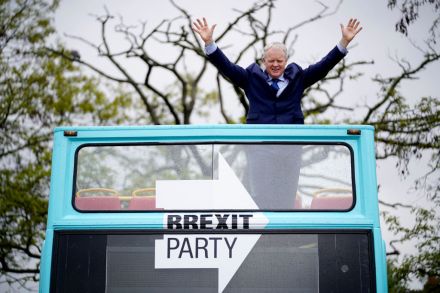
Of all the red warning signs for the Conservatives, the choice of the Brexit party’s candidate for the forthcoming Peterborough by-election is blinding as they come. Not only was Mike Greene a lifelong Conservative until a few weeks ago; he is a self-made man brought up in council house who has gone on to set up businesses and serve in several charitable roles such as trustee of Peterborough cathedral. If the Conservatives cannot attract and retain such a person as a member, then what is the point of them at all? They are either the party of self-reliance, of hard work, entrepreneurship and public service – or they might as well pack up and go home.

Tories lose over 1300 seats in local elections

From our UK edition

The Tories have lost over 1000 seats as both major parties were hit by a Brexit backlash in the local elections overnight. The Conservatives are down 1323 councillors, while Labour lost 77 representatives compared to 2015. Theresa May said voters had sent the 'simple message' that her party had to 'get on' with delivering Brexit. Labour's shadow chancellor John McDonnell said the results were a clear sign of voter dissatisfaction over Brexit: https://twitter.com/johnmcdonnellMP/status/1124210656146862080?

How to lose elections

From our UK edition

When a political party is in trouble, we see infighting, leak inquiries, resignations, mass loss of council seats, dismissals and botched attempts to depose the leader. But when a party implodes, something different happens: it loses the ability to defend or explain itself. An imploding party can and will lose any argument, no matter how strong its track record. The Tories entered this terminal stage under John Major after the disastrous local elections of 1995, which were followed by their landslide defeat of 1997. With the party now having had its worst set of election since 1995, it looks very much like they might be entering it again.

The Tories are stuck in the middle with May. Here’s what they should do next

From our UK edition

The Tories have a debate on their hands about what direction they should go in. Do they return to the politics of the Cameron coalition? This delivered majority government, won over a greater percentage of AB (better off) voters, won more university towns, more professionals but fewer rural areas. Or should the Tories double down and become the Brexit party, moving towards what Nick Timothy says is the “National” party, with a rural, less affluent base led by someone like Boris Johnson? The choice is far from straightforward and there are five big considerations for the party to take into account on this issue before deciding which path to take: Demographic parameters: which demographic groups will get larger or smaller over time?

‘I’m not stupid’

From our UK edition

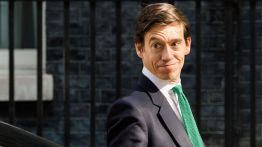
Rory Stewart has just been appointed international development secretary. Last week, he explained to Katy Balls why he would make a good Prime Minister: Almost nobody in Westminster admits to wanting to be prime minister. Rory Stewart is a cheerful exception. Most leadership hopefuls prefer to plot in dark corners and woo supporters in candlelit bars. The Prisons Minister is happy to sit in the sun in Hyde Park and talk openly about his ambition. It’s a tricky time for this country, he says. ‘In a normal situation I probably wouldn’t want to run.’ One of his friends thinks he’s mad: what’s the matter with just being MP for Penrith and the Borders? Why seek No. 10 now? Isn’t it a completely thankless task?

Ripe for reform

From our UK edition

Any hopes that the parliamentary recess would help resolve the great Brexit impasse have been dashed. MPs have returned from their break more entrenched in their positions. The essential facts remain. Theresa May doesn’t have enough votes to pass the withdrawal agreement. Equally, no Brexit option from a second referendum to a customs union has demonstrated that it can command the support of the Commons either. Tory MPs lack confidence in May’s leadership but can’t agree on who should succeed her, which keeps May in place. The consequence of all this: the drift continues. On the Tory side, the debate is fast coming down to what are MPs more scared of: May staying as Prime Minister until December or Boris Johnson taking her place? Most Tory MPs would reject both.

Backing Mrs Thatcher

From our UK edition

From ‘Be brave’, 28 April 1979: We can think of a number of reasons why voters might feel reluctant to vote for Mrs Thatcher. But this reluctance should be set aside. We must be brave. Only time can tell whether the Tories possess the necessary qualities of resolution and ability which are needed to deal with the nation’s problems. What we do know is that Labour entirely lacks them… The problems are familiar: a State which spends an ever-increasing proportion of ever diminishing national wealth; the atrophy of those traditions and mores which have supported British social life, resulting in growing lawlessness; a deplorable industrial record which may reasonably be blamed on a trade union movement that positively exults in maintaining low productivity.