Conservative party

‘Never mind the backstop, the buck stops here’: Boris launches his premiership with domestic focus

From our UK edition

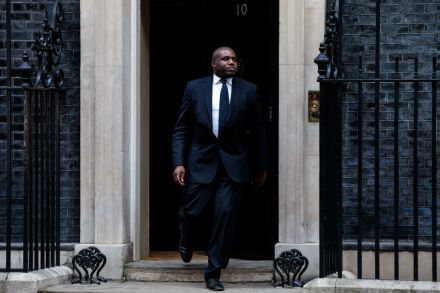
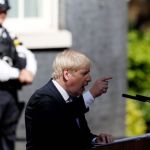
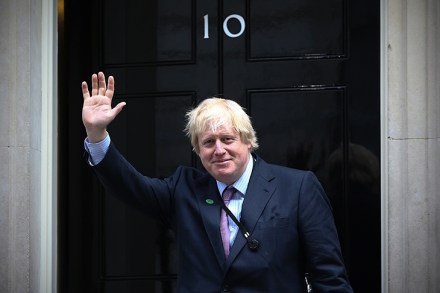
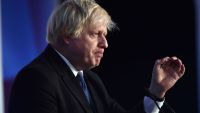
Boris Johnson has just given a rather urgent-sounding, fast-paced speech in Downing Street. So fast-paced, in fact, that it almost appeared he was in a hurry to catch a train. He of course promised to deliver Brexit by 31 October, but the bulk of his statement was in fact focused on what he wanted to do on domestic policy. He did so using typically tangible promises, telling voters that 'my job is to make your street safer', that 'my job is to make sure that you don't have to wait three weeks to see your GP' and 'my job is to make sure your kids get a superb education'. He also promised that his government would 'fix the crisis in social care one and for all with a clear plan we have prepared'.

Theresa May leaves Downing Street with best wishes for Boris

From our UK edition

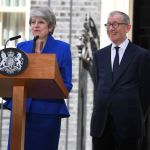
Theresa May's final statement in Downing Street before she left for Buckingham Palace was very dignified and generous to her successor. She offered her 'warm congratulations' to Boris Johnson and wished him 'every good fortune in the months and years ahead'. As with her performance at Prime Minister's Questions, May was keen to emphasise her commitment to continuing in public service, saying: 'I am about to leave Downing Street but I am proud to continue as the Member of Parliament for Maidenhead. I will continue to do all I can to serve the national interest.

Forget Brexit: Boris’s toughest task will be energising his exhausted party

From our UK edition

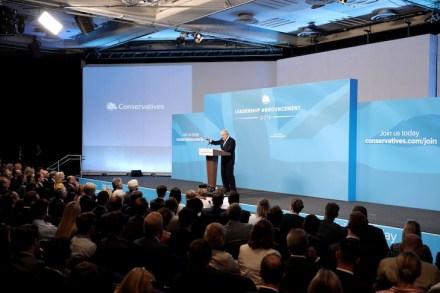
Boris Johnson will now be receiving plenty of unsolicited advice about how to be Prime Minister. As his victory speech a few minutes ago showed, though, he's not planning to ditch one of the qualities that got him into this job in the first place. Brand Boris isn't about the typical prime ministerial behaviour, stood squarely behind a lectern and trying to offer gravitas. To try to squeeze Johnson into this mould would be about as successful as Gordon Brown's attempts to look cheerful. That's why his speech was based around the acronym 'DUDE' - Deliver Brexit, Unite our Country, Defeat Jeremy Corbyn and Energise.

We are all paying the price for May’s desperate bid to define her legacy

From our UK edition

Theresa May’s final weeks in Downing Street have been much like the rest of her tenure: ungracious, uninspiring and unprincipled. May's latest departing gesture is a gigantic £500 million loan guarantee to Jaguar Land Rover to help with the development of electric cars. This follows on from the government’s £120 million loan to British Steel (which is now in receivership). But how does dishing out huge sums of money to corporate giants fit in with May's claim to stand up for the “Just About Managing”? The simple answer? It doesn't. But in a desperate bid to help JAMs, May has created an "Office for Tackling Injustices” in order to “gather data” on socio-economic, ethnic, and gender disparities.

Johnson and Hunt try to unite the Tory party in final leadership debate

From our UK edition

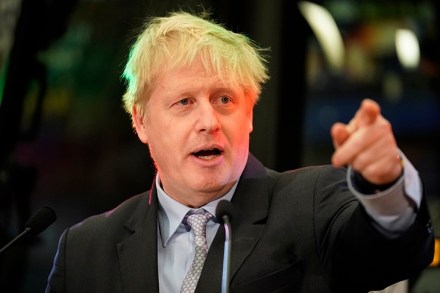
Tonight's Sun debate between Boris Johnson and Jeremy Hunt was far more relaxed than last week's head-to-head clash. But it was also stuffed with news lines, as both men prepared for the final few days of voting in the Tory leadership contest. Both declared the Northern Irish backstop dead, Johnson ruled out an election before Brexit happens, and they both attacked Donald Trump for telling black and minority ethnic congresswomen to 'go back'. On Brexit, the answer that Johnson gave about the backstop showed how likely it is that he might pursue a no-deal Brexit: he rejected a time limit or unilateral exit clause.

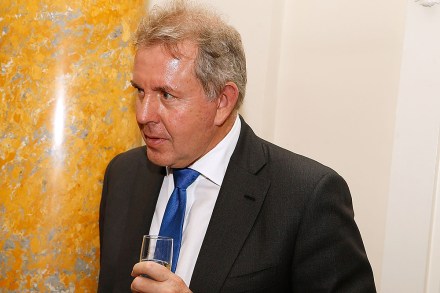
‘We will no longer deal with him’ was the end of Sir Kim Darroch

Last night, during his entertaining slugfest with Jeremy Hunt, his rival for Number 10, Boris Johnson promised to take Britain off the 'hamster wheel of doom.' I thought it was the best line of the night. Judging from the applause, the audience did, too. I should acknowledge that Boris was somewhat parsimonious about exactly what mechanism he intended to employ to effect the announced emancipation. But about two of the evening’s chief issues — Brexit and Britain’s relations with the United States — Boris really didn’t need details. He needed, and demonstrated, determination. The Sir Humphreys of the world hate Boris, and they hate Brexit.

sir kim darroch

What Tories can learn from Theresa May’s mistakes on immigration

From our UK edition

Percy Bysshe Shelley’s Ozymandias is often taught to schoolchildren, who read it as a warning about the fragility of human power. Conservatives should study it now and ensure they take an opportunity to learn from Theresa May’s mistakes on immigration. If there was one issue that helped May become, for a short time, a figure of “cold command” over her party, it was immigration. As home secretary and then Prime Minister, she was the senior figure at the top of the Conservative party who consistently took the hardest line on the issue.

Battle of Hastings

From our UK edition

Sir Max Hastings, whom I engaged as editor of the Daily Telegraph in 1986 and who stayed in that role for about nine years, seems to have installed himself at the head of the rabid mob of journalistic haters of Boris Johnson. In recent pieces in The Spectator and the Guardian he has described Boris as ‘a tasteless joke’ interested only in ‘fame and gratification… a scoundrel or a mere rogue’ (a subtle distinction), and in any case a man afflicted by ‘moral bankruptcy’. Max concedes that Boris is likely to be the next prime minister and preemptively accuses him of conducting a ‘celebrity government as in Ukraine and the US’.

Boris’s biggest challenge

From our UK edition

Every campaign has a wobble — and Boris Johnson is getting his in early. A mix of complacency (he felt confident enough to allow his campaign fixer, James Wharton, to catch up on his other commitments) and the drama at his partner’s flat have combined to put him on the back foot. To compound matters, Jeremy Hunt has gone on the offensive. It’s starting to resemble an actual contest. Or it might, if there were really any serious prospect of him losing. As one veteran of Tory leadership contests puts it: ‘The members are still behind Boris. It is Brexit, Brexit, Brexit.’ This Tory argues that when the Brexit-backing members hear the attacks on Boris Johnson, they assume it is as much about stopping Britain leaving the EU as anything else.

Plan B | 20 June 2019

From our UK edition

When Boris Johnson was appointed editor of this magazine two decades ago, an unkind soul said it was like ‘entrusting a Ming vase in the hands of an ape’. The remark encapsulated many people’s worst fears about the man who will almost certainly be Britain’s prime minister in four weeks’ time, if not before: that Boris is an irresponsible joker. Similar warnings were made when he was elected London mayor. His refusal to conform to type encourages a constant expectation of imminent disaster. What if Boris flops in No. 10? Even his supporters can’t be sure he won’t fail: his election as leader is a gamble from a party that believes its very survival is at stake.

High life | 13 June 2019

From our UK edition

A lady once offered to go to bed with me if I could ensure that she would write The Spectator’s Diary. This was some time ago, but what I clearly recall is that I didn’t even try. To help her land the Diary, that is. I don’t wish to start any guessing games among the beautiful ‘gels’ that put out the world’s best weekly, but to my surprise that particular lady did get her wish some time after, with no help from yours truly. (What I can tell you is that all this did not happen under the present sainted editor’s watch.) I was thinking of the Diary as I sat down to write because of the one by Jonathan Sumption in the 1 June issue, mentioned by a reader in a letter to the editor last week.

The two biggest threats to Boris’s leadership bid

From our UK edition

Now the real shenanigans begin. Boris Johnson will – barring a disaster of Johnsonian scale – be on the ballot of Tory members to pick their next leader and our prime minister on or around 22 July. And, truthfully, given that he is by a margin the darling and chouchou of those members, it is challenging to see how he can be beaten. Except for one thing. His campaign has been wholly based on Boris Johnson as an idea, a concept – the idea being that only he through his force of personality and penchant for the arresting bon mot can sequentially deliver Brexit, boost the popularity of his party and then win a general election.

How Boris’s campaign predicted he would get 114 votes

From our UK edition

Boris Johnson’s campaign team has been so well-organised that it predicted exactly the number of votes he would get in today’s secret ballot, I understand. According to WhatsApp messages between his supporters, one member handed Johnson a sealed envelope with ‘114’ written in it before the result, telling him to open it once the official numbers had been declared. The reason the prediction was correct is that the Johnson operation has been running a data-intensive targeting campaign for about three months, and therefore has a detailed understanding of where each MP is, and how likely they are to support each candidate. Parliamentary 'handlers' have offered information on every single MP as a result of repeated meetings and discussions.

Is an autumn election inevitable?

From our UK edition

There’s a joke going around the various warring tribes in the Tory leadership contest. They might not win this time, they tell each other, but not to worry: ‘We’ll all meet again in November.’ The point is that whoever succeeds Theresa May is doomed: the 31 October deadline will pass not with Britain leaving the European Union but with a political crisis and a general election that will be won by Jeremy Corbyn. After that, the Tories will in a few months go through the whole process again — this time to pick a leader of the opposition. ‘We’re using this leadership campaign as a test run for when the whole thing collapses in the autumn,’ says one aide.

Full text: Sajid Javid’s leadership pitch

From our UK edition

The first time I felt like an outsider was when I was six years old. My cousin told me we needed to change our walking route to her school because of the ‘bad kids’ who supported the National Front. That was the first time. But not the last. When I was at secondary school, the other kids told me all about their summer holidays. I’d only ever go to Rochdale but pretended I’d been abroad like them, because they couldn’t tell if I had a tan. When I wanted to do the O-levels and A-levels I needed although I had a couple of inspiring teachers who I’ll be forever grateful to I was told that kids like me should know their limits and stay in their lane.

May confirms she’ll stay on as an MP at dull PMQs session

From our UK edition

A fair few MPs felt there was no reason to come to today's Prime Minister's Questions, given the real action is in the Conservative leadership contest. There were spaces behind Theresa May as she took questions from Jeremy Corbyn. The Labour leader clearly hadn't put much effort into preparing for the session, either, offering a bizarre hotchpotch of questions ranging from no-deal Brexit to the government's record on renewables. Those Tories who had turned up weren't interested in asking May tricky questions: what was the point, when she has just weeks left as Prime Minister? Instead, they wanted to praise what existed of her record, with Peter Bone praising her 'superb' work on human trafficking, and Huw Merriman criticising his colleagues who had forced her resignation.

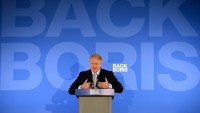
Full text: Boris Johnson launches his Tory leadership campaign

From our UK edition

It's a measure of the resilience of this country that since the vote to leave the EU and in defiance of all predictions, the economy has grown much faster than the rest of Europe. Unemployment has fallen to the lowest level since 1972, exports have soared, English football teams have won both the Champions League and the UEFA cup by beating other English football teams, and inward investment has soared to a record £1.3 trillion. It's almost as if the commercial dynamism of the British people is insulating them from the crisis in our politics, and yet we cannot ignore the morass of Westminster, where parties have entered a yellow box junction, unable to move forward or back, while around the country, there is a mood of disillusion even despair at our ability to get things done.

Rory Stewart is a reminder of what Boris Johnson used to be

From our UK edition

Britain is not quite in the grip of Rorymania. He gave a properly impressive speech this week and he has spoken with honesty and clarity about politics and policy. But Rory Stewart isn’t going to be our next prime minister and it’s hard to see him remaining in Cabinet for much longer. He’s a hit on Twitter, but Twitter is not real life. Most voters still don’t know who he is. None of that means what Stewart has done during the Conservative leadership election is irrelevant or unimportant. He, like Matt Hancock, has run towards conversations about difficult and important things like social care when many of their colleagues have run away.

Boris Johnson’s opponents have been too easy on him

From our UK edition

Boris Johnson is currently the quiet man of the Tory leadership contest, lurking in the shadows rather than courting media attention as he usually does. His campaign team has deliberately held him back from touring the studios to avoid gaffes or rows. They're even nervous about the limited exposure he has, joking that he is 'always one Monday column away from disaster'. Of course, it's easier to do this when your candidate has as high a profile as Johnson: he doesn't really need any more attention than he's already got. It is, though, not the greatest of compliments from those members of his campaign team that they seem to feel Johnson cannot be trusted not to cause a career-damaging row when the stakes are so high.