Conservative party

The joys of DIY government

One of the main problems with the Tories’ Big Society/post-bureaucratic/responsibility agenda is how to sell it to the public. At the moment, it all sounds a bit too metropolitan, a bit too vanilla latte, a bit too wonkish. How do you better convey the often solid thinking that lies behind the management consultancy speak? Well, I think Grant Shapps has just given it a good go. He described the warm feeling that he gets from DIY work – from, say, putting up his own shelves – and then expanded this to wider society. Imagine being the person who helped rejuvenate a post office, or who set up a school, or

Hammond’s honesty

Philip Hammond gave the first presentation at this Big Society event, and he admitted something that the Tories don’t admit too often.  First, he attacked Gordon Brown for doubling the national debt. And then he added that, “unfortunately, we’re on a trajectory where the national debt will double again over the next few years.” Hammond’s right to highlight this. The danger for a Tory government is that their attacks on Brown in 2010 could look hypocritical in 2015, when they would have presided over rising debt as well. The key thing is to pin the blame for this situation on Brown, and ask whether he can be trusted to keep

Take that, Tony

Yesterday, David Cameron offered a punchy response to Tony Blair’s return to the frontline of British politics, saying: “It’s nice to see him make a speech he’s not being paid for”. But I reckon the more stinging rebuke might come today. Nestled in the schedule at today’s Tory ‘Big Society’ event are two video messages from a couple of the most prominent independent political figures of the Blair era. The first is Anthony Seldon, the reform-minded headmaster of Wellington College, who has written numerous books on Blair, and who has recently done some eyecatching work on the big subject of Trust. And the second is Ray Mallon, the zero-tolerance elected

Whitehall’s hung parliament contingency plans vindicate Tory alarm over the economy

There it is. The Tories’ premier weapon emblazoned across the front pages of the Guardian and the Telegraph: Brown could stay on as PM in a hung parliament, even if the Tories win more seats. To be fair to Brown, the headlines are misleading. It is his duty to remain in office until it is clear that David Cameron or another politician commands the confidence of the House, which may take weeks in current circumstances. Mandarins are drawing up radical contingency plans to ensure that some modicum of economic stability is maintained during that period. These measures include temporarily proroguing parliament for 18 days after the election (rather than the

Why Blair’s return is good news for the Tories

Blair’s return will be worth a good 2-3 points to the Tory lead. Like Mandelson, he can dazzle journalists who admire his tradecraft. Like Mandelson, he is loathed by the public who see a snake oil salesman. Blair mis-sold the country a project in 1997, and delivered none of what he promised (and it was with those broken 1997 problems in mind that the News of the World backed the Conservatives last weekend). He is not very popular now. When he gave evidence to the Chilcott Inquiry, the crowds came from near and far to denounce him. One placard, which I found outside my office, said “Blair is a war

How more strikes could work for the Tories

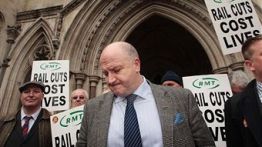
During the last Tube strike, a couple of lines kept going. As I made my way home by a rather circuitous route, I was intrigued that all the anger on the platforms was directed not at Transport for London or the new mayor but the unions. The general sentiment was that all the strikers should be fired, that back-up drivers should be trained up and that the trains should be automated. If the RMT do want to call more strikes, I suspect that they will make it a lot easier for an incoming Tory government to change the law to require minimun turnout for strike ballots — a change that

Tomorrow is a Big Day for the Tories

Tomorrow’s Word of the Day is ‘Big’.  That is to say: the Tories are holding a Big Event, on the theme of the Big Society, and they’ve got all their Big Hitters out for the occasion.  In all, there’ll be presentations from eleven shadow Cabinet members, followed by a speech from David Cameron.  You don’t often see such a concentration of Tory firepower outside of conference season. What’s clear, then, is that the Tories regard tomorrow as an important day for their election campaign.  And so they should.  Their Big Society agenda – aka, decentralisation – spans across some of their most encouraging policy ideas.  From Michael Gove’s plans to

Letwin gets to the point

Oliver Letwin is often mocked for putting things in over-complicated language, for talking about ‘a shift in the theory of the State from a provision-based paradigm to a framework-based paradigm’. But in his interview with the Wall Street Journal Europe, Letwin sums up the Cameron vision for public services with admirable clarity: ‘Hospitals compete for patients, schools compete for pupils, welfare providers compete for results in getting people out of welfare and into work. So we get to the point where it [the public sector] is efficient because it is answering to the people it is serving and not to bureaucracy.’ Tories who are looking for a pithy way to

Guess who’s back

Yep, you guessed right: Tony Blair was doing his bit for the Labour cause this morning, with a speech in his old constituency.  In truth, there was little in it of any note – or that we haven’t heard countless times from his successor.  Thus the Tories were derided as either the “old Tory party,” or as confused about their direction of travel.  Gordon Brown and Alistair Darling were hailed as the men who brought us through the worst of the economic storm.  And even the soundbites (“meeting not just future challenges, but seizing future opportunities”) sounded as if they had come from straight from the Brownite copybook.  Perhaps the

Is David Davis talking off-message?

James Macintyre asked yesterday, in response to a speech Davis made at the Bristol Chambers of Commerce. The question should enter John Rentoul’s entertaining list of questions to which the answer is No. Macintyre takes Davis’ comments out of context: ‘First, he [Davis] praises the post-war Labour Prime Minister Clement Atlee, who is credited with creating the NHS and the Welfare State, and effectively compares him to Margaret Thatcher: “Attlee created the modern Welfare State at a time when the country was bankrupt after the war. Mrs Thatcher transformed the country after 1979 when it was at its lowest ebb.”’ What Davis actually said was: “When times are tough, that

Labour have moved on from the death tax for now – and so should the Tories

Labour’s plans for a national care service aren’t looking too sharp this morning.  Andy Burnham is expected to announce a cap on residential costs for the elderly later today – to be funded by freezing inheritance tax bands, raising the statutory retirement age, and (lo!) efficiency savings.  But the full, free-for-everyone-at-the-point-of-use service will have to wait some time – or at least until a new independent commission has decided on how it can be funded in the long-term.  In other words, the government has decided to park the death tax issue until well after the election. Presentationally speaking, this is proving difficult for the government.  I mean, just rewind to

Osborne’s silent victory

I think Osborne’s main victory tonight would be to reassure those who thought him a clueless idiot. The left demonise him, and it’s easy for the right to despair at him too (yes, guilty). But the figure we saw tonight was calm, collected and assured – and I reckon this was his achievement. He allayed fears. Expectations of his performance would have been rock bottom, and he’d have surpassed them easily. He was playing it safe. Vince Cable did his after-dinner speaking comedy act (I met William Hague in the ‘spin room’ afterwards, who swears that some of Cables lines were nicked from his repertoire), and the studio audience loved

Tory poll lead widens further

I’ll spare you the nitty-gritty, but suffice to say that three separate polls tonight record growing leads for the Tories – of 7, 7 and 10 points, respectively.  One of the 7-point leads is from the YouGov Daily Tracker, which has been hovering around the 4 point mark for the past few weeks.  You could argue that we’re still operating more or less within the margin of error.  That’s true.  But throw in the polls from the weekend, and you’d be hard-pressed not to conclude that the tide is turning, at least momentarily, in Cameron & Co.’s favour.  Either way, Tory folk around Westminster certainly seem more relaxed than they

Few fireworks – but solid performances from Cable and Osborne<br />

So now we know what happens when you put three would-be finance ministers into a room, and start asking them questions.  There’s plenty of esoteric language, a good dash of posturing – and next to no fireworks.  Thinking about it, perhaps we shouldn’t have expected much else. Not that the pyrotechnics were completely absent, of course.  Both Cable and Darling rounded on Osborne over the Tories’ national insurance plans, and Osborne hit back with some well-directed attacks on Labour’s own tax and spend agenda – even getting Darling to waver and admit that a “death tax” is no longer on the cards.   But, for the most part, calm and

Brown and Cameron’s Commons clash serves as the warm-up for tonight’s debate

Gordon Brown and David Cameron have just been facing each other in the Commons chamber. Brown was notionally reporting back on the European summit meeting, but in relaity Brown and Cameron were setting the stage for the Chancellor’s debate tonight. Cameron claimed that there was a new dividing line in British politics, the Tories for ‘efficency and aspiration’ and Labour for ‘waste and taxes.’ Brown claimed that the Tories were indulging in panic measures and that their plans announced today would ‘withdraw the support that is necessary for the economy to have a sustained recovery.’ Brown might have some Keynesian economists on his side when he says this. But it

The Tories have a clear message on taxation

The Tories now have a clear message on personal taxation, ‘you’ll pay less under the Conservatives.’ Their announcement today that they will reverse, for seven in ten workers, Labour’s increase in the tax on jobs is welcome news. As I said in the Mail on Sunday, turning the spotlight on the National Insurance hike shows that Labour’s tax rises aren’t just going to hit people who earn more than £150,000 a year who are going to buy a house costing more than a million but anyone who earns more than £20,000 a year. Some are questioning whether National Insurance is the most effective tax to cut since  it is a

Back to his Tory best

George Osborne has just set the scene for tonight’s Chancellors’ debate by announcing something neither Darling or Cable will be able to match: a tax cut. It’s a real one, it will benefit some 20m workers and (best of all) it will be paid for by spending cuts. While the amount is not huge – everyone on under £43,000 will be £150 better off – it indicates the route the Conservatives would go down in government.   Trusting people with their own money, and stoking the recovery by cutting the tax on jobs. Here are the main points: 1) Osborne would raise National Insurance threshold in Apr11. One of the

A smart move by Osborne – but he needs to ready himself for his opponents’ attacks

There’s little doubting it: the Tory plan to (at least partially) reverse Labour’s national insurance hike has handed George Osborne a high-calibre weapon for tonight’s TV debate.  It is, I suspect, an attractive and attention-grapping policy in itself.  But it also helps the shadow Chancellor paint the Tories as the party of aspiration.  Or, as Tim Montgomerie has put it: “Seven out of ten working people will be better off if Cameron becomes Prime Minister.” But announcing the policy this morning has also given Alistair Darling and Vince Cable a chance to very publicly denounce it later today.  We’ve already had a preview of what’s likely to form the central