Conservative party

Time for a National Government? (Revisited)

If there is one lesson to be drawn from the television debates, it is that people have grown tired of politicians slagging each other off. David Cameron promised an end to “yah-boo” politics, but the institution of parliament makes this near-impossible in practice. However, while parliament is out of action, there just might be the possibility of creating something genuinely ground-breaking: a government of national unity. I first suggested this idea in the New Statesman during the 2008 Labour Party conference: “If the financial crisis is as serious as many in the government suggest, then extraordinary times require bold solutions. There is an argument for saying that the Prime Minister should

The need for speed

The markets have spoken, and they’ve done so with menace. The FTSE 100 closed down 138 points, which, though not a complete disaster, is far from encouraging. You might argue that the multinationals that comprise the FTSE 100 are more affected by the fortunes of international markets and commerce. Whilst that’s true it must be conceded that there is little comfort in the FTSE 250, a figure that provides a closer expression of domestic economic confidence, which closed down by 410 points. At the time of writing, Sterling, another bellweather indicator, is mired. The Pound is worth $1.47, and at one point it was at its lowest level against the

A deal that would kill Gove’s agenda at birth

While both the Conservatives and LibDems support the idea of Swedish schools, a Lib-Con deal could kill the agenda stone dead. David Laws is proposing to allow local authorities to have the power to veto new schools – which would, in effect, mean no rollout. As we all know, this could strangle the Gove school agenda at birth. Local authorities, whether Labour or Tory, will hate the idea of competition in the provision of education. The local authorities and teachers’ unions are incredibly powerful, and defeated Thatcher, Adonis and Blair. They have also nobbled the LibDems to the extent that, I understand, David Laws believes that he could not get

Cameron offers the hand of coalition to the Lib Dems

Woah, I didn’t think Cameron would go that far.  In his statement just now, the Tory leader started off by talking about minority government, as one might expect.  But he soon skipped past that, and onto what sounded like a more formal coalition with the Lib Dems.  He called it the Tories’ “Big Comprehensive Offer”. This offer trumped the one that Brown put forward ealier by virtue of its clarity.  Where Brown had hints and innuendo, Cameron had an itemised list of policies and specifications.  And so the Tory leader set out the areas where he wasn’t willing to compromise with the Lib Dems: Europe, cutting the deficit and immgration. 

Brown sets out his stall for the Lib Dems

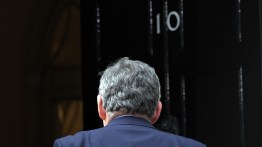
Gordon Brown’s statement outside Number 10 just now was a strange mix of statesmanship and salesmanship.  He began by trying to sound as reasonable as possible: claiming that he “understands” why Nick Clegg would like to meet with David Cameron first, and adding that he would happliy wait for them to finish their negotiations.  He claimed that he is keen to “resolve the situation for the good of the country.”  And he mentioned that Alistair Darling would be attending various meetings about the spreading fiscal crisis in Europe. But then, about halfway through, he flipped into used car salesman mode – hawking his rusty party to a sceptical Nick Clegg. 

Nick Clegg gives the Tories the go-ahead

So Nick Clegg has finally spoken – and his words will be welcomed by the Tories.  In an address outside of the Lib Dem HQ on Cowley St, he reiterated his previous argument that “whichever party gets the most votes and the most seats, without gaining a majority, has the first right to form a government.”  But added that “it seems this morning that the Conservative Party have the most votes and the most seats … it is for the Conservative Party to prove that it is capable of governing in the national interest.” What this means in practice isn’t 100 percent certain – although it doesn’t sound good for

Massive Failure by the Tories and Lib Dems to Manage Expectations

The old political hands in the Labour Party at least knew that they had to talk down their prospects (beyond the usual nonsense about fighting to win). Lord Mandelson was right to fight this election as the underdog because this now looks in some ways like a victory.  In fact this is a massive achievement for the Conservative Party. When David Cameron took over in 2005 many Tories would have settled for this result. They should always have been fighting a two-election strategy. But the Conservative Party allowed itself to get overexcited about the possibility of outright victory. The Liberal Democrats allowed themselves to dream and find themselves bitterly disappointed

There may be Tory trouble ahead

Will the 1922 Committee of Tory MPs elect an emergency chairman today? If so, the mission would be to warn Cameron off doing any deal with the LibDems. Most Conservatives will wake up today judging the Cameron campaign to have failed. In the view of many, he will have failed to honour his “change to win” promise: they all changed, as he asked, but he didn’t win. There will be a price to pay, and perhaps one of the heads around Cameron will have to roll to assuage the discontent. Any Lib-Con deal over voting reform will be anathema to many recently-elected as well as existing  Tory MPs. A new

Let the recriminations begin

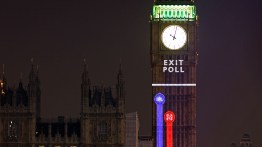
Let’s rewind to 10pm yesterday evening, when the exit poll was released.  Most politicos – myself included – were incredulous.  We could just about believe that there might be a hung Parliament with the Tories as the largest party, but a reduced number of Lib Dem seats?  After Cleggmania and all those recent opinion polls?  Gedouttahere. But, this morning, that exit poll is looking a good deal more prescient.  After an evening of erratic results, Sky’s projection matches it almost exactly: 309 seats for the Tories, 259 for Labour, and 54 for the Lib Dems.  So we’re on for a hung parliament, and all the backroom discussion and subterfuge that

Election Night live blog

0843, JGF: The result in Hampstead and Kilburn is remarkable. The local Lib Dems were convinced that they would win. But Glenda Jackson survives by 42 votes with the Tories in second. 0639, PH: A dejected sounding speech from Nick Clegg. 0638, PH: Clegg says “this has been a disappointing night for the Lib Dems – and we obviously didn’t achieve what we hoped to achieve.” 0637, PH: In his acceptance speech, Nick Clegg is going big on the voting problems of last night. 0634, PH: Some good news for the Lib Dems: erm, Nick Clegg holds in Sheffield Hallam. With an increased majority. 0620, JGF: Jon Cruddas holds on,

The party leaders vote

David and Samantha Cameron leaving the polling station in Spelsbury Gordon and Sarah Brown arrive to vote in North Queensferry Nick and Miriam Clegg vote in Sheffield

Message to the Tories: Grow Up About the New Labour Era

I have been deeply disappointed by Tory negative campaigning in the past few days. The Cameroon coup was inspired, in part, by Tony Blair, so to decry 13 years of New Labour is deeply hypocritical. The message, pioneered by Oliver Letwin, was that praise would be given where it was due. Britain has become a better place since 1997 and that is true for readers of the The Spectator as much as (and perhaps more than) anyone else. At the same time, Brown’s leadership of the country and his party has been woeful. The Labour Party has only itself to blame for this. It should have put up a candidate

As the polls open, a topsy-turvy campaign closes

Now’s the time, dear CoffeeHouser. After nearly three years in Number Ten, Gordon Brown is finally subjecting himself to the wishes of the British public. And, signs are, he won’t like what they’ve got to say. Putting the strong possibility of a hung parliament aside, last night’s opinion polls had Labour on or around Michael Foot levels of support. A few folk, like Marbury, have observed that it’s almost like the campaign didn’t happen. And they’re right: there is a peculiar symmetry to the electoral calculus. After all the mood shifts of the past four weeks, we’re back broadly where we started: with the Tories looking to gain either a

Two more polls point towards a hung parliament

Is this it? A couple more polls have been released, and – like all the others tonight – they point towards a hung parliament. An ICM poll for the Guardian has the Tories on 36 percent (up three points), Labour on 28 percent (no change), and the Lib Dems on 26 (down 2).  And a ComRes effort for the Independent and ITV has the parties on 37, 28 and 28, respectively. Most Tories I’ve spoken with this evening are, they say, mildly pleased with the opinion polls.  Not overjoyed, of course – but they feel their party’s greater firepower in the marginals means that numbers like those above will translate

Times/Populus has the Tories close to a majority

So the Times/Populus results are in, and they have the Tories on 37 percent (up one), Labour on 28 percent (up one), and the Lib Dems on 27 percent (down one). On a uniform national swing, this would leave us in hung parliament territory. But Tories I speak to are pretty confident that numbers like these, if replicated tomorrow, could give them a majority. Elsewhere, TNS-BMRB has the Tories on 33, Labour on 27 and the Lib Dems on 29.  Angus Reed for Political Betting has Tories on 36, Labour on 24, and the Lib Dems on 29.

Translating polls into seats

There’s an odd disconnect at the moment. Pretty much everyone I’ve spoken to predicts that the Tories will win 300 seats plus (the one exception was someone on the Union side who thought that they could hold the Tories to 280) but the polls show them winning significantly less than that.   Now, this is partly because nobody is sure how you translate votes into seats in a three-way contest. People are also factoring in that the Tory vote is more certain to turn out and that the Tory operation is more confident that it knows where its voters are than the other parties. But it is a testament to

Government in waiting?

I’m sceptical of the value of newspaper endorsements. Readers are often irritated by being told which way to jump – if you’ve read the letters page of the Times recently you’ll know what I mean. However, the weight of Fleet Street support for the Tories is significant. In addition to the usual suspects, the Sun, the Times, the Financial Times and the Economist have all defected from New Labour since 2005. Today, the Evening Standard joins them, endorsing the Conservatives in a general election for the first time since 1997. As with the endorsements in the Times, the Economist and the FT, Labour’s exhaustion, Cameron’s comparative vitality and the belief