Conservative party

The tensions undermining a pact

The announcement, yesterday, of Nick Boles’ proposal for a Lib-Con electoral pact conveniently coincided with the opening of an election court hearing into a particularly unpleasant battle between former Labour minister Phil Woolas and his Lib Dem opponent, Councillor Elwyn Watkins. The most serious allegations against Mr Woolas, who won the seat with a 103 vote majority at the last general election, are that he deliberately lied in accusing Mr Watkins of being “in league with extremist Muslims … and prepared to condone death threats against Mr Woolas,” and that in election pamphlets he falsely accused Mr Watkins of receiving funding from abroad. There will, no doubt, be some in

A Tory-Liberal pact is possible if the coalition lasts the distance

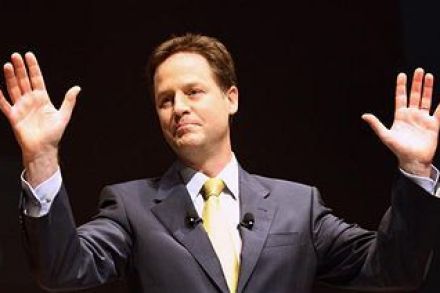
The outrider has returned to stables. Nick Boles MP, a one-time Cameroon confidante tipped for promotion, formally introduced the possibility of a Tory-Lib Dem electoral pact, it made a few cursory headlines and then David Cameron and Nick Clegg promptly denied any such intention. It had the appearance of the classic three-card trick. A formal alliance or non-aggression pact is highly unlikely unless the coalition survives to 2015. The government will collapse before then if enough Liberal Democrats believe its record is indefensible. However, if it doesn’t then the parties must defend their joint record and in doing so will offer a collaborative future. The alternative is absurd. Nick Clegg

A worrying – but not disastrous – poll for the government

This morning’s Times/Populus poll (£) will have supporters of the coalition grimacing into their cornflakes. The headline finding is bad enough, if rather familiar, with Labour closing the gap between themselves and the Tories to only two points. But what follows is worse. According to the poll, around three-quarters of voters reject the government’s deficit reduction strategy – preferring, instead, what are loosely the approaches advocated by Labour and the unions. And, what’s more, economic pessmism is arrowing upwards. The number of respondents who think “the country as a whole will fare badly,” has risen by 13 percentage points since June. The number who think “me and my family will

Who is behind Nick Boles’ proposed electoral pact?

Nick Boles proposed electoral pact (£) between the coalition partners would have a clear benefit for the Conservatives, it would make a deal between Labour and the Liberal Democrats after the next election impossible. That is quite a prize for the Conservatives. It would mean that David Cameron would continue as PM as long as the two parties between them held a majority of seats in the Commons. It is less clear what the Liberal Democrats would gain from it. Yes, it would help more of their MPs survive, but it would tie their hands ahead of another hung parliament and massively reduce their ability to claim that they are a distinct political

Boris for a second term

Boris’s decision to announce today that he is to run again for Mayor of London is intriguing. Many in government circles expected Boris to wait until London’s settlement in the CSR had been finalised before announcing, his candidacy was the best card he had in the negotiation. So his declaration has sparked speculation that Boris and George Osborne have come to a deal. If Boris wins, and he starts as favourite, then what he does in his second term will be fascinating and the best guide to his future plans. If we see Boris becoming an increasingly national figure and championing causes dear to the right—free enterprise, low taxes and

From the archives – Boris for Mayor

Boris Johnson has announced his candidacy for a second term as London Mayor. Here is what he wrote for the Spectator on the campaign trail last time round. How, as Mayor, I would help our brave troops, The Spectator, 17 December 2007 Even if the story is exaggerated, the underlying psychology is convincing. It is reliably reported that last month a woman in her thirties was doing her daily laps of the pool in Leatherhead, Surrey, when she became aware of an obstacle. A section of the swimming-pool had been roped off to allow 15 wounded soldiers to receive the therapy needed for their rehabilitation. It is hard to know

BoJo to stand for a second term as London Mayor

Today, it seems, the uncertainty is going to come an end: Boris Johnson will confirm that he is running for a second term as Mayor of London in May 2012. In truth, though, we probably shouldn’t have expected anything else. The timings of the Parliamentary term, and the inavailability of safe seats, always made an early return to Westminster unlikely – even if that’s what Boris had wanted. Stir the Olympic Games into the mix, and the lure of City Hall must have been too powerful to resist. As Ben Brogan says, this could be a timely boost for the Tories. The Boris campaign will be launched, to much jubilation,

How Humphrys got it wrong

The 8.10 Today programme slot this morning went to Nick Clegg. The programme wanted to discuss with the deputy PM the BBC’s finding that those areas most dependent on the state would be hit hardest by the coming cuts, for some reason this statement of the obvious is regarded as news. But John Humphrys, in his haste to interrupt the deputy PM, made some statements deserving of further scrutiny.   First, Humphrys suggested that the cuts will take place before Christmas. They won’t. Unlike the cuts announced in the immediate aftermath of the election, these are not in-year cuts.   Next, Humphrys claimed that the economy is at ‘stall-speed.’ But

Labour get the inquiry they wanted

To these eyes, this afternoon’s phone hacking debate was a surprisingly sedate affair. Chris Bryant – proposing a motion to have an inquiry conducted by the Standards and Privileges committee into the News of the World’s actions – seemed to go out his way to depoliticise the argument, and other Labour MPs followed his lead. And so there was relatively little mention of Andy Coulson, with the emphasis instead on the wrongs that might have been done to the House by the police and the media more generally. It was, then, little surprise that Bryant’s motion was passed unanimously. There were some flashes of controversy and acid, though. Bryant himself

The coalition’s shifting horizons

Nick Clegg’s speech today is meant to be one of a pair with David Cameron giving the other tomorrow. The speeches mark an attempt to set out an agenda for the government that goes beyond deficit reduction. The idea is that Clegg’s speech called ‘horizon shift’, which is all about making government policy more long term, goes hand in hand with Cameron’s speech tomorrow on ‘power shift’, the government’s plan to devolve power down. This twin-pronged approach came out of the political Cabinet at Chequers at the end of the last parliamentary term and a recognition that the coalition must be seen to be doing more than just reducing the

Clegg downplays the cuts

A noteworthy directional shift from Nick Clegg in his speech this morning. Instead of priming the us for “savage cuts,” as he once did, the Deputy PM is now deemphasising the severity of what’s to come: “Some of the hyperbole I have heard is just preposterous – this idea, that somehow, it is back to the 1930s. After the spending round, we are still going to be spending £700bn of public money – more than we are now.” To be fair, the basic message hadn’t changed: cuts are “unavoidable,” Clegg says, as we struggle to contain the deficit. But this new motif demonstrates just how keen the Lib Dem leader

The Royal Mail – a tough sell

Some day soon – unless the coalition has already lost its bottle – a bill will be introduced to ‘part-privatise’ Royal Mail. It has to be done. But it will be a tough sell, for four reasons. First, the market for the Royal Mail’s product is shrinking. It’s a big fish, but its pool is getting smaller. It carries 75 million letters a day, but that’s down by 10 million just in the last five years. And 87 percent is mail sent by businesses. Apart from Christmas cards, the rest of us now correspond by email. Last year’s pre-tax loss was £262m: the reality is that the business is insolvent.

In or out?

You’ve got to hand it to Dan Hannan – he knows how to make a splash. His latest initiative is a cross-party campaign for an “in or out” referendum on Britain’s EU membership. You can find details in his article for the Telegraph today or, indeed, on the campaign’s actual website. But the basic argument runs thus: with the AV vote next year, referendums are now hardwired into the political mainstream – so why not give us a vote on one of the biggest questions of national sovereignty that we face today? And if you agree with him on that, you can sign up here. Hannan is, of course, making

David Cameron’s father has died

Sad news today, Ian Cameron has died. The Prime Minister was with his father at the end, having flown out to France with his brother and sister from City airport this morning. His father’s cheerfulness and determination in the face of his disability has long been cited by friends of Cameron as one of the key influences on his character.   In a sign of how quickly the Cameron family has experienced the joy of new life and the sadness of the end of a life, Ian Cameron had not met his latest granddaughter when he died.   Here is the Downing Street statement: “It is with deep regret we

PMQs live blog | 8 September 2010

Stay tuned for live coverage of Clegg vs Straw from 1200. 1201: And here we go. Clegg begins by passing on his best wishes to David Cameron and his family. Condolences for the fallen in Afghanistan follow – “we will never forget their sacrifices.” 1204: Mark Pritchard begins with a dubiously plant-like question. “300 policemen have been laid off in West Mercia,” he observes – is the fiscal mess left by the last government to blame? It tees Clegg up to tear into Labour’s legacy. A combative start. 1206: Jack Straw steps up to the dispatch box. He begins with condolences for our troops, and then adds some warm regards

Ed Miliband makes a very obvious pass at Vince

Not exactly on the ball are they? It took nearly six hours for a Labour leadership contender to try to resuscitate Vince Cable’s graduate tax, which lapsed into seizure following reports that Lord Browne will recommend a tuition fee hike instead. Ed Miliband, in Mephistophelean mood, has appealed to Vince Cable, offering to replace tuition fees with a graduate tax. ‘You’re welcome to each other,’ will be the retort of most Tories. But Miliband’s pass is significant. The coalition agreement promised to wait for the Browne Review. But the agreement is no longer sacrosanct. With both eyes on his wavering fans, Cable has reintroduced tuition fees, the Lib Dem’s discarded

Vaz’s hand-grenade

Lucy Manning reports that Keith Vaz’s Home Affairs Select Committee will convene an investigation into the phone tapping scandal. Hauling Yates up before his eminence was a sleight of hand, calling for a second inquiry is as obvious as Jordan. Labour is confident and Coulson is their target. However, the Home Affairs Committee is more likely to examine the police’s inept investigations than the inner workings of a tabloid newsroom. (And so, according to Vaz, it will transpire.) Coulson will remain in the clear unless the CPS brings a prosecution on the basis of Sean Hoare’s new evidence. Labour will catch some collateral flak if this appeal goes ahead –

Labour’s fighting instincts flourishing in opposition

Keith Vaz’s sleight of hand to get Yates of the Yard before his committee today and to confirm that his officers will soon be talking to Andy Coulson is yet another reminder that Labour today has a lot more fight in it than the Tories did in 1997. Yates’ comments don’t come as a surprise; the government was making clear yesterday that Coulson was happy to talk to the cops. But they have pushed the story back up the news agenda — the 24 hour news channels are covering it live — just when it finally appeared to be dying down: mission accomplished for Vaz and Labour.

Johnson caught in the crossfire

The shrapnel from the phone-hacking scandal is scorching more flesh by the day. This morning, it’s not Andy Coulson nor the Metropolitan who are under question – but Alan Johnson and the Home Office. According to a leaked memo obatined by the Guardian, the department considered launching an independent inquiry into the Met’s investigation last year, but abandoned the idea after a Home Office official stressed that Scotland Yard would “deeply resent” any such action. The police, continues the official, would have taken it as a sign that “we do not have full confidence” in them. And so it went no further. Johnson was, of course, in charge at the

Coulson loosens the noose

The New York Times has produced what last year’s Guardian phone-hacking campaign lacked: direct testimony against Andy Coulson. Sean Hoare and an unnamed former News of the Screws editor allege that the practice was widespread and that Coulson encouraged it. These new revelations have rightly forced the Met to re-consider the case. At present, the political furore surrounds the Met’s incompetence not just the allegations against Coulson. Bill Keller, executive editor of the NYT, has claimed categorically that the ‘police already have evidence that they have chosen not to pursue’. Critics always believed the original investigation’s remit was too narrow, and Yates of the Yard was less than convincing when