Conservative party

Lessons from the midterms for the AV referendum

From our UK edition

Amid all the excitement of the US midterms, a small, local ballot took place which has important lessons for the UK’s referendum on the Alternative Vote – due to take place six months on Friday. Like us, America uses the straightforward first-past-the-post voting system for its thousands of elected offices – from local school boards and sheriffs to races for governors’ mansions and the White House itself. Their well-established primary system also gives voters a direct say in who the candidates should be – taking power away from the parties and making politicians more responsive to the demands of their local electorate.

Hardly vintage stuff from Ed and Dave

From our UK edition

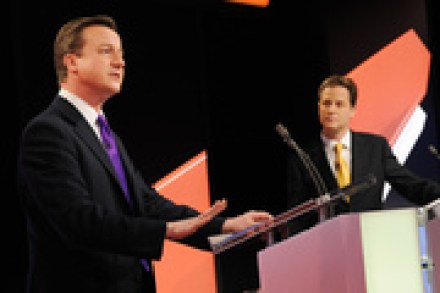
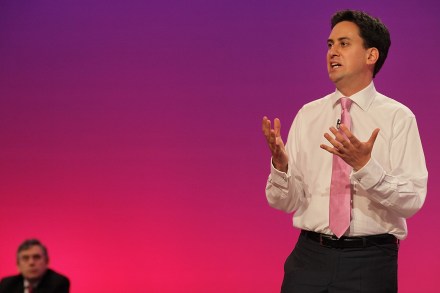
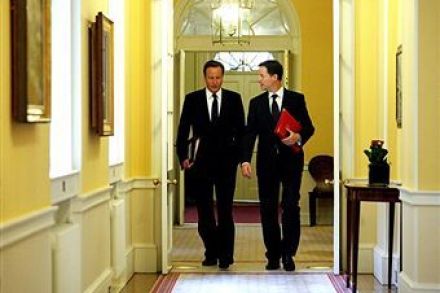
Neither Ed Miliband nor David Cameron had a good PMQs. Cameron let his irritation at questions about the appointment of his campaign photographer to a civil service post show. It was also a bit rich for him to criticise a Labour MP for asking a question scripted by the whips when Tory MPs ask patsy questions with monotonous regularity, I counted at least four in this session alone. But the regular shouts of ‘cheese, cheese’ from the Labour benches were clearly riling the Prime Minister. But it wasn’t a good session for Ed Miliband either. His delivery was rather halting and he stumbled on his words far more than he usually does. His jokes didn’t quite come off either.

PMQs live blog | 3 November 2010

From our UK edition

VERDICT: Perhaps the snappiest exchange between Cameron and Miliband so far, with both men on combative form. Miliband's charge was that, from tuition fees to child benefit, the coalition is breaking promises that it made before the election. And Cameron's counter was that he has had to take tough action to deal with the mess that Labour left behind, and that Ed Miliband has nothing to offer to that process other than kneejerk opposition. As exchanges across the dispatch box go, that's pretty standard stuff – but at least it was packaged with some wit (although little real insight) today. A score draw. 1232: And that's it. My short verdict coming up.

The tuition fees compromise

From our UK edition

Away from the mid-terms, we have the little issue of tuition fees. David Willetts will today set out the government's response to the Browne Review, and it's expected to look something like this: a £9,000 cap on fees, but universities will have to show that they are making extra provisions for poorer students if they charge over £6,000. Students would effectively be loaned the money by the state, and would start paying it back once they earn £21,000 after graduation. It's certainly a compromise arrangement, constructed with one eye on the Lib Dems and another on the universities. For Clegg's backbenchers, there's a rejection of the unlimited fees advocated by Browne, and an overall emphasis on "fairness" and on helping the less well-off into university.

Coalition 2.0

From our UK edition

Tomorrow’s announcement on university funding is a big moment for the coalition. It will show that the Conservative and Liberal Democrat leaderships have been able to come to agreement on a subject where they thought the differences were insurmountable just five months ago when they negotiated the coalition agreement. Indeed, in their months together in government, the two sides have managed to deal with two of the three issues that were too hot to handle in the coalition agreement. As I revealed in the Mail on Sunday, preparations have already begun behind the scenes to draw up a joint policy agenda for the second half of the parliament.

A day of Tory grumbles

From our UK edition

Today is one of those days when you can’t walk around the Palace of Westminster without bumping into a Tory with a grumble about the coalition’s polices. First of all, there’s massive irritation that the government has been forced into agreeing that prisoners should have the right to vote. It has revived Tory concerns about the ECHR and annoyance that the presence of the Lib Dems in the government means that nothing will be done about it. Then, there’s this Anglo-French defence agreement. Tories are, understandably, deeply suspicious of anything that smacks of giving the French a veto over the deployment of British forces.

Return of the Gord

From our UK edition

Oh look, the Old Crowd are moving in on the New Generation's patch. Not only has David Miliband broken his post-defeat silence with an engaging little article in the Mail on Sunday, but we also have news that Gordon Brown is to make his first Commons speech since the general election. That's right, after 174 paid days of, erm, indiscernible activity, Gordon will tomorrow insist that maintenance on Britain's two new aircraft carriers should be carried out on a Scottish shipyard, rather than in France. Everyone else is surprised that he didn't get that written into the contracts already. The return of the Gord throws up some questions for Ed Miliband. It's not just the speech tomorrow, but rather the release of our former Prime Minister's book on 7 December.

The Lib Dems, breaking doors in anger

From our UK edition

This one, from the Mail on Sunday, needs adding to the scrapbook: "Colchester MP Bob Russell’s fury over the Coalition’s housing benefit cuts boiled over at a stormy private meeting with the Deputy Prime Minister. To the astonishment of fellow Lib Dem MPs, it ended with Mr Russell storming out and slamming the Commons’ committee room door behind him. Witnesses said last night: ‘He took the door off its hinges.' In a bizarre twist, Mr Russell’s ally and fellow Lib Dem MP Mike Hancock - himself a fierce critic of Mr Clegg - tried to spare his colleague’s blushes by creeping back the following morning to repair the door before Commons authorities noticed it was even damaged.

The Tories rally after the Spending Review

From our UK edition

It's just one poll, but today's YouGov effort for the Sunday Times seems to underline many of the themes of recent weeks. It has the Tories on 42 percent, 5 points ahead of Labour on 37 percent, and with the Lib Dems on 13 percent. So the Spending Review – accompanied, as it has been, by rows over housing and child benefits – has not yet had a precipitous effect on the Tories' poll rating. If anything, YouGov have had the blue vote rallying since 20 October. As always we should be wary of drawing too many conclusions from the shifting landscape of opinion polls and surveys, but some of YouGov's subsidiary findings could help explain the Tories' position. First up, 72 percent of respondents back the coalition's plan to impose a cap on housing benefit.

It is when Boris comes from the right that he is a threat to Cameron

From our UK edition

The ease with which Number 10 dealt with Boris Johnson’s sally on housing benefit has revealed something important. A challenge from Boris is a threat to Cameron when Boris is vocalising the concerns of the right. But the mayor is far less dangerous when he is doing anything else. As one person close to the Tory leadership reflected to me on Friday, Boris’s interventions on Europe and 50p have caused Cameron problems because they have been immediately amplified by the right and Cameron has been conscious that most of his party agrees with Boris not him on the issue. But pretty much no one on the right agrees with Boris on housing benefit so his remarks fell on deaf ears. There is undoubtedly a space in British politics for a voice to the right of David Cameron.

Voters think the new generations look old and tired

From our UK edition

There’s an intriguing detail in the latest YouGov poll. The number of people seeing Labour as old and tired is back up to 44 percent, which is where it was before Ed Miliband became leader.   The concern for Labour must be that the youthful, vigorous optimism that Ed Miliband is trying to promote hasn’t cut through to the public yet. Admittedly it is early days. But first impressions do matter in politics. Indeed, I must admit to being slightly surprised that the Tories are still generally ahead in the polls. I thought that the spending review would push Labour into the lead.   Something that, contrary to the media perception, might be helping the Tories is the ongoing rows over housing benefit and child benefit.

Victory or defeat?

From our UK edition

What has David Cameron achieved in Brussels so far? In truth, it's fairly hard to tell. In a meeting with his European Council counterparts last night, our prime minister didn't get the "freeze or a cut [in the EU budget]" that he mentioned last weekend. But ten other countries, including France and Germany, have now allegedly hardened their resolve not to go beyond the 2.9 percent increase that they agreed back in August. A Downing Street spokesman explains that these countries will resist the usual compromise between their 2.9 percent and the European Parliament's demand for 6 percent, when the two sides meet over the next 21 days.

Some perspective on housing benefit

From our UK edition

Depending on who you read, the planned £400 a week cap on housing benefit is either comparable to Nazi concentration camps, death squads in Brazil, or ethnic cleansing in the Balkans Critics have ranged from the Mayor of London to the ultra Left. So it is worth taking a moment to get some perspective. Firstly, the general caps on housing benefit don't even impact on social tenants because they pay lower, subsidised rents, (though the £26,000 cap on the total amount of benefits per household might hit them). But for housing benefit claimants in the private sector outside London, less than 1% are affected by the cap. And even in London 9 out of 10 of private renters claiming housing benefit will be totally unaffected.

Boris v Dave, this time it’s serious

From our UK edition

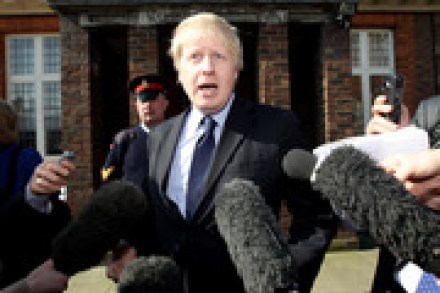
Make no mistake about it, Boris Johnson’s rhetorical assault on the coalition’s housing benefit plan is a direct challenge to David Cameron’s authority. The two best-known Conservatives in the country are now involved in a battle that only one of them can win.   Boris told BBC London this morning: "What we will not see and we will not accept any kind of Kosovo-style social cleansing of London. "On my watch, you are not going to see thousands of families evicted from the place where they have been living and have put down roots." What is infuriating the Tory machine is not only Boris’s criticisms, but the language that he is used—which makes Labour’s talk of social cleansing sound positively moderate.

PMQs live blog | 27 October 2010

From our UK edition

VERDICT: The housing benefit cuts inspired Ed Miliband's chosen attack – and he deployed it quite effectively, with none of the unclarity that we saw last week. For the most part, though, Cameron stood firm – leaning on his favourite rhetorical stick, What Would Labour Do? – and his final flurry against Ed Miliband was enough, I think, to win him this encounter on points. But don't expect this housing benefit issue to dissipate quickly. Bob Russell's question was evidence enough of how tricky this could be for the coalition. 1232: And that's it. My quick verdict shortly. 1231: Bob Russell, a Lib Dem, says that housing benefit cuts are "not a laughing matter," and urges the PM to reconsider the coalition's position.

Miliband’s stage directions

From our UK edition

Labour have sprung a leak, and it's furnishing the Times with some high-grade copy. Yesterday, the paper got their hands on an internal party memo about economic policy. Today, it's one on how Ed Miliband should deal with PMQs (£). With this week's bout only an hour-and-a-half away, here are some of the key snippets: 1. The Big Prize. "The big prize is usually to provoke the PM into appearing evasive by repeatedly failing to answer a simple question, often one that requires a simple Yes or No." 2. Cheer lines. "It's important to have a cheer line that goes down well in the chamber and can be clipped easily by the broadcasters. Mocking humour us especially useful here, especially if it strikes a chord with Tory backbenchers to silence them." 3.

Which side are you on? | 26 October 2010

From our UK edition

At last, The Guardian is reporting the grassroots rebellion in education. It has picked up on the story of Fiona Murphy who blogged on Coffee House yesterday about her trouble with the Tory-run council in Bromley. But hang on... the "grassroots revolt" of which the Guardian speaks is the councils, trying to protect their monopoly control over state schools. Here is the extract: "A flagship government policy has provoked a grassroots revolt against the coalition, with senior Conservative and Liberal Democrat councillors lining up to attack the introduction of free schools, one of education secretary Michael Gove's most cherished projects...

A Conservative council joins the secret war against England’s schools

From our UK edition

For the parents where I live who are campaigning for a better local school, the Spectator's expose on 'the secret war over England's schools' - with its description of how groups like the National Union of Teachers are attempting to stymie Michael Gove's plans for making education better - was familiar territory. The only difference here in Bromley is that it isn't left wing activists who are standing in the way of Mr Gove's reforms for better schools: it is our Conservative-run Council.   Having said earlier this year that they wanted our local school, Kelsey Park Sports College, to become an Academy - a decision that was a welcome relief for many local families - the Council is now backpedaling like crazy.

The coalition’s feel-good factor

From our UK edition

Since last week's Spending Review – and even before – the government has been operating in a toxic news environment. I mean, just consider the three main news stories that have surrounded the cuts. First, the 500,000 public sector job losses. Then, the IFS report and that single, persistent word: "regressive". And today – on the covers of the Independent and the Times – warnings that we could be dipping back into recession. Set alongside that tidal swell, the outpourings of Simon Hughes and the polling companies register as little more than sour footnotes. Even if the coalition plans to hide some of its better news, there's a clear need for it to push back against the gloom – lest it erode both public and Lib Dem support for they are doing.

Why a LibCon coalition might last beyond 2015

From our UK edition

May 2015 is an age away in political terms. But the question of what happens to the coalition after the next election is too politically interesting to be able to resist speculating on; even if this speculation is almost certainly going to be overtaken by events. Over at ConservativeHome, Paul Goodman asks if Cameron and Osborne share Francis Maude’s view that the coalition should continue after the next election even if the Tories win an outright majority. My impression is that they do. If the Tories won a majority of between 10 and 30, I’d be surprised if Cameron didn’t try and keep the coalition going. There are four main reasons why I think the Tory leadership would want to keep the Liberal Democrats in the government in these circumstances.