Conservative party

General Well-Being is back

From our UK edition

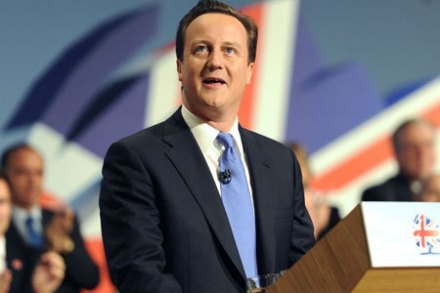
Spectators might smile wryly at the news that the government is to devise a method for tracking the well-being of the nation. This idea of General Well-Being (GWB) was common currency in the early days of the Cameron project, when the Tory leader was going all out to "detoxify the brand". But it soon hit a downturn-sized snag. Any talk of happiness might have sounded a little complacent and New Age-y in the face of job losses and bank bailouts. And so the Tories backed away from GWB, and it was relegated to little more than branding for the coffee stalls at Tory conference. It was quite a surprise to see it mentioned in the party's manifesto in April, although they did keep it on the hush, hush at the time. Yet now it's back at full volume. And the question is – why?
ConservativeHome goes global

From our UK edition

A post about the blogosphere, I know – but I thought CoffeeHousers might appreciate a link to the new ConservativeHome USA site that launched in the past hour. It is, of course, a sister site to the UK's very own ConservativeHome which, under the thoughtful editorship of Tim Montgomerie, has done so much to clarify the often hazy ground between the internet, politics and grassroots activism. Tim will, of course, be involved with the American project, but it's also got its own editorial team in the form of Ryan Streeter and Natalie Gonnella. The posts on Day One gives us a good sense of what we can expect in future: wide-ranging comment on, and analysis of, the entire US conservative movement.

Laws and the coalition

From our UK edition

David Laws’ eagerly awaited account of the coalition negotiations contains some great lines. Peter Mandelson’s declaration on being told of the Lib Dem’s desire for a mansions that ‘surely the rich have suffered enough already’ is classic. While William Hague’s description of the Conservative party as an 'an absolute monarchy, moderated by regicide’ is a candidate for the dictionary of quotations. But politically the thing that struck me about it most was what it tells us about Ed Balls. Balls had worked with Gordon Brown for years and had been one of the most ardent Brownite. Yet it was Balls who effectively pulled the plug on the idea of a Lib Lab pact when Brown was still desperate to try and make it work.

IDS shows how arguments are won

From our UK edition

For years, I have complained that the Conservatives have timidly stayed within Labour’s intellectual parameters, arguing that they need “permission” to make certain arguments and need to stay within the limits of what the public find acceptable. Such intellectual timidity confined them to opposition: they can never win, playing by Labour rules. Iain Duncan Smith is breaking free of this. It may be rash to predict it now, but I believe he is on the brink of a breakthrough in the way that welfare is regarded in Britain. This victory in a battle of ideas could be the greatest single blow against poverty in a generation. The extent of this was crystallised by Polly Toynbee in the Guardian yesterday.

The Gove reforms grow even more radical

From our UK edition

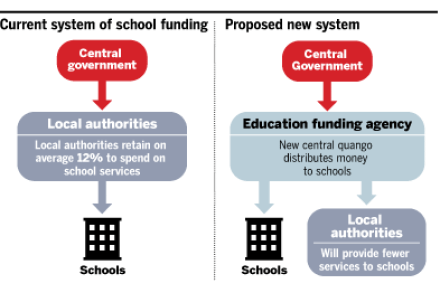
Local authorities are already doing their utmost to block the coalition's schools reforms, so just how will they respond to this story on the front of today's FT? It reveals how Michael Gove is planning to sideline local authorities from the funding of all state schools – not just free schools and academies. The idea is that state schools will get cash directly from the state, without any need for the council middlemen that currently control the system. Here's an FT graphic that captures the change: The money would be allocated to schools in proportion to the number of pupils they have, and headmasters would have much more freedom in how to spend it. This is the same simple but transformative dynamic that inspirits the rest of the Gove reforms.

The pledge divide

From our UK edition

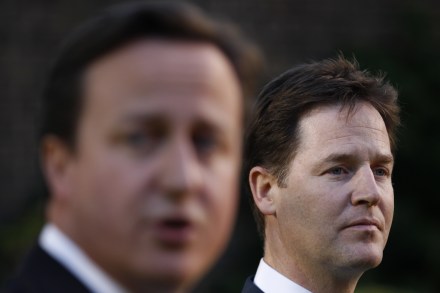
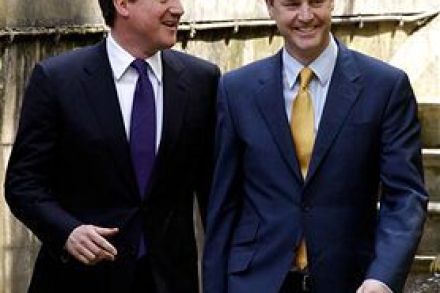
Over at the FT's Westminster blog, Alex Barker asks why it is that David Cameron's expensive personal pledge on pensioner benefits has survived the spending review while Nick Clegg's personal pledge to scrap tuition fees, which would have cost roughly the same amount, has been spectacularly ditched. As Alex argues, one reason is that Clegg himself was not particularly attached to his pledge on fees. Indeed, he had tried to change the policy several times in opposition. The other is that George Osborne, who is the Tories' chief election strategist as well as the Chancellor, is determined to protect the Cameron brand.

Ten things you need to know about the welfare White Paper

From our UK edition

I've sifted through yesterday's welfare White Paper, and thought CoffeeHousers might appreciate a ten-point guide to its contents. This is by no means the entire picture – and some of it will be familiar from past Coffee House posts – but hopefully it should capture the broad sweep of IDS's reforms: 1) The problem. Fundamentally, the issue is that there are a lot of people stuck on out-of-work benefits: around 5 million at the last count. This means different things for different groups. For the Treasury and taxpayers it contributes towards an unwieldy working-age welfare budget that has increased by 45 percent, in real terms, over the past decade – to around £80 billion.

The Lib Dems are spared by idiotic students

From our UK edition

The violence at today’s student protest is, politically, a boon to the coalition. The story now is not the Lib Dems breaking their word but the storming of Millbank. The violence will also have cost the no-fees cause much public sympathy, we don’t like attempts at aggressive direct action in this country. There are questions that need to be answered after today, why were the cops so unprepared for the protest turning violent? I crossed through the protest at lunchtime and then it was quite clear that there was potential for trouble. I’m also bemused as to why it is taking so long to put a stop to the violence and deal with those involved. Given the political environment, this might well not be the last protest to turn nasty.

The Big Society conundrum

From our UK edition

The children’s minister Tim Loughton is in danger of having ‘gaffe-prone’ become his suffix. After rather putting his foot in it at conference by suggesting that the policy George Osborne had just announced on child benefit could be revisited, he has now suggested that not even ministers know what Cameron’s big idea, the ‘Big Society’ actually is. He told a dinner last night: "The trouble is that most people don't know what the Big Society really means, least of all the unfortunate ministers who have to articulate it.” A friend of Loughton tells me that this was meant as a joke.

PMQs live blog | 10 November 2010

From our UK edition

VERDICT: Earlier today, I wrote that the coalition "has few better defenders of its cause than Nick Clegg". You wouldn't have guessed it from this PMQs performance. Harman had him on the back foot over tuition fees from the off, and he struggled to give concise, clear answers in return. A pity, because Clegg is right when he says that the coalition has a better policy than Labour's messy graduate tax – yet there was too much waffle, and too little directness, from him today. The deputy Prime Minister was better when he blazed with anger over Labour's hypocrisy. But, on the whole, this was a bout to cheer the Labour benches. 1233: And that's it. My verdict shortly.

What about Whig history?

From our UK edition

Simon Schama, who is advising the government on drawing up a new history section of the national curriculum, has an essay in The Guardian today setting out why and what children should learn about our ‘island story’. Schama highlights Thomas Becket’s clash with Henry II, the Black Death and the Peasants' Revolt, Charles the First’s execution, the establishment of the British Raj in India, the opium wars and the Irish question, as things that every school kid should be taught about. But at the risk of being too crudely Whiggish, the most important thing is surely that pupils learn how Britain became a democracy. It will help people understand the importance of their democratic rights, if they know how they were won.

The new welfare consensus

From our UK edition

The New Statesman's George Eaton has already homed in on the key passage from James Purnell's article in the Times (£) today, but it's worth repeating here. According to the former welfare minister, he pitched something like Iain Duncan Smith's Universal Credit to Gordon Brown, and the reception it received catalysed his departure from government: "Before I resigned from the Cabinet, I proposed a similar plan to Mr Brown. But he was scared that there would be losers, and his refusal to give me any answer made me think that there was no point in staying inside the Government to try to influence him." This is of more than simple historical interest, not least because it suggests why both Labour and the coalition are where they are on welfare.

Delay in Oldham is good news for the coalition

From our UK edition

The longer we go before a date is set for the Oldham East and Saddleworth general election rerun, the better it is for the coalition. This delay allows the Tories to give the Lib Dems a head start; Nick Clegg’s party can pour resources into the seat while the Tories do very little until a date is set. There will be a Tory candidate in this election, but I doubt that a Tory victory would be a cause for celebration at CCHQ or in Number 10. The Tory leadership knows that a bad result for the Lib Dems would make their coalition partners jumpy and make it harder for the coalition to govern effectively. A confident Liberal Democrat party would make Cameron’s life a lot easier than one more Tory MP.

Transparency is only half of the accountability story

From our UK edition

And the word of the day is … accountability. Or at least it's the guiding ideal behind these departmental business plans that the government is releasing. When David Cameron introduces them later he will call it a "new system of democratic accountability". The idea is that, if we know what each department is tasked with achieving, we can praise them should they succeed – or attack them when they fail. Which is all very heartening. The Tories, in particular, came to power promising to lift the bonnet on the engine of Whitehall – and they are doing just that. But transparency is only one half of the accountability story. The other is the rather more bloody, but no less crucial, business of blame.

A day of electoral positioning

From our UK edition

Away from turbulent priests and the welfare battle, there have been important changes to electoral politics today. The coalition partners will fight one another in Oldham East and Saddleworth. The seat is a three way marginal, which was number 83 on the Tories’ target list – precisely the sort of seat they’ll need to win in 2015. However, as James noted on Friday, the Liberal Democrats’ need is greater at the moment. Already, tongues are wagging that a pimpled Etonian is destined to journey north of the Watford Gap, safe in the knowledge that gallant defeat will ensure he is the next Prime Minister but three. Enter Nigel Farage, opportunistically.

Cameron the optimist

From our UK edition

Is David Cameron just too nice? There are worse accusations to levy at a politician, but it's one I have heard suggested quite a lot recently - and I have written about it in my News of the World column today. He seems to have adopted the politics of wishful thinking. There is a "zip-a-dee-do-dah strategy" and precious little contingency if things go wrong. He makes defence cuts, because he doesn't intend to go on a massive deployment (neither did Woodrow Wilson). He will make prison cuts, because he thinks - bless him - that it won't increase crime. He signs a deal with French for military co-operation, thinking they will dump the habit of 500-years and actually agree with Britain on the next major foreign policy dispute.

Is Euro-pragmatism here to stay?

From our UK edition

I'm off to Brussels, capital of the superstate, home of the EUSSR, or whatever you might want to call it. It has made me re-engage with European issues for the first time in six months. If Europe is not dead as a political issue in Britain then it is at least firmly stored in a coalition freezer, which can only be unlocked in the case of a thumping electoral for the Conservatives. But if the Tories scrape in at the next election or come up short of an outright majority,  David Cameron is likely to want the Coalition to continue. That would mean another decade of euro-pragmatism. A decade is a very long time in politics.

Toughening up on Home Affairs

From our UK edition

An intriguing argument from the Economist’s Bagehot this week: the government’s liberal prisons policy will force Coalition 2.0 to tack to the right on Home Affairs. ‘If the Lib Dems’ sway on these issues was foreseeable, so are its political dangers. One is Tory anger. Even some of the Conservative MPs who agree with the Lib Dems on control orders worry about their liberal line on crime. Behind the scenes, figures from both parties are coming together to plan “coalition 2.0”—a policy programme for the second half of the parliament. Among the rumoured Tory representatives are confirmed hawks such as Michael Gove, the education secretary, Owen Paterson, the Northern Ireland secretary, and Tim Montgomerie, a well-known blogger.

Junior Games

From our UK edition

Government allows some top-tier politicians to shine, while others lose the sheen they once had in opposition. So it has been with this Government. It has mostly been Lib Dems who have gleamed. Much can be said of Nick Clegg, Vince Cable, and Chris Huhne, but nobody will ever question the party’s ability to govern, or dismiss its front-line politicians as back-bench critics. In fact, if the Coalition lasts until 2015, the Lib Dems will have more Cabinet-level experience than the majority of the Shadow Cabinet, most of whom entered Cabinet under Gordon Brown in 2007. That will be quite a turnaround.

Strike out

From our UK edition

Spark up those Roman candles, the firefighters have called off their strike for today and tomorrow. According to the general secretary of the Fire Brigades Union (FBU), it's all because "we've listened to the concerns about public safety and we were extremely concerned about the capabilities of the private contractors being brought in to cover our strike" – which is awfully thoughtful of them, considering that they previously stoked those "concerns about public safety" by threatening to strike over Bonfire Night. Oh, and they appear to have won some concessions too: the London Fire Brigade will no longer sack any firefighters who refuse to accept contracts that include the disputed shift system.