Conservative party

The coalition’s liberal approach to sentencing could be the final straw for the middle class

From our UK edition

Today brings another couple of reminders of the coalition’s potential political problem with the middle class. In the Telegraph, Peter Oborne attacks Cameron and Osborne for a “morally disgusting” policy of targeting the middle class for an outsize share of the fiscal pain. While the Mail’s front page screams ‘What does get you locked up?’ as it details how 2,700 criminals who have more than fifty convictions were not sent to prison. Now, this is, obviously, the result of the last government’s sentencing policies. But, as the Mail points out repreatedly, this is a regime that Ken Clarke wants to make more liberal. In other words, even fewer people would be put away for the crimes they commit.

The true scale of the cuts

From our UK edition

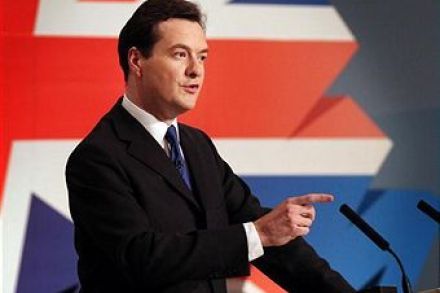
George Osborne likes to spend his weekends at Dorneywood, the chancellor’s official residence near Slough, but I doubt this one will be  particularly enjoyable. He will be burning the midnight oil as he prepares next Wednesday’s spending review. No doubt he will also be taking calls from ministerial colleagues, muttering dark threats about aircraft carriers, the arts, sport, the roads budget, overseas consulates – you name it. And just when the numbers all add up he will probably have to start all over again after discovering that No10 has  promised to save some wind turbines because Steve Hilton bumped into somebody at a drinks party.

Clegg sweetens the pill with a fairness premium

From our UK edition

Only five days to go until the spending review – and after weeks of emphasis on the cuts we're about to see, the government has today unveiled a new spending commitment. It comes courtesy of Nick Clegg: a new "fairness premium" targeted at the least well-off young people. Lib Dem Voice has full details here, but the basic point is that £7 billion will be spent, across 4 years, on programmes for disadvantaged 2 to 20 year-olds. Much of this will go towards the "pupil premium" that we've heard so much about, and which should advance school choice in the most deprived areas. Putting aside his genuine commitment to it, Clegg is facing two ways with this announcement: the public and his own party.

Labour’s economic credibility goes on tour to Brussels

From our UK edition

Bill Cash’s amendment to the EU budget bill may not have been the victory that the signatories to Douglas Carswell’s more incendiary effort hoped for, but it is significant. It is exactly in line with government policy that seeks to cap the EU budget and search for cuts. As Treasury Minister Justine Greening put it in the debate last night: ‘I will not hide from the House the Government's frustration that some of our partners - and those in EU institutions - do not seem to understand how bizarre it is, when national budgets are under such extraordinary pressure, that the EU should be immune from that.’ The EU Commission proposes a rise of 6 percent, well above inflation, whilst the EU parliament's budget committee called for a 2.

Dramatic cut in pension relief

From our UK edition

The coalition is not afraid of the moneyed classes, or Peter Mandelson's 'filty rich'. Tax relief on pension contributions is to be dramatically cut.  The allowance will be decreased from £250,000 per annum to £50,000 and the pension cap will fall from £1.8m to £1.5m and retiring workers could be taxed at 55 percent on any sum above that sum. These changes will save the Treasury £4bn per annum, mainly by limiting how much of a bonus pot or a windfall can avoid income or capital gains tax. The Telegraph describes the move as a ‘raid’ on the 'squuezed middle', which is not strictly true. The previous governnment made similar plans and this is a re-worked formula designed not to penalised middle Britain.

Boles: the coalition is David Miliband’s natural home

From our UK edition

Nick Boles is fast becoming ubiquitous. He wrote an article for this morning’s Guardian, urging Labour’s wounded Blairites to join the coalition, where ‘there is room for everyone inspired by the desire to transform the way that government works and give people more control over their lives.’ He writes: ‘If President Obama can keep Republican Robert Gates as secretary of state for defence, does Britain have to forfeit the remarkable talent of David Miliband? Can the coalition afford to do without the passionate expertise of Andrew Adonis as it completes his quest to connect Britain's great cities with high-speed rail?

Tories defying the profligate European Union

From our UK edition

Anyone who thought the new intake of Tory MPs were a bunch of automatons should take a look at the House of Commons order paper today. MPs have been asked to sign away 60 percent more of British taxpayers’ money to Brussels, in defiance of British public opinion. For years, they have done so without qualms. But the Conservatives, who were so rightly outraged at the way Labour whipped through the Lisbon Treaty, are challenging this. In an age of austerity, when we’re cutting child benefit and asking if Britain can afford to be a world-class military power, why should MPs sign off a 60 percent increase in the amount of money transferred from British taxpayers to the EU authorities?

PMQs live blog | 13 October 2010

From our UK edition

VERDICT: Well, who would have thought it? In his first PMQs performance, Ed Miliband not only put in a solid showing – but he got the better of David Cameron. I certainly don't agree with the Labour leader's central argument: that it is unfair to restrict child benefit. But he put his point across in measured, reasonable tones – and Cameron seemed flustered by comparison, as he wagged on about the size of the deficit. Make no mistake, the argument and the public's sympathies will unwind themselves over the course of the entire Parliament. They will not be resolved in one session of PMQs. But in presentational terms, MiliE will have the more flattering clips on the news later – which is more than he could have expected going into today.

An unlikely alliance against Murdoch

From our UK edition

The Guardian, the Daily Telegraph, the Daily Mail, the Daily Mirror, Channel Four, British Telecom and the BBC have united in common cause: stop Rupert Murdoch. This has to be The Digger’s greatest achievement: not since Waterloo has more motley a coalition been scrambled to resist a ravening tyrant. The signatories have written a letter to Vince Cable, who is to adjudge if Murdoch’s proposed full ownership of BSkyB will endanger media plurality. In reality, this hostile alliance is about more than plurality; it is a battle for the control of the news in a digital future.

The AV rebels change tack

From our UK edition

A little snippet from today's Times (£) that is worth noting down: "Tory rebels will this week lift their threat to the date of next year's proposed referendum on voting changes – because they believe May 5 offers the best chance of stopping the alternative vote (AV) system. That date coincides with the council elections in Scotland, Wales and most of England, and was thought likely to boost the 'yes' vote for replacing first-past-the-post general elections. Nick Clegg insists that the Lib Dems will not budge on the date. But a tactical rethink will see many AV sceptics wave it through when the Bill comes to the floor of the Commons this week.

Reforming incapacity benefit will not be easy – but it is crucial

From our UK edition

'500,000 to lose sick pay as welfare reforms bite'. Those words boom from the front-page of the Times this morning – and they're based on an article by Iain Duncan Smith (£) in which he admits that some 23 percent of the country's 2.1 million Incapacity Benefit claimants could be found fit for work. This, it is said, should save the Exchequer some £4 billion. The numbers are striking enough, but the policy behind them shouldn't be surprising at all. Even the last Labour government intended to reverse a political deceit that they had nurtured, but which was birthed during the Thatcher years: the artificial swelling of the sickness rolls. And the coalition has long planned to put rocket boosters under that process.

Vince Cable’s discomfort is shared by the coalition

From our UK edition

The trouble with holding a ministerial debate in public is that, when it comes to the crunch, it's obvious who the winners and losers are. So it is with Vince Cable and higher education funding. A couple of months ago, the business secretary tap-danced onto the stage with a (problematic) plan for a new graduate tax. Now, it seems clear that the Browne Review will reject his advice (£) in favour of increasing tuition fees. And so Cable has had to send out an excruciating email explaining why a graduate tax was never really a good idea in the first place. After the flip comes the flop, so to speak. But this isn't just about Cable's embarrassment.

Alan Johnson, from affable to aggressive  

From our UK edition

If Alan Johnson continues as he has started, then he may be a surlier, snarlier shadow chancellor than many of us expected. He's got an article in today's News of the World and an interview in The Observer – and, in both, he's on unusually combative form. Osborne's cuts are labelled as "deep and irresponsible," and the VAT rise is highlighted as a measure that will affect "those on middle and low incomes the most." Johnson even claims, with Balls-like stridency, that the coalition could drag us screaming into double-dip. And there's more. With a disingenuousness that would impress even Gordon Brown, Johnson glowers that the coalition's cuts are deeper than those during the Thatcher years. Depending on which metric you use, that's true enough.

The consequences of the child benefit row

From our UK edition

"You only get cut through when there’s a row," one Tory observed to me on Friday as we discussed the anger that had followed George Osborne’s announcement on child benefit. So in one way, the Tories are not unhappy with the fact that this story is still rumbling on. It is imprinting on the public mind that the Tories have hit the well-off. This is in advance of a spending review that is bound to hit hardest those people and regions that are most dependent on the state. Following the media coverage of the child benefit row, it will be much harder for Labour to make the charge that the cuts are socially divisive stick. It really does appear that "we are all in this together."   But there are two things that do worry the Tories about the row.

From the archives: Entering the ERM

From our UK edition

It's twenty years, to the day, since the UK joined the European Exchange Rate Mechanism – a decision that would, of course, culminate in our withdrawal on Black Wednesday, 16 September, 1992. Subsequent years of strong growth placed those events in a fresh context, but here's The Spectator's take from 1990: The dangers of stageism, The Spectator, 13 October 1990 Give the European federalists and inch, and they will take a kilometre. Commenting on Britain's entry into the Exchange Rate Mechanism of the EMS, Sir Leon Brittan claimed that 'Britain has begun an inevitable move towards joining a full European Monetary System, including a single currency'. And the Guardian, which now outstrips even the Independent in Euro-enthusiasm, pronounced as follows: 'Be clear.

A cul-de-sac of Gordon Brown’s making

From our UK edition

Earlier in the week, Liam Fox gaily described the Prime Minister as his ‘closest ally’ – a statement which aroused a little cynicism. But it seems that Fox was not exaggerating. According to the FT, Cameron now backs the navy’s grand blue-water strategy. Cameron’s about turn is striking: the last time the National Security Council convened he supported David Richards (he still does to an extent, pledging that army troop numbers will not be cut). The strategic arguments have not changed, which suggests that the politics has. Fox’s letter was one thing, the Clyde shipyards another.

Cameron sells the Big Society to the public sector

From our UK edition

David Cameron clearly wants us to waltz into the weekend with the Big Society on our minds – so he's written an article on the idea for the Sun. It rattles through all the usual words and phrases, such as "responsibility" and "people power", but it strikes me how he applies them just as much to the public sector as to the general public. This is something that he did in his conference speech, describing the "Big Society spirit" of a group of nurses: "It's the spirit that I saw in a group of NHS maternity nurses in my own constituency, increasingly frustrated by the way they were managed and handled, who wanted to set up a co-op to use their own expertise, their ideas, their contacts to provide a better serice for the mums in their area.

Osborne has a laid a trap

From our UK edition

One of the most intriguing questions about the decision to take child benefit away from households with a higher rate taxpayer in them is whether it marks the beginning of the end for universal benefits. The quotes today from Michael Fallon, the Tory vice-chairman, certainly suggest that it does. Fallon ridicules Ed Miliband with the line: “He wants to tax the poor to give benefits to the better off.” Now, if you accept that the poor are currently being taxed to provide child benefits for the rich (a slight exaggeration given that higher rate taxpayers contribute far more than they take out in services) then this argument applies with equal force to all other universal benefits.

The battle for the low-paid working class

From our UK edition

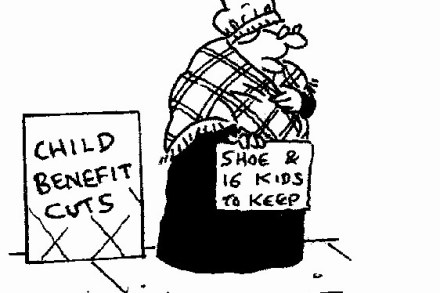
  Should families on welfare limit the number of babies they have? Jeremy Hunt suggested so last night - kicking off a debate fuelled by our disclosure in today’s Spectator about just how many out-of-work claimants have 6, 7 and 8+ children. The moral argument is pretty clear. Before a worker wants to expand his family, he usually thinks about whether he can afford it. It’s far from uncommon to hear people say that they’d like, for example, three kids - but this brings with it a certain financial requirement (size of house, car, etc) which is prohibitive (and far bigger than can be offset by child benefit). Yet the reverse financial incentives exist for parents on benefits. The more children they have, the more the state gives you.