Conservative party

PMQs live blog | 8 December 2010

From our UK edition

VERDICT: Tuition fees, tuition fees, tuition fees. Ed Miliband used only one weapon from his armoury today – but it served him unexpectedly well. The Labour leader scraped a contest that, as usual, offered far more heat than light. His attacks were slightly more cutting, his one-liners that little bit more memorable, and it was all the more remarkable given his dreadful performance seven days ago. It wasn't that Cameron performed badly. The PM rightly – and, at times, effectively – pointed out Labour's hypocrisy on this issue. But it all seemed a little flat, as though he was reading from a script that had only just been handed to him. In the end, this was one to cheer the Labour benches, and clear some of the fallout from last week.

The Sun gives Clarke a kicking

From our UK edition

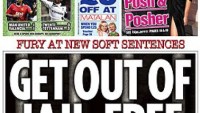
It may not be The Sun wot won or lost the last election, but its readers did swing heavily from Labour to the Tories and, even, to the Lib Dems. Which is why No.10 will not be untroubled by the paper's cover today. "Get out of jail free," it blasts, marking what Tim Montgomerie calls the "beginning [of] a campaign against Ken Clarke's prisons policy." And it doesn't get any kinder inside. Their editorial on the issue ends, "Mr Clarke and Mr Cameron owe Britain an explanation." It captures a strange split in the government's approach to crime. When it comes to catching crooks, the coalition is putting forward policies – such as elected police commissioners – that will go some way to ensuring the public get what they want.

How far our schools have fallen

From our UK edition

Comparing GCSE or A-Level results to previous years is a meaningless exercise. Leaving aside all the arguments about whether or not these exams are getting easier, it doesn’t much matter if children today are doing better academically than their peers a generation ago. What does matter is how they are doing in comparison to children in other countries, the people they’ll be competing with in the global marketplace.   Today’s PISA rankings, the OECD’s comparison of education standards, makes for depressing reading on this front. England has fallen from 7th in reading in 2000 to 25th today, from 8th to 27th in maths and 4th to 16th in science.

Some framework for the prisons debate

From our UK edition

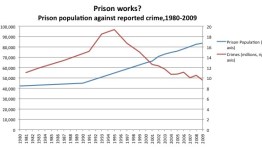
I thought that CoffeeHousers might appreciate a few graphs to steer them around the prisons debate. It's by no means a complete overview of the issue, but just three of the trends that hover over Ken Clarke's proposals: 1. Rising prison population, falling crime Well, that's striking enough. Expect, as any fule know, correlation doesn't necessarily imply causation – which is to say, the fall in crime could be due to something other than the rise in prisoners. Some put it down to improving economic conditions. Others mention deterrents such as CCTV. But those correlations can barely be hardened into a cause, either. So, all rather inconclusive.

Bercow vs McLoughlin

From our UK edition

Iain Dale has news of a remarkable exchange between the Speaker and the Chief Whip last night (see from 22:16:30 in the video above). The coalition were attempting to pass a motion limiting the debate on tuition fees to three hours. Labour was trying to prevent this.   The Labour front bench shouted ‘object’ at the wrong moment so Bercow, with a broad grin on his face, coached them through it. At which point, Patrick McLoughlin heckled, ‘give them an indication, won’t you?’ McLoughlin then goes to leave the Chamber. At which point, Bercow explodes, wagging his finger and ordering the Chief Whip to remain in the Chamber.   This row won’t have done anything for Bercow’s standing on the Tory side of the House.

Now the Tories have an issue to get stuck into…

From our UK edition

While Nick Clegg battles on the tuition fee front, another internal conflict breaks out for the coalition today: prisons. And rather than yellow-on-yellow, this one is strictly blue-on-blue. On one side, you've got Ken Clarke, who is controversially proposing a raft of measures for reducing the prison population. On the other, Tory figures like Michael Howard who insist that prison works – and that there should be more of it. Philip Davies, the Tory MP for Shipley, even told Radio 4 this morning that millions of Conservative voters would be disappointed by the coalition's plans.

The Lib Dem rebels make themselves heard

From our UK edition

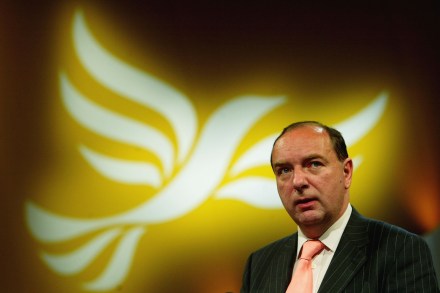
Here in Westminster we are all brushing up on the names of Lib Dem PPSs, as we try and work out who might quit the payroll vote over fees. The latest is that Michael Crockart, PPS to Michael Moore – who is himself the most anonymous Lib Dem Cabinet minister – looks set to walk. But one of the better known Lib Dem ministers has now put his head above the parapet. Norman Baker has told the BBC that quitting over fees is one ‘option’ but he hasn’t yet made up his mind. (Oddly enough, these comments seem to have been made on the South East edition of the Politics Show on Sunday, but only just reported).   Baker has always been a maverick.

The Passion of Nick Clegg

From our UK edition

You almost feel sorry for Nick Clegg this week, with the tuition fees vote in prospect. Being hated is difficult for LibDems because they didn’t expect it. Not so with the Tories. As a conservative, you usually realise early on that you're going to be a small fish swimming against the current of fashionable received wisdom – and that will involve various tribulations. Like having to persuade your non-political friends that you do not advocate slaughter of the firstborn, and that there is a difference between believing in empowering people, and wanting to let the devil take the hindmost. If you turn up to the Islington Conservative Carol Concert (as Eric Pickles is doing), then you brace yourself for protesters outside it (as there will be).

The making of the coalition

From our UK edition

David Cameron was despondent on the evening of 10 May. Although the election result was pretty much as he had predicted privately, he feared that his ‘big, open and comprehensive offer’ of coalition with the Liberal Democrats was about to be rejected in favour of a deal with Labour. When we talked that night he feared another spell in opposition, and he ended by suggesting I went into the office the next day since he would have time on his hands. But as we spoke, the Lib Dem negotiating team was reporting back to Nick Clegg on another disastrous set of discussions with Labour, ensuring that long-held hopes of the so-called ‘progressive alliance’ were shrivelling by the hour. Even Vince Cable accepted the reality of the situation.

Who got good value-for-money in the general election?

From our UK edition

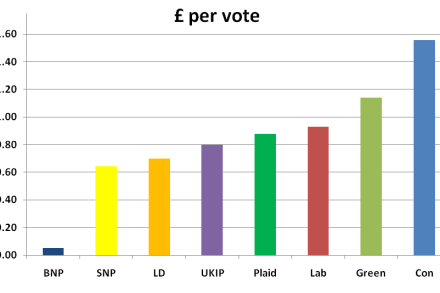
Coffee House has wrung today's party expenditure figures through the calculator to produce the colourful graphs below. As the headings suggest, they show how much was spent by each party* for every individual vote and seat they won in the general election: *That is, each party that received over 100,000 votes. Excluding Northern Ireland-based parties.

Uncharitable action

From our UK edition

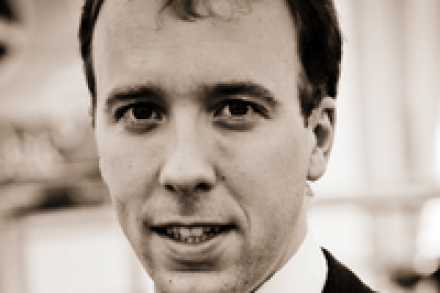
After CoffeeHouse raised a virtual eyebrow and a few questions about the behaviour of War on Want and the Jubilee Debt Campaign, Tory MP Matthew Hancock has written to the Charity Commission asking for an investigation into their status: "Quite apart from the issue over whether a charity should support an organisation that seeks to disrupt the operations of UK companies, I also believe that the charities’ support of UK Uncut clearly appears to breach Charity Commission guidance on political activity." Let us see what Dame Suzie Leather, the Chairman of Charity Commission, thinks.

Leaked embassy cable: what the Americans thought of Thatcher

From our UK edition

Forget the children of Thatcher, here's what the Americans were saying about the Iron Lady herself when she became Tory party leader. The source is a confidential cable from the American Embassy in London to the US State Department, dated 16 February 1975, and referenced in Claire Berlinski's book There is No Alternative: Subject: Margaret Thatcher: Some First Impressions 1. We understand Department is providing Secretary with biographic data on Margaret Thatcher prior to his meeting with her February 18, Here are our initial impressions of Britain's newest political star. 2. Margaret Thatcher has blazed into national prominence almost literally from out of nowhere.

Nothing Miliband says can rain on Mr Confident’s parade

From our UK edition

Back from Zurich, where he’s been helping FIFA determine the winner of the world’s greatest bribery festival, Cameron was in hearty form at PMQs today. He faced Ed Miliband who looks increasingly like the life and soul of the funeral. His party is riding high in the polls – but only when he’s away. As soon as he pops his head back around the door a groan of misery goes up and his rating collapses. Earlier this week the OBR gave an upbeat assessment of the economy so Ed sent his bad-news beavers to sift through it for signs of toxicity. They couldn’t find much. Jobless totals are to rise. But only a bit. The economy will grow reluctantly. But not that reluctantly. We’re faring worse than some of our rivals, and better than others.

PMQs live blog | 1 December 2010

From our UK edition

VERDICT: A freewheeling, swashbuckling sort of performance from Cameron today, that was encapsulated by a single line: "I'd rather be a Child of Thatcher than a Son of Brown". Sure, that may not go down too well with lefty Lib Dems nor, indeed, many Scottish voters. But, in the context of PMQs, it was a rapier response to Ed Miliband's sclerotic lines of questioning. Why the Labour leader chose to completely ignore today's Mervyn King quotes, and sift unpersuasively through the footnotes of the OBR report, I'm not sure. In any case, the plan didn't work at all. This was yet another PMQs which generated more heat than light, but Miliband was the only participant who got burnt.  1233: And that's it. My quick verdict shortly.

The Lib Dems need to get their act together on tuition fees

From our UK edition

There have been a huge amount of police out in Westminster today. After being caught off-guard by the student demo a few weeks back, the cops are now leaving nothing to chance.   But if the police have now got their act together, the same cannot be said of the Liberal Democrats. They are currently considering whipping their MPs to abstain on tuition fees despite the fact that the government’s policy is one that has been crafted by a Lib Dem Secretary of State, Vince Cable, and a Tory Minister of State, David Willetts.   If the Lib Dems were to abstain, it would play to the worst stereotypes of the party. They would be derided as ditherers of the first degree, incapable of taking a tough decision.

The money that didn’t swing the election

From our UK edition

Before the election, the Tories used to regularly, and with a certain justification, complain about how the vast majority of money that Peter Mandelson’s department was dishing out to businesses via the Strategic Investment Fund went to those based in Labour constituencies. Not a single Tory-held seat benefitted from this £601.5 million of spending. Indeed, 84 percent of the constituencies that benefitted from this money were Labour at the time. But new research on the election result shows that this money doesn’t seem to have made voters much more loyal to Labour. In the 25 seats that benefitted from the fund the swing against Labour was 12 percent. This is only marginally smaller than the 14 percent swing against Labour nationally.

Osborne airs the Tories’ election message

From our UK edition

George Osborne’s autumn statement previewed what I suspect will be the coalition, or at least the Conservatives, re-election message. ‘This government has taken Britain out of the financial danger zone and set our economy on the path to recovery.’   Today’s OBR forecast was a boon for the Chancellor. It suggests that there won’t be a double-dip recession, as his critics suggested there would be. The improved economic numbers allowed him to come to the House and declare that the deficit reduction ‘plan is working’, and that already the coalition has saved the country £19 billion in debt interest. Alan Johnson was his usual self in response.

Osborne saves his glad tidings for another day

From our UK edition

Courtesy of Paul Waugh and the Standard, the OBR projects there to be a £6bn budget surplus by 2015-16. There was no fanfare to herald this in George Osborne’s statement, which was a litany of dirge-like thanksgiving for catastrophe averted. The Treasury is now describing the figure as being 'within the margin of error’, which is fluent Sir Humphrey-speak. The Standard’s discovery is another example of the government deliberately hiding good economic news - in what Fraser terms Osborne's Paul Daniels Act. Now why, I wonder, would a self-confessed tactical obsessive, who just happens to be the Chancellor of the Exchequer, be doing that?