Conservative party

An 80 percent elected Lords would not be a Lib Dem triumph

From our UK edition

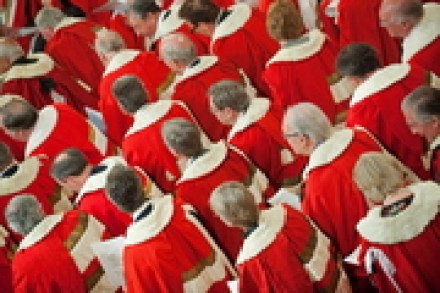
The Lib Dem manifesto committed the party to a fully elected House of Lords. The Tory manifesto talked about a ‘mainly-elected’ second chamber and in 2007 David Cameron voted for ‘the other place’ to be 80 percent elected (interestingly, George Osborne voted for a fully elected Lords). The coalition agreement committed the government to a ‘wholly or mainly elected upper chamber’. So it is hard to see how a Lords that retained a twenty percent appointed element could be portrayed as a major Lib Dem triumph as, according to today’s Guardian, the coalition wants. There has been talk in Westminster that Clegg’s consolation prize if the AV referendum is defeated will be a fully elected Lords, a long-standing Liberal aim.
The momentum shifts

From our UK edition

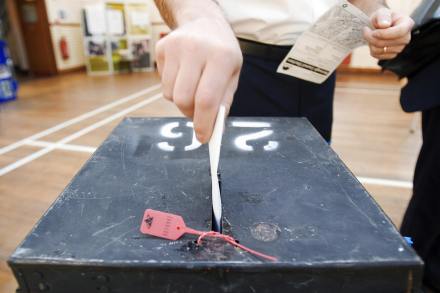
Yesterday’s announcement that 114 Labour MPs, including 5 shadow cabinet ministers, will be voting ‘No’ in next year’s Alternative Vote referendum isn’t exactly a ‘game changer’. But it has certainly shifted the terms of debate within the Labour party. Over the past few weeks a perception had been developing that adoption of the AV system, whilst not generating unparalleled excitement and passion within Labour ranks, was at least becoming the line to take. That perception has now changed. Labour’s internal stance on the issue is important. Labour supporters effectively represent the referendum’s ‘floating voters’.

Ed Miliband’s party reforms are purely presentational

From our UK edition

Ed Miliband’s proposal to cap party donations at £500 – thereby restraining the huge one-off union payments that sustain Labour – certainly looks radical enough. But, as any fule kno, surface appearances can be deceptive. As Jim Pickard explains in an insightful post over at the FT, the result would be a system that affects the other parties far more than it does Labour and their union support. The trick is crystallised by this passage from the original Independent report: “One reform option would be to treat Labour’s income from union members who pay the political levy as individual donations. This helps to fund the party’s day-to-day spending.

The final sting

From our UK edition

It's Christmas Eve, and the Daily Telegraph have wrapped up their sting operation in time for tomorrow. The final victims are the Foreign Office minister Jeremy Browne and the children's minister Sarah Teather. As it happens, Teather gets off without blemishing her copybook: her greatest indiscretion is to claim that Michael Gove is "deeply relieved" to be in coalition, as it means more funding for schools. Browne, though, is a touch more forthright: he says that Tory immigration policy is "harsh" and "uncharitable," but that Lib Dem involvement will provoke a "more enlightened" outcome. He adds that the Tories' EU grouping contains parties that "are quite nutty and that's an embarrassment to them.

Nick Clegg’s balancing act

From our UK edition

Today’s Lib Dem revelations are of the embarrassing, but not explosive, variety. David Heath, the deputy leader of the House, and Norman Baker, the transport minister, hypocritically say they are against tuition fees, despite having voted to let universities charge fees of up to £9,000. Baker also, crassly, compares himself to Helen Suzman, the anti-apartheid campaigner, working from within to change the system. But, beyond that, the remarks are what you’d expect a Lib Dem MP to say to a party supporter complaining about various Tory members of the government. I suspect Nick Clegg will be slightly more worried about Adrian Sanders, the MP for Torbay, issuing a broadside against the Lib Dem leadership. Sanders accuses Clegg & Co.

Paid to deliver

From our UK edition

Payments by results is the key to innovation in the public sector. It will help transform public services from something delivered by a state monopoly into being provided by a variety of suppliers who compete for state funding with best practice rewarded. The work programme to move the unemployed off benefits and back into work – outlined by Chris Grayling today –  is the biggest move to payments by results we have seen in this country. Groups can be paid up to £14,000 for moving the long-term unemployed permanently back into work. This should ensure that groups have an incentive to tailor their programmes to the individual rather than relying on a top-down, centralised model.

The political year in ten videos

From our UK edition

With Westminster winding down for Christmas, and Coffee House with it, it's probably time to start looking back on the year in politics. In which case, here's an opener: a chronological selection of ten videos that capture the some of the glories, iniquities and embarrassments of 2010. If CoffeeHousers have any alternative suggestions, then just shout out in the comments section, and we can add them to the bottom of this post. Here goes: 1.Terror on Downing St: The Movie A Taiwanese news report about the bullying allegations made against Brown in Andrew Rawnsley's book. The computer animations are astonishing, to say the least: 2. Gordon Brown calls the election (and the sound fails him) 3.

Grim parallels with Germany for Nick Clegg?

From our UK edition

Germany is one of the few countries that Nick Clegg has been able to look to for tips on how to be a successful Liberal party in coalition with a larger Conservative party. In 2006, Guido Westerwelle even took a delegation of Free Democrats to a Lib Dem frontbench meeting. Coffee House once predicted that, if the AV referendum was won, Clegg could one day become Britain's Hans-Dietrich Genscher, a permanent powerbroker. The parties are of course different in many ways. The Free Democrats are decidedly more pro-market and pro-business than the Liberal Democrats. They also have a lot more experience of government. Before the last election, the Free Democrats were part of Helmut Kohl's governments until 1998.

Minor indiscretions

From our UK edition

The Telegraph’s latest Lib Dem revelations are embarrassing for the ministers concerned, but won’t cause the coalition much trouble. Ed Davey is caught being critical of the announcement to take child benefit away from higher-rate taxpayers and expressing concerns about the changes to housing benefit. Michael Moore, the Scottish Secretary, is captured expressing regret about the Lib Dem u-turn on tuition fees and saying he couldn’t work with Tories like Liam Fox "for very long." Steve Webb, the highly numerate pensions minister, was trapped into revealing that he had written to the Chancellor about the child benefit changes because "the details aren’t right." There are, the Telegraph tells us, more of these revelations to come.

Broken Cable

From our UK edition

To understand why Vince Cable survived today one has to understand the dynamics of the coalition. The Liberal Democrat rank and file have had to swallow a lot recently, but the idea that one of their Cabinet ministers was going to be moved for being rude about Rupert Murdoch would have been too much to bear. The backlash to shunting Cable sideways would have destabilised the coalition, so he stayed in place. But Cable tonight is a much diminished figure. He has been shown to be eager to be indiscrete, to be overly keen to air the coalition’s dirty laundry in public.

Cable to remain as Business Secretary, but with diminished responsibilities

From our UK edition

1750: Here's the Downing Street statement: "Following comments made by Vince Cable to the Daily Telegraph, the prime minister has decided that he will play no further part in the decision over News Corporation's proposed takeover of BSkyB. In addition, all responsibility for competition and policy issues relating to media, broadcasting, digital and telecoms sectors will be transferred immediately to the secretary of state for culture, media and sport. This includes full responsibility for OFCOM's activities in these areas. The prime minister is clear that Mr Cable's comments were totally unacceptable and inappropriate.

Cable waltzes into trouble with an attack on Murdoch

From our UK edition

Those choppy waters that I mentioned earlier? They've just become perilous for Vince Cable. The BBC's Robert Peston has an extract from the Telegraph tapes that was omitted from the paper's coverage – and it is revelatory stuff. In it, the Business Secretary discusses Rupert Murdoch's bid to take majority control of BSkyB, and he drops this particular line: "And I don't know if you have been following what has been happening with the Murdoch press, where I have declared war on Mr Murdoch and I think we are going to win." Declaring war on Rupert Murdoch – and declaring that you're declaring war – may be inadvisable for most politicians.

Cameron and Clegg play the expectations game

From our UK edition

You know the drill by know: a Cameron and Clegg joint press-conference, so plenty of easy bonhomie and political japery. And today was no different. The Lib Dem leader set the tone with his opening gag, aimed at Vince Cable: "I haven't seen as many journalists in one room since my constituency surgery." After that, it was pretty much a gag a minute. Underneath all that, though, was some serious business. Cable came up ("very apologetic," apparently), along with his claims about Winter Fuel Allowance ("not true"). But, as Iain Martin has noted, the most intriguing moment was when Cameron claimed only that he "expects" the Tories and Lib Dems to fight as separate parties at the next election. Obviously, that falls some way short of a guarantee that they will.

A tale of two quads

From our UK edition

There could barely be a starker contrast between Danny Alexander's interview with the FT today and the, ahem, Cableleaks. Unlike his fellow Lib Demmer, the Treasury Secretary knew that he was speaking to a journalist – and he keeps well within the lines when discussing the coalition. "My impression," he says, "is that the Liberal Democrats support the coalition. People knew the first couple of years would be extremely tough." Alexander saves his most enthusiastic rhetoric for the quad: the group of four ministers – David Cameron, George Osborne, Nick Clegg and himself – who met regularly during the spending review period to decide where the cuts would fall. As he puts it, "it was a very effective way of making sure the government is joined up".

The coming war between the coalition and the councils

From our UK edition

Cameron vs the councils may well be the most vicious political battle of 2011 – and one I preview in my News of the World column (£) today. It comes in four stages. First was last week, when the increasingly impressive Eric Pickles said he wanted a 27 percent cut in funding over four years. Grant Shapps weighed in behind him – saying that even 8.9 percent in a year (the maximum cut facing councils) was do-able without any cuts in frontline services. The councils, predictably, said it is not possible. And the threats have started. The strategy amounts to nothing less than a human shield strategy. "If you make us cut," they say, "then we'll turn off street lights, or sack lollipop men" (both real examples).

Miliband the Monk has more bleak poll numbers to contemplate

From our UK edition

And the award for quotation of the day goes to the unnamed Labour MP who says, in the Sunday Times (£), of Ed Miliband: "We've got a new nickname for him: the monk, because he wants two years of quiet contemplation to work out what he's going to do."  And second prize goes to another Labour MP, quoted in the same article, for this: "I give him 18 months. Tops." Words alone may not hurt Miliband, however acidic they are – but throw in another set of poor poll ratings for the Labour leader, and he is rather limping towards next month's 100 day milestone. Today's YouGov poll has a 29-44 split between those who think he is doing well and those who think he is doing badly.

Cable hopes to generate light from heat

From our UK edition

First Clegg, now Cable – the Lib Dems really are putting their all into this year-end attack on the bankers. In an interview with the Sunday Times (£) today, the Business Secretary speaks unequivocally and with some zeal. "We've got to…start shining a light onto what's actually going on at the top of the leading banking institutions," he says, "If you keep people in the dark, you grow poisonous fungus." And just in case you were wondering which half of the coalition is wielding the anti-fungal torchlight, Cable makes sure to add that, "standing up to militant bankers is probably more difficult for [the Tories]." The subtext: we took on the students, you've got to do this one for us. Question is, how much can actually be done?

High Court rejects temporary immigration cap

From our UK edition

The High Court has just declared the government's temporary cap on non-EU immigration is unlawful. Its ground was that the cap was not introduced with proper parliamentary scrutiny. However, the annual cap, which will not be in place until April next year, is not affected by this decision. But without a temporary cap there'll be a spike in applications as people try and beat the cap. It'll be fascinating to see how the PM and the Home Secretary respond to this ruling. At the moment, the government is playing it softly, softly. But there are Tories who think that the government cannot just allow a key part of its flagship immigration policy to be struck down by the courts. The combination of judges and immigration is a red rag to large sections of the Tory party.