Conservative party

Ed Miliband by numbers, April edition

It’s just a single poll, sure — but Ipsos MORI’s latest is still fairly eye-catching stuff. And this is why: it has the Tories level with Labour for the first time since October. Anthony Wells serves up a pinch of salt over at UK Polling Report, saying that this “unusual” result is most likely down to the weightings that are used. But, technicalities aside, any poll that puts the Tories close to Labour, at this stage in the political cycle, is going to be greeted cheerily by Cameron & Co. – and less so by Team Miliband. It’s not all bad news for Ed Miliband, though. His personal ratings have

The NHS furore rumbles on

Another story to sour Andrew Lansley’s cornflakes this morning: the King’s Fund has released a “monitoring report” into the NHS which highlights, among other things, that hospital waiting times are at a 3-year high. The figures they have used are available on the Department of Health website — but unshackled from Excel files, and transcribed into graph form (see above, click for a larger version), they are now, it seems, a discussion point. The Today Programme tried to bait a couple of NHS chieftains on the matter earlier. The worst they could extract from either of them was that, “[waiting times] haven’t got massively longer now, but people are worried

Labour are drawing the wrong lessons from America

The global debate about how we live within our means is moving fast. I spent a week in Washington while Congress and the President hammered out their deal on this year’s budget. The deal was significant because all sides agreed on the need to cut spending now. After days of brinkmanship, they agreed to £38 billion in-year cuts. Significant, perhaps, because America has now started to tackle its huge deficit. But everyone agreed it is a small downpayment ahead of a much bigger debate to come.   What’s fascinating for us here is that President Obama’s proposals are to cut the deficit slightly faster than we are here. Congress would

The Odd Couples

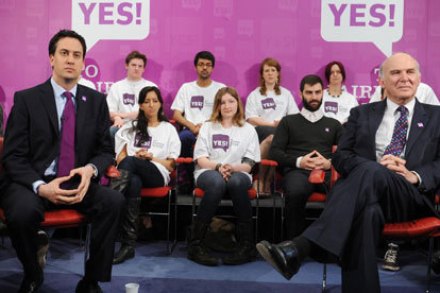
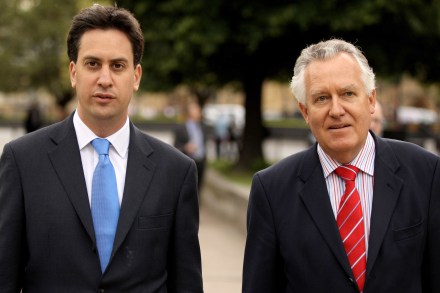
It must be Jack Lemmon and Walter Matthau season at the Commons’ film club. A string of odd political couples has stalked stages across the land this morning, supposedly pronouncing the merits or demerits of the alternative vote. David Cameron and John Reid were the oddest: the Prime Minister’s well-heeled insouciance contrasting with his lordship’s winking Glaswegian charm. It’s good fun, without being hugely constructive. Cameron and Reid joked that they agreed on nothing beyond FPTP, before embarking on a distended muse about party politics and that old canard ‘Britishness’. Things were little better for Ed Miliband, who spent a large portion of his conference listening to Vince Cable explain

How the coalition plans to recover

This morning’s battle of the political odd couples shows the dangerous direction in which the AV referendum is going for the coalition. The Yes campaign are becoming ever closer to making explicit the argument that a yes vote is the best way to keep the Tories out. For their part, the No side are continuing to hammer the compromises of coalition and the unfairness of the party in third place determining the result. In other words, no more Lib Dems in government. These campaign strategies mean that the result of the referendum will be seen as a decisive rejection of one side or other of the coalition. This is precisely

Pickles wins

Eric Pickles has been fighting councils who publish newspapers to celebrate their exploits. The government has used a combination of political pressure and legislation to curtail these ‘Pravdas’. Most offending councils have maintained their resistance, but Lambeth has relented. Its freesheet, Lambeth Life, cost £500,000 to produce last year. The Spectator submitted freedom of information requests to examine the paper’s accounts and a list of staff. Lambeth’s FoI officers replied: ‘4 people used to work on the Lambeth Life newspaper, an editor, journalist, sales manager and a designer. Although due to changes in the publicity code for local Government, the paper is ceased to print in March.’ It’s a small

Clegg breaks the mould

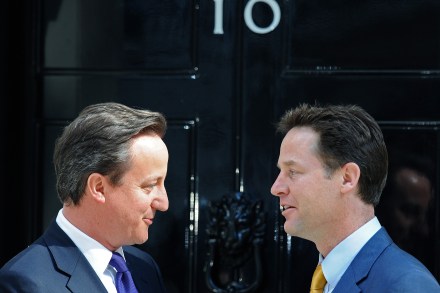
For weeks now, the genteel coalition has been getting grubbier. Today the Deputy Prime Minister cut loose and went into campaign mode as the leader of the Liberal Democrats. With both eyes on preserving his party’s loosening roots in local government, he assaulted (£) Conservative and Labour councils for cutting services. Clegg was not assisted by the more prominent Lib Dems in local government: the ubiquitous councillor Richard Kemp, the Lib Dems’ chief at the Local Government Association, asserted, almost with a note of relish, that the party is going to get a ‘kicking’. It probably will. But, as James argues, Clegg’s immediate concern after 5 May will be to

Slippery Jack

A mad, muscular Sally Bercow cavorts on the Commons chair, diminutive husband on her knee, his features impish. With a few scratches of the nib, the Independent’s merciless Dan Brown, in his cover design for this biography, passes judgment more viciously than Bobby Friedman manages over the next 250 often unexciting pages. The book is not entirely without merit. It is earnest in the manner of a schoolgirl’s essay. There are not too many spelling mistakes. The author has plainly made scores of telephone calls to old acquaintances of the man we must now, revoltingly, call Mr Speaker. Friedman deserves a B-plus for effort. His book is not, however, as

The coalition can’t go on together with suspicious minds

Vince Cable’s attack on the PM’s speech today is just the latest elbow to be thrown in what has been a fractious few weeks for the coalition. The immediate cause of these rows has been the need for the Lib Dems to assert their distinctiveness before the May elections and tensions over the AV referendum. The Lib Dems, who feel that their leader is being ‘swiftboated’ by the Tory-funded No campaign, have been increasingly assertive in the last month or so. But there are dangers to this strategy. For one thing, it has eroded trust within the coalition. Ministers are now not being frank with each other because they don’t

Cameron’s other speech

There is no rest for the Prime Minster. After delivering his speech on immigration in Romsey this morning, there was another to deliver, 62 miles away in Woking, this afternoon. This second CamSpeech of the day was billed as a scene-setter for the local elections — and so it proved. Rather than dwelling on a single policy area, the main purpose was to rattle through 101 reasons to vote Tory on 5 May. If there is anything to be taken from the text, it is just how upfront and unapologetic it is. There is little room for nuance, but plenty of room for sweeping, and forceful attacks, on Labour. This

Cable lashes out at Cameron

I wrote earlier that the immigration debate can bite back — and it’s already done just that. Speaking this morning, Vince Cable has labeled the Prime Minister’s speech as “very unwise,” and at risk of “inflaming extremism.” That, lest it need saying, is the same Vince Cable who’s a member of Cameron’s government. In theoretical terms, what this clarifies is the parameters of the Coalition Agreement. While almost every policy that Cameron highlights in his speech is part of that document, it seems that the Lib Dems don’t have to agree with the way he sells them. The point is being made, this morning, that the idea of reducing net

Nothing new, but much to ponder, in Cameron’s immigration speech

There is, really, little that is new in David Cameron’s speech on immigration today. Besides one or two grace notes, almost all of its policy suggestions appeared in the Coalition Agreement: you know, all the stuff about a cap on immigration and a Border Police Force. Its rhetoric is strikingly similar to Cameron’s last big speech on immigration in October 2007. So if he’s not saying anything particularly groundbreaking, what is he saying? With the local elections only three weeks away — and on the back of the Lib Dems’ newfound assertiveness — it’s hard not to see this as an outreach exercise. This is one for core Tory voters,

Cameron needs to tread with care

David Cameron’s Oxford gaffe is refusing to die down. Whenever I’ve called Tory MPs or other members of the Conservative family in the last few days, it has been the first subject they have wanted to raise. People are genuinely perplexed — and worried — as to why Cameron said what he said. As Pete pointed out earlier, Bruce Anderson — the commentator who is David Cameron’s longest standing media supporter — warns that the Prime Minister is fuelling fears of government encouraged discrimination against the middle classes. Another long standing Cameroon loyalist said to me earlier, that he now worried that Cameron just felt too guilty about his own

The Tories’ middle-class problem?

Back in July 2003, Bruce Anderson wrote a piece on David Cameron for The Spectator. Its tone was summed up by its headline — “My hero” — and that tone has suffused through much of Bruce’s writing about the Tory leader since. Which is why his piece for the FT today is striking by virtue of its differentness. Its headline is that, “Cameron is losing touch with core Tories.” Its argument is that the Tory party is ignoring the hopes, fears and aspirations of the white middle classes. Admittedly, Bruce doesn’t put all this down to Cameron. On his account, there are demographic factors at play — not least that

Osborne enters the fray

Seems that the Tories can be more assertive too. After remaining more or less silent on the matter since the coalition was formed, George Osborne has today given his take on the AV referendum to the Daily Mail — and he’s far from kind towards the Yes campaign. “What really stinks,” says the Chancellor, “is actually one of the ways the Yes campaign is funded.” What he has in mind are the campaign’s ties to an organisation that sells vote counting services, as revealed by Ed Howker in The Spectator. “I think there are some very, very serious questions that have to be answered.” But, rather than just attacking the

Another fight looms for Cameron over votes for prisoners

Prisoner voting is back on the agenda. The European Court of Human Rights has rejected the British government’s appeal and declared that the coalition has six months to draw up proposals to change the law.   David Cameron now has to decide whether to ignore the Strasbourg Court or go against the will of his MPs, who voted overwhelmingly to oppose giving prisoners the vote in response to the court’s initial decision. In many ways, ignoring the court is the safer option. Tory MPs aren’t inclined to back down on this issue and if Cameron tried to make them he would create a lot of ill-will and take an awful

Why we should be concerned about debt interest

There’s an interesting post by Éoin Clarke on debt interest doing the rounds. It originally appeared on his blog, but was soon commandeered by LabourList — and little wonder why. Dr Clarke’s point is a perceptive and striking one. Debt interest, he says, is lower now than it was under John Major. The implication is that when George Osborne rattles on about the money blown on just “servicing our debt,” we should take it with an almighty heap of salt. It’s not, perhaps, as bad as all that. Or, rather, that’s one way of looking at it. There are other ways, which I would list thus:   1) Going beyond

A question of access

When a Prime Minister gets his facts wrong as spectacularly as David Cameron did yesterday with his comment that  ‘only one black person went to Oxford last year’ everyone wonders why. Now, the simplest explanation is that it was a straight cock-up. One of the pitfalls of these Cameron Direct events is that errors can come out. Another theory doing the rounds this morning is that Cameron is giving a speech on immigration later this week, with some tough language in it, and so was trying too hard to show that he is anti-racist. But whatever the explanation, Cameron needs to be careful about how he approaches the university access

The Vickers Review, acceptable to both halves of the coaltion

The Vickers Review into the future of banking appears to have prevented a possible coalition row. The Tories and the Liberal Democrats have had different views on what to do about the banks, with the Lib Dems keener to break up the banks come what may and the Tories more worried about preserving the competitiveness of the City.   At the very start of the coalition there was a rather unseemly turf war between Cable and Osborne about who controlled policy on the banks, and many have expected a row to break out when he review reported. But, as we predicted on Coffee House back in February, the review has

Lamb volunteers for the slaughter

We’ll try to get the video later, but, for now, a transcript of Norman Lamb’s appearance on the Politics Show will have to do (UPDATE: video added above). Here we had a very unusual political moment: an assistant whip, and adviser to Nick Clegg, not only calling for changes to government policy, but also threatening to resign should they not happen. His main argument was that the NHS reforms should be dealt with more slowly: “I think it would be a crying shame if that really important principle [giving GPs more power and responsibility] was lost because we rushed the reform process and got it wrong. My real concern is