Conservative party

Dot Wordsworth: We’ve been self-whipping since 1672

From our UK edition

Isabel Hardman of this parish explained after last week’s government defeat that a deluded theory among the party leadership had held that Tory backbenchers were now self-whipping. When she aired this opinion on Radio 4, Michael White of the Guardian did a Frankie Howerd-style, ‘Ooh, Missus!’ routine. Surprisingly, self-whipping is no neologism. The satirical Nonconformist clergyman Robert Wild, in a poem on Charles II’s declaration of indulgence in 1672, refers to the ‘self-whippings, of the Popish Priests’. He meant the use of the discipline for ascetic motives. This was equally frowned upon by the Quaker poet John Greenleaf Whittier.
How Australia’s Tony Abbott pulled off a great conservative victory

From our UK edition

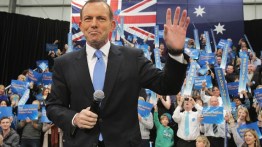
By conventional wisdom, Tony Abbott should not become Prime Minister of Australia this weekend. He ought to be too conservative, a throwback to a bygone age. He is sceptical about global warming, and proposed to abolish a carbon tax on the grounds of its expense and uselessness. He is a churchgoer who is against abortion and is sceptical about gay marriage. He is a former boxer, who tends to back America in foreign policy disputes. He is an Anglophile and an enthusiastic monarchist. He ticks almost every unfashionable box in modern politics. His victory is not inevitable, but those wishing to place money on his rival, Kevin Rudd, can find bookmakers willing to give odds of 26-1.

Toby Young: Should I be an MP?

From our UK edition

In this week's Spectator, columnist Toby Young toys with the idea of standing as a Conservative candidate in in Hammersmith. He examines the factors stacked against any chance of success, and the reasons he has for standing: Suppose I won. Then what? I’d be faced with the pride-swallowing siege that is the life of a newly elected MP. Forget about affairs of state. The only decision I’d have to make would be who to suck up to more, George Osborne or John Bercow? Neither prospect fills me with joy. Being a backbench MP is drudge work for the most part and I’d have to take a salary cut to do it. Once upon a time, MPs could expect a little respect for devoting themselves to public service, but not any more.

Parliament has finally woken up – because voters are keeping their MPs in line

From our UK edition

They should have seen it coming. A government defeat on an issue of war may be unprecedented, but defeat on the Syria vote did not come out of the blue. You can certainly blame poor party management, failure to prepare the ground, underestimating the poisonous legacy of Iraq — but such failings are common enough. The biggest single factor is one that ministers, the media and MPs themselves have failed to understand: Parliament has changed. The consensus has long been that Parliament no longer matters. It is assumed to be the docile creature of the government, full of spineless or ambitious MPs who are the slaves of the party whips. In fact, unnoticed and under our noses, that has been becoming progressively less and less true throughout my 30 years in Parliament.

William Hague tells the 1922 that ‘lessons will be learned’ from Syria vote

From our UK edition

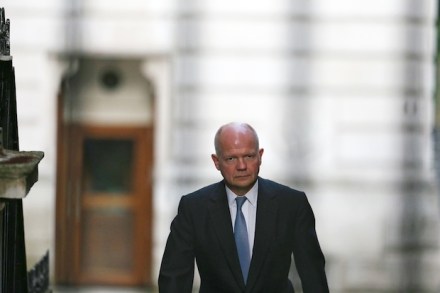
William Hague’s appearance at the 1922 Committee has underlined the fact that the Tory party is now split on foreign policy. I’m told that the questions that the Foreign Secretary received were pretty much evenly split between the passionate supporters of intervention in Syria and its passionate opponents. Those present calculate that the room was evenly split between the two factions. Hague, I understand, made a robust case for why Britain needs to remain an outward looking nation that is prepared to use its military forces. But he did say, when asked, that ‘lessons will be learned’ from how the Syria vote was handled. This answer will fuel Westminster speculation that Hague was unhappy with the decision to recall Parliament.

‘To sack Jesse Norman over a moral issue like whether to support war is outrageous’

From our UK edition

Jesse Norman's departure from the policy board hasn't come as a huge surprise to many Tory MPs: I was with one after the vote who was subjecting his twitter feed to a lengthy examination to work out whether Norman was stranded overseas. The only evidence available was that Norman went to a beer festival on 26 August and found out about the recall from the BBC and Easyjet. 'I love beer festivals, but I also know when to turn up,' grumbled the MP. It would have been a terrible message to send to other backbenchers if Norman hadn't been moved from his job. This is a sign of Number 10 applying a bit of an Andy Flower strategy to MPs: and that is a good thing for party management in general. But one Tory colleague I've spoken to this morning disagrees.

George Osborne: There’ll be no second Commons vote on Syria

From our UK edition

There’ll be no second parliamentary vote on Syria, George Osborne stressed this morning. There had been speculation that following President Obama’s decision to go to Congress before using military force, meaning that strikes won’t happen before the week of the 9th of September, there could be a second parliamentary vote on UK military involvement. But Osborne scotched that idea on the Andrew Marr show this morning. listen to ‘Osborne - No second Syria vote’ on Audioboo Obama’s decision, though, has eased the political pressure on David Cameron.

Syria defeat: what happened to the whips?

From our UK edition

There are a number of serious implications of tonight's result. But it's worth briefly considering the whipping operation in the hours leading up to this vote. Firstly, there was no rebel whipping operation (as in, no backbenchers leading others to revolt, totting up numbers and issuing rebuttals of government claims) as there has been on other votes such as the Lords and EU budget and referendum rebellions, which means MPs were only being pulled away from the government position by their own instincts. Or they were being left to wander away from the government position. From the conversations I've had with MPs, the government whipping operation continued to be pretty low-key until the middle of today, when the whips started to panic.

Cameron’s retreat on Syria vote: why it happened and what it means

From our UK edition

To be fair to David Cameron, he's not the only leader who's performed a volte-face in the past 24 hours. If you'd listened to Ed Miliband yesterday afternoon, you might have been forgiven for thinking that he was quite likely to support the government's motion on Syria, so long as it was and 'legal' and had specific and limited aims.

How will the Tory whips handle tomorrow’s Syria vote?

From our UK edition

The government has yet to compose the motion that MPs will debate and vote on in tomorrow's Commons debate on Syria. And while some MPs are making clear that they are very nervous about the prospect of intervention, many others are yet to make up their minds. This means that as they return to Parliament today and tomorrow ahead of the debate (which starts at 2.30pm), they are sitting targets for the whips. There are some MPs like John Baron who are clear that they do not support intervention. Then there are a number of independently-minded MPs like Douglas Carswell and Sarah Wollaston who aren't worth much of a whip's time: it won't make any difference to how they cast their vote.

Graeme Wilson of The Sun to be new Downing Street press secretary

From our UK edition

The Cameron operation’s effort to move onto an election footing continues with a set of new appointments to the Number 10 political operation. Gabby Bertin, who has been with Cameron since he became Tory leader, will return from maternity leave to become director of external relations. Bertin, who was previously Cameron’s political spokeswoman, will be responsible for forging – and maintaining Downing Street’s – relations with business, pressure groups and charities. The appointment of one of his most trusted aides to this role is a sign of how imperative Cameron believes it is to prevent Labour from securing business support at the next election.

David Cameron denies he’s planning another coalition. Good.

From our UK edition

I'm just back from three weeks away to find the summer momentum very strongly behind the Tories. A ComRes poll suggests that the majority of Labour supporters think Ed Miliband is doing badly, and things are going so strongly for the Tories (as George Trefgarne writes) that the odds on a Tory majority are shrinking rapidly. So why would Cameron be planning for another coalition, as my colleague James Kirkup writes in his Telegraph splash today? His piece has struck a nerve in No. 10, which is strongly denying that the Prime Minister is thinking of anything other than a Conservative majority in 2015. There are, I'm told, no plans to change any rules to make coalition more doable after the next election. Of course, you may say, Cameron would say this anyway.

How the Tories planned to spend this summer behaving like an opposition party

From our UK edition

Unless you're as optimistic as Jon Ashworth, it's pretty clear that messaging-wise, Labour have had a pretty bad summer. There are many reasons for this that many wise people have examined in quite some detail and at quite some length, but one of the major strategic errors is that the party appears to have made entirely the wrong assumption about what the Tories had planned for recess. Labour was clearly just lying in wait for more mistakes and bad news to come crawling out of the woodwork over the holidays. But they'd reckoned without the months of careful planning that the Conservatives had put into this slower season.

Tories and Lib Dems pass on will donation to contain row

From our UK edition

So both the Lib Dems and the Tories have yielded to the inevitable, and passed on the Joan LB Edwards donation to the Treasury. Their responses were swifter than even critical friends might have expected. The Lib Dems were first out of the starting blocks in the race to the moral high ground by announcing they'd be writing a cheque to the Treasury. But before Nick Clegg even had time to start recording a new autotune version of 'I'm Sorry' about how 'we took a donation that we couldn't possibly keep (but frankly could have done with given the state of the party coffers)', the Tories decided they had to do the same. So that's that, row contained and moral high ground reached by both parties. Except stories like this never do politics any favours at all.

Why the happy Tories can’t relax after Labour’s bad summer

From our UK edition

Last December, after one of the most brutal PMQs this Parliament has seen, David Cameron was walking through the corridors of the Palace of Westminster to address a 1922 Committee meeting. Ed Miliband had subjected the Prime Minister to a real savaging, and Labour backbenchers had loyally joined in, raising a constituent's suicide and describing Cameron's government as ‘grandeur for the few, the workhouse for the many'. It had been a bleak session. Heading for Committee Room 14, the Prime Minister bumped into a junior minister, who was keen to reassure him that everything would come out in the wash. He told Cameron that 'they can go for the emotional attack, and we can always come back at them with statistics'.

Cheery silly season puts Tories on even keel

From our UK edition

Even if Help to Buy is contributing to a bubble rather than the sensible restructuring of the economy that politicians promised before they started trying to scale that particular mountain, there are still reasons to be cheerful about the economy for the Tories this morning, on top of the delight offered yesterday by Chris Bryant's antics. The Guardian's ICM poll finds today that the Conservatives' approval rating on economic competence has risen to 40 per cent from 28 per cent in June. Labour has only crept up five points in comparison, from 19 per cent to 24 per cent. There are clearly all sorts of reasons why the party shouldn't be hanging out the bunting for 2015 just yet (Paul Goodman has a good post on this here).

John Bercow reinvents being Speaker of the House of Commons

From our UK edition

If only he’d read the job description a little bit more closely, we might have avoided all these rows. Unfortunately for John Bercow, the man who loves the sound of his own voice more than anything else, the role of Speaker really doesn’t do what it says on the tin. Traditionally, the Speaker has taken a definite back seat, bellowing the odd ‘order, order’ in the Commons but otherwise maintaining a rather reticent and impartial position. Judging by Bercow’s behaviour over the past few months, it would seem that he hasn’t got the memo.

Chris Christie lays down a marker for the 2016 US presidential election

From our UK edition

Ties between the Tories and the Republicans have rarely been weaker than they are today. The hiring of Jim Messina, Barack Obama’s campaign manager, is another sign that the Tories are more interested in the technical effectiveness of the Obama machine than they are in anything that the Republicans are producing. I suspect that the Republican most likely to revive Tory interest in the GOP, its idea and its electoral strategy, is Chris Christie, the governor of New Jersey. Christie is neither a southern Republican nor a Tea Party man. Rather, he’s a north eastern Republican with a more emollient attitude to government. Christie is up for re-election in New Jersey this autumn, a contest that he’s expected to win easily.

Cruddas’s revenge

From our UK edition

Roll up, roll up, Cameron-bashers everywhere. Peter Cruddas is planning to blow some of the £180,000 he won in libel damages against the Sunday Times with a ‘Victory Party’ at his City offices on 17 September. Cruddas was falsely accused of charging donors for access to Number 10, and he’s somewhat piqued at having got naff-all help from Dave when the story broke. This is a ‘thank you for standing by me party’ and it promises to feature in the book that Cruddas is writing about his bust-up with Downing St. The invitation warns: ‘You might be asked some questions by a ghost writer who will be in the audience. You do not have to answer any questions and you do not have to give anybody your name and details unless you want to. It is your choice.

Matt Hancock sketches an incumbent’s re-election argument

From our UK edition

Matt Hancock is both a competent economist (read his account of the Great Recession) and a keen political strategist. Where possible he has used his position as minister for skills to position the coalition on the compassionate side of the employment argument; for example, with his considered support for the minimum wage. Yesterday, in an article for ConservativeHome, he pre-empted Labour’s attempt to shift economic focus to the cost of living, now that hopes of a recovery are building. He made two basic points: 1). Labour’s record on the cost of living is abysmal – wages did not keep pace with growth during the boom. He says that gross disposable income fell by 1.1 per cent per head between 2003-08.